At Joyful Wellness, we often write about healthier habits, stronger communities, greener cities, longer lives, and happier days. Hope is at the heart of what we do because we believe every person deserves reasons to look forward to tomorrow.
Yet there are weeks when hope feels overshadowed by grief, and looking away is no longer an option.
Recently, a young man lost his life in the waters off Aurora while pursuing a dream he carried deeply in his heart. His story touched the nation, and many Filipinos mourned alongside his family.
Soon after came the devastating news from Tacloban. Three students lost their lives, others were injured, children ran in fear, and parents rushed to school grounds desperate to find their sons and daughters. In the aftermath of such heartbreak, many of us found ourselves asking the same difficult question: What is happening to our children?
READ: Why Teen Anxiety Continues to Rise—And What Parents Can Do About It
The question extends beyond those who died, those who were wounded, or those accused of causing harm. It encompasses all of them. What struggles are our young people carrying that remain unseen? What pain hides behind ordinary school days, classroom laughter, social media posts, report cards, and teenage smiles? And what burdens quietly settle in young hearts until they become too heavy to bear?
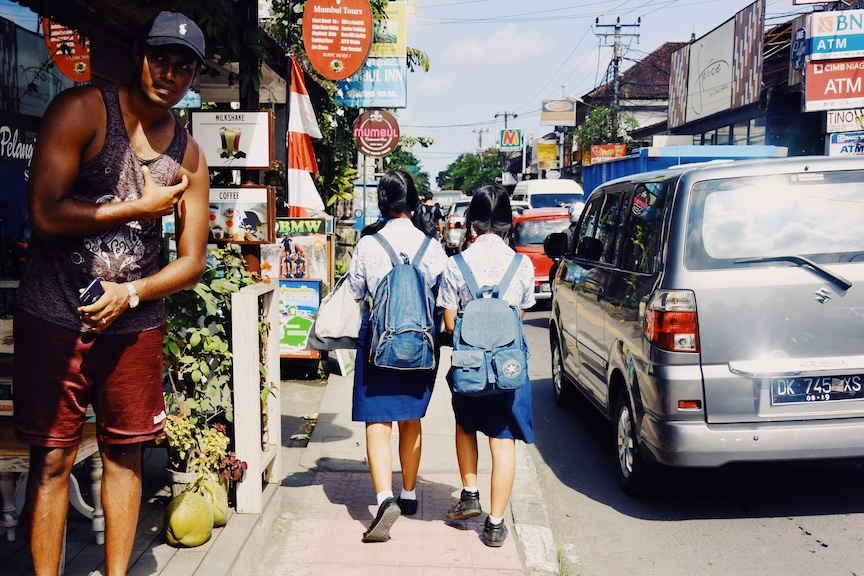
Photo by Gocha Szostak on Unsplash
Beyond the backpacks, what burdens are our children carrying that we cannot see?
As a mother, a citizen, and the editor of a wellness platform, I find myself wrestling with questions that offer no easy answers. Why do so many young people appear exhausted before they have even begun their adult lives? Why have anxiety, loneliness, bullying, and despair become such familiar parts of our conversations? How did we reach a point where children are expected to navigate challenges that many adults find overwhelming themselves?
One of the most heartbreaking realities is that tragedies rarely emerge without warning. Long before a crisis unfolds, signs often appear. A child may feel invisible. A teenager may carry humiliation or abandonment. Someone may begin to believe that nobody cares. Another may cry in silence or reach out for help in ways that go unnoticed. Despite these signals, life continues at its relentless pace.

Every child deserves to feel safe, seen, and heard.
Most of us are busy earning a living, trying to survive, scrolling through endless information, arguing over issues, or managing our own personal struggles. In the midst of all this activity, it becomes easy to overlook one another. We may fail to notice the child sitting alone, the teenager who suddenly withdraws, the classmate being bullied, the friend who no longer laughs, the son who stops talking, or the daughter who no longer feels safe.
The challenge before us includes understanding how these tragedies happen. A deeper question asks whether we have become so distracted that we fail to recognize suffering while it is still small enough to heal.
This is an invitation for greater awareness and attention from parents, schools, leaders, communities, and every member of society.
Children are shaped by the environment we create, the values we demonstrate, and the behaviors we choose to tolerate. Young people observe when rules are ignored, when cruelty is rewarded, and when compassion is absent. They also notice when nobody seems willing to listen or care.
At Joyful Wellness, we believe health extends far beyond nutrition, exercise, medicine, or longevity. True wellness includes a sense of belonging, safety, kindness, and the assurance that when life becomes unbearable, someone will be there to listen.
Healing may begin in simple ways. More often, it starts with paying attention, looking up from our distractions, checking in on one another, listening a little longer, and caring a little more.
No child should have to carry unbearable pain alone. No parent should ever have to bury a child and no classroom should become a place of fear, and no society should grow so numb that it can no longer hear the cries of its youngest members.
Photo by Filip Lazar on Unsplash
Just a reminder that every statistic was someone’s child.
The grief felt across the country the past days is impossible to ignore. Perhaps this is the moment to listen more carefully. Our children may be trying to tell us something, and this time, we must not look away.