

Mercury in Cosmetics: Risks, Health Effects, and How to Stay Safe
A promise of brighter, lighter skin can be tempting.
In an age of online shopping, influencer recommendations, and beauty products delivered with just a few taps on a smartphone, consumers are constantly exposed to products promising dramatic transformations. Yet behind some of these promises lies a hidden danger that health experts, scientists, regulators, and industry leaders are urging the public to take seriously.
That danger is mercury.
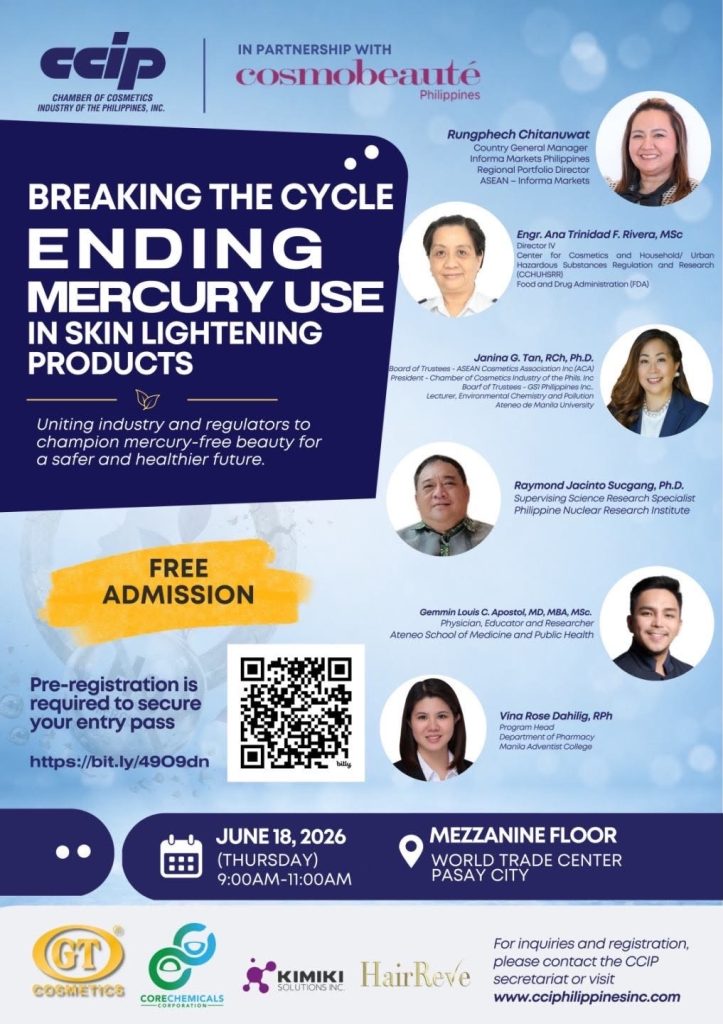
The issue took center stage during “Breaking the Cycle: Ending Mercury Use in Skin Lightening Products,” a forum organized by the Chamber of Cosmetics Industry of the Philippines (CCIP) on June 18, 2026, at the World Trade Center in Pasay City. Bringing together experts from government, academia, healthcare, and industry, the event highlighted a troubling reality: despite regulations and repeated warnings, mercury-containing cosmetic products continue to find their way into the marketplace.
Why Mercury in Cosmetics Remains a Concern
Mercury is one of the oldest known poisons. While its dangers have been recognized for decades, exposure continues through products that may still be available through online sellers, informal markets, and counterfeit distribution channels.
In her discussion on Minamata Disease, Janina G. Tan, RCh, Ph.D., President of the Chamber of Cosmetics Industry of the Philippines and an environmental chemistry lecturer at Ateneo de Manila University, revisited one of the world’s most significant environmental health disasters to illustrate how mercury became recognized as a serious threat to human health.
The lessons of Minamata remain relevant today.
According to Raymond J. Sucgang, Supervising Science Research Specialist at the Department of Science and Technology–Philippine Nuclear Research Institute (DOST-PNRI), research on online skin-lightening products from selected Asian countries continues to reveal alarming levels of mercury contamination. His team’s findings showed that mercury-containing cosmetics remain widely available and that exposure levels associated with some products exceed accepted health limits, raising serious public health concerns.
These findings underscore that mercury contamination is an ongoing consumer safety challenge.
EXPLORE: When Whitening Becomes a Health Risk
The Health Risks of Mercury Exposure
Many consumers associate mercury with skin-whitening creams, but contamination may also be found in other cosmetic products.
According to Vina Rose Dahilig, RPh, Program Head of the Department of Pharmacy at Manila Adventist College, mercury contamination may appear in unregistered and counterfeit cosmetics. Products that may potentially contain mercury include certain anti-aging creams, acne treatment products, freckle-removal creams, spot-correcting products, whitening underarm creams, and some eye-area cosmetics.
Experts warned that mercury exposure can affect both the skin and internal organs.
Possible skin effects include:
- Contact dermatitis
- Skin irritation
- Hyperpigmentation
- Increased susceptibility to bacterial and fungal infections
- Skin thinning and scarring
The risks, however, extend far beyond the skin.
Gemmin Louis C. Apostol, MD, MBA, MSc, Program Head for Environmental Health at the Ateneo de Manila University School of Medicine and Public Health, explained that long-term mercury exposure may affect the brain, kidneys, eyes, endocrine system, and immune system. Symptoms may include tremors, memory problems, vision disturbances, hormonal disruption, and kidney damage.
Dr. Apostol also highlighted a concerning reality: mercury is often not the only harmful ingredient found in problematic cosmetic products. Some products may contain a combination of mercury, hydroquinone, and corticosteroids, creating what he described as a toxic cocktail capable of producing rapid cosmetic effects while posing significant health risks.
READ: Skincare Boom Raises Safety Concerns Over Whitening Products in the Philippines
Why Do Mercury-Containing Products Continue to Exist?
Despite regulations prohibiting mercury in cosmetics, unsafe products continue to circulate.
Dahilig identified several consumer behaviors that contribute to demand, including the desire for rapid whitening results, the influence of social media marketing, the misconception that imported products are automatically superior, and the attraction of inexpensive alternatives.
Market conditions also contribute to the problem.
Counterfeit products, unregistered online sellers, incomplete labeling, and misleading claims make it difficult for consumers to distinguish legitimate products from potentially dangerous ones.
During the forum, Anna Trinidad F. Rivera, MSc, Director IV of the Food and Drug Administration’s Center for Cosmetics and Household/Urban Hazardous Substances Regulation and Research, emphasized that regulators continue to monitor online selling platforms. However, enforcement remains challenging as products removed from one platform often reappear under different names or through new seller accounts.
The persistence of mercury-contaminated cosmetics demonstrates that regulation alone cannot solve the problem.
From Your Face to the Food Chain
One of the most striking discussions during the forum centered on mercury’s environmental impact.
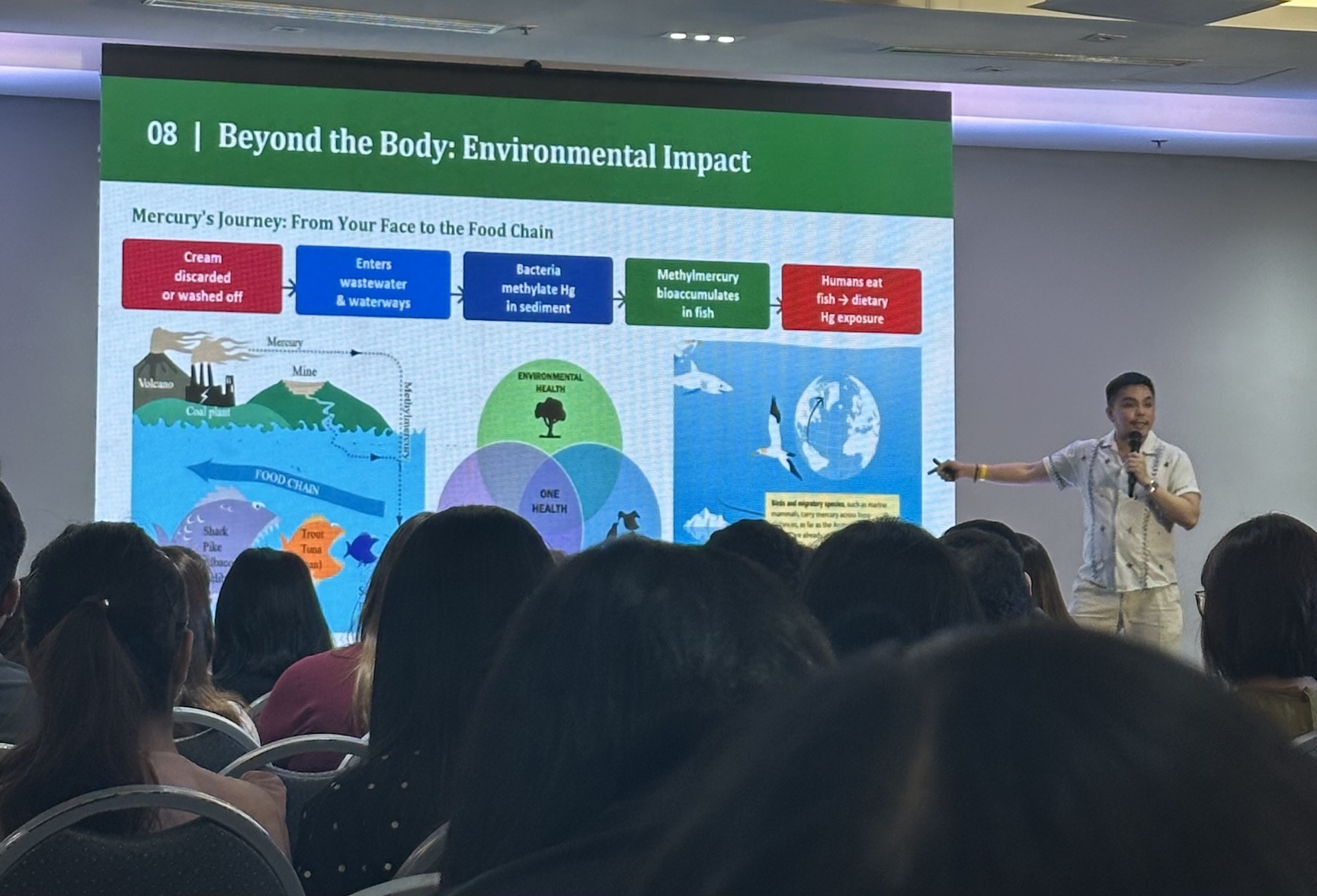
Dr. Apostol explained how mercury can travel far beyond the bathroom mirror. When mercury-containing creams are washed off the skin or discarded, traces may enter wastewater systems and waterways. In aquatic environments, bacteria can transform mercury into methylmercury, a highly toxic compound that accumulates in fish and other organisms.
As contamination moves through the food chain, human exposure can occur again through food consumption.
In other words, what begins as a cosmetic product used by an individual can eventually become an environmental health issue affecting entire communities.
This is why experts stress that eliminating mercury from cosmetics benefits not only consumers but also ecosystems and future generations.
How to Protect Yourself from Mercury-Contaminated Cosmetics
The good news is that consumers can take practical steps to reduce their risk.
Verify FDA Notifications
Before purchasing cosmetic products, verify whether they are properly notified or registered through the Philippine Food and Drug Administration.
Be Skeptical of Unrealistic Claims
Products that promise extremely rapid whitening or dramatic results within a very short period should be approached with caution.
Examine Labels Carefully
Avoid products with incomplete ingredient lists, unclear manufacturers, or exaggerated marketing claims.
Purchase from Reputable Sources
Buy cosmetics only from legitimate retailers, licensed pharmacies, authorized distributors, and trusted online platforms.
Consult Healthcare Professionals
If you experience skin irritation or have concerns regarding a cosmetic product, seek guidance from a dermatologist, pharmacist, or healthcare professional.
Report Suspicious Products
Consumers who encounter potentially unsafe cosmetic products are encouraged to report them to the FDA through its official channels.
DISCOVER: Philippines reexamines beauty standards as health risks emerge
Safe Beauty Begins with Informed Choices
Throughout the forum, one message remained clear: the challenge is more than removing mercury from cosmetic products. It requires building a culture in which beauty is guided by science, safety, transparency, and informed decision-making.
Government agencies, healthcare professionals, educators, industry stakeholders, and consumer advocates all have important roles to play. Yet one of the strongest defenses against unsafe products remains an informed and empowered consumer.
As CCIP and its partners continue to advocate for mercury-free cosmetics, the message extends beyond compliance with regulations. It is a call for greater awareness, stronger consumer protection, and a shared commitment to public health.
The desire to look one’s best is understandable. But when it comes to mercury, no cosmetic benefit is worth the potential cost to human health and the environment.
Safe beauty begins with informed choices—and the science is clear: mercury has no place in cosmetics.
References
- Chamber of Cosmetics Industry of the Philippines (CCIP). Breaking the Cycle: Ending Mercury Use in Skin Lightening Products Forum, June 18, 2026, World Trade Center, Pasay City.
- Presentation by Raymond J. Sucgang, DOST-Philippine Nuclear Research Institute.
- Presentation by Vina Rose Dahilig, Department of Pharmacy, Manila Adventist College.
- Presentation by Gemmin Louis C. Apostol, Ateneo de Manila University School of Medicine and Public Health.
- Presentation by Anna Trinidad F. Rivera, Food and Drug Administration.
- Presentation by Janina G. Tan, Chamber of Cosmetics Industry of the Philippines.
- Minamata Convention on Mercury.
- Philippine FDA Public Health Advisories on Mercury-Contaminated Cosmetic Products.
- EcoWaste Coalition reports on mercury-contaminated cosmetics.