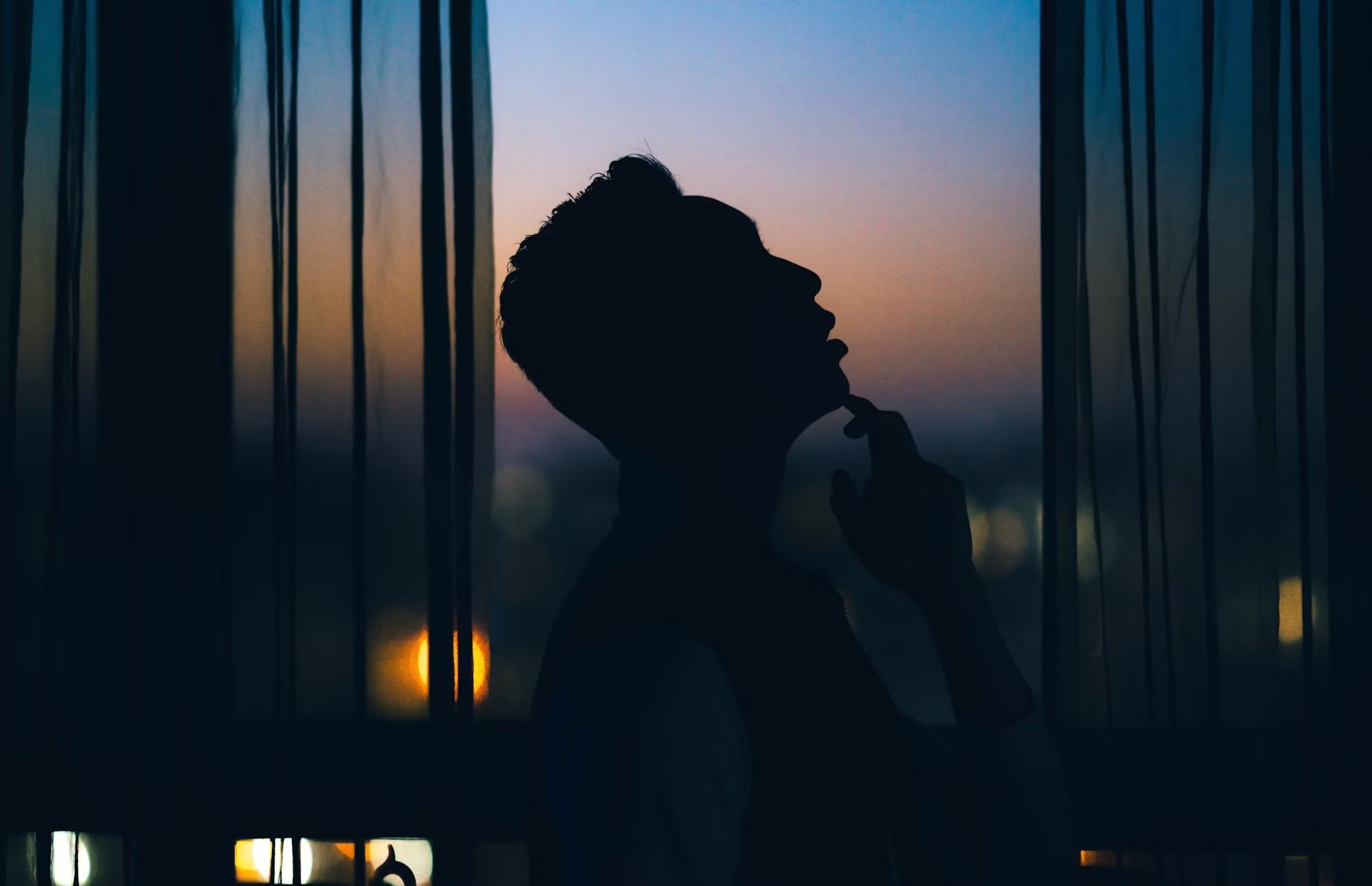
As the Ber months begin, five quiet minutes at twilight can create a gentle transition from the demands of the day into the evening.
As the season changes, a slightly unsettling feeling can manifest as the year reaches its later months. The sun starts to set earlier, evenings feel like they’ve arrived uninvited, and something in our moods can shift without us quite knowing why. There is real biology behind our response to changing light, and it is worth meeting that transition with something more deliberate than simply pushing through it.
This is a five-minute practice built for exactly that transition: the twilight hour, when the light is changing and the body is beginning its evening shift. A few minutes of intentional breathing can give you a quiet pause between the demands of the day and whatever comes next.
What Actually Happens as Daylight Changes
The seasonal changes in mood that some people notice as daylight patterns shift are not simply in our heads. Light is one of the strongest signals that helps regulate the body’s circadian system, the internal timing system that influences sleep and other daily rhythms. Changes in the timing and amount of light we receive can affect the timing of melatonin and other circadian processes.
Researchers have proposed several explanations for why some people are particularly sensitive to seasonal changes in light, including what is sometimes called the photoperiod hypothesis. The basic idea is that the brain and body can respond to changes in day length, with the circadian system helping coordinate those changes.
At its most pronounced, this seasonal pattern can appear as Seasonal Affective Disorder (SAD), a form of depression with a recurring seasonal pattern. Symptoms can include persistent low mood, loss of interest, low energy, changes in sleep and appetite, and difficulty concentrating. Winter-pattern SAD is associated with reduced daylight in many higher-latitude regions, although the relationship between latitude and prevalence is more complicated than it was once thought. A 2025 systematic review and meta-analysis of 24 studies involving more than 32,000 people found that SAD and subsyndromal SAD were more common at higher latitudes.
That distinction matters if you’re reading this from the Philippines. We are much closer to the equator than countries where winter brings dramatic changes in daylight, so the seasonal shift in actual day length is relatively small. There is also no good basis for assuming that the Ber months themselves cause SAD in Filipinos.
What can still change is the rhythm of our days. Screen-heavy evenings, long hours indoors, artificial light and the particular pressures of the final months of the year can all shape how an evening feels. The practice below is useful whether what you’re experiencing is a subtle response to changing light or simply a stressful, transitional stretch of the calendar.
Why Twilight Specifically Is Worth Working With
Dusk isn’t an arbitrary choice of moment for this practice. It is a natural transition point between daytime and night.
Light and darkness provide important cues to the circadian system. As evening progresses and environmental light decreases, melatonin normally begins to rise as part of the body’s preparation for sleep. Artificial light in the evening can delay or suppress aspects of this process, particularly when exposure is bright or occurs at biologically sensitive times.
Modern life can make that transition easy to miss. We switch on the lights, pick up the phone, answer another message or finish one last task just as the world outside is getting darker.
Spending five deliberate minutes at twilight doesn’t “reset” the nervous system or guarantee better sleep. It simply gives you a chance to notice the transition rather than rushing straight through it.
Sometimes, that is enough reason to pause.
READ: Cloudier November dims sunlight, drives Vitamin D decline
The Science Behind the Breath
The specific breathing pattern used in this practice isn’t arbitrary either. It is adapted from a 2023 randomized controlled study published in Cell Reports Medicine that compared three five-minute breathwork practices with five minutes of mindfulness meditation over 28 days.
The study enrolled 108 participants, who practiced at home. One of the techniques, called cyclic sighing, emphasized prolonged exhalations: a double inhale followed by a longer exhale.
The researchers found that the breathwork groups, particularly the cyclic-sighing group, showed greater improvements in positive mood and reductions in respiratory rate than the mindfulness group. The researchers concluded that five minutes of daily cyclic sighing showed promise as a stress-management practice.
There is an important distinction here: this was a relatively small, remotely conducted study, and it studied mood and physiological measures—not seasonal depression or SAD. So we shouldn’t present cyclic sighing as a treatment for seasonal mood disorders.
What the research does give us is something simpler and more useful: a short breathing practice that may help some people feel calmer in the moment.
That’s enough for a five-minute evening ritual.
5-Minute Twilight Meditation
Find a window, a porch, or simply a quiet spot where you can sense the light changing outside, even if you can’t see the sunset directly. Sit comfortably, and follow this sequence.
1. Settle in — 30 seconds
Let your shoulders drop and your jaw unclench. Notice the quality of the light around you without trying to change anything about how you feel.
2. Begin cyclic sighing — 3 minutes
Inhale gently through your nose. Without exhaling, take a second, shorter inhale. Then slowly exhale through your mouth, making the exhale longer than either inhale.
Repeat the double-inhale, long-exhale pattern at a comfortable pace.
Don’t force the breath. If you feel dizzy, light-headed or uncomfortable, return to normal breathing and stop the exercise.
3. Return to natural breathing — 1 minute
Let your breath settle back to normal.
Notice any change in your body: a looser jaw, relaxed shoulders, a quieter mind or simply the feeling of having stopped for a moment.
There doesn’t have to be a dramatic difference.
4. Name the transition — 30 seconds
Silently or aloud, acknowledge the shift happening outside and inside:
The day is ending, and so is the version of yourself that had to carry it.
That’s the entire practice. No app, no equipment and no particular skill required beyond five uninterrupted minutes.
Turning It Into a Real Wind-Down Ritual
A single session can be a useful pause on a difficult day. A regular practice may be more meaningful if it becomes part of your routine.
In the Stanford-led study, participants practiced for 28 days, and the researchers observed changes in mood and physiological measures over that period. The study does not establish that everyone will experience the same benefits, but it does offer a reasonable case for keeping the practice simple and consistent.
It helps to anchor the ritual to something that already happens around dusk: the moment the streetlights come on, the call to Angelus if that’s part of your evening, or simply the first time you notice that the room has grown dimmer.
Let that be the cue rather than trying to remember a specific clock time.
And don’t worry about doing it perfectly. Five comfortable minutes that you actually practice will always be more useful than an elaborate routine you never return to.
Seasonal changes can affect how we experience light, sleep and mood, although the effect varies enormously from person to person. In the Philippines, where daylight changes far less dramatically than it does in higher-latitude countries, the Ber months don’t automatically bring a biological winter.
But they do bring a transition.
Twilight gives us a small, beautiful place to notice it.
Meet the dimming light with five quiet minutes instead of five more tabs open.
A note on this topic: Seasonal mood changes exist on a spectrum, and this piece covers general wellness practices rather than treatment. If low mood, persistent changes in sleep or appetite, or loss of interest in daily life last and begin to interfere with how you function, it’s worth talking with a mental health professional rather than relying on breathing exercises alone.
Photo by Naitian (Tony) Wang on Unsplash
References
- Balban MY, Neri E, Kogon MM, et al. Brief structured respiration practices enhance mood and reduce physiological arousal. Cell Reports Medicine. 2023. Source
- Czeisler CA, et al. Circadian rhythms and sleep: the role of light exposure. Cold Spring Harbor Perspectives in Medicine. 2015. Source
- Mishra S, et al. Seasonal affective disorder and its association with latitude: a systematic review and meta-analysis. 2025. PubMed
- Chang AM, Aeschbach D, Duffy JF, Czeisler CA. Evening use of light-emitting eReaders negatively affects sleep, circadian timing, and next-morning alertness. Proceedings of the National Academy of Sciences. 2015. PubMed