For years, property advertisements focused on square footage, location, and prestige. The promise was simple: buy the address, secure the lifestyle.
Now, something quieter but more revealing is happening across global real estate. Developers are increasingly selling wellness itself.
The language has shifted. Brochures now mention walkability, air quality, green spaces, biophilic design, circadian lighting, fitness recovery rooms, meditation decks, bike lanes, and access to nature. Residential towers advertise wellness floors alongside swimming pools. Offices speak about mental well-being and human-centered design. Mixed-use developments promise not just convenience, but balance.
In other words, the healthiest spaces are becoming premium spaces.
The question is no longer simply where people live. It is whether the environments around them help them stay physically and emotionally well.
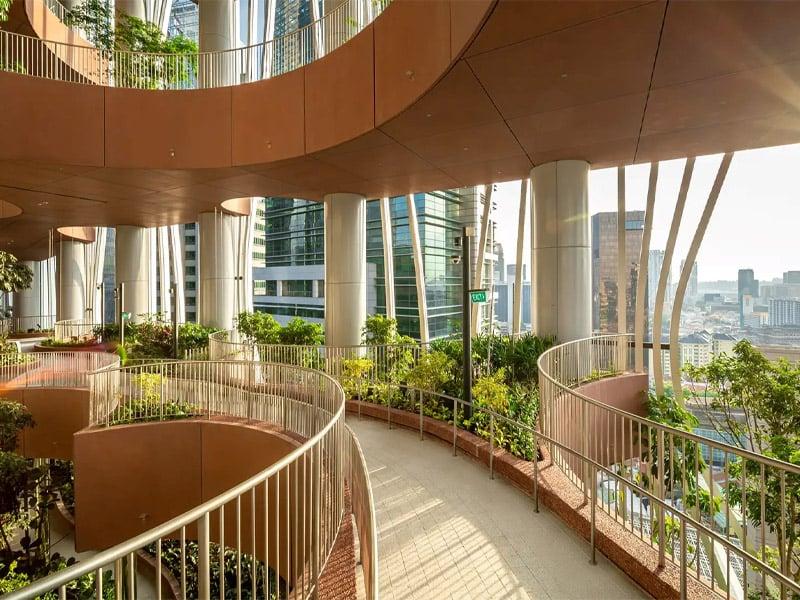
Wellness is becoming real estate value
This shift is far from being an accident.
According to the Global Wellness Institute’s Build Well to Live Well report, wellness real estate has become one of the fastest-growing sectors within the global wellness economy. The sector includes homes, communities, offices, and mixed-use developments intentionally designed to support health and well-being.
Meanwhile, global developers increasingly recognize that buyers and tenants now care about stress, burnout, mobility, sleep quality, air quality, and mental restoration as much as traditional luxury.
The pandemic accelerated this awareness dramatically.
Suddenly, people noticed whether they had natural light, access to parks, walkable neighborhoods, quiet spaces, or enough ventilation inside their homes. A beautiful lobby mattered less if daily life still felt exhausting.
Consequently, wellness moved from being an optional amenity to a design philosophy.
The healthiest buildings now think beyond aesthetics
Modern wellness-focused developments are designed around how people actually live and recover.
According to research cited by the World Health Organization, urban design directly affects physical activity, stress levels, respiratory health, and mental well-being. Green spaces, walkability, and access to social spaces all contribute to healthier communities.
That thinking is now influencing architecture itself.
Developers are incorporating:
- natural ventilation
- daylight optimization
- greener open spaces
- pedestrian-centered mobility
- fitness and recovery areas
- healthier building materials
- quieter acoustics
- flexible work-live environments
Biophilic design, which integrates natural elements into built spaces, has also gained attention because studies increasingly associate nature exposure with lower stress and improved emotional well-being.
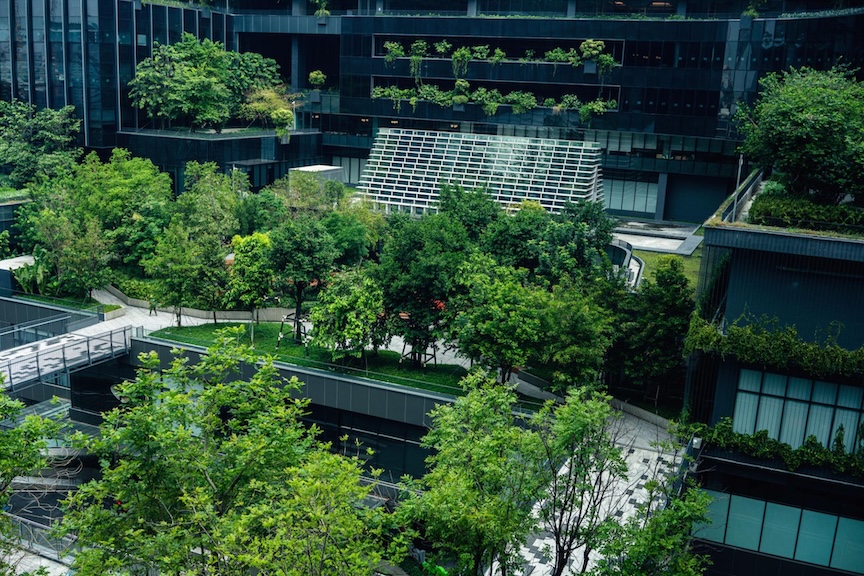
The result is a subtle but important evolution: buildings are no longer being designed only to impress people visually. Increasingly, they are being designed to affect how people feel physically and psychologically.
READ: The Healthiest Cities Are Being Designed—Are Filipinos Included?
Why this matters in the Philippines
This global trend feels particularly relevant in Metro Manila and other dense Philippine cities.
Long commutes, worsening heat, congestion, flooding, air pollution, and limited green space have made urban exhaustion feel almost normal. Wellness, therefore, is no longer only about spa treatments or fitness culture. It is increasingly about whether daily environments drain people less.
The UP Center for Integrative and Development Studies (UP CIDS), in its 2025 policy brief Urban Design Wellness: Crafting Place-Based Policy for Health and Wellness in Communities, argues that healthier communities depend on wellness urban design integrating mobility, governance, and the built environment.
The paper emphasizes walkable neighborhoods, green spaces, mixed-use planning, efficient transportation, and accessible public services as essential elements of healthier urban living.
This matters because wellness cannot be sustained entirely through individual discipline if cities themselves are designed around stress.
A resident living near trees, shaded walkways, nearby groceries, healthcare access, and reliable transport experiences wellness differently from someone navigating hours of traffic, unsafe streets, poor ventilation, and little public space.
In that sense, developers are responding not only to aspiration, but also to urban fatigue.
The rise of “wellness infrastructure”
What developers are increasingly building is not simply luxury. It is infrastructure for recovery.
A shaded jogging path encourages movement. A pocket garden creates a pause between work and home. Better ventilation affects sleep quality. Mixed-use developments reduce commuting strain. Nearby grocery access changes food behavior. Even noise reduction matters.
According to the Global Wellness Institute, wellness real estate intentionally considers physical, mental, social, and environmental health together rather than separately.
This broader approach also overlaps with preventive health.
The World Health Organization has repeatedly emphasized that healthier environments help reduce chronic disease risks and support mental well-being. Meanwhile, studies on urban wellness increasingly show links between greener neighborhoods and lower stress levels, better emotional recovery, and more physical activity.
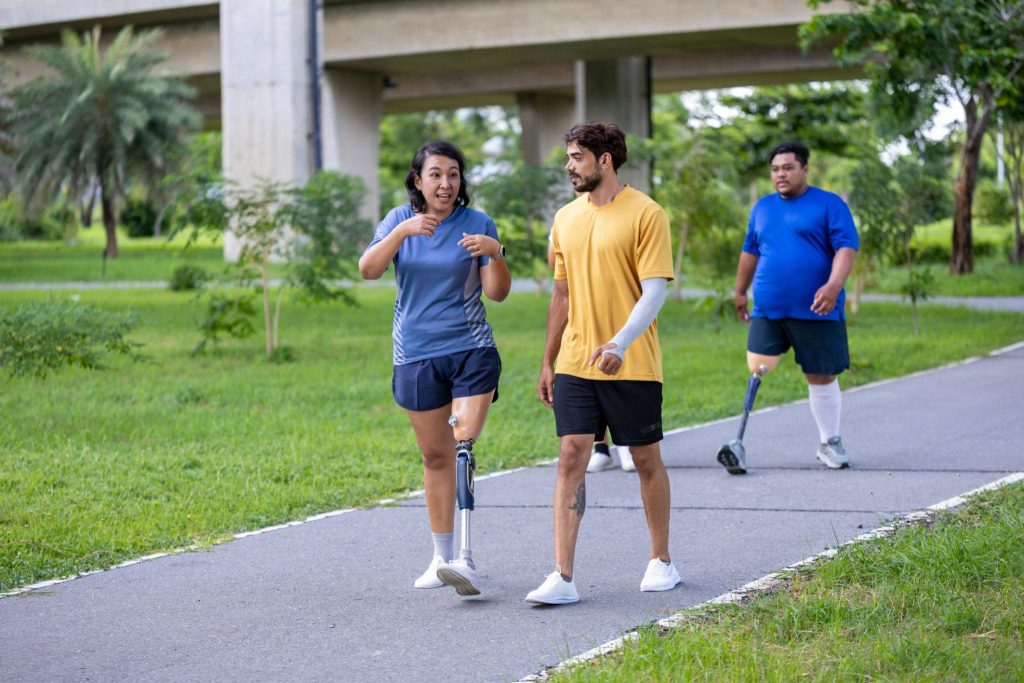
Consequently, real estate is beginning to intersect with public health in ways that were once considered niche.
Wellness is also becoming a market signal
There is, of course, a commercial reality behind all this.
Developers understand that younger buyers and urban professionals increasingly prioritize lifestyle quality over purely formal luxury markers. Walkability, sustainability, and emotional well-being have become part of consumer demand.
According to industry analyses from wellness-focused property groups, buyers increasingly associate wellness-oriented spaces with long-term value, resilience, and quality of life.
This shift is also visible globally in the rise of:
- wellness-certified buildings
- eco-conscious developments
- transit-oriented communities
- mixed-use wellness districts
- nature-integrated architecture
In many ways, wellness has become the new language of aspirational living.
The risk, however, is that healthier environments may become accessible mainly to those who can afford premium developments.
Who gets included in the wellness city?
This is where the conversation becomes more important than branding.
If green spaces, walkability, cleaner air, better mobility, and restorative design genuinely improve health, then they should not exist only inside luxury enclaves.
The UP CIDS paper quietly raises this concern by emphasizing equitable urban environments and healthier spatial planning at the barangay and neighborhood level, not only inside high-end developments.
In other words, wellness urban design must rise above merely a marketing strategy. It should become part of how cities themselves evolve.
Because the deeper insight behind the wellness real-estate movement is actually simple: people are exhausted.
People are looking for spaces that help them breathe easier, recover better, move more naturally, and feel less overwhelmed by daily life.
Developers noticed that exhaustion early. Public policy may still be catching up.
The future may belong to healthier spaces
The healthiest buildings of the future may hardly be the tallest or most technologically impressive.
They may simply be the ones that understand human beings better.
Buildings that let in more light. Communities that encourage walking. Neighborhoods with more trees. Spaces that reduce noise instead of amplifying it. Homes designed with productivity in mind, but also envisioned for restoration.
That shift may explain why wellness is increasingly becoming central to real estate itself.
People are no longer buying only property.
Increasingly, they are buying the possibility of feeling better inside the lives they already have.
alex-shuper-q5J99DkExpw-unsplash.jpg
References
- Global Wellness Institute. Build Well to Live Well: Wellness Lifestyle Real Estate and Communities. Available at: Global Wellness Institute
- UP Center for Integrative and Development Studies (UP CIDS). (2025). Urban Design Wellness: Crafting Place-Based Policy for Health and Wellness in Communities.
- World Health Organization (WHO). Urban Health and Healthy Cities. Available at: WHO Urban Health
- Motiv Group – Why Wellness Is Rewriting the Rules of Real Estate Development
- Prodelfit – Why Real Estate Developers Are Investing in Wellness-Focused Spaces