
A child walking to school beneath trees. A grandmother able to reach a health center within minutes instead of hours. A shaded sidewalk that makes walking possible even in April heat. A neighborhood where clean air, public parks, safe streets, and reliable transport are treated not as luxuries, but as part of health itself.
These images may sound idealistic. Nevertheless, urban planners, architects, and public-health experts increasingly argue that they are practical health interventions.
The healthiest cities in the world are no longer being judged only by hospitals or economic growth. They are being judged by whether ordinary people can breathe cleaner air, move safely, access green spaces, recover from stress, and reach care before illness worsens.
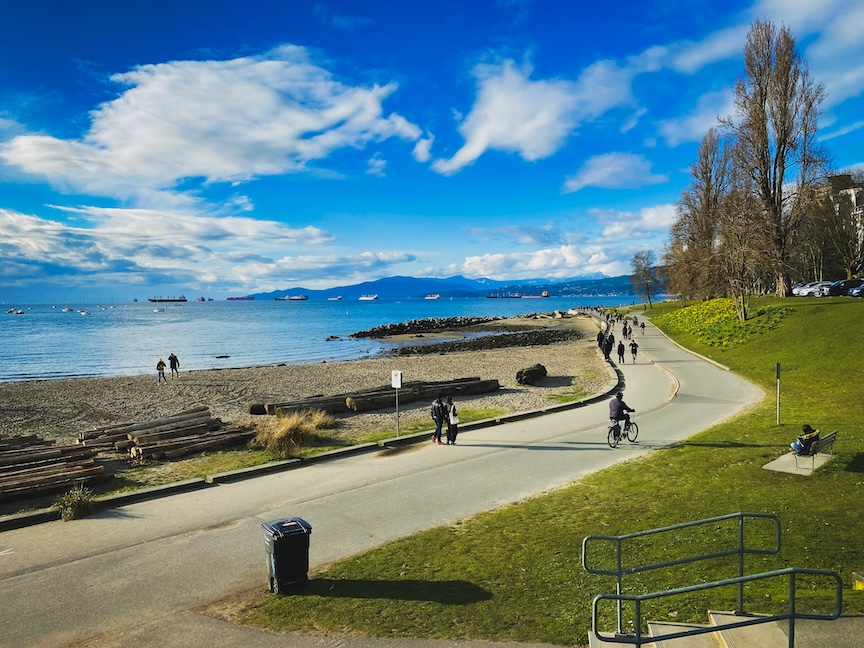
Photo by Peter Skaronis on Unsplash (The sunset beach in Vancouver in February. The coastal seaport city in the province of British Columbia, Canada, is consistently ranked among the top five greenest cities in the world)
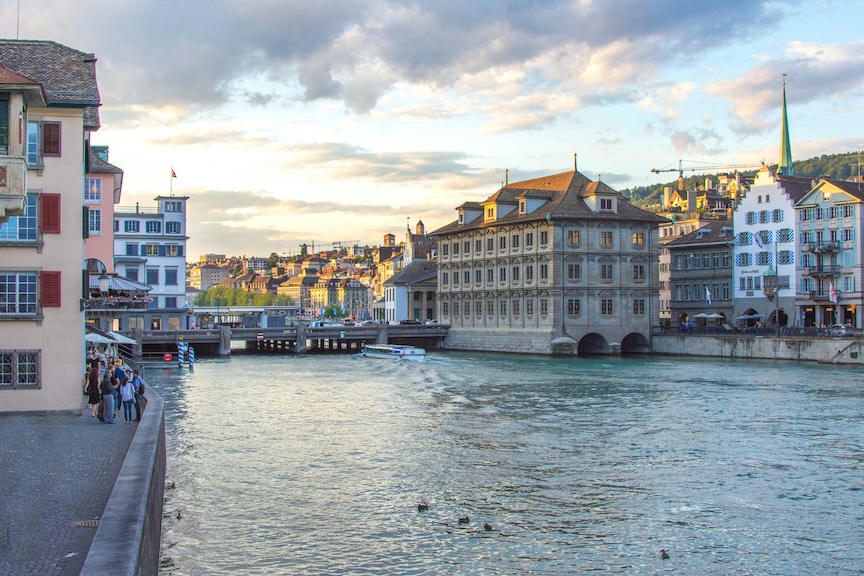
Photo by Hem Poudyal on Unsplash (Zurich by the evening, Switzerland is world leader in dealing with air pollution)
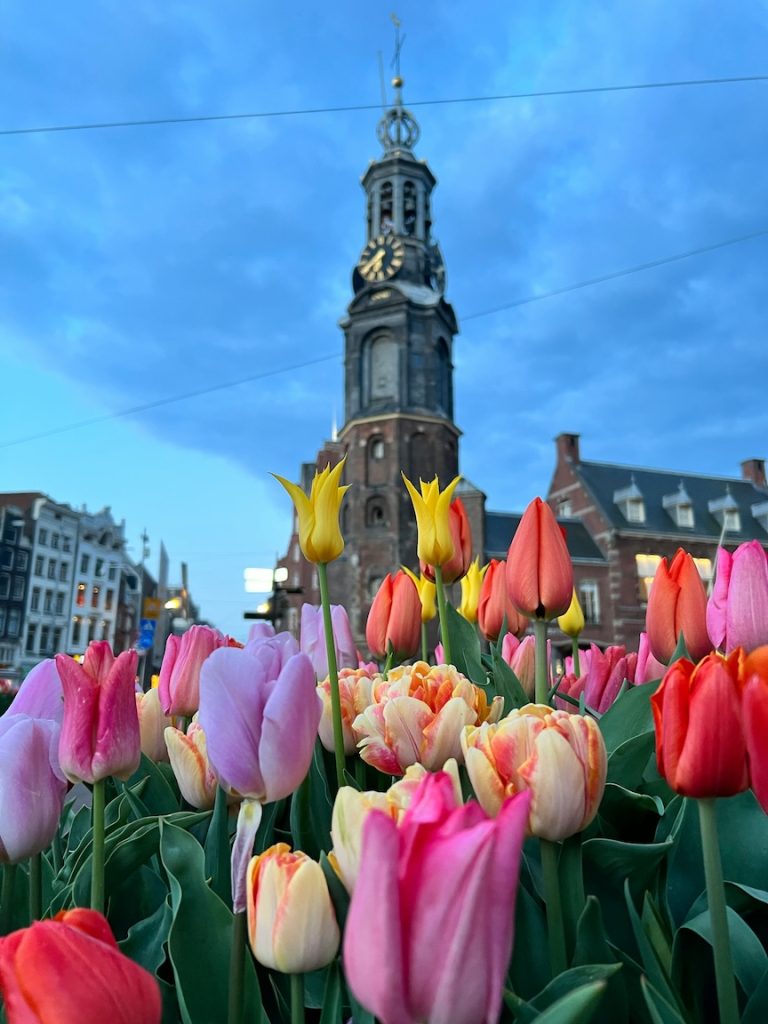
Photo by Paul Niemeijer on Unsplash (Tulip festival 2022 Amsterdam, The Netherlands, most walkable city: urban planning makes it very welcoming to walkers, with cafés, monuments, museums and neighbourhoods all ripe for exploring on foot)
The question for the Philippines is becoming harder to ignore: as healthier cities are being designed elsewhere, are Filipino communities being designed for wellness too?
Health is now an urban-design question
For decades, public health was discussed mainly through medicine, vaccination, and hospital systems. Today, researchers increasingly see the built environment itself as part of disease prevention.
According to the World Health Organization, neighborhoods and cities play a critical role in promoting physical and mental well-being. Studies consistently show that green spaces, walkable streets, cleaner air, and accessible public spaces can improve health outcomes while reducing stress and chronic disease risk.
This broader approach is now often called wellness urban design, or WUD.
Based on the 2025 UP Center for Integrative and Development Studies policy brief Urban Design Wellness: Crafting Place-Based Policy for Health and Wellness in Communities, wellness urban design integrates the built environment, mobility systems, and governance to create healthier communities.
The report argues that national health goals are not enough on their own. Policies must become tangible changes at the barangay and neighborhood level.
In practical terms, this means health is shaped not only by clinics and medicines, but also by sidewalks, trees, transport systems, drainage, lighting, parks, noise levels, and whether daily life feels survivable.
The Philippines is urbanizing faster than it is healing
This conversation matters because Philippine cities are growing under enormous pressure.
The UP CIDS policy brief notes that rapid urbanization, informal settlements, poor sanitation, pollution, weak mobility systems, and environmental degradation have created overlapping health risks across many urban areas.
Air pollution remains one of the clearest examples.
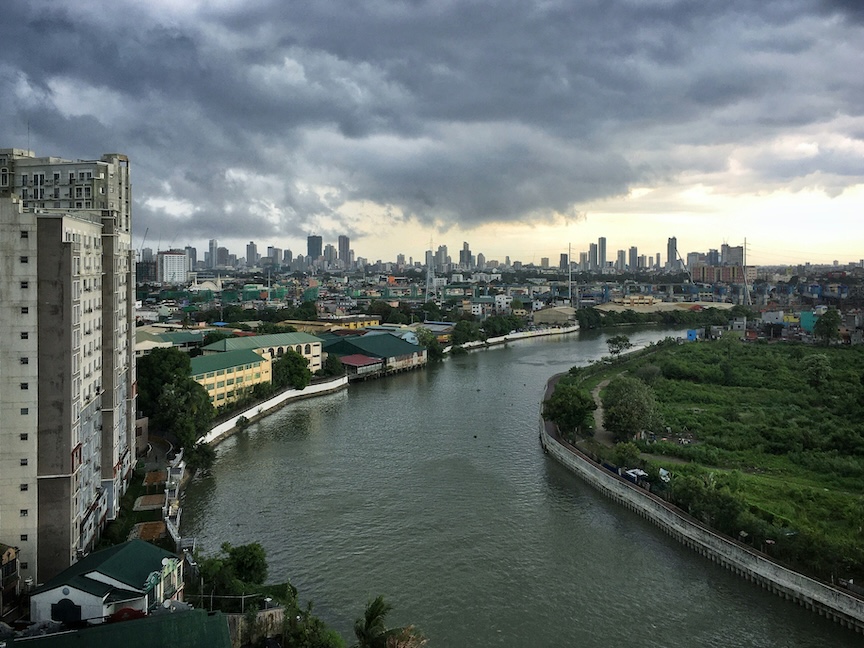
Photo by Kristine Wook on Unsplash (Manila Skyline)
According to the brief, respiratory disease is already among the country’s leading causes of death and disability, while constant exposure to smoke-belching vehicles increases pulmonary health risks.
Meanwhile, water pollution continues to trigger gastrointestinal disease outbreaks, especially in communities lacking reliable sanitation systems. In July 2023, contaminated drinking water in Rapu-Rapu, Albay reportedly caused three deaths and 57 gastrointestinal infections.

Photo by Josephus Bajo on Unsplash (Malabuyoc, Cebu, Philippines)
Climate stress is intensifying the problem.
During the April 2024 heat wave, several Philippine areas—including Metro Manila, Tuguegarao, Laoag, Iloilo City, and Zamboanga City—recorded heat index levels exceeding 42°C, triggering school suspensions and public-health concerns.
In many communities, extreme heat is no longer an occasional inconvenience. It is becoming part of daily life.
And yet the burden is uneven.
A family living in a walkable district with nearby parks, shaded streets, and accessible healthcare, experiences urban life differently from a family navigating flood-prone roads, unsafe sidewalks, long commutes, and overcrowded housing.
That difference quietly becomes a health gap.
What healthier cities actually look like
The healthiest cities are not necessarily the richest-looking ones. Often, they are simply the most thoughtfully designed.
According to the UP CIDS paper, wellness urban design prioritizes:
- walkable neighborhoods
- sufficient green and open spaces
- accessible public transportation
- mixed-use communities
- cleaner environments
- efficient health services
- community-centered governance
These ideas may sound technical, but their effects are deeply human.
A shaded, walkable street encourages movement and reduces heat exposure. Reliable public transport reduces stress and commuting fatigue. Parks and open spaces create opportunities for physical activity, social connection, and emotional recovery.
Research cited in the policy brief also points to the mental-health value of green spaces.
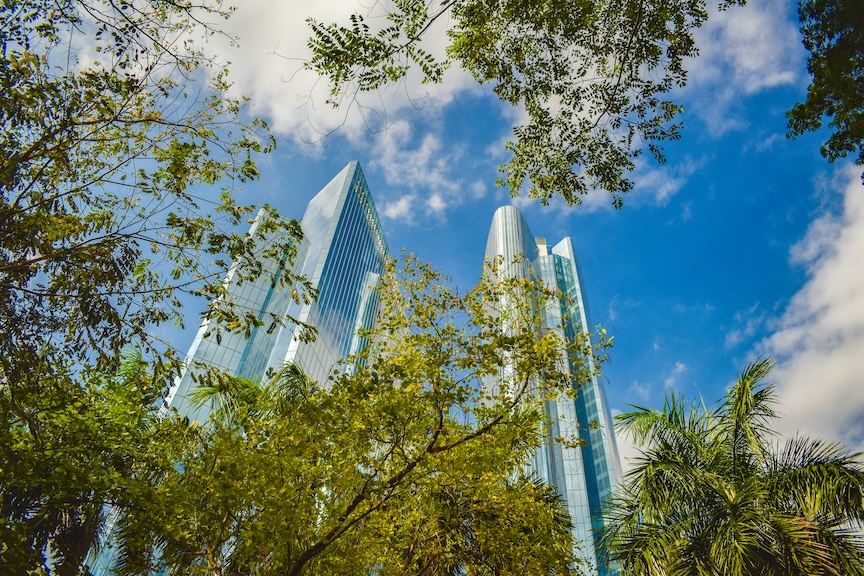
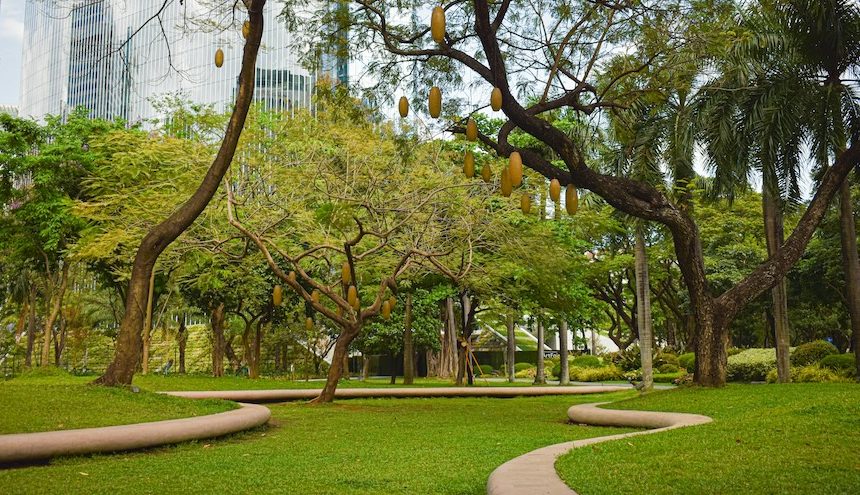
Photo by Sian Labay on Unsplash (Ayala Triangle Walkways, Makati, Metro Manila, Philippines)
The greening of streets and open areas may help reduce air pollution while lowering stress and encouraging relaxation. Likewise, public spaces that allow social interaction and community engagement positively affect well-being.
Meanwhile, walkable neighborhoods help reduce chronic disease risk by making everyday movement easier and more natural.
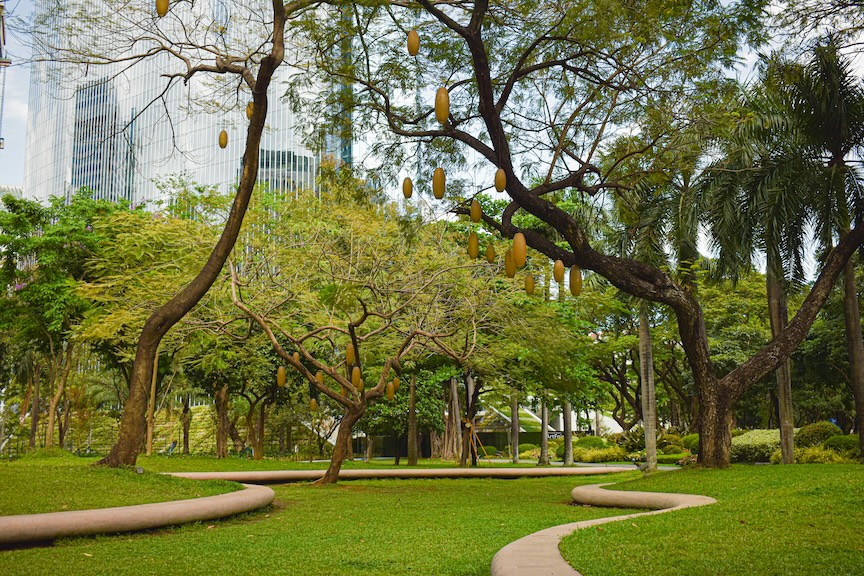
Photo by Sian Labay on Unsplash (Ayala Triangle Walkways, Makati, Metro Manila, Philippines)
This is one reason urban wellness is increasingly being discussed not only by architects, but also by public-health experts.
The hidden inequality inside “healthy living”
The challenge, however, is that wellness is often easiest to access for people who already have resources.
A person living near parks, bike lanes, healthy food options, and private clinics can follow “healthy lifestyle” advice more easily than someone living beside polluted roads with limited public transport and no nearby green space.
The UP CIDS brief subtly points to this inequality by emphasizing underserved and geographically isolated communities, as well as the need for health centers reachable within 30 minutes.
That recommendation matters.
According to the report, despite the Local Government Code mandating local governments to promote the welfare of constituents, Philippine laws still lack clear requirements translating broad health goals into neighborhood-level urban wellness strategies.
The result is unevenness.
Some districts gain walkable developments, bike infrastructure, mixed-use planning, and cleaner environments. Others remain trapped in flood-prone, congested, and poorly ventilated spaces where daily survival consumes most energy.
In other words, wellness is not distributed equally across the map.
Why women may notice these gaps first
Interestingly, the Metro-Legazpi study within the policy paper found that women tended to place greater importance on governance and policy in promoting healthy urban environments.
Researchers observed a weak positive correlation between gender and support for governance-related wellness strategies.
This finding quietly makes sense.
Women are often the ones managing children’s school routes, caregiving responsibilities, market trips, household health concerns, and elder care. Unsafe sidewalks, inaccessible clinics, flood-prone roads, and long commuting times affect them directly and repeatedly.
Meanwhile, older and more educated respondents also showed stronger support for wellness urban design, suggesting that experience and awareness may deepen appreciation for healthier environments.
The study’s respondents repeatedly used words such as city, health, infrastructure, proper, and provide when discussing wellness design.
These are not decorative concerns. They are survival concerns.
The city itself can either heal or exhaust people
One of the strongest ideas in wellness urban design is that infrastructure itself affects emotional and physical health.
Noise pollution disrupts sleep and contributes to stress. Flooding increases disease exposure. Lack of shade worsens heat risk. Poor transport systems reduce time for rest and family life.
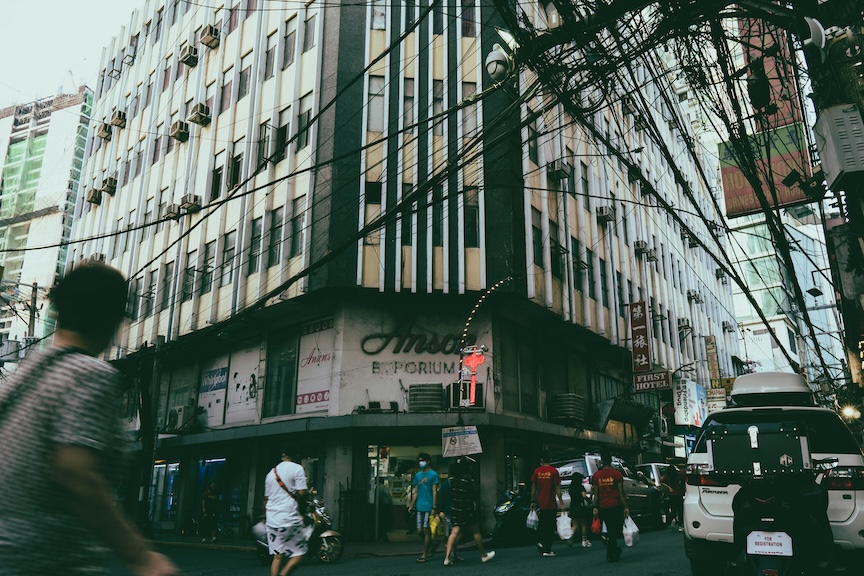
Photo by Gabriel Banzon on Unsplash (Binondo, Manila, Metro Manila, Philippines)
Meanwhile, inaccessible healthcare facilities delay treatment.
The UP CIDS paper argues that health centers should ideally be reachable within 30 minutes of communities they serve, adjusted for congestion and geographic isolation.
This recommendation feels especially urgent in a country where many people already postpone medical care because of transport costs, travel time, or overcrowding.
Likewise, the report highlights the need to modernize health infrastructure itself through:
- telemedicine capability
- solar backup power
- universal accessibility
- stronger ICT systems
- improved acoustic and visual privacy
These details may seem administrative, yet they shape whether care feels humane and reachable.
A greener future is also a health strategy
One of the clearest findings in wellness urban design research is that greener cities are healthier cities.
READ: Can Nature Reset the Filipino Mind?
The policy paper recommends:
- preserving and expanding green spaces
- investing in urban greening
- reducing urban sprawl
- promoting mixed-use development
- prioritizing active transport
These interventions are increasingly viewed as preventive medicine.
Green spaces can help reduce heat-island effects, improve air quality, support mental health, and encourage physical activity.
At the same time, they create something less measurable but equally important: moments of relief.

Photo by hiding ninja on Unsplash (Intramuros, City Of Manila, Metro Manila, Philippines)
In dense urban environments, relief itself becomes a health resource.
Are we building cities people can actually live in?
The Philippines already has national goals for health promotion, preventive care, and supportive environments under the Philippine Development Plan 2023–2028.
Nevertheless, the UP CIDS paper argues that there is still no clear national roadmap translating these ambitions into detailed, neighborhood-level urban wellness design.
That gap matters because health is experienced locally.
A family does not live inside a policy document. They live beside roads, sidewalks, drainage systems, transport terminals, clinics, schools, and public spaces.
Consequently, the future of Filipino health may depend not only on healthcare reform, but also on whether cities themselves become more humane.
The healthiest cities are already being designed around the world. They are investing in shade, mobility, green infrastructure, cleaner transport, accessible healthcare, and public spaces that support daily life instead of draining it.
The Philippines now faces a difficult but necessary question.
As healthier cities are being imagined and built, who gets included in that future—and who gets left navigating heat, pollution, congestion, and exhaustion alone?
Because in the end, urban wellness is not simply about architecture or aesthetics.
It is about whether ordinary people can still build healthy lives inside the cities they call home.
References
- Baria, R. (2025). Urban Design Wellness: Crafting Place-Based Policy for Health and Wellness in Communities. UP Center for Integrative and Development Studies (UP CIDS) Policy Brief 2025-34, University of the Philippines.
- World Health Organization (WHO). Healthy Cities and Urban Health. WHO. Available at: World Health Organization – Healthy Cities
- World Health Organization (WHO). (2024). Malnutrition Fact Sheet. Available at: WHO Malnutrition Fact Sheet
- World Health Organization (WHO). (2025). Tuberculosis Fact Sheet. Available at: WHO Tuberculosis Fact Sheet
- Cruz, R. (2024). Reports on Philippine heat index levels and school suspensions during April 2024 heat waves.
- Calipay, M. (2023). Reports on contaminated water outbreak in Rapu-Rapu, Albay.
- Morand, S., & Lajaunie, C. (2021). Outbreaks of vector-borne and zoonotic diseases linked to deforestation and reforestation.
- HKS Architects. (2023). Urban Wellness and Healthy City Design Research.
- Benzar, J. (2024). Research cited in UP CIDS policy brief on the mental-health benefits of green spaces and nature-based solutions.
- Philippine Development Plan 2023–2028. National Economic and Development Authority (NEDA). Available at: Philippine Development Plan 2023–2028
- Republic Act No. 7160. The Local Government Code of 1991. Republic of the Philippines.
- Republic Act No. 7279. Urban Development and Housing Act of 1992. Republic of the Philippines.
- Republic Act No. 6541. National Building Code of the Philippines. Republic of the Philippines.