

Why the NDRRMC Mobile Alert Can Trigger Anxiety and How to Help Your Nervous System Settle
In the Philippines, the arrival of the rainy season brings with it a very particular digital phenomenon.
Without warning, millions of smartphones can erupt into a piercing, metallic, dual-tone alarm.
It is the NDRRMC Emergency Alert System, designed to warn people about approaching hazards, from typhoons and severe flooding to earthquakes and other emergencies. Under the country’s Free Mobile Disaster Alerts Act, telecommunications providers are required to send disaster alerts to people in affected areas. The NDRRMC’s current disaster-response plan also provides for emergency alert and warning messages through mobile networks.
The purpose is serious: get people’s attention when attention matters.
And it certainly does.
The sudden sound has also acquired a life of its own online. Across TikTok, Facebook and other social platforms, Filipinos have turned their collective reaction into memes and jokes about the heart-stopping jolt, the instant agitation and the strange feeling of remaining on edge even after the message has been read.
The humour is understandable. So is the reaction.
When an unexpected, highly attention-grabbing sound cuts through whatever we are doing, the body can respond before the thinking brain has had time to catch up. Heart rate may rise. Muscles can tense. Breathing can change. For some people, especially those already feeling stressed or overwhelmed, that sudden jolt can feel surprisingly intense.
Understanding why that happens can make the experience a little less mysterious and give us a few simple ways to help the body settle afterward.
Why That Sound Gets Under Your Skin
There is a scientific reason many alarms sound unpleasant.
Researchers use the term auditory roughness to describe sounds with rapid amplitude fluctuations that create a harsh, rough or grating perceptual quality. This quality occurs in some natural danger signals, including screams, and is also deliberately used in many artificial alarms because it can attract attention and communicate urgency.
In one neuroimaging study, researchers found that unpleasant, rough sounds including artificial alarms, produced greater responses in the amygdala, a brain region involved in processing threat and danger. The researchers suggested that auditory roughness may help warning sounds capture attention and prompt rapid defensive responses.
That does not mean the NDRRMC sound has been scientifically proven to be designed specifically to “hijack” the amygdala. Nor does the sound simply bypass the brain’s auditory processing system.
What it does mean is more interesting.
Some characteristics of alarming sounds appear to be particularly effective at grabbing our attention and signalling that something may require an immediate response.
The body can react before we have consciously processed the message.
That familiar moment of What was that? can therefore arrive with a physical jolt: shoulders tightening, jaw clenching, heart pounding or stomach dropping.
And if the message itself announces a typhoon, earthquake or flood, the information that follows can reinforce the sense of danger.
The alarm has done its job.
Now the body needs a chance to realise that it has received the warning.
READ: How Stressful News and Public Chaos Affect Mental Health
When the Alarm Has Stopped—but Your Body Hasn’t
This is where the experience can become frustrating.
You have read the message. You understand what it says. And you may even know that you are currently safe.
Yet your body still feels as though it is waiting for something.
That is because the nervous system does not always shift from alertness to calm at the exact same moment that the conscious mind does.
The goal, then, is not to fight the reaction or tell yourself that you “shouldn’t” be anxious.
It is to give your body a few clear signals that it can begin settling.
A Three-Step Reset After the Alarm
1. Release the physical tension
Let your shoulders drop.
Unclench your jaw. Soften your hands. Place both feet comfortably on the floor.
Take a moment to notice where your body is holding tension and deliberately let a little of it go.
Shifting attention to the body can help interrupt the automatic cycle of tension and bring awareness back to the present moment.
2. Slow the breath
Try a simple pattern:
Inhale gently for two counts.
Exhale slowly for four.
There is no need to force a very deep breath. Keep the breathing comfortable and let the exhalation be longer and slower than the inhalation.
Research on voluntary slow breathing has found effects on autonomic regulation, including increases in vagally mediated heart-rate variability during and after slow-breathing practice. Systematic reviews have also associated slow breathing with reduced physiological arousal and feelings of anxiety in some settings.
The point is not to “flush out adrenaline” instantly.
It is simply to give your body a slower rhythm to follow.
3. Come back to the room
Look around you.
Name three ordinary things you can see.
Touch something with a distinct texture—the edge of your desk, the fabric of your clothing, the surface of a table.
Notice one sound that is happening right now.
This kind of sensory grounding shifts attention toward the immediate environment and the present moment. Grounding approaches are commonly used to help people orient themselves to what is happening around them during periods of distress or heightened arousal.
There is something reassuring about the simplicity of it.
The alarm said: Pay attention.
Your senses can answer: I am here. I am listening. I know where I am.
Don’t Silence the Warning—Settle the Response
It is understandable to want to turn off a sound that makes your heart leap.
But emergency alerts exist for a reason. Philippine law requires mobile disaster alerts precisely so people in affected areas can receive timely warnings about impending hazards.
Read the message. Check the location and instructions. Take the appropriate safety action.
And once you know what you need to do, give your body a moment to come back down.
Shoulders lower.
Jaw softens.
Breath slows.
Feet return to the floor.
Look around.
The rain may still be falling outside. The storm may still be approaching. The warning may still matter enormously.
But you can meet the information with a little more steadiness.
Because an alarm is designed to wake us up to danger.
It does not have to keep our bodies there.
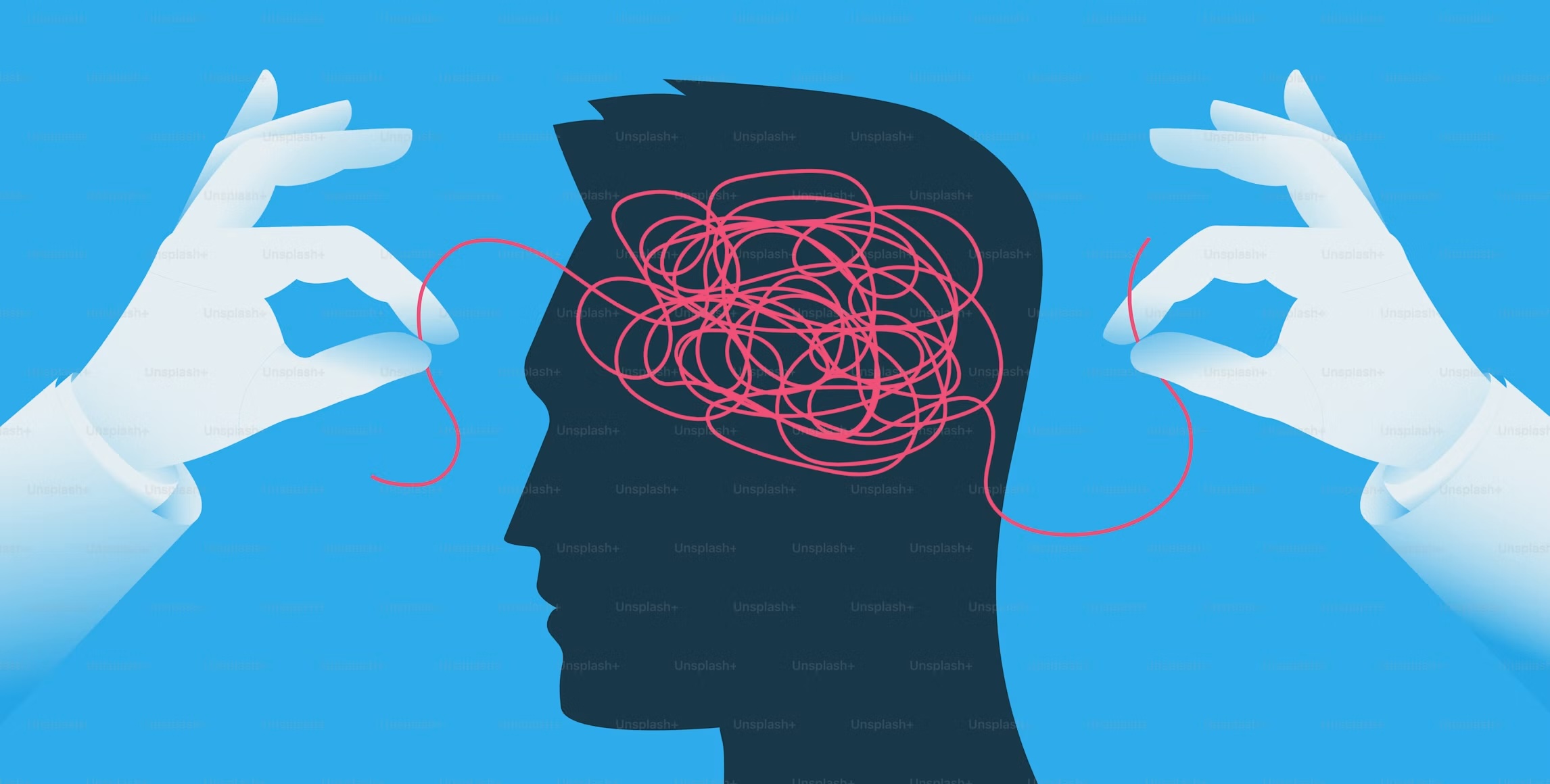
*Photo from Getty Images for Unsplash+
References
Republic Act No. 10639 — The Free Mobile Disaster Alerts Act. Republic of the Philippines. June 20, 2014.
National Disaster Response Plan 2024. National Disaster Risk Reduction and Management Council. The plan describes NDRRMC emergency alert and warning procedures and their implementation under RA 10639.
Arnal LH, Flinker A, Kleinschmidt A, Giraud AL, Poeppel D. Human Screams Occupy a Privileged Niche in the Communication Soundscape.Current Biology. 2015;25(15):2051–2056.
Auditory roughness elicits defense reactions.Scientific Reports. 2021. The study examines roughness as an auditory feature associated with danger and defensive responses.
Zaccaro A, Piarulli A, Laurino M, et al. How Breath-Control Can Change Your Life: A Systematic Review on Psycho-Physiological Correlates of Slow Breathing.Frontiers in Human Neuroscience. 2018;12:353. doi:10.3389/fnhum.2018.00353.
Laborde S, Allen MS, Borges U, et al. Effects of voluntary slow breathing on heart rate and heart rate variability: A systematic review and a meta-analysis.Neuroscience & Biobehavioral Reviews. 2022;138:104711. doi:10.1016/j.neubiorev.2022.104711.
U.S. Department of Veterans Affairs, National Center for PTSD. Grounding and present-moment orientation strategies.