
Movement Is Medicine Series: Why Staying Mobile May Be One of the Best Things You Can Do as You Age
For older adults, mobility goes beyond exercise. It is about keeping the freedom to live an ordinary life.
There is this particular independence we rarely think about until we begin to lose it.
Getting out of a chair without pushing against the armrest. Walking to the kitchen. Climbing a flight of stairs. Getting in and out of a car. Bending down to pick something up. Turning around without losing your balance. Carrying a bag of groceries home.
These movements look ordinary because, for much of our lives, our bodies perform them without asking permission.
Then, gradually, they can become harder.
A knee hurts. The legs feel weaker. Balance becomes less certain. A long walk feels tiring. After a fall—or even a near fall—we become more cautious. We move less because we are afraid of falling, and moving less can make us weaker.
That cycle is worth interrupting.
Mobility is being able to exercise as it is about preserving the physical capacity to participate in everyday life.
And the good news is that the body can continue to respond to movement well into older age.
Mobility Is More Than Walking
When we talk about keeping older adults active, walking often gets all the attention. Walking is excellent, but mobility requires more than putting one foot in front of the other.
The WHO recommends that adults aged 65 and older generally aim for 150–300 minutes of moderate-intensity aerobic physical activity per week, or an equivalent combination of moderate and vigorous activity, together with muscle-strengthening activities and regular balance-focused activity for those with poor mobility.
That combination makes sense when we think about what daily life actually asks of the body.
We need strength to stand up and carry things.
We need balance to remain steady when we turn, step over an obstacle or walk on an uneven surface.
We need coordination to adjust when something unexpected happens.
We need flexibility and range of motion to reach, bend and rotate.
And we need enough cardiovascular fitness to walk through a shopping mall, climb stairs or keep up with the people we love.
Mobility, therefore, is about maintaining a useful body than just achieving a particular fitness level.
READ: Movement Is Medicine: The Quiet Prescription We’ve Always Had
Start With Everyday Movement
So, do you need to begin with a gym membership? No.
Start with the movements that matter most in your own day.
Practice standing up and sitting down from a sturdy chair. Walk regularly, even if you begin with short distances. Take the stairs when they are safe and manageable. Carry light groceries. Tend to plants. Do household chores. Move your arms through their comfortable range of motion.
The WHO’s message is reassuring: some physical activity is better than none, and people who are inactive should start with small amounts and gradually increase the duration, frequency and intensity according to their abilities and circumstances.
For someone who has been sedentary, ten comfortable minutes today may be more useful than an ambitious workout that leaves them exhausted or discouraged.
Consistency is significant than bravado.
Strength Training Helps Preserve Independence
One of the most important changes that accompanies aging is the gradual loss of muscle mass and strength. That can affect much more than athletic ability.
Leg strength helps us rise from a chair.
Hip and trunk strength help us remain stable.
Upper-body strength helps us carry objects and perform household tasks.
Strength training is often associated with lifting heavy weights. However, depending on a person’s ability, it can involve resistance bands, light weights, controlled body-weight exercises or appropriately modified movements.
For an older adult with significant weakness, pain, osteoporosis, neurological conditions, heart disease or a history of falls, it is sensible to ask a physician, physiotherapist or qualified exercise professional for guidance before starting a new program.
The goal is to help the body do more of what everyday life asks of it.
Balance Exercises Can Help Prevent Falls
Balance can feel like something we either have or don’t have.
It can be complicated, though.
Balance depends on the brain, muscles, joints, vision and inner ear working together to keep the body oriented in space. Balance is a skill we can practice. Appropriate balance training can improve functional balance and, as part of a broader exercise program, help reduce the risk of falls.
Simple exercises can include repeatedly standing from a chair, walking heel-to-toe along a clear path, shifting weight from one foot to another or practicing controlled movements under appropriate supervision.
But balance exercises deserve one important rule:
Do NOT practice challenging balance exercises beside a table edge, on a slippery floor or somewhere a fall could cause serious injury.
Use a sturdy support when appropriate, have another person nearby when necessary, and progress gradually.
Being brave is not the same as being safe.
Movement Singapore: What Can Older Adults Learn From Parkour?
This is where an unusual idea from Singapore becomes fascinating.
Movement Singapore, founded by parkour coach Tan Shie Boon, teaches adults roughly 50 to 70 years old parkour-inspired movement skills. It describes its program as focusing on agility, movement skills and fall safety.
It sounds counterintuitive.
Parkour is usually associated with young people jumping over walls and vaulting across obstacles. Yet Movement Singapore has adapted elements of the discipline for older adults, using movement challenges to help participants develop physical confidence and responsiveness. The program’s current materials specifically emphasize agility and fall safety.
This does not mean seniors should start jumping over walls.
It is an illustration of something interesting: older adults do not necessarily need to stop challenging their bodies; they need appropriate challenges designed for their abilities.
And learning how to respond when balance is disrupted may be just as valuable as learning how to remain perfectly still.
The idea is worth watching—and perhaps worth exploring in a future Joyful Wellness feature.
How Families Can Help Older Adults Stay Mobile
You might be asking if mobility should become another task we assign to our parents or grandparents?
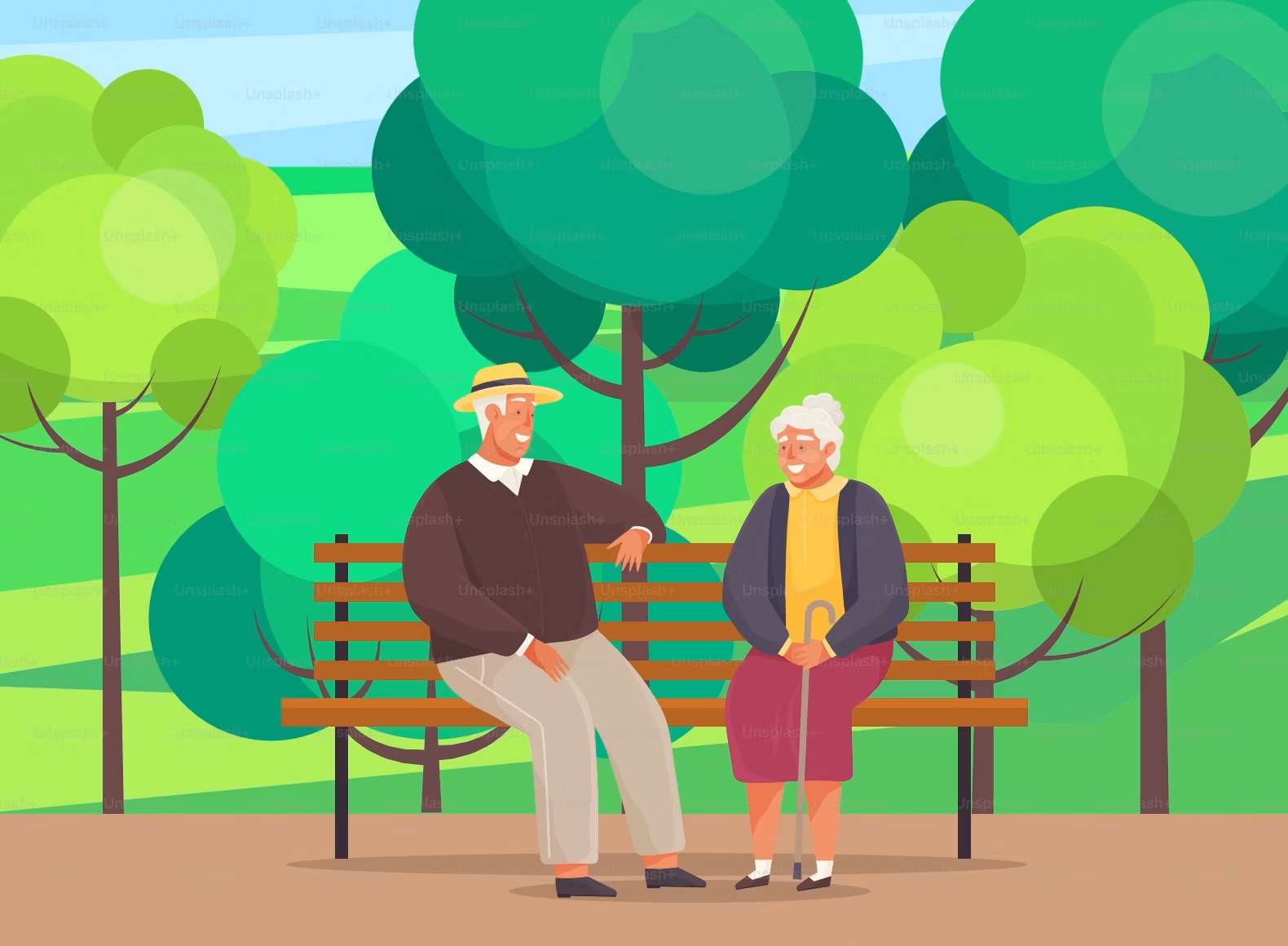
No. It works better when movement becomes part of ordinary family life.
Invite them for a walk instead of simply asking whether they exercised. Take them to a park. Encourage them to participate in cooking or gardening. Let them carry something appropriate rather than automatically doing everything for them. Give them opportunities to move safely and independently.
And pay attention to changes.
If an older person who normally walks comfortably suddenly becomes unsteady, starts avoiding stairs, has repeated falls, develops new weakness or experiences persistent pain, please let’s all be patient and avoid simply attributing it to “getting old.”
Those changes deserve attention from a healthcare professional.
Sometimes the most helpful intervention is finding out why movement has become difficult in the first place.
EXPLORE: Top 4 Ways to Unlock Longevity: The Age of Regeneration is at Hand
The Goal Is Independence, Not Youth
What is liberating about changing the goal?
People do not need 70-year-old bodies to behave like 30-year-old bodies.
We need them to remain capable.
Capable of getting up.
Capable of walking.
Yes, able to reach, carry, and recover from a misstep.
Capable of going somewhere simply because we want to.
That is what mobility gives us: not youth, but agency.
Don’t you agree that is one of the most meaningful forms of longevity?
Adding years to life, but keeping enough strength, balance and confidence to continue living those years on our own feet.
A Simple Start This Week
For an older adult who is generally well enough for light activity, begin gently:
- Walk for 5–10 minutes, then gradually build duration.
- Practice sitting down and standing up from a sturdy chair several times, using support if needed.
- Add simple strength work two days a week, progressing gradually.
- Practice balance safely, preferably with a stable support nearby.
- Break up long periods of sitting with brief movement.
- Choose activities that are enjoyable enough to repeat.
And if someone has significant mobility limitations, recurrent falls, unexplained weakness, chest pain, severe breathlessness, dizziness or a new medical problem, get professional guidance before increasing activity.
You will be surprised to discover that the most sustainable exercise is the one that helps a person keep doing the things that make life feel like theirs.
*Photo by Getty Images for Unsplash+
Editorial Note
Joyful Wellness provides general, science-informed health information to help readers make informed decisions about their well-being. Our content is intended for educational purposes and does not replace professional medical advice. For personal health concerns or symptoms, readers are encouraged to consult a licensed healthcare professional.
References
- World Health Organization. Physical Activity.
- World Health Organization. Being Active in Later Adulthood.
- Centers for Disease Control and Prevention. A CDC Compendium of Effective Fall Interventions: What Works for Community-Dwelling Older Adults.
- Movement Singapore. Movement Singapore: Parkour for Ages 50–70.