

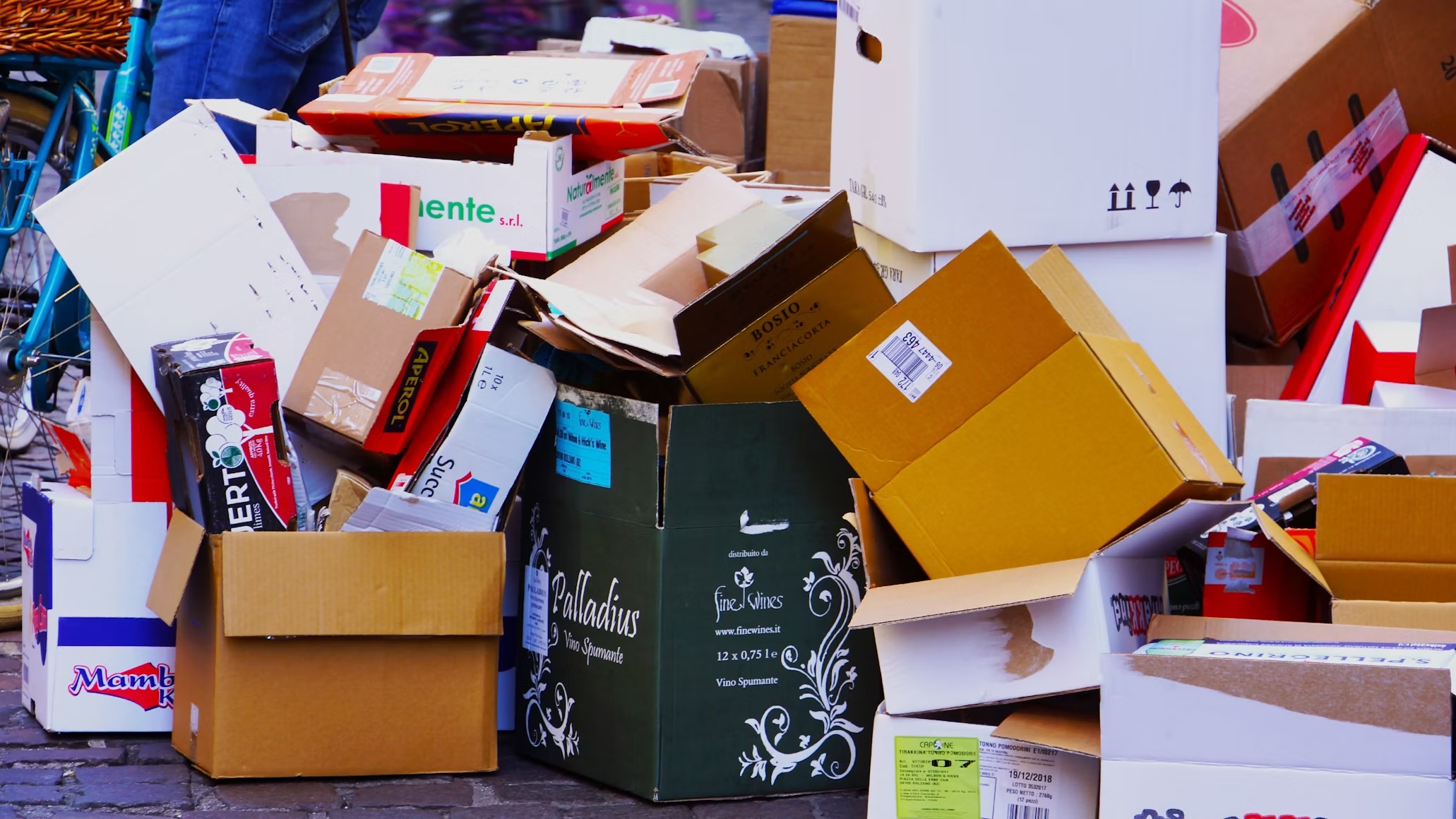
The moment September rolls into the calendar, the air in the country changes. Malls are brighter, homes glisten, and Christmas songs start to hum in the wind. In the back of every Filipino’s mind, a countdown quietly kicks in; the “Ber” months finally begin. September to December mark the start of the longest Christmas season in the world, and with it, the longest shopping season too.
Before that season fully starts, there’s a window worth using differently. Instead of asking what you’re going to bring into your home this Christmas, the Ber months are a good time to ask what’s already there that doesn’t need to stay. A “Zero-Waste Ber Cleanse”: a decluttering pass through your space, done with waste reduction in mind, before the festive shopping rush adds new things to sort through later.
Why Are the Holidays the “Trash Season”?
It helps to know what you’re actually getting ahead of.
The Philippines generates a significant amount of solid waste every day. Recent government reporting puts national waste generation at roughly 61,000 to 65,000 tons daily, with about 0.7 kilograms generated per person per day based on conservative estimates. Metro Manila alone generated an estimated 4.34 million tons of solid waste in 2025, or close to 12,000 tons a day.
The holidays add another layer. Gift packaging, decorations, shopping bags, disposable items, and food waste all become part of the seasonal increase in what households need to throw away. The Department of Environment and Natural Resources has specifically urged Filipinos to reduce waste during the holidays by reusing decorations and gift materials, choosing reusable items, and avoiding unnecessary food waste.
None of this is really anyone’s fault in isolation. Gift-giving, family feasts, and festive decorating are deeply woven into how Filipinos celebrate the season, and no one is going to cancel Noche Buena for the sake of a smaller trash bag. But it does mean the season adds volume to a home that, for many households, was already fairly full to begin with. Clearing some of that out beforehand, rather than trying to find room for new gifts and décor on top of everything already sitting in a closet, is simply the more sustainable order of operations.
DISCOVER: How Cleaning Supports Mental Health: The Science Behind One of Wellness’ Simplest Habits
The Case for Decluttering First
There’s a good reason to do this for your own sake, not just for the environment.
A well-known study from UCLA’s Center on Everyday Lives of Families spent years documenting the homes and daily lives of 32 dual-income Los Angeles families. Researchers examined the relationship between the families’ possessions, their perceptions of their homes, and measures of stress. They found a link between how mothers described their homes and their diurnal cortisol patterns, suggesting that a more stressful perception of the home environment was associated with a less healthy daily stress-hormone pattern.
Further research has found similar associations between how people experience their home environments and their psychological well-being. The important distinction is that clutter is not a simple medical cause of chronic stress, but the way we experience our surroundings can affect how stressful or restful home feels.
On the other hand, there’s a practical angle here too, especially at this time of year. A cluttered home doesn’t just feel stressful in the abstract. It makes the incoming wave of gifts, decorations, and holiday shopping bags genuinely harder to manage, with nowhere obvious to put anything and no clear sense of what you already own. Clearing space in September solves a problem in December before it even starts.
The Zero-Waste Way to Declutter: Where Things Should Actually Go
Decluttering sustainably means being a little more deliberate about where things end up than just bagging everything for the nearest bin. A simple sorting framework helps:
Resell what still has life in it.
Clothes, appliances, furniture, and toys in decent condition can go to community buy-and-sell groups, secondhand marketplace apps, or a simple garage sale, turning clutter into a bit of extra holiday budget in the process.
Donate what’s usable but not sellable.
Local charities, church donation drives, and community organizations may accept clothing, household items, and other useful goods, especially as the season approaches and donation drives ramp up. Check what organizations actually need before dropping things off; donating unwanted items that cannot be used simply shifts the waste problem somewhere else.
Upcycle what’s damaged but not useless.
Torn clothing, old jars, and worn-out furniture often have a second life with a bit of creativity, discussed in more detail below.
Recycle what’s genuinely recyclable.
Paper, cardboard, glass, and certain plastics can go to local junk shops, which play an important role in the country’s informal recycling network and often purchase sorted materials by weight. What can actually be accepted varies, so it’s worth checking with your local junk shop or materials recovery facility first.
If you use eco-bricks, follow a legitimate program.
Some Philippine schools, barangays, and environmental organizations have used properly prepared eco-bricks for specific community projects. But eco-bricking is not a universal solution for non-recyclable plastic. If you choose this route, follow the receiving organization’s requirements rather than creating eco-bricks simply as a way to store plastic that would otherwise be thrown away.
Dispose responsibly as a genuine last resort.
Whatever’s left over after all of the above should still be segregated according to your local government’s waste ordinance. Under the Ecological Solid Waste Management Act, proper segregation, collection, recovery and disposal are responsibilities shared by households, communities and local governments.
The goal is not to achieve a perfectly empty bin. It is to make sure fewer usable things end up as waste simply because sorting them felt like more effort than throwing them away.
Upcycling Ideas Worth Trying Before December
A few low-effort projects turn “stuff you were about to discard” into things you’ll actually use this Christmas:
- Old glass jars into candle holders or storage. A wash, a wrap of leftover twine or fabric scraps, and a tea light can turn a used jar into a holiday centerpiece. Make sure to use as heat-safe jar and watch the candle.
- Worn-out clothing into cleaning rags or reusable gift wrap. Fabric scraps can make excellent reusable furoshiki-style wrapping for gifts, an idea that also cuts down on the wrapping-paper waste the season is famous for. The DENR has similarly encouraged reusable gift wraps and other ways of reusing holiday materials.
- Cardboard boxes into gift boxes or organizers. A little paint or leftover wrapping paper turns a shipping box into a presentable gift container or a drawer organizer for the items you’re keeping.
- Cardboard and paper packaging into holiday décor. Shipping boxes, paper bags and other clean paper materials can become gift tags, ornaments, simple decorations or storage before finally entering the recycling stream.
READ: The September Spark: Deepening Our Roots for the Golden Season
Turn It Into a Ber Months Tradition, Not a One-Time Thing
The real value of a Zero-Waste Ber Cleanse comes from doing it every year, not just once. A household that declutters every September has less accumulated clutter to manage each year, and a clearer sense of what it already owns before buying anything new for the holidays. That, in turn, can mean fewer duplicate purchases, less impulse holiday shopping, and less of the “where do I even put this” scramble that shows up every December.
Treat it as the opening ritual of the Ber months, right alongside the first Christmas playlist and the first nativity set going up. One clears space, another fills it back in; hopefully a little more thoughtfully than the year before.
The Ber months do not have to begin with a shopping list. It can start with a decluttering of your own home, sorted with a bit of intention: resell what has value, donate what still works, upcycle what doesn’t and recycle the rest. It clears mental and physical space before the season’s usual wave of new things arrives, and it keeps a little more out of the landfill in a season that needs clearing up more than most.
*Photo by boris misevic on Unsplash
References
- Manila Bulletin — “Confronting the Christmas trash avalanche”
- Philippine Daily Inquirer — “Food waste: The not-so-jolly impact of holiday celebrations”
- Philippine Daily Inquirer — “Public urged to reduce holiday trash”
- National Solid Waste Management Commission (NSWMC), Environmental Management Bureau — “Celebrating Christmas, the Environment-friendly Way”
- Rappler — “Stats on holiday shopping in PH and why the ‘ber’ season matters to retailers”
- UCLA Center on Everyday Lives of Families (CELF) — “Life at Home in the Twenty-First Century: 32 Families Open Their Doors,” UCLA Newsroom coverage
- Cleveland Clinic / Blue Cross Blue Shield of Michigan — “The Science Behind Decluttering”