

A summer study in joy, connection, and the small movements that shape a life
Let us focus on this particular kind of question that resurfaces every summer, almost predictably, as if heat and light have a way of loosening the grip of routine: What, exactly, makes us happy? We mean the immediate, lived experience of being here, awake, present, aware of one’s own life as it unfolds. It is a question we tend to postpone in busier months, when days are structured and expectations are clearer. But summer, with its slight permission to soften, has a way of returning us to it.
For many, happiness has long been framed as something to be pursued indirectly through achievement, accumulation, or carefully planned milestones. We tell ourselves that once certain conditions are met, the feeling will follow. Yet decades of psychological research have suggested something more complicated, and perhaps more humbling: that happiness is not reliably produced by what we acquire, but by how we live, moment to moment, often in ways that are small, repetitive, and easily overlooked.
The Kind of Wealth That Lasts
One of the most cited longitudinal studies on the subject, the Harvard Study of Adult Development, which has followed participants for over 80 years, arrives at a conclusion that feels both unsurprising and quietly demanding: the quality of our relationships is the strongest predictor of long-term happiness and health. The words wealth, status, professional accomplishment, have nothing to do with it. Then what? Connection. And it is connection that is built slowly, through presence, attention, and shared time.
This may explain why some of the most vivid moments of happiness occur in ordinary ones. A meal that extends longer than expected. A conversation that moves, almost imperceptibly, from polite to honest. The feeling of being understood without having to explain too much. These are experiences that tend to linger.
READ AGAIN: Happiness Without an Audience
The Joy of Moving
There is, too, a physical dimension to happiness that is often underestimated. Movement, particularly the kind that is unstructured and unmeasured, has been consistently associated with improved mood and reduced anxiety. Research in The Lancet Psychiatry (2018) found that individuals who engaged in regular physical activity reported fewer days of poor mental health, with the benefits extending beyond formal exercise to include activities such as walking, gardening, and recreational movement. What matters, it seems, is consistency and perhaps even more importantly, enjoyment.
Summer lends itself naturally to this kind of movement. The kind that happens almost incidentally: walking a little farther than usual, lingering outdoors, choosing to move simply because it feels good to do so. These are the kind of habits that over time, shape the body and the mind in ways that are both measurable and deeply felt.
Let it Land
And then there is attention, the quiet, often neglected component of happiness. In an age where distraction is available and constant, the ability to be present has become less of a given and more of a practice. Studies on attentional control suggest that the mind tends to wander nearly half the time, often toward thoughts that are not particularly pleasant. Happiness, in this context, is less about eliminating difficulty and more about gently returning to what is in front of us, to what is happening now.
This is where summer becomes more than a season. It becomes an opportunity, however brief, to recalibrate. To notice the texture of daily life without rushing past it. To allow for pauses. And to rediscover the possibility that joy can just happen naturally without need for engineering or designing, it can be recognized.
It is worth noting that happiness, as defined in contemporary research, is not a constant state of pleasure or ease. It includes difficulty, uncertainty, even discomfort. What distinguishes those who report higher levels of wellbeing is the presence of meaning, connection, and the capacity to engage with life as it is, rather than the absence of challenge or having a life as it is expected to be.
BE HAPPY, BE HEALTHY: Science Links Happiness, Social Connection to Better Health
The Way We Live
There is a quiet freedom in this understanding. It removes the pressure to get everything right. It suggests that happiness is something we participate in, through the way we relate to others, the way we move through our days, the way we allow ourselves to experience what is already here.
Perhaps this is why the question persists. Because the answer shifts with context, with season, with attention. It asks for a kind of ongoing curiosity.
What actually makes us happy?
Should they be things we have been taught to prioritize?
Are they the milestones we have been waiting for?
It may be something quieter.
More immediate.
Closer than we think.
A conversation that stays with you.
A moment of movement that clears your mind.
An afternoon that unfolds without urgency.
Unremarkable, at first glance.
And yet, if we are paying attention, enough.
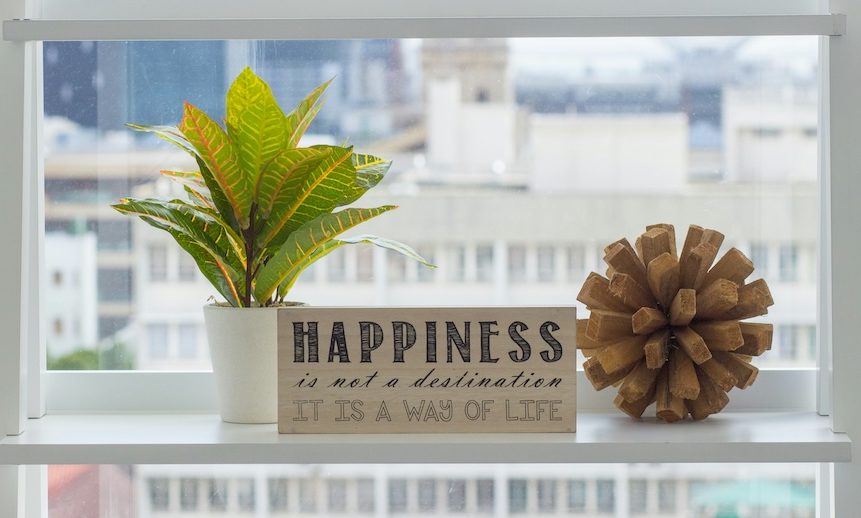
Photo by Spring Fed Images on Unsplash
References:
- Harvard Study of Adult Development — Relationships and Happiness
- The Lancet Psychiatry (2018) — Exercise and Mental Health
- Killingsworth, M.A. & Gilbert, D.T. (2010). Science — Wandering Mind Study
- World Health Organization — Mental Wellbeing