

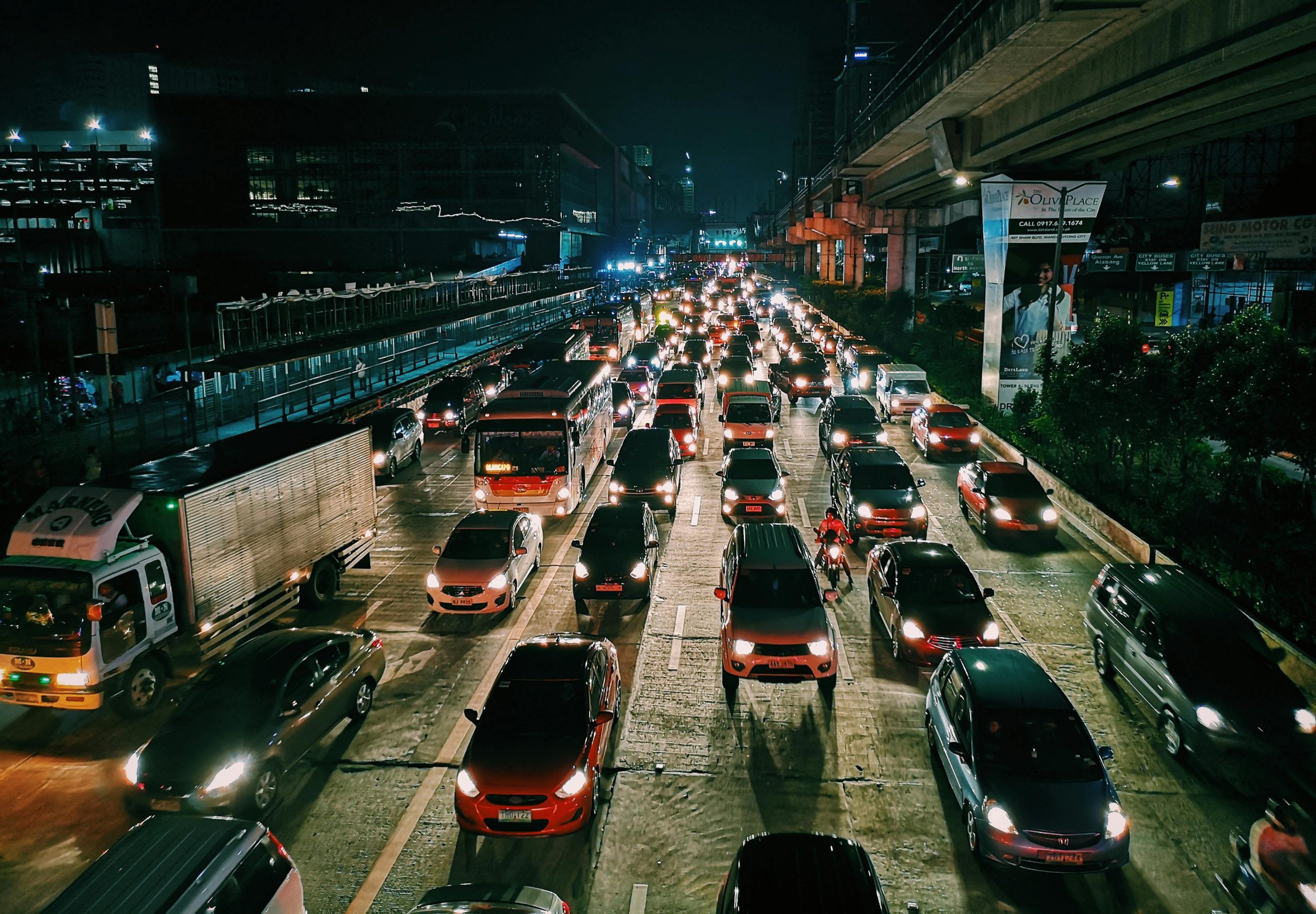
The Christmas lights go up earlier each year, and so do the brake lights. From simbang gabi dawn masses to late-night mall runs and reunions, the “ber” months supercharge Metro Manila traffic, and with it, the air people breathe.
According to the Department of Health (DOH), seasonal gridlock mixing with New Year fireworks smoke raises respiratory risks, especially for children and older adults. Based on DOH holiday surveillance, bronchial asthma cases at eight sentinel hospitals climbed from six on December 22, 2024 to 80 by January 2, 2025; most patients were children aged 0–9, with clusters at the Philippine General Hospital and Tondo Medical Center.
Meanwhile, the environment bureau’s New Year’s Eve 2025 bulletin shows PM2.5 levels in the National Capital Region (NCR) still spiked well above health-based guidelines despite improvements from the previous year.
PLAN YOUR HOLIDAY SCHEDULE WELL WITH THIS TOOL
Moreover, road volume surged into December. According to the Metropolitan Manila Development Authority (MMDA), about 464,000 vehicles were already traversing EDSA daily by December 9, 2024, with volumes expected to peak at roughly 480,000 per day in mid-December.
On the other hand, to temper rush-hour choke points, mall operators again adjusted hours and delivery windows for the holidays.
Together, those patterns — more cars, slower trips, denser plumes — mean more fine particulate matter and traffic-related gases hanging low over neighborhoods just as families pack churches, malls, and roads.
DENR’s Environmental Management Bureau (EMB) reports fireworks and firecrackers on New Year’s Eve remain a recurring driver of short-burst pollution, reinforcing the holiday “one-two punch” with road emissions.
READ: Watchdogs Warn Filipinos on Toxic Christmas Lights, Toys
Why This Matters Even If Annual Averages Improved
On paper, Philippine air quality looked better in 2024 than several years ago.
According to DENR data released in August 2025, Metro Manila’s annual PM2.5 fell from 27 µg/Ncm in 2016 to 16.86 µg/Ncm in 2024, while the nationwide annual average dropped from 20 to 16 µg/Ncm over the same period, gains the agency attributes to cleaner fuels and tighter emission controls.
However, “better on average” does not mean “safe every day.”
The World Health Organization’s 2021 Air Quality Guidelines set far stricter health-protective limits — 5 µg/m³ (annual) and 15 µg/m³ (24-hour) for PM2.5, which many cities still exceed during episodic spikes. Based on IQAir’s 2024 World Air Quality Report, the Philippines averaged 14.82 µg/m³ PM2.5 last year, ranking 74th of 138 countries — about three times the WHO annual guideline.
Meanwhile, New Year’s Eve tells the story of dangerous short-term exposures.
According to the EMB’s 2025 bulletin, NCR PM2.5 from fireworks dropped 53% to 119 µg/Ncm on NYE 2025 from 253 µg/Ncm on NYE 2024, yet even the “improved” level was still cited as 240% above the Philippine 24-hour guideline used in the bulletin.
In short: holiday nights can push air far above health-based thresholds even as yearly averages trend down.
READ: DOH deploys suitcase labs, speeds up TB detection
What Pollution Does to Lungs (and Hearts)
The latest synthesis from the State of Global Air 2024 (by the Health Effects Institute, with UNICEF) finds air pollution is now the world’s second-leading risk factor for death, linked to 8.1 million deaths in 2021; it highlights PM2.5 and traffic-related nitrogen dioxide (NO₂) as key culprits and notes a specific pediatric burden tied to NO₂.
WHO materials likewise detail how PM2.5 aggravates asthma and bronchitis and raises risks of COPD exacerbations, heart attack, and stroke. Furthermore, the U.S. EPA’s health summaries explain that fine particles are small enough to reach deep into the lungs and, some fraction, enter the bloodstream, driving cardiorespiratory impacts.
Closer to home, local pediatric specialists have warned that childhood asthma remains common and sensitive to seasonal triggers; the DOH’s holiday surveillance underscores how cold nights, trapped pollution, rush-hour emissions, and fireworks can combine to precipitate attacks in kids.
According to DOH tallies reported January 2, 2025, bronchial asthma cases jumped during the Christmas-New Year period, with pediatric patients overrepresented.
The Traffic Link You Can’t See: Nitrogen Dioxide
If PM2.5 is the smoke you inhale, NO₂ is the tracer that shows where tailpipes are working overtime.
State of Global Air’s NO₂ brief explains that the pollutant is a major component of vehicle exhaust and a reliable proxy for traffic-related air pollution and health effects.
Meanwhile, satellite analyses visualized by NASA’s Earth Observatory show clear NO₂ hotspots along major urban thoroughfares, a pattern echoed worldwide.
Furthermore, regional remote-sensing work covering Metro Manila observes typical morning and late-afternoon NO₂ peaks consistent with rush-hour traffic. In short, route choice and timing—not just whether you step out—shape exposure.
Policy Moves — and Monitoring Gaps
DOH emphasizes that holiday readiness now routinely includes Code White alerts for hospitals — such as the Christmas 2024 to New Year 2025 period, to prepare for cardiac and respiratory surges. Nevertheless, air-quality governance faces blind spots:
EMB, meanwhile, operates a national network of monitors, yet the bureau and advocates acknowledge the need for denser, more granular, real-time coverage to reflect street-level realities and guide transport and health decisions.
Encouragingly, civil-society and research groups are building momentum: Clean Air Asia has piloted validated citizen-sensor networks in Manila, and the new Breathe Metro Manila coalition has rallied for metro-wide, real-time data aligned with WHO guidelines.
How to Protect Your Lungs During the Holidays
For Families and Commuters
- Check air quality and adjust. Use official bulletins or reputable platforms that publish real-time PM2.5; if levels are high—or the sky looks smoky—reschedule non-urgent trips or shift to cleaner indoor venues. (Context: WHO guidance on health risks and exposure.)
- Time and route your trips. WHO and EPA materials advise minimizing time on heavily trafficked roads and at major intersections; choose quieter side streets and travel off-peak when possible.
- Reduce exertion near traffic. If exercising outside, move workouts away from main roads or go earlier, when vehicle flows are lighter. (WHO/EPA guidance.)
- Mask smartly on smoky nights. According to U.S. public-health agencies, well-fitted N95/KN95 respirators filter fine particles far better than cloth or loose surgical masks; fit matters.
- In the car, use “recirculate.” Evidence from exposure studies shows recirculating cabin air can significantly cut particulate infiltration in heavy traffic.
- Improve indoor air. Randomized trials and reviews show HEPA air cleaners reduce indoor PM2.5 during smoke events and improve selected asthma outcomes, which is especially useful for children, older adults, and people with asthma/COPD.
- Have an asthma action plan and keep vaccines current. Clinician-guided action plans and up-to-date flu/pneumococcal shots lower risks of severe respiratory complications that pollution can exacerbate. (WHO/public-health guidance.)
For Communities and LGUs
- Enforce anti-smoke belching at holiday chokepoints. DENR says vehicles are the primary urban source of pollution; targeted enforcement near malls and terminals delivers immediate gains.
- Coordinate mall hours and logistics. MMDA’s holiday measures, later mall openings and night-time deliveries, help spread out peaks; scale these with local data.
- Expand monitoring and publish real-time dashboards. Citizen-validated networks and new coalitions are pushing for actionable, street-level information so residents can plan routes, and vulnerable groups can limit exposure.
Beyond Metro Manila: Key Cities are Not Immune
While NCR dominates headlines, holiday mobility spikes also hit Cebu, Davao, and regional capitals.
According to IQAir’s 2024 report, the Philippines’ annual PM2.5 average was 14.82 µg/m³ — nearly triple WHO’s annual guideline — underscoring the need for vigilance outside the capital too.
Meanwhile, Davao City’s traffic office acknowledged heavy Christmas congestion from last-minute shopping (even as the citywide firecracker ban remains in force), and Central Visayas’s EMB confirmed periods of haze in late 2024; local media also documented New Year 2025 fireworks in Cebu City.
Furthermore, the EMB’s 2025 bulletin and Manila Observatory analyses show holiday fireworks continue to drive unhealthy PM2.5 spikes at multiple urban sites.
What to Watch These “Ber” Months
- Traffic volumes. Expect EDSA and radial counts to climb from September, peaking in the two weeks before Christmas, raising near-road exposures, according to MMDA and mall-hours advisories.
- Weather inversions. Cooler nights and still air can trap pollutants; WHO explains how such conditions worsen short-term risks for vulnerable groups.
- Fireworks behavior. Despite campaigns and localized bans, neighborhood pyrotechnics remain common; EMB and the Manila Observatory typically record sharp December 31–January 1 PM2.5 spikes.
- DOH alerts. Expect holiday hospital advisories (Code White) and public reminders; last year’s asthma uptick highlights the need for pediatric precautions.
Holiday cheer need not come with wheezing and watery eyes. Traffic isn’t just a hassle; it’s a seasonal health hazard. Yes, annual averages may be improving; nevertheless, holiday spikes still slam vulnerable lungs.
The data are clear: kids bore the brunt of last year’s asthma surge, and road exhaust plus fireworks is a predictable one-two punch. Do the easy wins: choose cleaner routes, travel off-peak, windows up with A/C on recirculate, mask when the air looks smoky, and keep an asthma plan within reach.
And for cities: smooth the traffic, enforce anti–smoke belching, and publish real-time air data, so families can celebrate with lights and music, not nebulizers.
DISCLAIMER
This article provides general information and does not constitute medical advice. Consult your healthcare provider for personalized recommendations. If symptoms persist, consult your doctor.