

Everyday habits for healthy skin and graceful aging
Everywhere we turn, aging is presented as something to correct: the fine line to erase, the dark spot to lighten, the firmness to restore. Entire industries have been built around the promise of “turning back time.”
But aging itself is not a condition to cure.
The skin changes as we do. Collagen production gradually declines, elastic fibers become less resilient, and years of exposure to sunlight leave their mark. Ultraviolet (UV) radiation, in particular, can damage skin cells and connective tissue and contribute to wrinkles, pigmentation changes and the gradual loss of elasticity. The World Health Organization notes that UVA can penetrate deeper into the skin and contribute to premature aging and loss of elasticity.
None of this means we need to wage war against our own faces.
A gentler approach is possible: protect what can be protected, nourish the body, make room for recovery, and choose habits that can actually survive ordinary life.
START WITH THE SUN
If there is one habit with particularly strong evidence behind it, it is sun protection.
In the Philippines, sun exposure is not limited to vacations or afternoons at the beach. It happens while waiting for the jeepney, walking between buildings, buying lunch, working outdoors, or simply going about an ordinary day.
A landmark randomized trial involving 903 adults found that people assigned to use broad-spectrum sunscreen daily had 24% less measurable skin aging over 4.5 years than those who used sunscreen at their discretion. The study did not show that sunscreen could stop aging; rather, it demonstrated that consistent protection could slow one important, preventable contributor to visible skin aging.
The practical version is simple: use a broad-spectrum sunscreen with SPF 30 or higher on exposed skin. When swimming or sweating heavily, choose a water-resistant formula and follow the product’s directions for reapplication. Dermatologists and the WHO also recommend shade and protective clothing because sunscreen is only one layer of protection. A hat, umbrella, sunglasses or long sleeves may not feel like skincare products, but they are forms of skincare too.
And the small details matter. The ears, neck, hands and tops of the feet are easy to overlook. Sunscreen is also commonly under-applied, which means the protection written on the label may not be the protection actually received.
DISCOVER: Daily Skin Care: The Quiet Art of Self-love
FOOD THAT DOES THE BODY GOOD
The body needs adequate energy, protein, vitamins, minerals and fluids. Vitamin C, for example, plays a role in collagen synthesis and antioxidant defense, although nutrition research does not support the idea that one particular food can reverse skin aging.
This is where ordinary Filipino meals can be more useful than the latest beauty trend
The Pinggang Pinoy food guide developed by the DOST-Food and Nutrition Research Institute uses a familiar plate model to help Filipinos build balanced meals. Developed in collaboration with the World Health Organization, Department of Health and National Nutrition Council, it is not marketed as an anti-aging formula—and that is precisely the point.
Wellness does not always need to look sophisticated.
Grilled fish with vegetables and rice. Eggs with tomatoes. Monggo with leafy vegetables. Fruit after a meal. Water instead of another sugary drink. These choices may not promise glowing skin in seven days, but they contribute to the nutritional foundation on which the body maintains and repairs itself.
The same principle applies to supplements.
Collagen powders, capsules and drinks are increasingly marketed as shortcuts to firmer, younger-looking skin.
But the evidence is not as settled as advertisements may suggest. A 2025 systematic review and meta-analysis of 23 randomized controlled trials involving 1,474 participants found apparent benefits of collagen supplements when all studies were considered together. However, those benefits were not seen when researchers looked specifically at studies without pharmaceutical-industry funding or at higher-quality studies.
The authors concluded that there is currently insufficient high-quality clinical evidence to support collagen supplements for preventing or treating skin aging. That does not mean every supplement is useless. It means the promise should be kept in proportion to the evidence.
Before spending on a product promising to “reverse” aging, it may be worth asking a simpler question: Have the basics been taken care of first?
KEEP MOVING
Exercise is often discussed as though it has to be intense to count.
The World Health Organization recommends that adults get 150–300 minutes of moderate-intensity physical activity each week, or 75–150 minutes of vigorous activity, or an equivalent combination. Adults should also include muscle-strengthening activities involving the major muscle groups on at least two days a week.
But physical activity can come from walking, transportation, household chores, recreation and other parts of daily life—not only formal workouts.
That distinction matters in the Philippines.
The goal is not to punish the body into looking younger, but to keep the body capable of carrying us through the years ahead.
A walk around the neighborhood. Taking the stairs when practical. Gardening. Dancing. Doing household chores. Playing with the children. A workout when time allows.
Movement doesn’t have to be complicated to count.
And if we have been inactive, starting small is perfectly reasonable. A little movement is better than none, and activity can be built gradually.
MAKE ROOM FOR RECOVERY
There is another part of wellness that does not fit neatly into a bathroom shelf: recovery.
While sleep, rest and stress management are sometimes treated as luxuries, the body does not stop needing recovery simply because life is busy. Poor sleep can affect mood, energy and our ability to function well; ongoing stress can also make healthy routines harder to maintain.
This is why wellness advice should leave room for real lives.
Not everyone can sleep eight hours every night. Not everyone has access to a gym, an expensive skincare routine or a quiet place to exercise. Some people work night shifts. Others care for children or older relatives. Some have long commutes or limited budgets.
For one person, recovery might mean going to bed thirty minutes earlier; for another, it might mean sitting down for ten minutes instead of immediately moving on to the next task.
Neither is insignificant.
BEING GENTLE
A complicated routine is not necessarily a better one. Dermatologists caution against introducing multiple anti-aging products at once because irritation can make skin concerns more noticeable.
The same caution applies to “natural” remedies. Lemon juice, abrasive scrubs, concentrated essential oils and homemade mixtures can irritate the skin and worsen discoloration. Natural is not automatically synonymous with gentle or safe.
The skin does not need to be constantly corrected to deserve care.
And when a product promises extraordinary results, a little skepticism is healthy.
Perhaps that is the more useful way to think about aging.
At the end of the day, we cannot, nor do we need to, stop the clock. Fine lines will still appear, skin will still change, and our faces will continue to record the years we have lived.
The goal is not to arrive at another birthday looking as though time never happened.
It is to arrive with a body that has been cared for, a life that has been lived, and a relationship with aging that is a little less fearful.
Maybe slowing down the clock was never really about making time disappear.
Maybe it is about learning how to move through it with care.
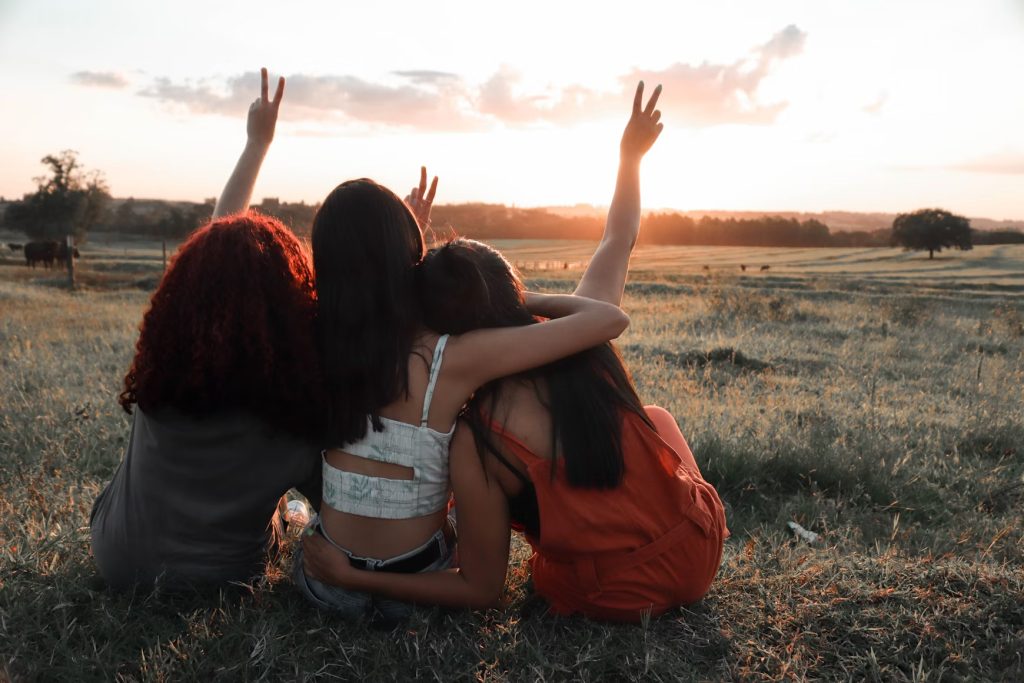
*Photo by Jabari Timothy on Unsplash
References
- World Health Organization. Radiation: The known health effects of ultraviolet radiation. WHO. 2024. WHO — Ultraviolet radiation and health effects
- Hughes MCB, Williams GM, Baker P, Green AC. Sunscreen and prevention of skin aging: a randomized trial. Annals of Internal Medicine. 2013;158(11):781–790. doi:10.7326/0003-4819-158-11-201306040-00002. PubMed — Sunscreen and prevention of skin aging
- World Health Organization. Radiation: Protecting against skin cancer. WHO. WHO — Protecting against skin cancer
- Food and Nutrition Research Institute, Department of Science and Technology. Pinggang Pinoy: Healthy Food Plate for Filipino Adults. FNRI-DOST. FNRI-DOST — Pinggang Pinoy
- Myung S-K, Park Y. Effects of collagen supplements on skin aging: a systematic review and meta-analysis of randomized controlled trials. The American Journal of Medicine. 2025;138(9):1264–1277. doi:10.1016/j.amjmed.2025.04.034. PubMed — Collagen supplements and skin aging
- World Health Organization. Physical activity. WHO. Updated 2025. WHO — Physical activity recommendations
- American Academy of Dermatology. How to maximize results from anti-aging skin care products. AAD. American Academy of Dermatology — Anti-aging skin care