
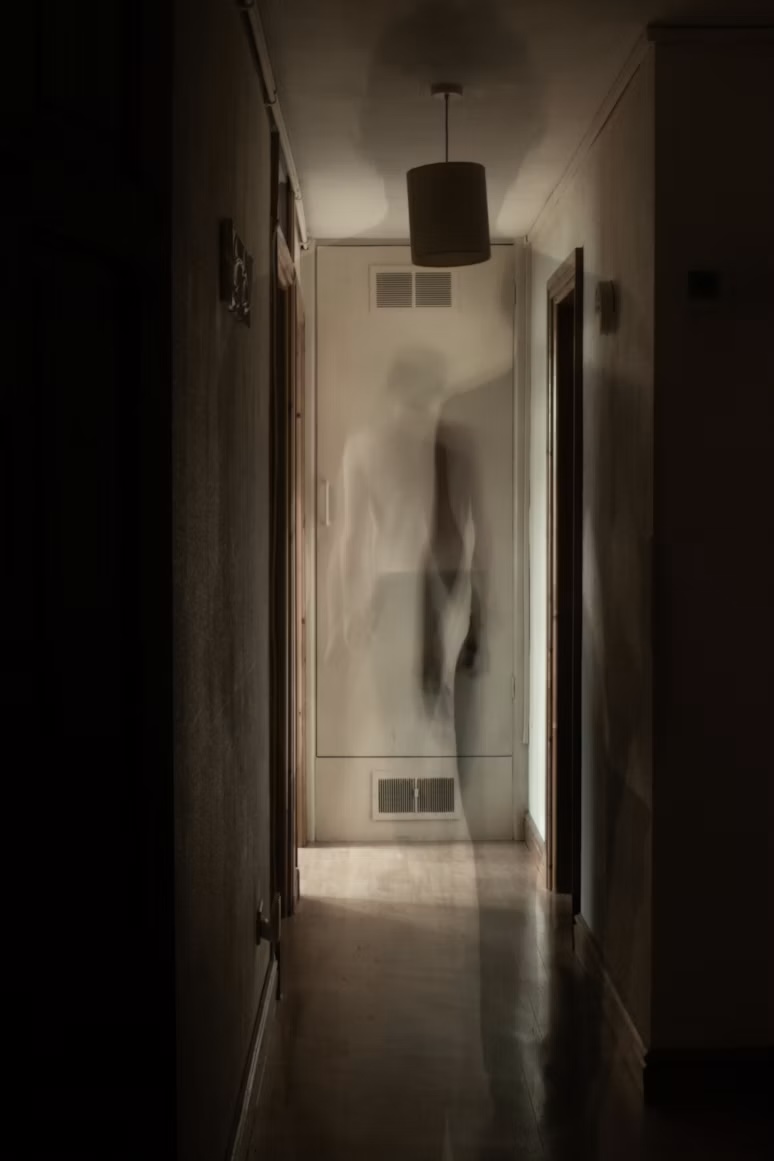
Some ghosts live in old houses. Others live in our memories, our phones, our unfinished business—and occasionally, in the corner of our bedroom at 2 a.m.
There are many ways to be haunted.
You could encounter a white lady on a deserted provincial road, hear unexplained footsteps in an empty house, or wake up convinced that someone is standing beside your bed.
Or you could check your phone and discover that someone who once promised never to leave has not replied to your message since March.
All equally unsettling, depending on whom you ask.
The Filipino imagination has never been short of ghosts. We have our white ladies, kapres, tiyanaks, manananggals, and mysterious dwende said to inhabit old trees, abandoned buildings, and the darker corners of the neighborhood. Their stories have travelled through generations, often accompanied by a familiar warning from someone older: Huwag kang dadaan diyan sa gabi.
But not all ghosts are supernatural. Some arrive through a notification that never comes. Others return as old photographs, unfinished conversations, or memories we thought we had finally put away.
Perhaps the most interesting thing about ghosts is not whether they exist. It is why we keep telling stories about them and finding new ways to recognize them in our everyday lives.
Because, in one way or another, most of us have been haunted by something.
The ghosts we grew up with
Every Filipino family seems to have at least one ghost story, usually told by an aunt, a grandparent, or someone who knows somebody who absolutely swears it happened.
There is the white lady along a lonely road, the kapre in an ancient tree, the tiyanak whose cries resemble those of a baby, and the manananggal, one of the most enduring figures in Philippine folklore.
These stories are more than entertainment. They are part of a rich cultural imagination shaped by indigenous beliefs, regional traditions, religion, and generations of oral storytelling. They reflect how communities understood unfamiliar places, danger, and the mysteries of the natural world.
A good ghost story also has a special social purpose: it brings people together. We huddle closer, exchange stories, and enjoy being frightened in the safety of familiar company.
Of course, curiosity is admirable, but common sense remains a useful survival skill. Perhaps we should leave the abandoned house exploration until daylight.
The ghoster: Seen, delivered, and never heard from again
If there is one ghost particularly suited to modern life, it is the ghoster.
You meet someone. You exchange messages. Conversations stretch past midnight. There are plans, promises, perhaps even declarations of affection. Then, without warning, the messages stop.
No explanation. No goodbye. Not even a polite excuse about being busy.
And just when you have decided to move on, a notification appears: they have viewed your story.
Welcome to digital haunting.
Ghosting—the sudden withdrawal from communication without explanation—can happen in dating, friendships, and even professional relationships. What makes it difficult is the uncertainty it leaves behind. The person on the receiving end may wonder what happened, what they did wrong, or whether they should reach out again.
Then there is orbiting: someone no longer speaks to you but continues watching your social media stories and occasionally liking your photographs. Not quite present, not entirely gone.
The healthiest response may be to stop interpreting every online appearance as a sign. Someone’s silence is not a measure of your worth. And if you are the one disappearing, remember that a little honesty is usually kinder than leaving someone wondering whether their phone has developed a personal grudge.
The ghosts of our past—and the people we miss
Some ghosts do not need a cemetery or a dark hallway. They live comfortably in our memories.
A song brings back an old relationship. A familiar street reminds us of another time. An old photograph reveals a younger version of ourselves who seemed so certain about the future.
Memory is not a perfect recording of the past. It is a dynamic process, and emotionally significant experiences can return to mind long after they have happened. Reflection can help us learn, but repeatedly replaying painful experiences without reaching new understanding can become rumination.
Sometimes, the kindest thing we can do for our former selves is remember that they were working with the knowledge and circumstances they had at the time. Not every mistake needs to become a life sentence.
And then there are the ghosts we wish were still here.
A familiar voice, a favorite recipe, the scent of someone’s perfume, or an empty chair at a family gathering can bring back a loved one who has passed away. For many people, grief includes a continuing sense of connection with the person they have lost.
This is not automatically a sign of a mental health problem. People find different ways to keep loved ones close: through photographs, prayers, family traditions, visits to graves, and stories shared across generations.
In Filipino families, remembrance often becomes communal. During Undas, relatives gather to light candles, offer flowers, pray, and recall the people who helped shape their lives.
Not all ghosts are frightening. Some are simply love looking for somewhere to go.
DISCOVER: Friendship Breakups and the Grief No One Names
The ghosts our brains sometimes create
Have you ever awakened in the middle of the night, unable to move, with the distinct feeling that someone is standing beside your bed?
One possible explanation is sleep paralysis.
During REM sleep, the stage associated with vivid dreaming, the brain temporarily limits most voluntary muscle movement. Occasionally, a person becomes conscious before this temporary paralysis has ended. They may be unable to move or speak and may experience frightening images, sounds, chest pressure, or a sensation that another presence is nearby.
It can feel intensely real.
Science also offers an explanation for why shadows sometimes look like figures and ordinary noises suddenly sound ominous. Our brains constantly interpret incomplete information and search for meaningful patterns. In darkness or when we are frightened, an ambiguous shape may look like a person, while a familiar sound may seem strangely threatening.
Researchers call another experience a felt presence: the sensation that someone is nearby despite no clear evidence of another person. It has been reported in different contexts, including sleep-related experiences.
These explanations do not account for every unusual experience, but they remind us that perception is not always a perfect reflection of what is happening around us.
So before calling a paranormal investigator, check whether you are sleep-deprived, whether the curtains are moving, and whether that suspicious figure is actually a coat.
READ: HPV Vaccines, Fear, and Cervical Cancer: The Girls in White Dresses
The ghosts of unfinished business
Some ghosts are not people at all. They are the things we keep postponing.
The apology never made. The difficult conversation avoided. The dream abandoned. The decision we keep putting off because we are afraid of what might happen next.
Sometimes, the best way to quiet these ghosts is to do something about them. Have the conversation, make the appointment, return to the project—or accept that some things cannot be repaired.
Not every open door needs to remain open forever.
Which ghosts deserve to stay?
Perhaps we do not need to get rid of every ghost.
Some memories deserve to stay. Some stories are worth retelling. Some traditions remind us of the people and places that shaped us. But when grief, anxiety, or frightening experiences begin interfering with everyday life, talking to someone we trust or seeking professional support can help.
As October comes to a close, November’s trick is learning which ghosts deserve a story, which deserve understanding, and which we should finally stop inviting in.
Keep the family stories. Keep the photographs. Keep the traditions that bring people together. Learn from the past, but do not let it occupy every room in your present.
And if you happen to hear a strange noise tonight, do the sensible thing first. Turn on the light. Check the door. Make sure the cat is not responsible.
Then, if something still seems to be lurking in the hallway, perhaps leave the investigation until morning.
After all, even ghosts deserve office hours.
Together for Better Health.
*Photo by Rayner Simpson on Unsplash
Editor’s Note
This article is for general information and entertainment. Unusual experiences involving sleep, grief, or emotional distress can have different explanations. If they are recurring, frightening, or affecting everyday life, consult a qualified health professional.
References
- American Academy of Sleep Medicine. Resources on sleep paralysis and sleep health.
https://sleepeducation.org/ - National Health Service (NHS). Sleep paralysis.
https://www.nhs.uk/conditions/sleep-paralysis/ - The Lancet Psychiatry. The Felt-Presence Experience: From Cognition to the Clinic (2023).
Use the journal article as a reference for the experience of sensing another presence without clear sensory evidence. - American Psychological Association (APA). Resources on grief and bereavement.
https://www.apa.org/topics/grief - Cleveland Clinic. Resources on ghosting and its emotional effects.
https://health.clevelandclinic.org/ - National Institute of Mental Health (NIMH). Caring for Your Mental Health.
https://www.nimh.nih.gov/health/topics/caring-for-your-mental-health