

On a very hot day in a Philippine city, a walk home can feel like a health lesson. A road lined with trees feels different from a road made only of concrete, smoke, and traffic. One offers shade, softer air, and a brief place to breathe. The other can leave a child, a worker, or an older person exhausted before they even reach home.
That everyday difference is now part of a serious public-health question: can the way a city is built help people stay well, almost the way medicine does?
According to the World Health Organization’s 2025 urban health fact sheet, inland cities may experience temperatures 3°C to 5°C higher than surrounding rural areas because of the urban heat-island effect, which is worsened by large concrete surfaces and lack of green cover.
That question matters in the Philippines because many of the country’s biggest health problems are long-term illnesses that develop quietly over time.
According to a 2023 Department of Health and World Health Organization release, noncommunicable diseases such as cardiovascular disease, diabetes, cancer, and chronic lung disease account for 70% of Filipino deaths, while cardiovascular disease remained the country’s leading cause of death in 2022.
Meanwhile, based on the DOST-Food and Nutrition Research Institute’s 2023 National Nutrition Survey for adults aged 20 to 59, 57.1% were overweight or obese using the Asia-Pacific body mass index classification, 13.0% had elevated blood pressure, and 46.9% were insufficiently physically active.
In simple terms, many Filipinos are already living with the very risks that hotter, less walkable cities can worsen.
Why the Philippine setting makes this urgent
The heat burden is also unevenly distributed.
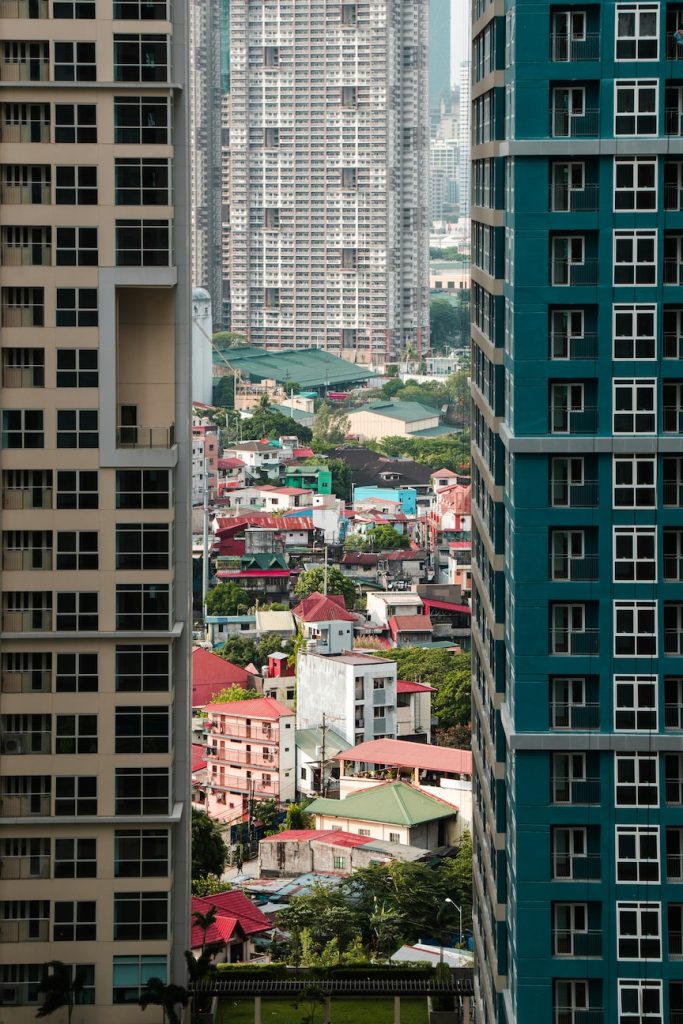
Photo by Taylor Keeran on Unsplash (Manila, Philippines)
Based on a 2020 study in Nature Communications assessing heat-health risk across 139 Philippine cities, the places with high or very high heat-health risk were concentrated in Metro Manila. Manila City was the only city classified under the “very high” category, while all Metro Manila cities in the study ranked among the top 20 for heat-health risk.
Meanwhile, the Climate Change Commission, citing Department of Health surveillance, reported 513 heat-related illnesses in 2023. From January 1 to April 18, 2024, the same monitoring system recorded 34 heat-related illnesses and six deaths.
Consequently, conversations about trees, shade, parks, and cooler public spaces are no longer only about beauty or leisure. They are increasingly about protection.
This is where the idea of a “green prescription” enters the discussion.
According to NHS England, green social prescribing means helping people participate in nature-based activities to improve physical and mental health. These activities may include walking groups, gardening, outdoor exercise, and time spent in green or blue spaces.
Meanwhile, UP Manila reported in November 2025 that social prescribing connects patients to community-based, nonclinical services that can improve health and well-being while addressing deeper causes of illness through more holistic care.
In other words, the idea is simple enough for even a student to understand: sometimes health is supported not only by what happens in a hospital or clinic, but also by what happens in a park, on a sidewalk, or beneath a line of trees.
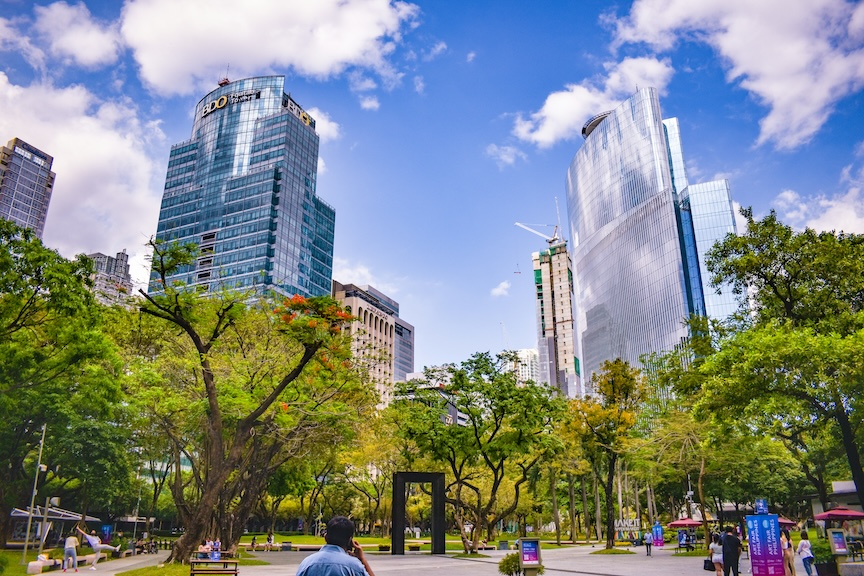
Photo by Sian Labay on Unsplash (Ayala Triangle Walkways, Makati, Metro Manila, Philippines)
What the latest global science says
One of the strongest broad reviews of nature prescriptions came from a 2023 systematic review in The Lancet Planetary Health. Researchers identified 92 unique studies of nature-prescription programs. Compared with control groups, these programs were associated with:
- lower systolic blood pressure by 4.82 mm Hg
- lower diastolic blood pressure by 3.82 mm Hg
- roughly 900 additional daily steps
The review also found improvements in depression and anxiety scores.
Nevertheless, the authors were careful to note that many studies carried moderate to high risk of bias. Good science does not turn hope into exaggeration. It acknowledges that the evidence is promising while recognizing that stronger studies are still needed.
A newer global study strengthens the mental-health side of the conversation. Based on a 2025 systematic review and meta-analysis in BMJ Open, nature-based health interventions led to small-to-large improvements in anxiety, depression, stress, and overall mental-health scores among people already experiencing stress or diagnosed with anxiety or depression.
Again, the researchers urged caution because the included studies were diverse and methodologically limited.
Meanwhile, a widely cited 2018 systematic review and meta-analysis found that greater exposure to green space was associated with:
- lower salivary cortisol, a stress marker
- lower heart rate
- lower diastolic blood pressure
- lower risk of type 2 diabetes
- lower all-cause mortality
- lower cardiovascular mortality
Put simply, nature is no longer being studied only as something pleasant. It is increasingly being studied as something measurable.
Another 2023 meta-analysis indexed in PubMed found that a 10% increase in green space was associated with lower depression risk, while higher satellite-based vegetation scores were also linked to reduced depression risk.
On the other hand, researchers continue to caution that not every health claim surrounding nature carries the same level of certainty. The strongest and most consistent findings today involve stress reduction, mood improvement, blood pressure, and physical activity.
Hence, the safest conclusion remains a careful one: greener places appear to help, and the evidence is strongest where outcomes can be clearly measured.
What public-health agencies say green spaces actually do
The World Health Organization has long argued that this conversation goes beyond aesthetics.
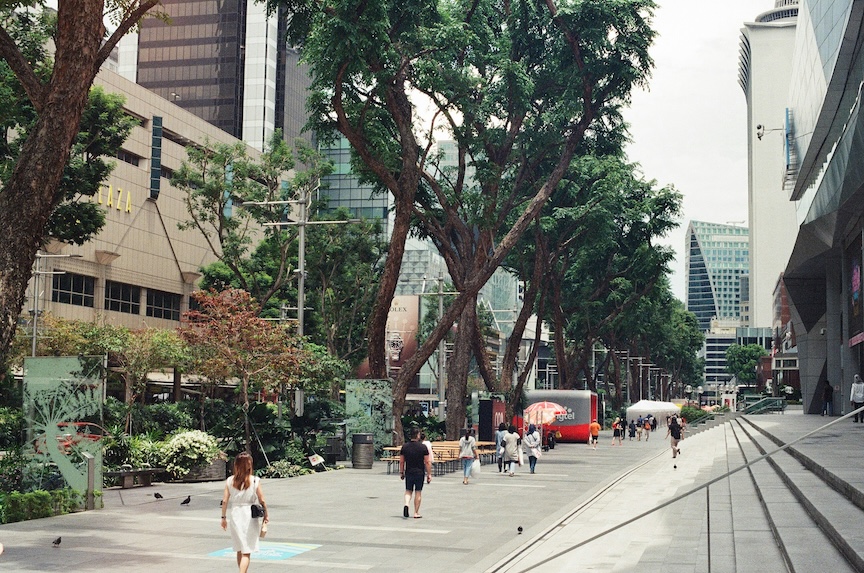
Photo by Hannah Sibayan on Unsplash (Orchard Road, Singapore)
In its review Urban Green Spaces and Health, WHO said parks, playgrounds, and residential greenery can promote mental and physical health while reducing illness and premature death among urban residents.
The report explains why. Green spaces can:
- support psychological relaxation
- reduce stress
- encourage physical activity
- strengthen social connection
- reduce exposure to air pollution, noise, and excessive heat
Meanwhile, another WHO review on urban green-space interventions said these interventions may help address obesity, cardiovascular disease, mental health concerns, and overall well-being.
Urban design, therefore, is not only about buildings and roads. It is also about the daily conditions shaping how bodies and minds recover.
What Philippine evidence adds
The Philippine evidence makes this more than a borrowed global trend.
Based on a 2023 study in Sustainable Cities and Society, researchers surveyed 307 residents in Pasig City and examined how close they lived to different types of parks. The study found that proximity to nature parks and community parks was associated with more manageable stress levels, while living near linear parks was linked to more walking and cycling.
Likewise, elderly and unemployed residents living near parks reported greater stress relief and physical activity.
This does not mean every park can solve every health problem. Nevertheless, it provides local evidence that access to green space can influence how people feel and move inside a real Philippine city.
Meanwhile, the 2023 National Nutrition Survey helps explain why these findings matter.
If 46.9% of adults are insufficiently physically active, then even modest increases in walking matter. If 13.0% already have elevated blood pressure, environments that encourage movement and reduce stress matter too.
Furthermore, if 57.1% are overweight or obese, health can no longer be treated solely as a matter of personal choice. The spaces surrounding people matter as well.
A student cannot choose a shaded sidewalk that does not exist. A grandparent cannot choose a nearby safe park if the nearest open space is too far or unsafe to reach.
Hence, the city itself becomes part of the health story.

Photo by Cheene Rubin on Unsplash (Mati City, Mati City, Philippines)
When access becomes the real prescription
This is why WHO guidance on accessibility matters so much.
According to WHO’s review on urban green-space interventions, all urban green spaces should be physically accessible within a short distance of homes, with obvious and safe entrances and pleasant access routes. The report notes that a five-minute walk, or roughly 300 meters, is often considered acceptable.
In addition, green spaces should be socially accessible: free of charge, welcoming, and inclusive for all community groups.
That may sound like a planning detail, but it is really a health detail. Advice becomes easier to follow when the environment needed for that advice is nearby, safe, and available to everyone.
Recent Philippine policy moves suggest that some local leaders are beginning to think this way.
According to a November 2025 Quezon City government report, the city joined the C40 Cities Cool Cities Accelerator and committed to:
- strengthening early-warning systems
- expanding access to cooling solutions during heat emergencies within two years
- increasing shade and tree canopy in public spaces within five years
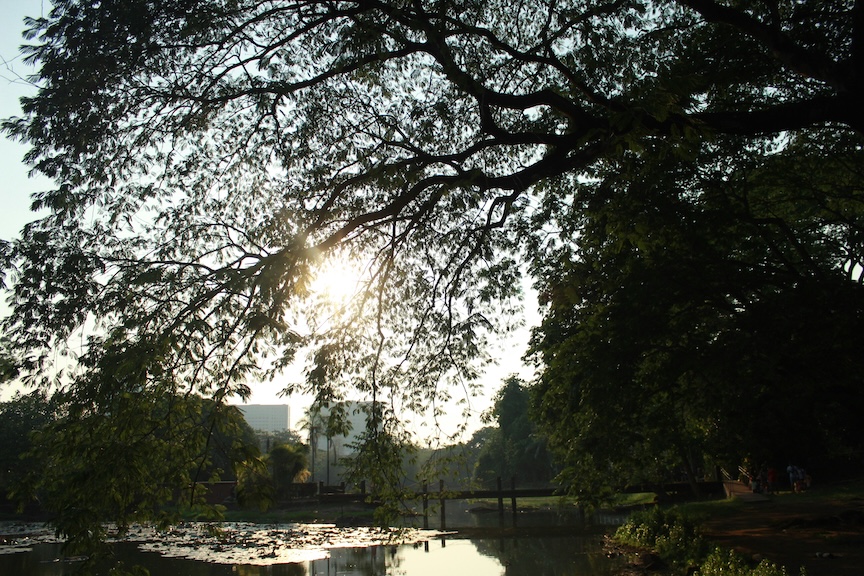
Photo by Beng Ragon on Unsplash (Ninoy Aquino Parks and Wildlife Center, Elliptical Road, Diliman, Quezon City, Metro Manila, Philippines)
Meanwhile, the Climate Change Commission said in a 2024 explainer on urban forests that trees help reduce the urban heat-island effect, provide shade, cool the air through transpiration, and improve air quality by removing pollutants such as particulate matter, nitrogen oxide, sulfur dioxide, and ozone.
These are not side benefits. They are public-health functions.
A prescription written into the map
So, can urban design become preventive medicine?
Based on the best available evidence, the answer is careful but increasingly clear.
A city cannot replace hospitals, medicines, nurses, or doctors. On the other hand, it can make health easier or harder to protect.
According to the latest global reviews, nature-based health programs may help lower blood pressure, increase walking, and improve mood and stress scores.
According to the latest Philippine surveys and local studies, the country is already dealing with heat, inactivity, and chronic disease in exactly the places where greener, cooler, and safer public spaces could make the greatest difference.
Consequently, the real meaning of a green prescription may be larger than a doctor’s advice sheet. It may be a reminder that health is shaped not only by what is prescribed inside a clinic, but also by what is built outside it.
This idea feels deeply human because it returns health to ordinary life. It asks whether a child can walk to school under shade, whether a tired parent has somewhere nearby to breathe after work, and whether an older person can move safely without battling heat, traffic, and fear.
Meanwhile, science says these are not “soft” questions. They are serious health questions.
A greener city will not cure every illness. Nevertheless, it can lower certain risks before they worsen, ease stress before it becomes chronic strain, and give people small daily opportunities to move, rest, and recover.
Hence, if medicine is meant to help people live longer and better, then a safer, cooler, greener city may become one of the most practical prescriptions the Philippines can write into its future.
chris-czermak-pnMZAaRvoHU-unsplash.jpg
References
Barquilla, C. A. M., Lee, J., & He, S. Y. (2023). The impact of greenspace proximity on stress levels and travel behavior among residents in Pasig city, Philippines during the COVID-19 pandemic. Sustainable Cities and Society, 97, 104782.
https://doi.org/10.1016/j.scs.2023.104782
Department of Science and Technology–Food and Nutrition Research Institute. (n.d.). Nutritional status of adults (20 to 59 years old): Philippines, 2023. https://enutrition.fnri.dost.gov.ph/uploads/7_2023_NNS_ADULTS.pdf
Estoque, R. C., Ooba, M., Seposo, X. T., Togawa, T., Hijioka, Y., Takahashi, K., & Nakamura, S. (2020). Heat health risk assessment in Philippine cities using remotely sensed data and social-ecological indicators. Nature Communications, 11, 1581. https://doi.org/10.1038/s41467-020-15218-8
Jessen, N. H., Løvschall, C., Skejø, S. D., Madsen, L. S. S., Corazon, S. S., Maribo, T., & Poulsen, D. V. (2025). Effect of nature-based health interventions for individuals diagnosed with anxiety, depression and/or experiencing stress: A systematic review and meta-analysis. BMJ Open, 15(7), e098598. https://doi.org/10.1136/bmjopen-2024-098598
Liu, Z., Chen, X., Cui, H., Ma, Y., Gao, N., Li, X., Meng, X., Lin, H., Abudou, H., Guo, L., & Liu, Q. (2023). Green space exposure on depression and anxiety outcomes: A meta-analysis. Environmental Research, 231(Pt 3), 116303. https://doi.org/10.1016/j.envres.2023.116303
Nguyen, P.-Y., Astell-Burt, T., Rahimi-Ardabili, H., & Feng, X. (2023). Effect of nature prescriptions on cardiometabolic and mental health, and physical activity: A systematic review. The Lancet Planetary Health, 7(4), e313–e328. https://doi.org/10.1016/S2542-5196(23)00025-6
Quezon City Government. (2025, November 28). Quezon City joins global effort vs deadly extreme heat. https://quezoncity.gov.ph/quezon-city-joins-global-effort-vs-deadly-extreme-heat/
Twohig-Bennett, C., & Jones, A. (2018). The health benefits of the great outdoors: A systematic review and meta-analysis of greenspace exposure and health outcomes. Environmental Research, 166, 628–637. https://doi.org/10.1016/j.envres.2018.06.030
World Health Organization. (2023, June 21). DOH, WHO scale up efforts to prevent cardiovascular diseases in Western Visayas.
https://www.who.int/philippines/news/detail/21-06-2023-doh–who-scale-up-efforts-to-prevent-cardiovascular-diseases-in-western-visayas
World Health Organization. (2024, May 28). Heat and health. https://www.who.int/news-room/fact-sheets/detail/climate-change-heat-and-health
World Health Organization Regional Office for Europe. (2016). Urban green spaces and health: A review of evidence. https://iris.who.int/handle/10665/345751
World Health Organization Regional Office for Europe. (2017). Urban green space interventions and health: A review of impacts and effectiveness. https://iris.who.int/handle/10665/366036