

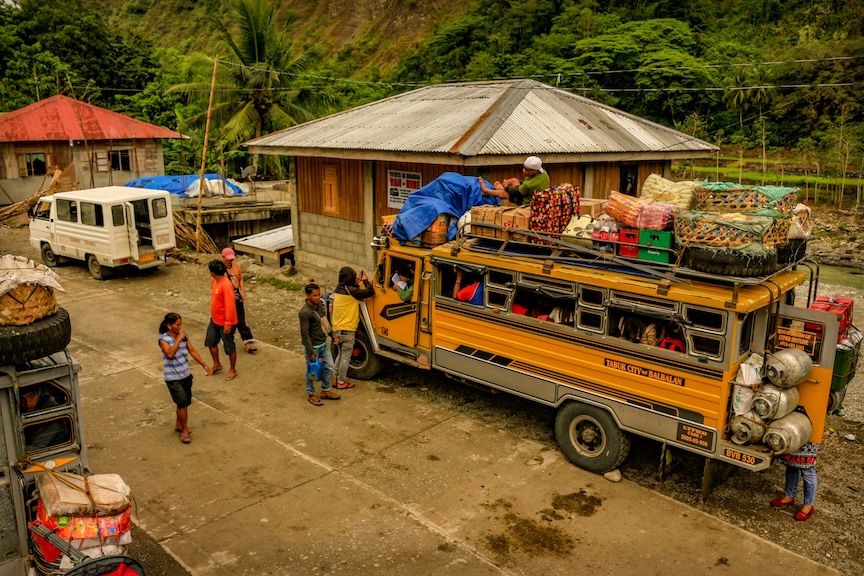
In Benguet this month, the story of nutrition did not begin in a clinic or a classroom. It began in a cabbage field.
Reuters reported on April 7 that some farmers in the province were leaving vegetables unharvested because rising fuel, labor, and transport costs made it harder to earn back what they had spent. The report said cabbage production cost had climbed to about ₱18 to ₱20 per kilo, while farm gate prices had dropped as low as ₱3 per kilo.
That scene matters because it shows, in the clearest possible way, how a fuel shock can become a food shock. When the cost of moving goods rises, the pressure does not stay on the highway. It travels to farms, markets, kitchens, and finally to the dinner table.
That is why healthy eating in the Philippines now must be understood not only as a diet story, but also as an energy and a class story. In March 2026, the FAO Food Price Index averaged 128.5 points, up 2.4 percent from February, marking the second straight monthly increase.
The Food and Agriculture Organization said the rise reflected not only normal market conditions but also responses to higher energy prices linked to the conflict escalation in the Near East.
Meanwhile, the Philippine Statistics Authority reported that headline inflation in the Philippines rose to 4.1 percent in March from 2.4 percent in February. For the bottom 30 percent of households by income, inflation was even higher at 4.2 percent.
Why fuel prices change what people eat
It is easy to think of oil as a transport issue and food as something separate. Nevertheless, the connection between food and fuel is undeniable. Farmers need energy for production and transport. Traders need fuel to move vegetables, fish, meat, and fruit from farms and ports to public markets and supermarkets. Households, in turn, spend not only on food, but also on fares, electricity, and cooking fuel.
Consequently, when fuel prices rise, families are hit more than once. They pay more to get to work, buy more food, and more to cook it.
Reuters reported that in March 2026 diesel prices in the Philippines jumped 59.5 percent year on year and gasoline prices rose 27.3 percent, helping push transport inflation up 9.9 percent. Hence, food becomes more expensive before it even reaches the plate.
The latest global evidence explains why this matters for nutrition. Based on the World Bank’s Food Prices for Nutrition DataHub, the global average cost of a healthy diet reached $4.46 per person per day in 2024, and around 2.6 billion people still could not afford one.
Likewise, SOFI 2025, or The State of Food Security and Nutrition in the World 2025, said food prices rose throughout 2023 and 2024, pushing up the cost of healthy diets and weakening affordability, especially for poorer populations. This is an important shift in how the problem is framed. The issue is not only whether healthy food exists. The issue is whether ordinary people can still pay for it.
What a healthy diet means, and why it becomes harder to buy
According to the World Health Organization’s January 2026 fact sheet on healthy diets, a healthy diet is built on four principles: adequacy, balance, moderation, and diversity. WHO also says a variety of minimally processed and unprocessed foods low in unhealthy fats, free sugars, and sodium should form the foundation of a healthy diet.
Furthermore, WHO notes that diet is shaped by social and economic conditions, including income and food prices, and says people older than 10 should aim for at least 400 grams of fruits and vegetables a day.
In other words, healthy eating is not just about eating “less junk.” It is about having regular access to a varied diet that includes fruits, vegetables, grains, pulses, and quality sources of protein.
On the other hand, the foods that make a healthy diet are often the ones that become hardest to afford during inflation.
The World Bank’s Food Prices for Nutrition work shows that animal-sourced foods are the most expensive part of a healthy diet globally, while vegetables are the second most expensive. Fruits also cost more than basic staples. That is why many households do not first cut rice or other filling staples when money becomes tight. They cut the foods that add balance and nutrients. They buy less fish, fewer eggs, less meat, and less fresh produce. What remains is often a diet that still fills the stomach but offers less protein, fewer vitamins, and less diversity.
What the latest Philippine survey shows
The latest Philippine survey tells the same story. According to DOST-FNRI’s release on the 2023 National Nutrition Survey, the average Filipino household’s daily food intake mainly consists of rice, vegetables, and fish, with rice contributing 58 percent of total energy intake.
The same release said consumption of fruits, corn, root crops, tubers, dried beans, nuts, and legumes remains low. In addition, DOST-FNRI reported that poorer households rely more heavily on rice, while higher socioeconomic groups consume more fish, meat, and poultry.
But that single contrast captures the class divide in the Filipino diet. The more income a household has, the more variety it can buy. The less income it has, the more it must depend on the cheapest staple that can make everyone feel full.
A related DOST-FNRI advisory, based on the 2021 Expanded National Nutrition Survey, makes the problem even more concrete. It said Filipino adults consume only about 58 grams of vegetables and 17 grams of fruit daily, far below WHO guidance.
Likewise, the 2023 National Nutrition Survey found that average intake of calcium, vitamin A, and vitamin C is low across nearly all age groups. These are not small details.
They show that many Filipinos are already eating less of the very foods that protect health over time. When fresh produce becomes more expensive because of fuel and transport costs, a weak diet becomes even weaker.
READ: Filipinos Stretch Meals as Hunger Surges, Programs Race to Respond
Inflation does not hurt all classes equally
This is where social class analysis becomes necessary. Inflation is often reported as one national number, but that number hides unequal pain. According to the PSA’s March 2026 report for the bottom 30 percent of households, food and non-alcoholic beverages accounted for 49.7 percent of inflation for this group. Food inflation for them rose to 3.7 percent in March from 1.9 percent in February.
Meanwhile, the PSA’s national report said overall food and non-alcoholic beverages inflation rose to 2.8 percent in March from 1.6 percent in February. These are not just technical indicators. They show that poorer households are pressured most where they are most vulnerable: in the cost of eating.
A middle-class family may respond to rising prices by eating out less or switching brands. A poor family often responds by lowering the quality of food itself.
The wider poverty picture makes that inequality even sharper. According to the PSA’s 2023 poverty statistics among the basic sectors, released in March 2025, the sectors with the highest poverty incidences were Indigenous Peoples at 32.4 percent, fisherfolk at 27.4 percent, and farmers at 27.0 percent. This is one of the harshest truths in the Philippine food system: the people closest to producing food are often among the poorest.
Meanwhile, Reuters’ Benguet report showed how fuel price increases can hurt producers and consumers at the same time. Farmers pay more to grow and move food, while families pay more to buy it.
Consequently, the same economic shock can punish both the people who raise vegetables and the people who need them most.
Children absorb the damage first
Children show the consequences most clearly. According to a July 2025 statement from UNICEF Philippines and the National Nutrition Council, one in two Filipino children under five is food poor, meaning they eat from fewer than five out of eight essential food groups in a day.
The same statement said 13 percent are in severe child food poverty, eating from only two or fewer food groups. Among children aged 6 to 23 months in the poorest families, only 17.8 percent receive varied diets.
Likewise, DOST-FNRI’s 2023 National Nutrition Survey said only 13.9 percent of children received a minimum acceptable diet. These figures matter because child nutrition is not just about being full today. It shapes growth, brain development, and health later in life.
The same DOST-FNRI release reported that 23.6 percent of children under five are stunted and 5.6 percent are wasted. It also said that 31.4 percent of households experienced moderate to severe food insecurity in 2023.
Meanwhile, WHO says healthy diets help protect against malnutrition in all its forms as well as noncommunicable diseases such as diabetes, heart disease, stroke, and cancer.
Hence, the current food-and-fuel squeeze is not only a short-term hardship. It is a public health warning. If families keep moving away from diverse diets and toward cheaper calories, the effects will show up later in disease, poor growth, and deeper inequality in health outcomes.
Beyond advice
For that reason, it is no longer enough to tell Filipinos simply to “eat healthy.” Advice matters, but advice cannot compete with a shrinking budget. WHO says governments have a central role in creating a healthy food environment, including using policies and incentives that make fresh fruits and vegetables more available and affordable.
Nevertheless, healthy eating in the Philippines will remain fragile if food policy is separated from energy, transport, wages, and social protection. If oil prices rise and every step in the food chain becomes more expensive, then nutrition cannot be treated as a private choice alone. It has become a structural problem.
That is the deeper lesson of the Benguet field. It is not only a story about abandoned cabbage. It is also a story about a parent in a wet market choosing more rice and fewer vegetables, a child whose meals become less varied, and a worker whose paycheck buys less protein than it did a month ago.
Based on the FAO Food Price Index for March 2026, the World Bank’s Food Prices for Nutrition DataHub, SOFI 2025, the PSA’s latest inflation and poverty reports, DOST-FNRI’s 2023 National Nutrition Survey, WHO’s healthy diet guidance, and Reuters’ April 2026 reporting from Benguet, the evidence points in one direction.
Healthy eating today is not just a matter of willpower or knowledge. It is a fuel-price story, a purchasing-power story, and, above all, a class story.
Photo by Joshua Kyle on Unsplash
References:
Food and Agriculture Organization of the United Nations. (2026, April 3). FAO Food Price Index rises in March as Near East conflict raises energy costs. https://www.fao.org/newsroom/detail/fao-food-price-index-rises-in-march-as-near-east-conflict-raises-energy-costs/en
Food and Agriculture Organization of the United Nations, International Fund for Agricultural Development, United Nations Children’s Fund, United Nations World Food Programme, & World Health Organization. (2025). The state of food security and nutrition in the world 2025: Addressing high food price inflation for food security and nutrition. https://openknowledge.fao.org/handle/20.500.14283/cd6008en
National Nutrition Council & UNICEF Philippines. (2025, July 1). National Nutrition Council and UNICEF rally to end child food poverty in the Philippines. https://www.unicef.org/philippines/press-releases/national-nutrition-council-and-unicef-rally-end-child-food-poverty-philippines
Philippine Statistics Authority. (2025, March 31). Poverty incidence declined from 2021 to 2023 in ten basic sectors. https://psa.gov.ph/content/poverty-incidence-declined-2021-2023-ten-basic-sectors
Philippine Statistics Authority. (2026, April 7). Summary inflation report consumer price index (2018=100): March 2026. https://psa.gov.ph/content/summary-inflation-report-consumer-price-index-2018100-march-2026
Philippine Statistics Authority. (2026, April 7). Summary inflation report consumer price index for the bottom 30% income households (2018=100): March 2026. https://psa.gov.ph/content/summary-inflation-report-consumer-price-index-bottom-30-income-households-2018100-march-2
Reuters. (2026, April 7). Philippine central bank warns of oil spike ‘spillover effects’ as inflation breaches target. https://www.reuters.com/world/asia-pacific/fuel-price-surge-pushes-philippine-inflation-above-central-bank-target-2026-04-07/
Reuters. (2026, April 7). Soaring diesel prices squeeze vegetable farmers in northern Philippines. https://www.reuters.com/business/energy/high-fuel-costs-forcing-philippine-farmers-abandon-harvests-2026-04-07/
World Bank. (2025, August 6). Can everyone afford to eat healthy? New data show progress, but not fast enough. World Bank Data Blog. https://blogs.worldbank.org/en/opendata/can-everyone-afford-to-eat-healthy–new-data-show-progress–but-
World Bank. (n.d.). Food Prices for Nutrition DataHub: Global statistics on the cost and affordability of healthy diets. https://www.worldbank.org/en/programs/icp/brief/foodpricesfornutrition
World Health Organization. (n.d.). Healthy diet. https://www.who.int/news-room/fact-sheets/detail/healthy-diet
Department of Science and Technology–Food and Nutrition Research Institute. (2025, July 3). DOST-FNRI unveils 2023 Filipinos state of health and nutrition. https://www.dost.gov.ph/knowledge-resources/news/86-2025-news/4067-dost-fnri-unveils-2023-filipinos-state-of-health-and-nutrition.html
Department of Science and Technology–Food and Nutrition Research Institute. (n.d.). Pinoy adults, older persons need to consume more fruits and veggies – DOST-FNRI. https://fnri.dost.gov.ph/index.php/publications/writers-pool-corner/57-food-and-nutrition/870-pinoy-adults-older-persons-need-to-consume-more-fruits-and-veggies-dost-fnri