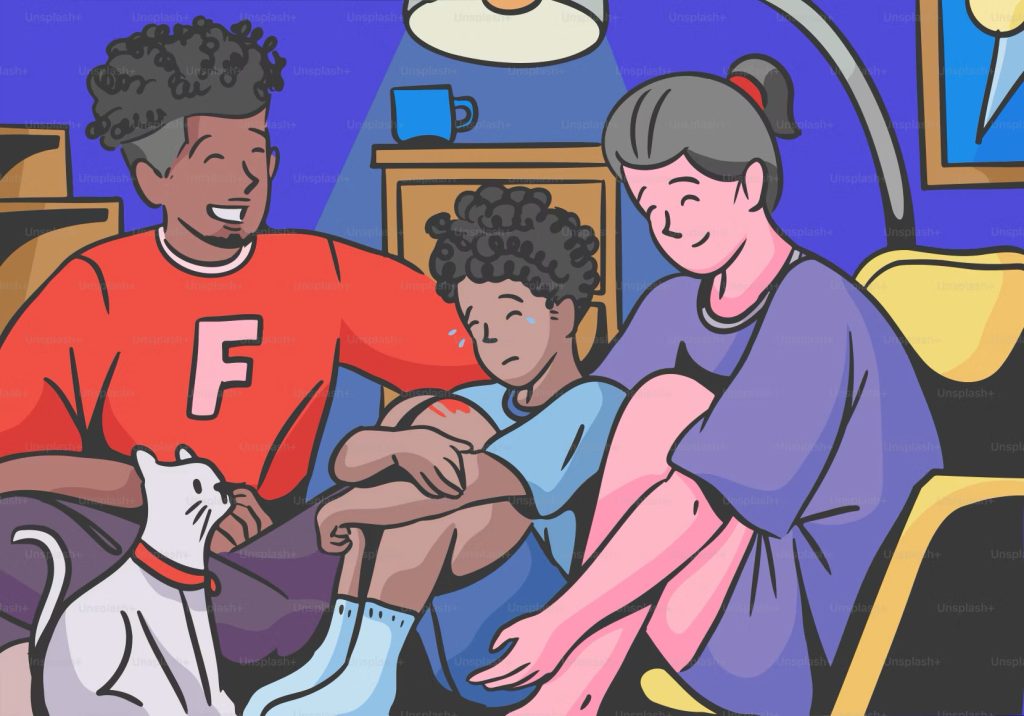


A story of illness, grace, and everyday courage
There are many different stories we read about and admire.
And then there are stories we recognize.
This is the second kind.
She is someone you may or may not know.
She wakes early because sleep has become lighter these days. Morning arrives gently. There is a moment, just before she rises, when she feels the weight of what she is living with.
Not dramatically.
Just enough to be real.
A diagnosis, received months ago, has quietly rearranged her life. There was no loud announcement. It came in measured words, in a room that looked like any other, delivered with the calm professionalism of someone who has said it many times before.
Since then, life has simply… changed.
The Days That Continue
She still makes breakfast.
Still answers messages.
And still asks the people she loves if they have eaten, if they have arrived safely, if they are well.
There are appointments now. Medications. Moments of fatigue that arrive without warning.
But there are also ordinary things:
Sunlight on the kitchen floor.
A familiar joke that still makes her laugh.
The quiet comfort of someone sitting beside her, saying nothing.
If you asked her how she is, she might say, “Okay.”
And she would mean it.
What Changes, Quietly
Illness sometimes transform people in visible ways.
More often, it changes what they notice.
Time is no longer something assumed.
It is something felt.
A cup of coffee is no longer rushed.
Conversations are no longer postponed.
A good day is no longer taken lightly.
Psychology has a name for this shift: post-traumatic growth.
Does it mean suffering is good?
No, but because, in its presence, some people begin to see life more clearly.
Research shows that individuals living with serious illness often report:
- a deeper appreciation for everyday moments
- stronger, more meaningful relationships
- a clearer sense of what truly matters
Alongside difficulty.
Choosing, Again and Again
What is most striking is rarely constant strength.
But repetition.
She chooses, each day, to continue.
To get up.
To engage.
Yes, to remain present in a life that no longer feels guaranteed.
There are days when this is easy.
There are days when it is not.
But the choice is made anyway.
Quietly.
Without waiting for recognition.
Simply, as part of living.
READ: The Man Who Chose to Live Anyway
The People Who Stay
Around her, life gathers.
A friend who drops by without needing an invitation.
A family member who learns, instinctively, what to say and what not to say.
Someone who simply sits, offering presence instead of solutions.
Science has long confirmed what we already know:
Connection heals.
Studies show that strong social support improves emotional resilience, reduces stress, and even affects physical outcomes in people living with illness.
Love, in its simplest form, becomes part of the treatment.
What This Gives Us
You might know someone like her.
A mother.
Or a friend.
A colleague.
Perhaps even yourself, on a day when life feels heavier than usual.
And this is where the story becomes yours.
It is about how life is lived when things are uncertain.
A Different Measure of Living
We often think a good life requires certainty, stability, and control.
But there are people living among us who show something else entirely:
That a life can be meaningful even when it is fragile.
And joy can exist even when it is incomplete.
That presence—quiet, attentive presence—is enough.
This is for Everyone
This story offers recognition.
That even in the presence of the ugliest things in the world— of illness, of change, of misery, of things we did not choose—
life continues.
And within that continuation, there is still room:
To notice, connect, and be here.
Fully.
Even now.
Photo by jon-tyson-VBnrJHa74UU-unsplash.jpg
References:
Tedeschi, R. G., & Calhoun, L. G. (2004). Posttraumatic growth.
Stanton, A. L. (2007). Adjustment to chronic illness.
Helgeson, V. S. (2006). Social support and health outcomes.
American Psychological Association (APA). Resilience and coping with illness.