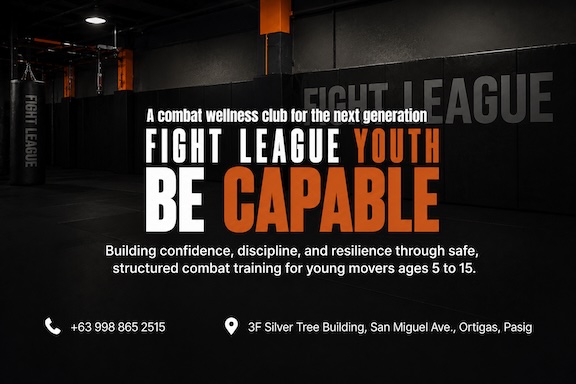
The Fight League’s Youth Development Framework believes movement may be one of the greatest gifts parents can give their children.
There was a time when childhood naturally came with scraped knees, endless afternoons outdoors, and games that quietly taught balance, agility, courage, and cooperation. Children climbed trees, chased one another through neighborhoods, fell, stood up again, and learned without realizing it, that confidence begins with movement.
Today’s children are growing up in a different world.
Many spend more hours sitting than moving. Screens have become classrooms, playgrounds, and entertainment centers all at once. While technology has undoubtedly expanded opportunities for learning, it has also reduced many of the everyday movements that once formed the foundation of healthy physical development.
The consequences extend beyond physical fitness.
Research in child development increasingly shows that movement supports cognitive development, emotional regulation, confidence, and resilience. Children who learn how to control their bodies often become better equipped to manage challenges beyond the gym, whether in school, friendships, or everyday life.
This understanding lies at the heart of the Fight League Youth Development Framework, a new program that reimagines what youth training can be.
Instead of emphasizing early competition or producing the next generation of fighters, Fight League developed the Youth Development Framework around a more ambitious purpose: helping children become more capable human beings.
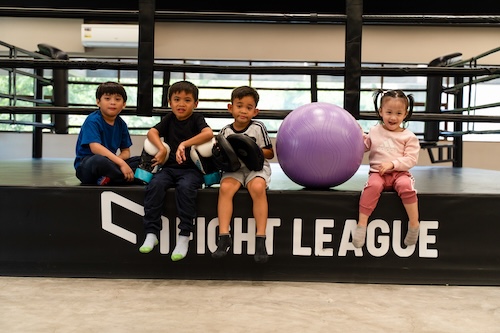
Grounded in the internationally recognized Youth Physical Development Model, the program introduces children to movement through structured, age-appropriate progressions that respect how young bodies grow and learn. Participants move through a series of eight-session modules, advancing only after demonstrating readiness through movement quality, confidence, and consistency, not speed.
It is a philosophy that replaces pressure with preparation.
“Progress should never be rushed,” the Fight League coaching team explains. “Every child develops differently, and our responsibility is to meet them where they are.”
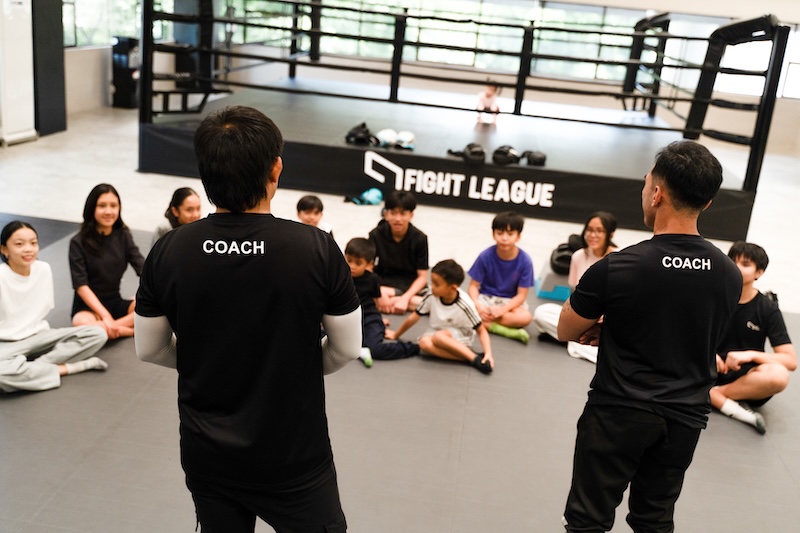
The first module focuses on perhaps the most overlooked skill of all: learning how to move well.
Children practice balance, coordination, posture, safe falling techniques, crawling, rolling, changing direction, and developing body awareness, abilities that form the building blocks not only of sport, but of everyday life. These seemingly simple movements improve physical literacy, allowing children to move with greater confidence in almost every environment.
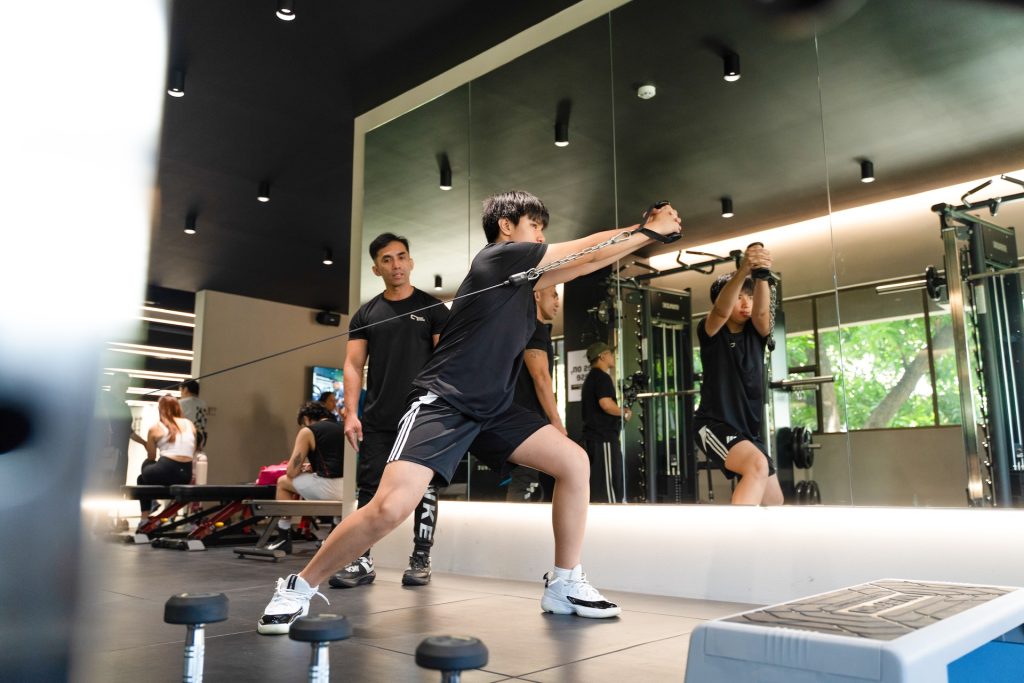
As participants grow, the program gradually introduces athletic strength, reaction training, footwork, and combat-inspired movement patterns. Young athletes learn proper posture, movement efficiency, defensive awareness, and controlled striking mechanics within a carefully supervised environment where safety remains the highest priority.
Importantly, combat sports become an engaging way to teach discipline, focus, respect, coordination, and decision-making. Children discover how to stay calm under pressure, listen carefully to instruction, work with partners, and develop confidence through measurable progress rather than comparison.
This reflects a growing understanding within modern sports science that strength and conditioning for children goes beyond lifting heavy weights or accelerating specialization. During the formative years, experts recommend prioritizing movement competency, physical literacy, and healthy exercise habits that can support lifelong health.
EXPLORE: Combat, Calm, and Control
Fight League has designed every stage of the framework with those principles in mind.
Parents, meanwhile, often notice changes that extend well beyond physical performance. After several months, children frequently become more willing to try unfamiliar activities, participate more confidently in groups, maintain better posture, improve listening skills, and demonstrate greater resilience when faced with challenges.
These may not appear on a scoreboard, but they are victories that matter.
Each class combines movement games, skills development, athletic exercises, partner activities, reaction drills, and reflective cooldowns, creating an environment where learning remains enjoyable while steadily building capability. Coaches assess every participant individually, ensuring progression occurs only when the child demonstrates readiness rather than perfection.
For those who require additional time, there is no stigma attached.
The philosophy is simple: strong foundations create stronger futures.
That same philosophy extends to the admission process. Every child begins with a movement assessment that helps coaches understand their current abilities before recommending the most appropriate starting point. From there, participants receive structured guidance through each module while parents are kept informed of their child’s development through capability reports and milestone assessments.
Behind the framework is a multidisciplinary collaboration involving professionals in sport science, strength and conditioning, athletic performance, youth coaching, and combat sports. Their collective expertise has shaped a curriculum that balances evidence-based practice with the realities of coaching children in a positive, supportive environment.
In an era when parents often worry about confidence, resilience, physical inactivity, and excessive screen time, programs like this offer something refreshingly different.
They remind us that movement is not simply exercise.
It is education.
It teaches children how to trust themselves, solve problems with their bodies, recover after setbacks, and discover that growth happens one small achievement at a time.
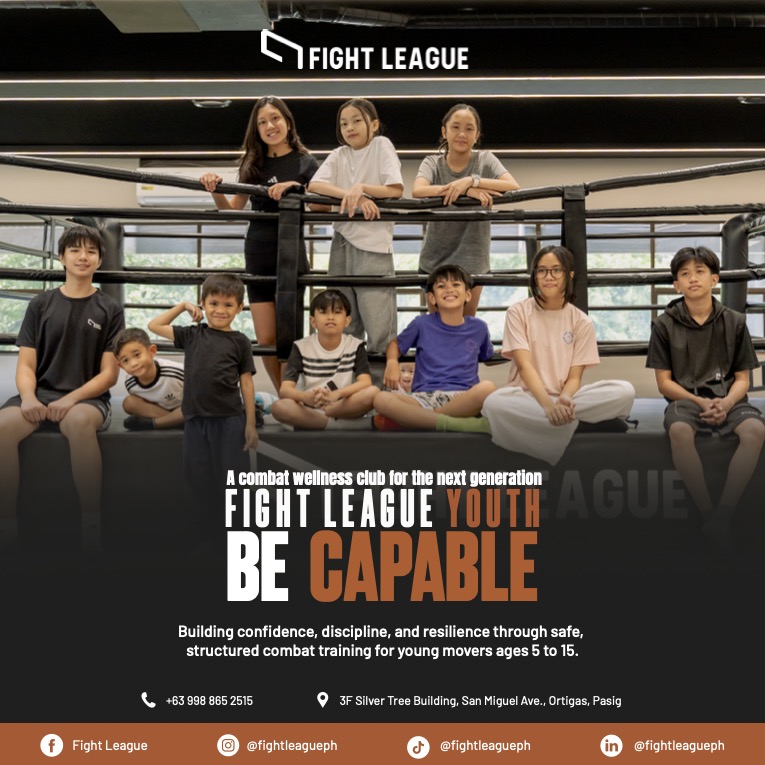
Fight League’s Youth Development Framework is ultimately about nurturing capable young people—children who stand a little taller, move with greater confidence, and carry lessons learned on the training floor into classrooms, playgrounds, homes, and eventually, adulthood.
Because the greatest measure of a youth program is not how many champions it creates, but how many confident, resilient, and capable individuals it helps shape.
Editor’s Note
This sponsored feature was prepared by Joyful Wellness using information provided by Fight League about its Youth Development Framework. Every child is unique, and while structured movement programs can offer many developmental benefits, parents and guardians are encouraged to assess whether a program is appropriate for their child’s individual needs. Consulting your child’s pediatrician or healthcare provider before beginning any new physical activity or training program is always a wise step, particularly if your child has existing medical conditions or specific health concerns.
At Joyful Wellness, we believe informed decisions are the foundation of lifelong well-being.
*All photos are provided by Fight League