As dialysis cases continue to rise, health experts are urging Filipinos to pay attention to one of the body’s hardest-working and most overlooked organs.
Most people pay little attention about their kidneys.
Unlike the heart, they are barely noticeable, no missed beats, no pounding chests. Unlike the lungs, they do not remind us of their importance with every breath. They work quietly, filtering waste, balancing fluids, regulating blood pressure, and helping keep the body in equilibrium.
Perhaps that is why kidney disease often goes unnoticed until it becomes a serious problem.
As the Philippines observes National Kidney Month this June, health officials are sounding the alarm on a growing public health challenge that affects tens of thousands of Filipinos every year.
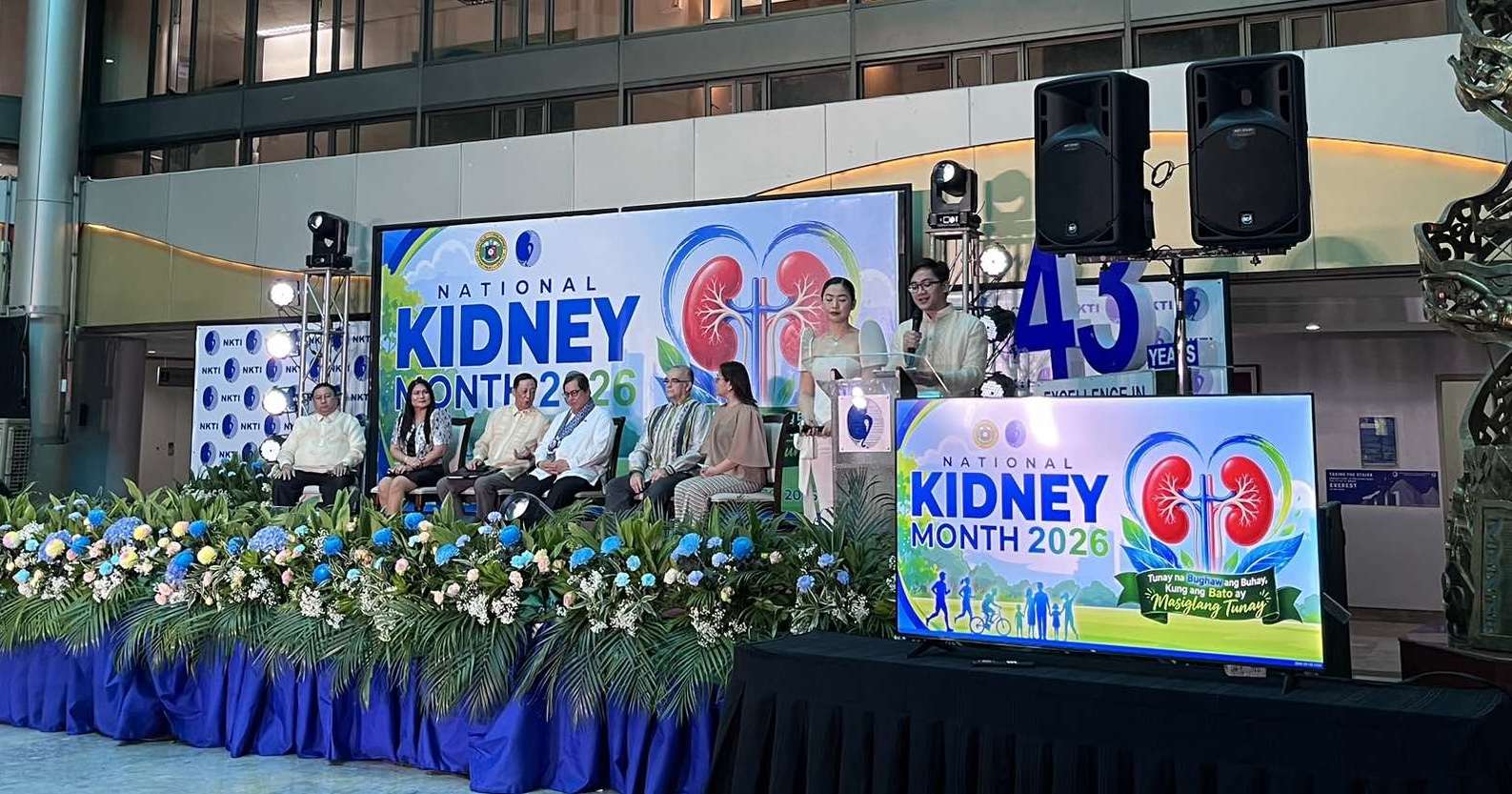
At the official launch of the 2026 National Kidney Month celebration held at the National Kidney and Transplant Institute (NKTI) in Quezon City, Department of Health Secretary Teodoro J. Herbosa reported that more than 64,000 Filipinos underwent dialysis treatment in 2024, underscoring the continuing rise of chronic kidney disease and the increasing demand for renal replacement therapy.
The observance carries this year’s theme: “Tunay na Bughaw ang Buhay, Kung ang Bato ay Masiglang Tunay,” a reminder that healthy kidneys remain essential to living a productive, active, and meaningful life.
Established through Presidential Proclamation No. 184, signed in 1993, National Kidney Month is observed every June to raise awareness about kidney health, encourage preventive care, and promote early detection of kidney disease.
For the NKTI, which spearheads the annual campaign, the mission has never been more urgent.
MORE INFO: National Kidney Month: Kidney Health, Kidney Disease, and Chronic Kidney Conditions
The Silent Disease
One of the greatest challenges in fighting chronic kidney disease (CKD) is that it often develops quietly.
In its early stages, many patients experience few or no symptoms at all.
By the time swelling, fatigue, changes in urination, or other warning signs become noticeable, significant kidney damage may have already occurred.
This is one reason health experts continue to emphasize routine health screenings and regular checkups.
“Early detection saves kidneys,” has become a recurring message among nephrologists and public health advocates.
Many cases of kidney disease are linked to conditions that are already widespread among Filipinos, including hypertension, diabetes, obesity, and cardiovascular disease.
As rates of these chronic illnesses continue to rise, so does the risk of kidney complications.
Bringing Prevention Closer to Communities
During the launch, Secretary Herbosa highlighted the Department of Health’s commitment to strengthening preventive healthcare through the Universal Health Care program and the agency’s 8-Point Action Agenda.
The strategy focuses on expanding access to disease screening, strengthening primary healthcare services, and bringing preventive interventions closer to communities.
The launch was attended by NKTI executives, healthcare professionals, employees, and representatives from partner organizations, reflecting a shared commitment to improving kidney health nationwide.
NKTI also unveiled several initiatives aimed at improving patient care and promoting healthier lifestyles, including new medical technologies, an electric cart for patient transport, and refrigerated drinking water fountains that encourage proper hydration among patients and visitors.
Throughout June, NKTI and partner organizations will conduct public lectures, community outreach activities, health screenings, and awareness campaigns across Metro Manila and other parts of the country.
The institute has likewise intensified its media engagement efforts to educate Filipinos about chronic kidney disease and the importance of prevention.
Small Habits, Big Protection
The encouraging news is that many kidney diseases are preventable.
Experts continue to recommend simple daily habits that support long-term kidney health:
- Drink adequate amounts of water throughout the day.
- Limit excessive salt, sugar, and highly processed foods.
- Maintain healthy blood pressure and blood sugar levels.
- Exercise regularly.
- Avoid smoking.
- Be cautious with prolonged use of over-the-counter pain relievers and self-medication.
- Undergo regular blood and urine tests, particularly if there is a family history of kidney disease, diabetes, or hypertension.
These may seem like ordinary recommendations, but their impact can be profound.
“The kidneys may work silently, but the message of National Kidney Month is clear: paying attention today could help prevent a lifetime of treatment tomorrow.”
A Wellness Issue, More Than Just a Medical One
At Joyful Wellness, kidney health represents something larger than a medical concern.
It reminds us that wellness often depends on the body’s quiet systems—the ones we rarely notice until they are struggling.
Like many chronic diseases, kidney disease highlights the importance of prevention, consistency, and informed choices.
The kidneys may work silently, but the message of National Kidney Month is clear: paying attention today could help prevent a lifetime of treatment tomorrow.
We must take charge of protecting the organs that never ask for attention, but tirelessly care for us every day.
Photo from Josephine Babaran/ PIA-PMD
References
- National Kidney and Transplant Institute (NKTI)
- Department of Health (DOH)
- Presidential Proclamation No. 184 s. 1993
- Universal Health Care Act
- World Health Organization (WHO)
- National Kidney Foundation
- Philippine Information Agency (PIA)