
At many Filipino dinner tables, the first sign of trouble is small. Someone coughs again or looks more tired than usual. Someone has lost weight, but the family tells itself it may just be stress, work, or lack of sleep.
Nevertheless, tuberculosis, or TB, often enters a household this way: quietly, slowly, and close to the people a sick person loves most.
As the world marks World TB Day on March 24, the Philippines is again being pressed to act on one of its biggest health problems. According to a joint World Health Organization (WHO) and Department of Health (DOH) release issued on November 12, 2025, the Philippines accounted for 6.8% of the world’s estimated 10.7 million TB cases in 2024, or about 625 cases per 100,000 people.
The same release said TB still kills an estimated 98 Filipinos every day. Meanwhile, the government aims to screen 12 million Filipinos by 2026 and increase the national TB budget to ₱4.2 billion, up from ₱2.6 billion in 2025.
Why the Dining Table Matters
TB matters at home not because it spreads through rice, soup, or spoons, but because families share air.
According to the U.S. Centers for Disease Control and Prevention (CDC), TB germs are released into the air when a person with active TB in the lungs or throat coughs, speaks, or sings. The CDC also emphasizes that TB is not spread by sharing food or drink.
Meanwhile, WHO identifies household contacts as a high-risk group and recommends systematic screening.
In simple terms, if one person in a home has TB, the people eating, sleeping, and spending long hours near that person may also need testing—even if they feel well.
The real danger at the dining table is not the plate. It is the shared air and the delay in getting checked.
Why Early Prevention Matters, Especially for Children
Not everyone who inhales TB bacteria becomes sick immediately. That is why prevention is critical.
According to the CDC, treating inactive (latent) TB infection is the best way to prevent active disease.
WHO guidance is even more urgent for children. Children under 5 who live with someone with bacteriologically confirmed pulmonary TB should receive preventive treatment after active TB is ruled out, even if testing is unavailable.
WHO also notes:
- Children under 5 are at higher risk of rapid progression to disease
- Children under 2 face the highest risk of severe TB
Older children, adolescents, and adults in the same household may also receive preventive treatment after proper evaluation.
For families, this means waiting can be dangerous. A child who looks well today may still need protection tomorrow.
What the Latest Global Report Shows
Global data show that many households are still missed after the first diagnosis.
According to the WHO Global Tuberculosis Report 2025:
- Estimated household contacts in 2024: 14 million
- Reported contacts: 11 million
- Received preventive treatment: 3.5 million
This means only 25% of estimated household contacts received preventive care.
On the positive side, the median completion rate for those who started preventive treatment in 2023 was 89%, showing that treatment works when completed.
Nevertheless, WHO highlights a persistent gap between:
- Those identified and screened
- Those who actually start preventive treatment
In other words, many families are still being reached too late—or not supported through the full prevention process.
READ: Japan’s New Grant Strengthens PH Fight Against Tuberculosis
What the Latest Philippine Update Shows
The Philippines has begun strengthening its response.
According to the November 2025 WHO-DOH release:
- Preventive treatment enrollment increased by over 50% in 2024
- Preventive care now includes contacts of drug-resistant TB cases
- Children with non-severe TB can now take a 4-month treatment regimen, instead of six months
Shorter regimens are important. They make treatment easier to complete, especially for families facing financial and logistical challenges.
However, public data still lack a simple year-by-year national trend on household screening after the pandemic.
Hence, the clearest conclusion is this: prevention is improving, but household protection is not yet strong enough to be taken for granted.
The Bill That Arrives After the Diagnosis
For many families, the biggest barrier is cost.
According to the 2022 Philippine TB patient cost survey (PLOS One):
- Average total cost of TB care: US$601.4
- Non-medical costs (transport, food): 42.7%
- Income loss: 40.4%
More than:
- 40% of households relied on savings, loans, or asset sales
- 42.4% faced catastrophic costs (over 20% of annual income)
- 54.5% reported moderate to severe economic impact
Additional findings:
- 29.1% lost jobs
- 21.2% experienced food insecurity
- Caregivers lost an average of 54.7 hours
These realities explain why exposed family members may delay screening. Sometimes it is not denial. It is the cost of a jeepney ride, a missed workday, or fear of deeper financial strain.
Why Poverty Keeps TB Close
TB is closely tied to poverty and food insecurity.
According to a 2025 Philippine Institute for Development Studies (PIDS) report:
- 31.4% of Filipino households were moderately to severely food insecure in 2023
WHO’s 2026 World TB Day campaign emphasizes that TB is driven by social and economic inequities.
WHO also identifies key risk factors:
- Undernutrition
- Diabetes
- Alcohol use
- Smoking
- HIV
Globally, about half of TB-affected households face catastrophic costs.
Hence, TB is not only a disease of bacteria. It is also a disease of:
- Crowded homes
- Limited income
- Poor nutrition
- Difficult choices
The Caregiver Who Often Comes Last
In many Filipino homes, the caregiver often a mother or grandmother, comes last.
She notices symptoms, prepares medicines, and ensures clinic visits. Yet she may delay her own checkup.
A Philippine study (2012) found women delayed TB care due to:
- Financial strain
- Family responsibilities
- Stigma
- Health system barriers
This remains relevant today, as caregivers still bear significant time and economic burdens.
TB prevention must therefore ask:
- Who is caring for the patient?
- Who is missing work?
- Who is ignoring her own symptoms?
Why Stigma Keeps Households Quiet
Delay is social as it is financial.
A 2023 mixed-methods study found high levels of TB-related stigma among patients, families, and communities.
A 2022 study in Pampanga identified barriers such as:
- Unclear symptoms
- Fear of discrimination
- Financial burden
- Visibility of seeking care
As a result, families may stay silent:
- A father hides his diagnosis
- A mother fears gossip
- A teenager avoids disclosure
When silence takes over, the disease stays longer inside the home and prevention is delayed.
What the Newest Philippine Research Says
Evidence shows that early household action works.
A 2025 Philippine cost-effectiveness study found that expanding preventive treatment to children aged 5–14 is cost-effective.
The most effective strategy includes:
- Screening exposed children early
- Providing preventive treatment promptly
This aligns with WHO guidance: household screening is one of the most effective TB control strategies.
In simple terms, it is better and cheaper to prevent illness than to treat it later.
Where the Fight Really Begins
The fight against TB may be funded in Congress, planned by DOH, and tracked by WHO, but it is often decided at home.
It is decided when:
- One diagnosis leads to family screening
- A child is checked early
- The caregiver is also tested
- Services are accessible and affordable
WHO’s World TB Day 2026 message is clear: TB care must be accessible, affordable, stigma-free, and community-driven.
At its core, this is a simple idea.
Families should feel:
- Safe enough to talk
- Informed enough to act
- Supported enough to complete prevention
Because TB continues to spread in a household depending on what happens around the table.
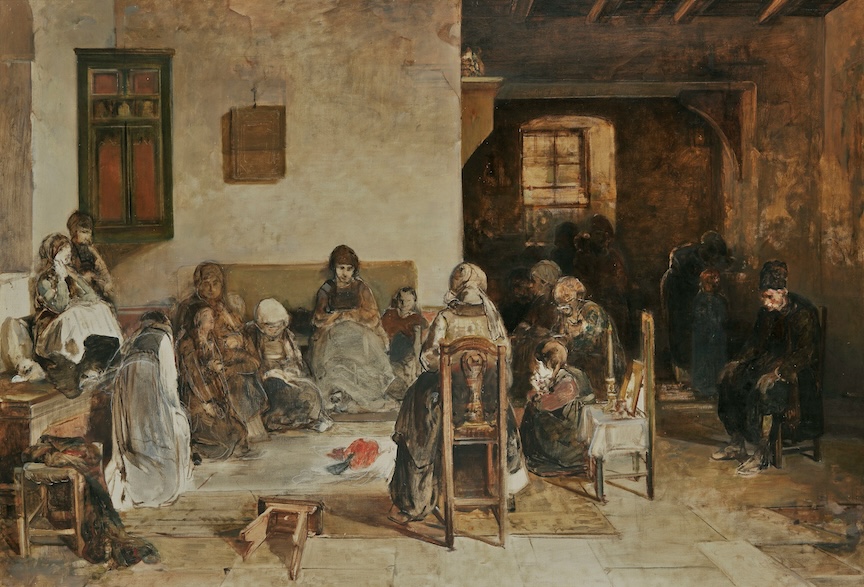
Photo by europeana-OPE3qT-l2gc-unsplash
References:
Adiong, S. J., Bangcola, A. A., & Macalnas, A. (2023). Exploring social stigma and awareness towards tuberculosis in a municipality in Southern Philippines: A mixed-methods study. The Malaysian Journal of Nursing, 14(3), 94–101. https://doi.org/10.31674/mjn.2023.v14i03.011
Centers for Disease Control and Prevention. (2025, January 17). Tuberculosis: Causes and how it spreads. https://www.cdc.gov/tb/causes/index.html
Florentino, J. L., Arao, R. M. L., Garfin, A. M. C., Gaviola, D. M. G., Tan, C. R., Yadav, R. P., Hiatt, T., Morishita, F., Siroka, A., & Yamanaka, T. (2022). Expansion of social protection is necessary towards zero catastrophic costs due to TB: The first national TB patient cost survey in the Philippines. PLOS ONE, 17(2), e0264689. https://doi.org/10.1371/journal.pone.0264689
Hu, A., Loo, E., Winch, P. J., & Surkan, P. J. (2012). Filipino women’s tuberculosis care seeking experience in an urban poor setting: A socioecological perspective. Health Care for Women International, 33(1), 29–44. https://doi.org/10.1080/07399332.2011.630495
Ilaiwy, G., Keim-Malpass, J., Tuppal, R., Ritua, A. F., Bassiag, F. R., & Thomas, T. A. (2025). Cost effectiveness analysis of expanding tuberculosis preventive therapy to household contacts aged 5–14 years in the Philippines. Journal of Clinical Tuberculosis and Other Mycobacterial Diseases, 39, 100519. https://doi.org/10.1016/j.jctube.2025.100519
Semeniano, R. D., Go, G. L., Javier, C. A., & Ferrer, E. B. (2025). Socioeconomic determinants of food insecurity in the Philippines: Evidence from the 2018–2019 and 2021 expanded national nutrition surveys. Philippine Journal of Development, 49(2). https://doi.org/10.62986/pjd2025.49.2b
World Health Organization. (2025a). 3. TB prevention & screening. In Global tuberculosis report 2025. https://www.who.int/teams/global-programme-on-tuberculosis-and-lung-health/tb-reports/global-tuberculosis-report-2025/tb-prevention-and-screening
World Health Organization. (2025b, November 12). WHO, DOH target 12M Filipinos to be screened for tuberculosis by 2026; Philippines aims to double budget for TB services. https://www.who.int/philippines/news/detail/12-11-2025-who–doh-target-12m-filipinos-to-be-screened-for-tuberculosis-by-2026–philippines-aims-to-double-budget-for-tb-services
World Health Organization. (2025c, November 13). Tuberculosis. https://www.who.int/news-room/fact-sheets/detail/tuberculosis
World Health Organization. (2026). World TB Day 2026: Yes! We can end TB! Led by countries, powered by people. https://www.who.int/campaigns/world-tb-day/2026
Zimmerman, E., Smith, J., Banay, R., Kau, M., & Garfin, A. M. C. G. (2022). Behavioural barriers and perceived trade-offs to care-seeking for tuberculosis in the Philippines. Global Public Health, 17(2), 210–222. https://doi.org/10.1080/17441692.2020.1855460