
This October, Dictionary.com named “maxxing” its 2026 Word of the Year. Short for “maximizing,” the term now attaches itself to almost anything: sleepmaxxing, proteinmaxxing, even cozymaxxing for an optimized night in. Dictionary.com reported that use of the term in digital media in August 2026 was nearly 19 times its average monthly use in 2025. Some people use it sincerely. Others use it to poke fun at hustle culture and the pressure to optimize every part of life.
But the term that helped bring the trend into the spotlight is considerably less cozy. Looksmaxxing, the practice of maximizing physical attractiveness, emerged from online forums associated with incel and manosphere communities before spreading to mainstream social media, including feeds viewed by teenagers.
Wanting to look and feel your best is perfectly normal. The trouble starts when appearance becomes the measure of your worth, and when the advice for improving it turns harmful.
What Looksmaxxing Is, and Where It Came From
Looksmaxxing exists on a spectrum, and it helps to understand the vocabulary.
Softmaxxing covers relatively common practices such as skincare, grooming, haircuts and fitness. Hardmaxxing refers to more extreme attempts to change one’s appearance, including cosmetic procedures, anabolic steroid use, severe dieting and “bonesmashing”—the dangerous practice of repeatedly striking the face in the mistaken belief that it will reshape facial bones.
Between these extremes are techniques such as “mewing,” a tongue-posture routine promoted online as a way to sharpen the jawline. Looksmaxxing communities also use terms such as “mogging” (outclassing someone in appearance), “canthal tilt” (the angle of the outer corner of the eye in relation to the inner corner), and “ascending” (improving one’s appearance). Some use the “PSL scale,” an online rating system associated with early looksmaxxing forums.
Boys and men post photographs of their faces and bodies to be rated by strangers. According to the Child Mind Institute, some online spaces even use AI chatbots designed to assess physical attractiveness. Clinicians have reported boys as young as 13 visiting these forums and asking for advice.
What drives the trend? Scott Griffiths, a psychologist at the University of Melbourne who studies male body image, told ABC News that young men are increasingly preoccupied with appearance. As traditional expectations of men as sole providers change, physical appearance can become another way of performing masculinity. Looksmaxxing sells the promise that a better jawline or more conventionally attractive face can improve one’s social standing, relationships and opportunities.
A Spectrum, Not a Villain
It is worth pausing before treating every skincare-curious teenage boy as a patient.
A November 2026 commentary in the Journal of Adolescent Health, written by University of Toronto researchers and colleagues, makes this distinction directly: looksmaxxing exists on a spectrum, and clinicians should not automatically pathologize normal grooming, exercise or appearance-related behaviour among boys and young men.
The picture changes when these behaviours become extreme or unsafe, or are accompanied by emotional distress, obsessive appearance monitoring, distorted perceptions of the face or body, difficulty functioning at school or work, or a declining quality of life.
That’s the line worth watching—not whether someone owns a moisturizer.
Why It’s a Toxic Beauty Standard
Women have lived with narrow beauty standards for generations. Looksmaxxing brings a version of that pressure to boys and men, often dressed up as objective, data-driven self-improvement.
A 2025 study published in Sociology of Health & Illness analyzed 8,072 comments from an online looksmaxxing community reported to receive about six million unique visitors a month. Researchers found that users scrutinized one another’s bodies through a rigid masculine ideal, focusing on features such as facial symmetry and brow ridges. The community also encouraged substantial body modifications and, in some discussions, subjected users to humiliation and messages that could encourage self-harm. The researchers described this process as “masculine demoralisation.”
Several features make the standard especially corrosive:
- It’s metric-based. Jaw width, facial symmetry and the spacing between features become numbers, creating endless opportunities to find another flaw.
- It’s never satisfied. The ideal is narrow and often shaped by racialized and Eurocentric beauty standards, making constant dissatisfaction almost inevitable.
- It ties worth to looks. The message is that who you are matters less than how you look.
- It treats natural features as defects. An Inquirer opinion column described a 14-year-old Filipino boy posting his photograph on a looksmaxxing forum and asking whether he could still be attractive despite his “flat” Filipino nose. It is a troubling example of what happens when a narrow beauty template becomes the standard against which local features are judged.
For context, Filipino youth are also navigating an increasingly screen-centered world. AXA Philippines’ 2026 Mind Health Report, as reported by BusinessWorld, found that 72 percent of Filipino youth surveyed reported feelings of loneliness or sadness. They spent an average of 7.5 hours a day on screens, and 98 percent reported negative effects from screen use. These findings do not establish that social media causes loneliness or appearance anxiety, but they highlight the pressures young people are navigating online.
What Doesn’t Work, and What Can Hurt
Mewing has no established evidence for reshaping the jaw. The technique involves placing the tongue against the roof of the mouth, with the aim of creating a sharper jawline or changing facial structure. A commentary in the Journal of Oral and Maxillofacial Surgery warned that the social media craze is not supported by sound scientific evidence. Normal tongue posture is not the same as a proven method for changing adult facial bones.
Self-inflicted injury is dangerous. The idea that hitting the jaw can reshape facial bones is false. Deliberately striking the face can cause bruising, fractures, dental damage and other injuries. It is not a safe alternative to medical or dental treatment.
Steroids, unregulated products and extreme diets carry real risks. The 2026 Journal of Adolescent Health commentary warns that looksmaxxing spaces can expose young people to pseudoscientific health claims, unregulated products and extreme body-change practices. Anabolic steroids, in particular, can affect hormonal function, fertility, cardiovascular health and mental well-being. Severe food restriction can also compromise nutrition, growth and development.
The spaces themselves can be harmful. Looksmaxxing forums may expose young people to misogyny, racism, humiliation and content involving self-harm. These risks extend well beyond concerns about appearance.
When It Becomes Body Dysmorphic Disorder
One condition clinicians are alert to is body dysmorphic disorder (BDD), a mental health condition involving persistent preoccupation with perceived flaws in appearance that other people may not notice or consider significant.
The International OCD Foundation estimates that BDD affects approximately 1.7 to 2.9 percent of the general population. It often begins during adolescence and can remain undiagnosed because people may feel too embarrassed or ashamed to talk about their concerns.
BDD affects people of all genders. It is somewhat more common among women in general population studies, but is found more frequently among men in some cosmetic surgery and dermatology settings. Social expectations around masculinity may also make some boys and men reluctant to seek help.
BDD deserves to be taken seriously. It is associated with significant distress, impaired daily functioning and increased risk of suicidal thoughts and behaviours. It is not simply vanity or dissatisfaction with a particular feature.
Cosmetic procedures are not a treatment for BDD. Changing a perceived physical flaw does not necessarily relieve the underlying preoccupation, and cosmetic interventions may not produce the psychological outcome a person hopes for.
The encouraging part is that BDD is treatable. Evidence-based care includes specialized cognitive behavioural therapy (CBT), while medication such as selective serotonin reuptake inhibitors (SSRIs) may also be considered by a qualified clinician. Treatment should be tailored to the person’s age, symptoms and needs.
Self-Care That Isn’t Destructive or Toxic
Here’s the part that matters most. Taking care of how you look and feel can be a genuinely good thing. The test is simple: does it leave you healthier, calmer and more connected? If a habit makes you anxious, secretive or isolated, it may be time to reconsider it.
Curate what you take in.
A randomized controlled trial involving 220 young people aged 17 to 25 who experienced emotional distress found that limiting smartphone-based social media use to about one hour a day for three weeks improved how participants felt about their appearance and weight compared with unrestricted use. The study was relatively small and short, so the findings are encouraging rather than conclusive. Unfollow accounts built around appearance ratings and comparison, and avoid forums where strangers score faces.
Keep skincare simple.
The American Academy of Dermatology recommends a basic routine built around three steps: cleansing, moisturizing and protecting the skin with sunscreen. Using too many products can irritate the skin and cause contact dermatitis. A complicated routine is not necessarily a better one.
Move for strength, energy and mood.
The World Health Organization recommends that adults get 150 to 300 minutes of moderate-intensity physical activity a week, while children and adolescents aged 5 to 17 should average at least 60 minutes of moderate-to-vigorous activity a day. Exercise should support health and capability, not become a way to punish the body for failing to meet an appearance ideal.
Eat enough and sleep enough.
Regular meals and consistent sleep are foundations of good health. Extreme restriction and unregulated supplements are not shortcuts to well-being.
Talk to someone.
Boys and men may find it difficult to disclose body-image worries, which is exactly why a trusted friend, relative, school counselor or healthcare professional matters. Moreover, if appearance concerns are taking over your thoughts or interfering with daily life, seek help from a clinician familiar with body image concerns or BDD.
Redefine “good-looking.”
Health, energy, a personal style you enjoy and the way you treat people all contribute to how others experience you. None of these can be meaningfully rated out of ten.
If you’re considering a cosmetic procedure, speak openly with a qualified, licensed professional about your reasons and expectations. If appearance worries are causing significant distress, consider discussing them with a mental health professional before making an irreversible decision.
And if you’re worried about someone else, ask gently and without mocking. Focus on how the person is feeling rather than criticizing their appearance. Take expressions of hopelessness or thoughts of self-harm seriously, and help them connect with appropriate support.
Looksmaxxing did not invent the wish to look good. It turned that wish into a scoreboard where almost nobody wins, and sold potentially harmful shortcuts to the boys and men who feel they are falling behind.
The healthier alternative isn’t to stop caring about yourself. It’s to care in ways that add to your life: a simple skincare routine, movement that makes you stronger, enough food and sleep, a social media feed that doesn’t make you feel worse, and people you can be honest with.
You are not a set of measurements, and nothing a forum says about your jaw changes that.
A note on this topic: this piece discusses body dysmorphic disorder, eating disorders, and self-harm at a general level and is not medical advice. If appearance worries are taking over your thoughts, if you’re restricting food, or if you or someone you know feels hopeless, please reach out to a doctor or mental health professional. In the Philippines, the National Center for Mental Health Crisis Hotline is available 24/7 at 1553 (or 1800-1888-1553 toll-free nationwide).
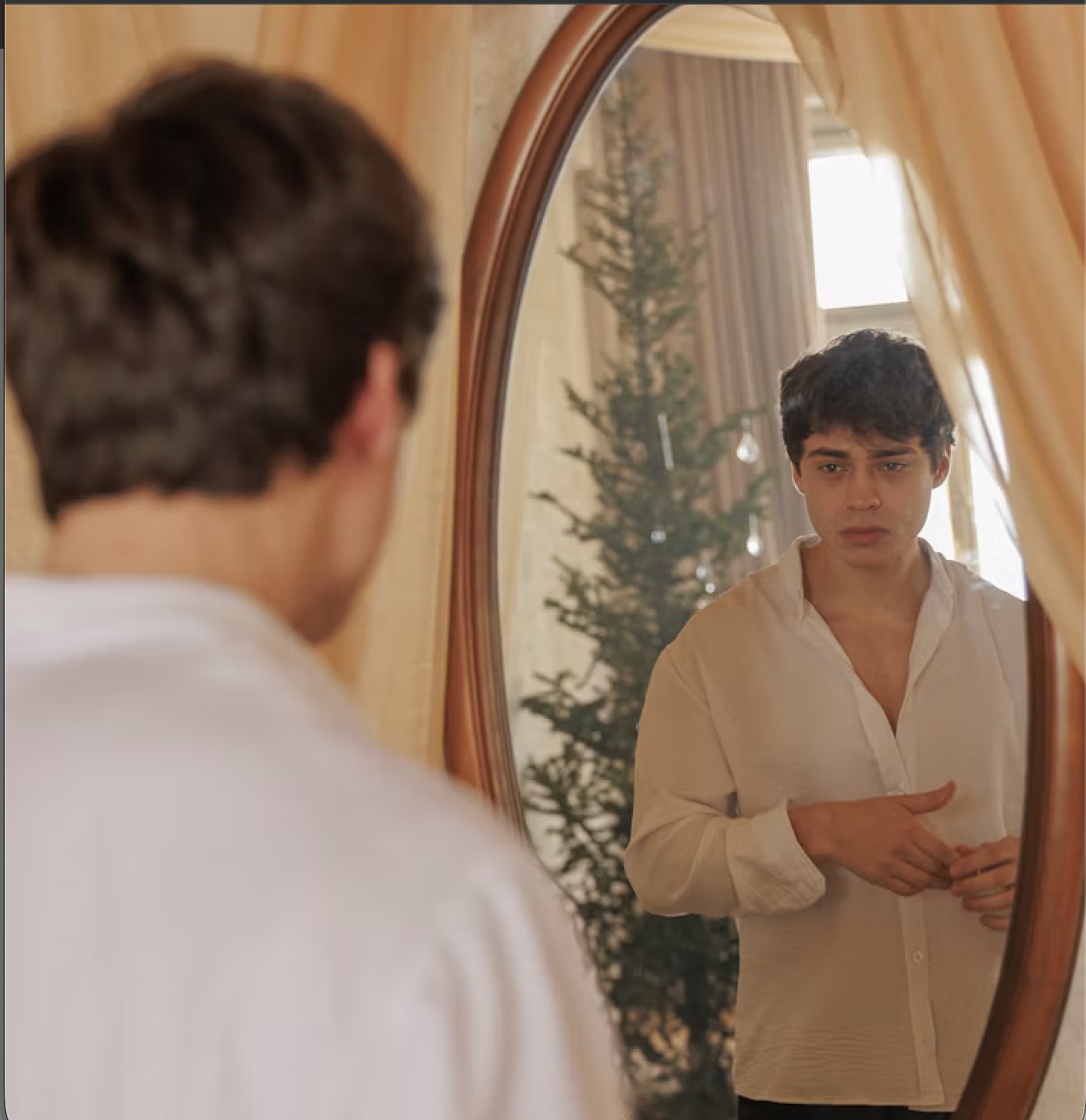
*Photo by Aleksandra Sapozhnikova on Unsplash
References
- Dictionary.com. (October 25, 2026). Dictionary.com’s 2026 Word of the Year Is… Read the announcement.
- Ganson, K. T., Piatkowski, T., & Nagata, J. M. (2026). Looksmaxxing Among Adolescent Boys and Young Men: Increasing Awareness Among Clinicians. Journal of Adolescent Health. Read the commentary.
- Halpin, M., et al. (2025). When Help Is Harm: Health, Lookism and Self-Improvement in the Manosphere. Sociology of Health & Illness, 47(3), e70015. Read the study.
- Child Mind Institute. Looksmaxxing and Its Impact on Boys. Read the clinical explainer.
- International OCD Foundation. Prevalence of Body Dysmorphic Disorder. Read the resource.
- NICE. Obsessive-compulsive disorder and body dysmorphic disorder: Treatment recommendations. Read the clinical guidance.
- Goldfield, G. S., et al. Reducing Social Media Use Improves Appearance and Weight Esteem in Youth With Emotional Distress. Read the study.
- American Academy of Dermatology. Skin Care on a Budget. Read the recommendations.
- World Health Organization. Guidelines on Physical Activity and Sedentary Behaviour. Read the guidelines.
- AXA Philippines. Mind Health Report 2026. Read the report summary.