
When the AI chest X-ray tool qXR arrived in the Philippines in 2024, a company representative told reporters it could identify a high proportion of abnormalities previously missed or mislabeled by radiologists, reportedly with zero false positives. It is a striking claim. It is also the kind of claim that begs the questions: compared with what, tested where, and on whom?
That is the right instinct for this whole topic. Artificial intelligence is genuinely changing how cancer screening works, and some of the clinical evidence is strong. However, “accurate” is a more slippery word than it sounds—and the clearest answers on how these tools perform still come from studies conducted outside the Philippines. [[1](https://www.preprints.org/manuscript/202610.2250)]
What Is Being Used?
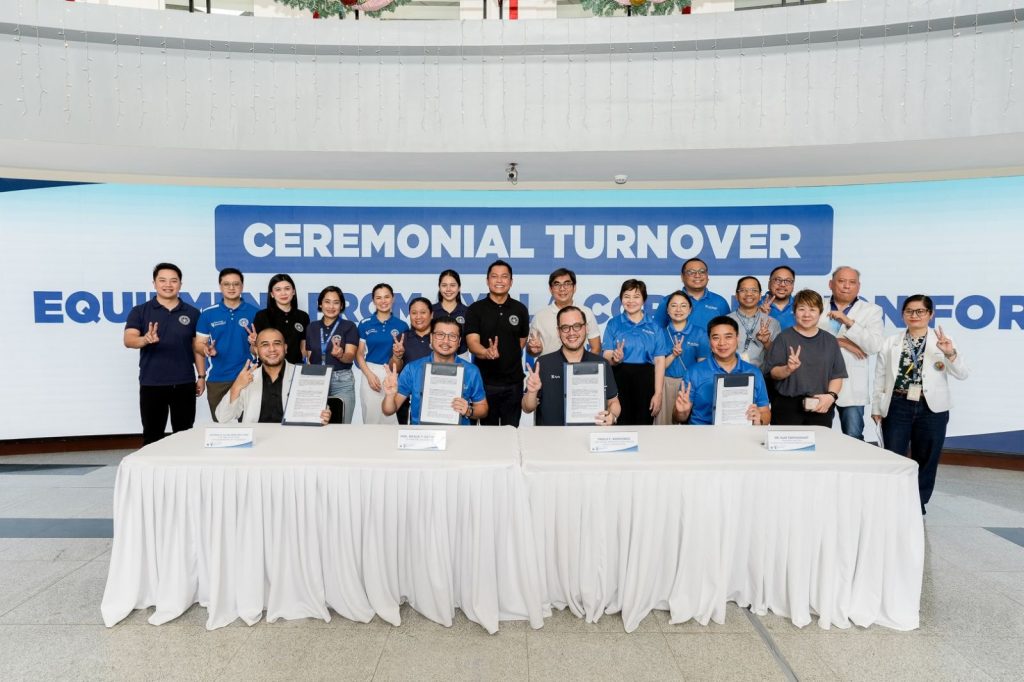
The best-publicized local program centers on lung cancer, the leading cause of cancer death among Filipinos, with 23,728 new cases and nearly 21,000 deaths recorded by the World Health Organization in 2022. In 2024, AstraZeneca and Ayala’s AC Health partnered with Qure.ai to deploy qXR software at Healthway Cancer Care Hospital in Taguig and Healthway QualiMed Hospital in Santa Rosa, Laguna, as part of the global Lung Ambition Alliance. The stated goal was to screen at least one million Filipinos by 2026. [1, 2, 3]
Crucially, hospitals like Healthway do not use qXR to diagnose cancer on its own. Instead, the software scans a standard chest X-ray and flags suspicious nodules for a human radiologist, acting as a fast triage tool to help doctors decide who should be referred for a confirmatory low-dose CT scan (LDCT). [1, 2]
What “Accuracy” Really Means
Three numbers do most of the work when evaluating a screening tool:
- Sensitivity: Of the people who truly have the disease, how many does the test catch? A sensitivity of 80% means 20 out of 100 cancers are missed.
- Specificity: Of the people who do not have the disease, how many does the test correctly clear? Low specificity means more false alarms.
- Positive Predictive Value (PPV): When the test flags a scan as “abnormal,” how often is it right?
These metrics trade off against each other. Push a tool to catch more subtle cancers, and it usually raises more false alarms. A vendor claim of “zero false positives” comes from a narrow retrospective audit of previously missed X-rays rather than everyday clinical screening. Across all patients walking through a clinic door, no real-world X-ray tool achieves zero false positives.
What Independent Studies Show for Lung Screening
Peer-reviewed studies paint a more measured picture than launch headlines:
- Controlled Reader Studies: In a multi-reader study of 300 X-rays from 40 US hospitals, 15 physicians read each image twice—once without AI and once with qXR as a second reader. Overall sensitivity rose from 72.8% to 83.5%, while specificity improved marginally from 71.1% to 72.0%. That is a meaningful gain without a spike in false alarms, though it took place in a controlled reading exercise rather than a live clinic.
- Real-World Clinic Data: In routine clinical settings, numbers tend to dip. A 2026 validation study at a hospital in Costa Rica found qXR achieved 71% sensitivity and 90% specificity for lung nodules, with a positive predictive value of 49%—meaning roughly half of the flagged nodules turned out to be false alarms. The authors stressed that AI tools must be validated in local clinical environments before deployment. [1, 2]
Systematic reviews comparing AI with human readers show a consistent pattern: AI tends to be more sensitive, while radiologists tend to be more specific. Across published studies, realistic sensitivity for X-ray nodule detection sits closer to 70% to 85% rather than 95%. A negative AI read does not completely rule out cancer, and a positive flag still requires specialist review. Furthermore, existing X-ray AI studies measure how well software spots nodules—not whether it reduces lung cancer deaths, a milestone currently proven only for LDCT screening.
The Best-Tested Cancer AI: Mammography
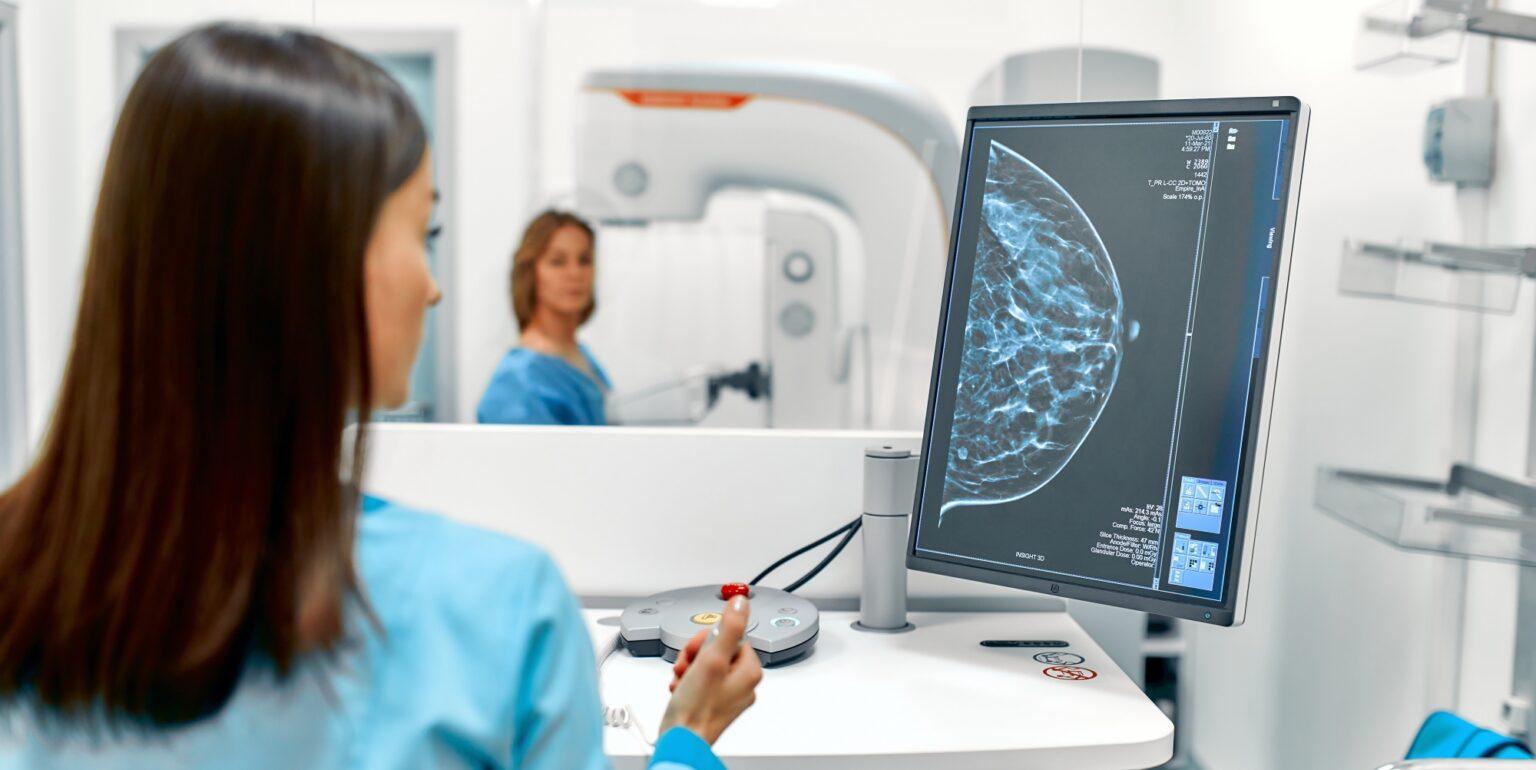
The strongest clinical evidence for cancer AI comes from breast screening: [[1](https://www.preprints.org/manuscript/202610.2250)]
- The MASAI Trial: Published in The Lancet, this Swedish trial randomly assigned over 105,900 women to AI-supported mammography or standard double reading by two radiologists. The rate of interval cancers—cancers appearing between scheduled screenings—was 1.55 per 1,000 women in the AI group versus 1.76 in the standard group, proving AI was non-inferior. Earlier MASAI results also showed a 44% reduction in radiologists’ screen-reading workload, alongside increased cancer detection without a significant increase in false-positive results.
- The PRAIM Study: A real-world German study of more than 463,000 women found that AI-supported reading detected 6.7 cancers per 1,000 women compared to 5.7 with standard reading—a 17.6% relative increase—without raising patient recall rates. [1, 2] The recall rate was slightly lower in the AI-supported group, although the difference was not statistically significant.
Even these impressive results require local context. Both European trials took place in organized, population-wide screening programs with double-reading radiologists. The Philippines relies largely on opportunistic screening, where patients get checked only when they seek care rather than through systematic national invitations. [1, 2, 3]
The Philippine Fine Print
For Filipino patients and hospitals, three practical factors determine whether screening AI delivers on its promise:
- Local Validation: Software performance can shift depending on patient demographics, local tuberculosis prevalence (which leaves lung scars that mimic nodules), and X-ray machine quality. Peer-reviewed validation data specifically on Filipino lung cancer screening populations remains scarce.
- The Cost of the Next Step: An AI flag is only helpful if a patient can afford the follow-up. PhilHealth introduced a ₱7,220 benefit package for low-dose chest CT screening under Circular No. 2025-0014 in 2025. Its use is subject to the applicable eligibility, referral and provider requirements. Subsequent guidance under Circular No. 2025-0027 established quality standards for lung cancer screening. An abnormal finding may require further imaging, specialist consultation or, in selected cases, a biopsy. Patients should ask their healthcare provider which investigation is appropriate and what costs may be involved.
- Privacy and Oversight: While the Philippines approved a National AI Strategy in May 2025, it still lacks a standalone AI law. Medical AI tools are governed primarily by the Data Privacy Act of 2012 and National Privacy Commission (NPC) Advisory No. 2024-04. Those rules protect how patient data is processed, but they do not serve as clinical benchmarks for diagnostic accuracy. [1, 2, 3]
Questions Worth Asking Before You Say Yes
If a clinic or hospital offers AI-assisted screening, it is reasonable to ask:
- Will a radiologist also review my scan? AI works best as a second pair of eyes, not a standalone doctor.
- What happens if the AI flags something, and what will it cost? Ask about referrals for LDCT scans or biopsies, and whether your PhilHealth or HMO plan covers them.
- If the AI clears my scan, am I completely in the clear? Not necessarily. Symptoms like a persistent cough, coughing up blood, or unexplained weight loss still require a thorough medical evaluation.
- How is my medical image stored and used? Ask whether your scan will be anonymized and whether it will be used to train future software algorithms. [[1](https://bworldonline.com/opinion/2026/05/25/751659/leveraging-ai-for-earlier-detection-of-lung-cancer/)]
The Bottom Line
AI is already improving cancer screening where it has been rigorously tested, with the strongest proof in mammography and encouraging—if more modest—results for chest X-rays. In the Philippines, expanding early detection through hospital partnerships is a welcome step, even if local clinical data is still catching up and “95% with zero false positives” belongs to marketing brochures rather than medical journals. For patients, the healthiest approach is pragmatic curiosity: take advantage of wider screening access, ask what local safeguards are in place, and remember that a clear AI screen is a helpful tool—never a substitute for a doctor’s judgment. [[1](https://www.preprints.org/manuscript/202610.2250)]
A note on this topic: this piece offers general health information and is not medical advice. If you have symptoms such as a persistent cough, blood in your sputum, a breast lump, or unexplained weight loss, see a doctor regardless of any screening result.
References
1. Philippine Daily Inquirer / Asia News Network (August 2024). “AI-powered technology for early lung cancer detection now in PH.” — Philippine introduction of qXR and local implementation.
2. Academic Radiology (2024). “Effect of Artificial Intelligence as a Second Reader on the Lung Nodule Detection and Localization Accuracy of Radiologists and Non-radiology Physicians in Chest Radiographs: A Multicenter Reader Study.” — Independent clinical evidence on AI-assisted lung nodule detection.
3. BioMedInformatics (2026). “Evaluation of the ‘qXR’ Software for the Detection of Pulmonary Nodules, Cardiomegaly and Pleural Effusion: A Comparative Analysis in a Latin American General Hospital.” — Real-world validation and the importance of local testing.
4. Gommers, J., et al. (2026). “Interval cancer, sensitivity, and specificity comparing AI-supported mammography screening with standard double reading without AI in the MASAI study.” The Lancet, 407(10527), 505–514. — Latest MASAI trial findings.
5. Hernström, V., et al. (2025). “Screening performance and characteristics of breast cancer detected in the Mammography Screening with Artificial Intelligence trial (MASAI).” The Lancet Digital Health. — Earlier MASAI screening results.
6. Nature Medicine (2025). “Nationwide real-world implementation of AI for cancer detection in population-based mammography screening.” — PRAIM study and real-world mammography evidence.
7. National Privacy Commission (December 2024). NPC Advisory No. 2024-04: Guidelines on the Application of the Data Privacy Act to AI Systems Processing Personal Data. — Philippine privacy and AI oversight.
8. Republic Act No. 10173. Data Privacy Act of 2012. — Legal framework for personal data protection in the Philippines.
9. PhilHealth Circular No. 2025-0014 and Circular No. 2025-0027 — Official references for the cancer screening benefit and lung cancer screening quality standards. PhilHealth
10. International Agency for Research on Cancer (IARC). GLOBOCAN 2022 Philippines Fact Sheet — For the national lung cancer statistics.