

For real, even the woman who can handle everything sometimes needs someone to say: Yes. This is hard.
There are women who can book the flight, pay the bill, run the meeting, buy the beautiful dress, arrange the dinner and make a decision before everyone else has finished discussing the problem.
And then there is menopause.
Suddenly, she is standing in a perfectly air-conditioned room wondering why she is on fire.
She wakes at three in the morning, drenched in sweat, and spends the next hour staring at the ceiling. Her skin feels dry. Her eyes and her mouth feels dry. And, in an especially unamusing development, some parts of the body she would rather not discuss at breakfast have apparently joined the drought.
She is tired.
She is irritated.
Sometimes, she finds herself sad for no obvious reason.
She may have money and independence. She may have a career, a beautiful home, a loving family, a passport full of stamps and enough credit on her card to book herself somewhere wonderful this weekend.
And still, she can feel absolutely miserable.
This is menopause.
And no, “menopausing” is probably not a word.
But you know exactly what I mean.
The Cruel Joke of It
We spend years being told to prepare for everything.
Save for retirement.
Take care of our skin.
Exercise.
Eat properly.
Build a career.
Raise children.
Look after our parents.
Plan the future.
And then, just when we think we have become reasonably competent at being ourselves, our hormones decide to rearrange the furniture.
Menopause is a natural stage of life. But natural can be unpleasant.
Hot flashes and night sweats can be mild for some women and severe enough to disrupt sleep, work and daily life for others. Vaginal dryness, irritation, painful sex and urinary symptoms can become part of what clinicians call genitourinary syndrome of menopause. Mood changes and sleep problems can join the party, too.
And perhaps the most maddening thing is that there is no single menopause experience.
Some women sail through.
Others wonder who has taken over their body.
Both experiences are real.
No, You Are Not Overacting
Some cultures have a a peculiar habit of telling women to tolerate discomfort gracefully.
A little tired? Have some coffee.
Can’t sleep? Try Katinko.
Cold? Dress in layers.
Dry? Drink more water.
Sad? Think positive.
It can all become a little insulting.
Sincerely, the answer is not another lifestyle hack.
Sometimes the answer is medical care.
Hormone therapy is an evidence-based treatment for bothersome hot flashes and genitourinary symptoms for appropriate women, and nonhormonal treatments are also available. Vaginal estrogen and other local treatments can be considered for genitourinary symptoms depending on individual circumstances. The right choice depends on medical history, symptoms and personal preferences.
There is no medal for suffering quietly.
If your symptoms are affecting your sleep, relationships, sex life, work or ability to enjoy your days, you are allowed to say:
I need help with this.
Forget about “that is weakness.”
That is information.
And Then There Is the Sadness
This part deserves more tenderness.
Sometimes you cannot explain why you feel low.
Nothing terrible happened.
You may even have a perfectly good life.
But some days feel heavier than they should.
Mood changes can occur during the menopause transition, and recent research continues to explore the relationship between hormonal changes, sleep, hot flashes and psychological well-being.
This doesn’t mean every sad day is caused by menopause. Nor should persistent depression or anxiety simply be written off as “hormones.”
It means we should pay attention.
And perhaps be less cruel to ourselves while we do.
READ: Menopause Is Not the End of Anything
The Quickest Kindness
Here is something wonderfully uncomplicated:
Talk to yourself like someone you love.
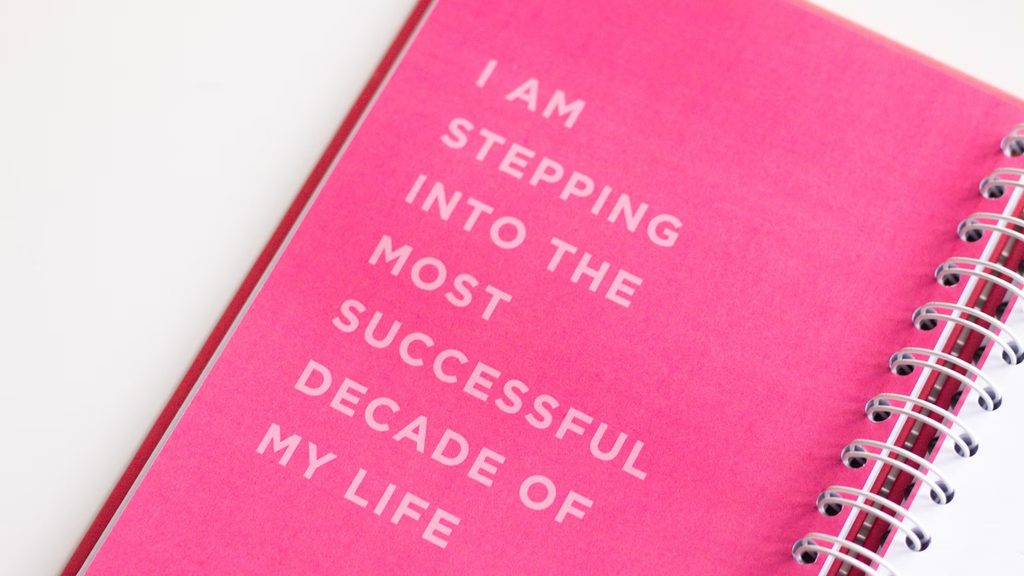
It sounds almost embarrassingly simple.
It is not.
Research has repeatedly found associations between self-compassion and well-being in women experiencing menopause. In one study, self-compassion was more strongly associated with several measures of well-being than menopausal stage or hot-flash frequency. Another study found a strong relationship between self-compassion and sleep quality among women experiencing hot flashes and night sweats.
And a 2026 feasibility trial of compassionate-mind training for women experiencing low mood or anxiety during the menopause transition found promising preliminary improvements in depression, anxiety and self-criticism. It was small, so we should not oversell it. But it is an intriguing direction for research.
Not promoting self-compassion like it’s a cure.
It doesn’t lower estrogen.
It doesn’t stop a hot flash.
Nor will it magically make you sleep through the night.
But it can change the person standing beside you while all of this is happening.
And that person is you.
So Be Kind
Be kind enough to turn on the air conditioner.
Be kind enough to carry a fan.
Stiil, be kind enough to buy the moisturizer.
Be kind enough to use a vaginal moisturizer or lubricant if dryness is making life uncomfortable, and talk to your doctor if symptoms persist.
Try so hard to be kind enough to eat properly.
Lift something heavy.
Walk.
Sleep when you can.
Take the trip.
Buy the bikini, regardless.
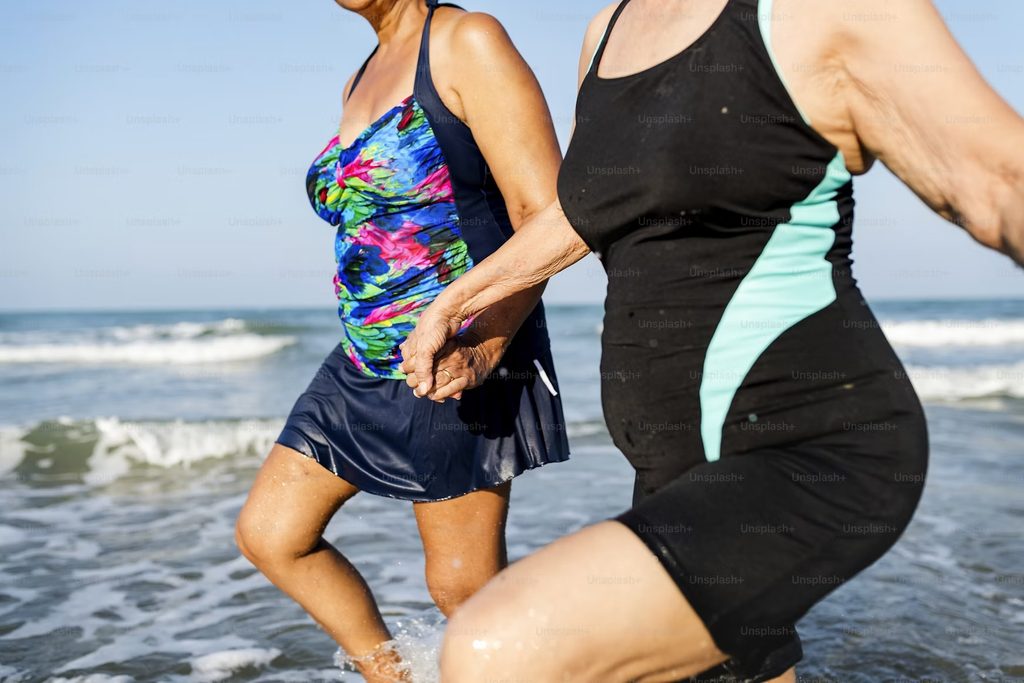
Cancel the dinner if you are exhausted.
Say no.
Say yes.
Confirm the appointment.
Ask about treatment.
Tell someone you trust that you are having a difficult time.
And if you have the means to make your life more comfortable, use them.
There is no virtue in suffering unnecessarily.
You Are Still Here
Perhaps this is the part of menopause nobody tells us.
You don’t have to become the old version of yourself again.
You don’t have to pretend that nothing has changed.
Your body has changed.
Your hormones have changed.
Needs may have changed.
So change the way you care for yourself.
This is not the end of youth.
It is not the end of beauty.
Discover that this is not the end of desire, adventure, ambition, laughter or pleasure.
It is certainly not the end of buying yourself something beautiful just because you want it.
And if you’re having one of those days when the hot flash arrives, your skin is desert-dry, you haven’t slept properly and you find yourself inexplicably close to tears in the middle of a perfectly beautiful Sunday—
you are not failing at life.
You are having a human experience.
Be furious if you need to.
Laugh at the absurdity.
Cry.
Call your friend.
Open the window.
And then, please, be gentle with the woman going through it.
She has been taking care of everyone for a very long time.
Maybe now she gets to take care of herself.
*Photo by Becca Tapert on Unsplash
References
- The Menopause Society. Menopause Topics: Symptoms. The Menopause Society. Current patient guidance.
- Bryant C, et al. “Self-compassion weakens the association between hot flushes and night sweats and daily life functioning and depression.” Maturitas. 2014.
- Bryant C, et al. “The role of self-compassion in the relationship between hot flushes and night sweats and anxiety.” Maturitas. 2021.
- Judd FK, et al. “Does self-compassion explain variance in sleep quality in women experiencing hot flushes?” Maturitas. 2023.
- National Institute for Health and Care Excellence (NICE). Menopause: Identification and Management (NG23). Updated 2026.
- The Menopause Society. Menopause Topics: Hormone Therapy. Current patient guidance.