
The first heavy rains of the season often bring a welcome change. After months of intense summer heat, cooler mornings and afternoon showers can feel refreshing. But the rainy season also arrives with its own set of challenges—from flooded streets and traffic disruptions to power interruptions and an increased risk of illnesses such as dengue, leptospirosis, and respiratory infections.
According to the Philippine Atmospheric, Geophysical and Astronomical Services Administration (PAGASA), the southwest monsoon or Habagat brings frequent rainfall across much of Luzon and the Visayas from June to November, often accompanied by tropical cyclones. While we can’t control the weather, we can control how prepared we are for it.
If we say that wellness is built through small, consistent habits, the rainy season is no exception. A few thoughtful preparations today can help protect your home, your health and your family’s safety in the weeks ahead.
REMINDER: Typhoid Fever Amid the Rainy Season in PH
Preparing Your Home
- Inspect and reinforce your roof and gutters. Before heavy rains arrive, check for leaks, rust, or loose shingles. Clean gutters and downspouts to prevent water buildup that can cause flooding or structural damage.
- Elevate electrical outlets and appliances. If your area is flood-prone, raise outlets and move appliances to higher ground. Avoid touching exposed wires; wet surfaces can conduct electricity and cause fatal shocks.
- Keep drainage clear. Regularly remove debris from canals and household drains. Coordinate with barangay clean-up drives to prevent clogging that leads to street flooding.
- Prevent mosquito breeding. Empty containers that collect water and use mosquito screens. Dengue cases often rise during the rainy season, so maintaining cleanliness is crucial.
🌧️ Did You Know?
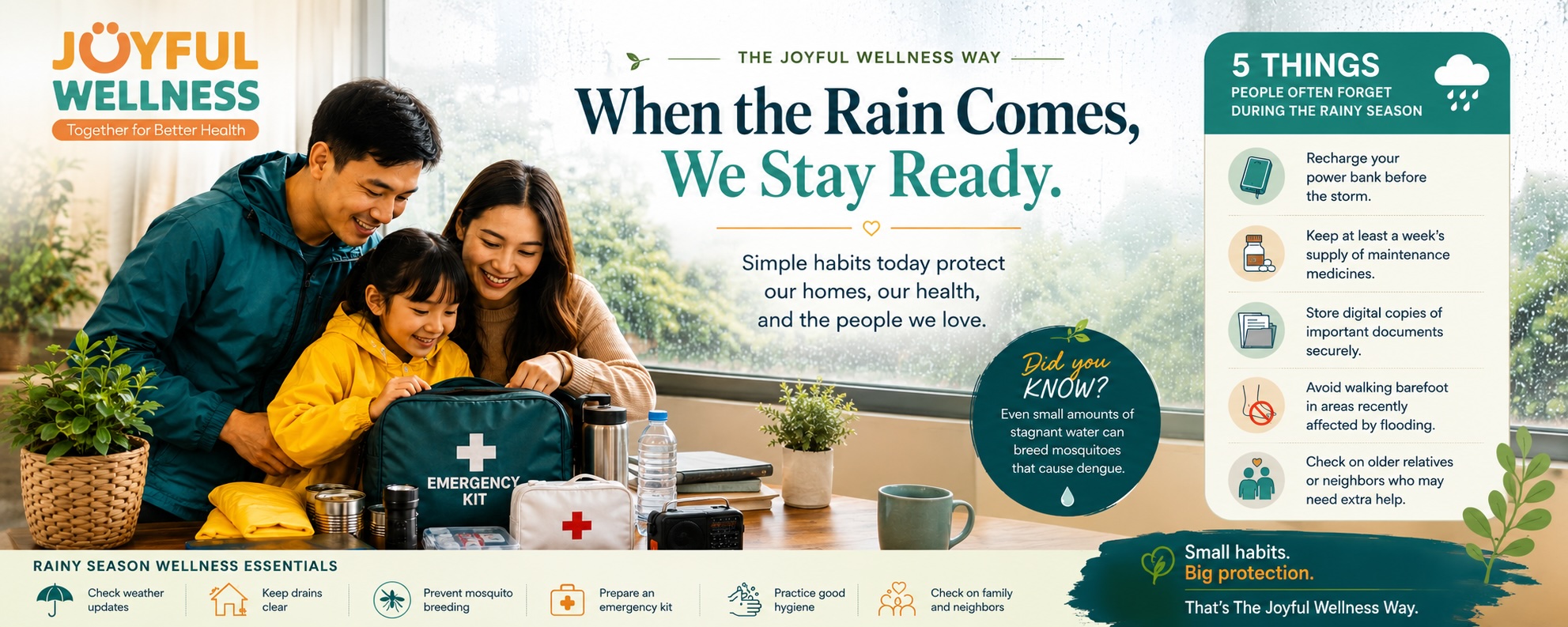
It doesn’t take a large pool of water for mosquitoes to multiply. Even small amounts of clean, stagnant water collected in flower pots, old tires, buckets, or discarded containers can become breeding sites for Aedes mosquitoes, which transmit dengue.
Prepare an Emergency Kit Before You Need It
Emergencies rarely arrive with advance notice.
Organizations such as World Vision Philippines recommend preparing a basic emergency kit that is easy to access during heavy rains or power interruptions.
Your kit may include:
- Flashlights and extra batteries
- Bottled drinking water
- Ready-to-eat food
- Basic first-aid supplies
- Maintenance medicines
- Power banks and charging cables
- Important documents stored in waterproof containers
Having these essentials ready can reduce stress and help families respond more calmly during emergencies.
Staying Safe When Heading Outdoors
- Check weather updates. Monitor advisories from PAGASA and local government units before leaving home. Avoid unnecessary travel during heavy rainfall or flood warnings.
- Dress for the weather. Wear waterproof shoes or boots to reduce the risk of slipping, carry a sturdy umbrella, and use a raincoat instead of thin jackets. Keep an extra set of clothes in your bag.
- Stay visible and cautious. Rain reduces visibility for drivers and pedestrians. Use bright or reflective clothing and avoid crossing flooded streets.
- Protect your gadgets and documents. Use waterproof pouches for phones, wallets, and IDs. Keep power banks charged in case of power outages.
One important reminder: avoid walking through floodwater whenever possible.
Floodwater is not simply rainwater. It may contain bacteria, sewage, chemicals, broken glass, or hidden open manholes beneath the surface. If contact with floodwater cannot be avoided, wash thoroughly with clean water and soap as soon as possible, especially if you have cuts or open wounds.
Looking After Your Health at Work or School
- Plan your commute. Leave earlier than usual and check traffic updates. Flood-prone areas can delay public transport. Planning ahead can make a significant difference during un
- Maintain hygiene. Wet environments can spread bacteria and viruses. Wash hands often and keep alcohol or sanitizer handy., especially after commuting or coming into contact with wet surfaces. The rainy season calls for extra attention to everyday hygiene.
- Stay informed. Follow your institution’s emergency protocols. Know evacuation routes and safe waiting areas.
It’s also a good idea to monitor your health during the rainy months. If you develop persistent fever, severe body aches, difficulty breathing, or other unusual symptoms, seek medical advice promptly rather than waiting for them to worsen.
Five Small Things People Often Forget During the Rainy Season
Sometimes it’s the smallest habits that make the biggest difference.
This week, remember to:
- Recharge your power bank before heavy rains arrive.
- Keep at least a week’s supply of maintenance medicines if severe weather is forecast.
- Store digital copies of important documents securely.
- Avoid walking barefoot in areas recently affected by flooding.
- Check on older relatives or neighbors who may need extra assistance during bad weather.
The Joyful Wellness Way
A rainy day does not make the world stop. With preparation and awareness, we can stay safe, dry, and resilient. These are simple habits that help protect our homes, our health and the people we love. The key is consistency, small habits like checking drains, packing essentials, and monitoring weather alerts can make a big difference when the skies turn grey.
The Science Behind This Story
- Philippine Atmospheric, Geophysical and Astronomical Services Administration (PAGASA). Weather Advisories and Southwest Monsoon (Habagat) Information.
- Department of Health (DOH). Dengue Prevention and Leptospirosis Health Advisories.
- World Health Organization (WHO). Flooding and Communicable Diseases.
- Philippine Red Cross. Household Disaster Preparedness Guidelines.
- World Vision Philippines. Emergency Preparedness Resources.