

The modern professional can move through multiple countries in a week, attend meetings from an airport lounge, and remain connected to colleagues across continents at almost any hour of the day.
What many of us do far less frequently is squat, twist, reach, balance, crawl, or sit comfortably on the floor.
These are among the most fundamental actions available to the human body. Yet in a world organized around screens, chairs, transportation, and convenience, they have become increasingly absent from daily life.
International Day of Yoga
This year’s International Day of Yoga is being observed under the theme of Yoga for Healthy Ageing. The theme arrives at a time when conversations about health are increasingly dominated by longevity. From biological age testing and wearable technology to supplements and recovery protocols, there is growing interest in how long we can live and how effectively we can slow the ageing process.
Yoga occupies an unusual position within that conversation.
Yoga teachers often argue that yoga is more than a form of exercise.
That statement can sound strange when viewed from the outside. Millions of people encounter yoga through physical postures, fitness studios, and athletic practice. Yet within the tradition itself, exercise was never the sole objective. Postures, or asanas, are one component of a broader system that includes breath regulation (*pranayama*), self-study, attention, and daily practice. Yoga asks people not simply to practice for an hour, but to move through life with greater awareness.
READ: Movement Is Medicine: The Quiet Prescription We’ve Always Had
An Ancient Practice Endures
Many contemporary wellness trends promise to optimize the body. Yoga, by contrast, has spent thousands of years teaching people how to live within it. Long before concepts such as health span, biological age, and preventive medicine entered public conversation, yoga concerned itself with how people sustain physical capability, mental clarity, and engagement with the world around them as they move through different stages of life.
Part of the reason yoga has endured for thousands of years may be that it addresses capacities that remain relevant regardless of age. Through movement and breath, the practice engages qualities that modern research continues to identify as important to long-term health, including balance, strength, mobility, coordination, and respiratory function.
Yoga For Seniors
While completing a yoga teacher training, I attended community classes offered through the program. One attendee, a man in his seventies, arrived for his first yoga class requiring assistance throughout much of the session. Several months later, he was moving through practice largely on his own. His breathing had become steadier; the need for assistance had diminished, and there was a visible difference in the ease with which he moved.
Individual experiences are not scientific evidence. They do, however, reflect questions that researchers have increasingly begun to study.
The Research Findings
A 2021 systematic review and meta-analysis published in the International Journal of Environmental Research and Public Health examined 22 studies involving older adults. They found that yoga improved balance, lower-body flexibility, lower-limb strength, mobility, and overall physical function. The authors concluded that yoga could improve both physical function and health-related quality of life. A separate review published in Age and Ageing found that yoga-based exercise programs significantly improved balance and mobility among adults over sixty.
These findings are particularly relevant because balance and mobility influence far more than exercise performance. They affect whether people can continue travelling independently, participate in social activities, recover from falls, navigate stairs, carry groceries, and remain engaged in the routines that shape everyday life.
The same continuum can be observed from another perspective in the story of Charlotte Chopin, a yoga teacher in France who continues to teach classes at 102 years old. At one end is someone arriving at their first class in their seventies. At the other is someone who has maintained practice for decades. Together, they illustrate different stages of a lifelong relationship with movement, breath, and physical capability.
Designed As A Practice
Yoga philosophy offers its own language for this idea. In the Yoga Sutras, the concept of abhyasa refers to sustained and consistent practice over time. The emphasis is on returning to practice repeatedly more than on intensity, performance, or achievement. The principle appears deceptively simple. It is also one of the reasons yoga continues to resonate in a culture often drawn toward quick results and short-term interventions.
Practices have survived for centuries because they continue to answer questions people keep asking. How do we remain capable as we age? How do we maintain balance amid changing circumstances? We remain curious on how to sustain our physical and mental wellbeing through different stages of life?
More than five thousand years after its origins, yoga continues to attract first-time practitioners while remaining part of the lives of people who have practiced for decades. At a time when longevity has become a central focus of health and wellbeing, its enduring relevance may stem from a simple fact: yoga was never designed as a workout. It was designed as a practice, and practices tend to stay with us far longer than exercises do.
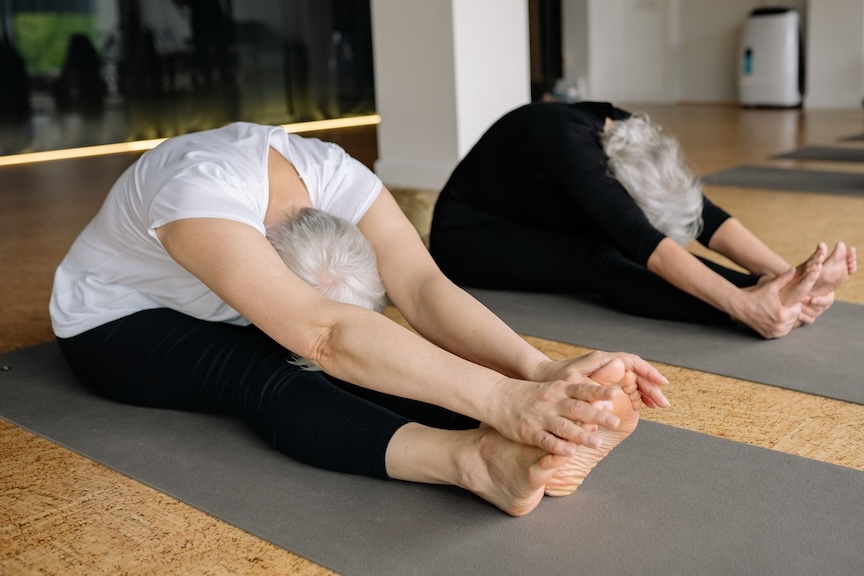
Photo by Yan Krukau: https://www.pexels.com/photo/elderly-people-doing-yoga-8436479/
References
Wu, Y., Wang, Y., Burgess, E. O., & Wu, J. (2021). *The Effects of Yoga on Physical Function and Health Related Quality of Life in Older Adults: A Systematic Review and Meta-Analysis*. International Journal of Environmental Research and Public Health, 18(21), 11663.
Youkhana, S., Dean, C. M., Wolff, M., Sherrington, C., & Tiedemann, A. (2016). *Yoga-based exercise improves balance and mobility in older people: A systematic review and meta-analysis*. Age and Ageing, 45(1), 21–29.