
How Tomo Okabe is helping women rediscover strength, confidence, and themselves
Gyms that promise flatter stomachs, leaner arms, firmer thighs, abound. Then there are places that quietly promise something far more radical: the possibility that a woman can return to herself.
Inside the newly opened SPICE UP FITNESS at Park Triangle in Taguig, mirrors line the walls, machines gleam under careful lighting, and music pulses softly through the room. The atmosphere feels focused yet welcoming, a space shaped by intention, discipline, and quiet confidence. More than a place for workouts, it carries the sense that something deeply personal and transformative is unfolding here..
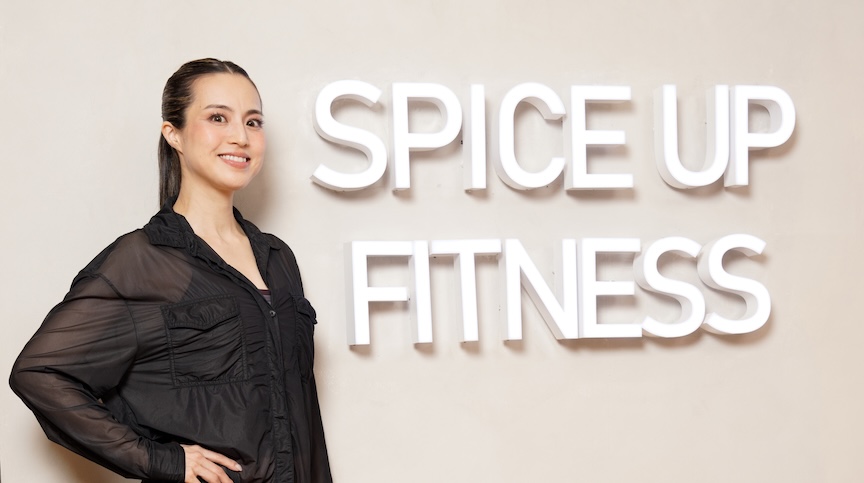
At the center of it all is Tomo Okabe, charming, magnetic, quick to laugh, startlingly youthful, and entirely certain of what she wants her life’s work to accomplish.
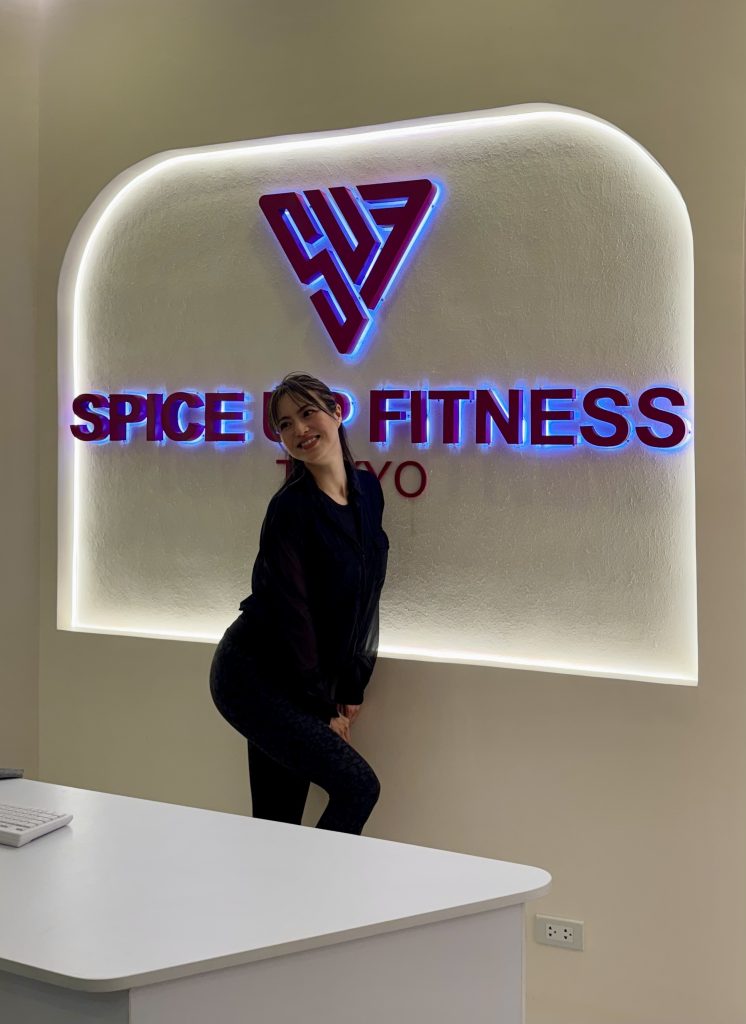
“Fitness is not about becoming someone else. It is about becoming a stronger version of yourself.”
— Tomo Okabe, founder of SPICE UP FITNESS
At the heart of the women-only fitness brand from Japan is a deeper philosophy: confidence, independence, and transformation from within.
“This is not business for me,” she says at one point during our conversation, almost casually, though the conviction behind the words lingers long after. “Fitness is just a tool.”
It is perhaps the most revealing thing she says in the interview.
Because what Okabe has built over the last decade in Japan is not merely a fitness brand. It is a philosophy rooted in self-confidence, female empowerment, emotional transformation, and the belief that strength can reshape not only the body, but an entire life.
Long before SPICE UP FITNESS became one of Japan’s most talked-about women-only gyms — and before its expansion to Vietnam and now the Philippines — Okabe was simply a little girl from Kanagawa Prefecture running along with the boys in playgrounds, swimming competitively, and discovering early that movement came naturally to her.
Sports defined much of her childhood. Swimming first. Then track and field. Sprinting. Hurdles. Competition after competition. Victories came early, but so did setbacks. At one point, a broken leg nearly derailed her athletic journey entirely. Yet even that experience, she recalls now with surprising calmness, taught her something important about resilience, timing, and the refusal to surrender to failure.
By high school, another realization had begun to form.
As a female athlete training under male coaches, there were moments she felt unable to openly discuss the realities of being a woman, injuries, physical discomfort, the private complexities of the female body. Nothing traumatic occurred, she clarifies, but the discomfort stayed with her. Quietly, almost subconsciously, the seeds of SPICE UP FITNESS were already being planted.
“Maybe if there were female coaches,” she reflects, “women athletes would feel more comfortable.”
After high school, Okabe made a leap that would alter the course of her life. At 18, speaking barely any English, she moved alone to the United States to study exercise physiology at the University of Florida. The adjustment was brutal. Language barriers left her isolated. Cultural differences shocked her. But unlike many students who go abroad primarily to learn English, Okabe says she arrived with something far more specific in mind.
She wanted to understand the human body.
More importantly, she wanted to understand women.
GET THE JOURNAL NOW: A BETTER YOU
The true turning point, however, did not come inside a classroom. It came during a summer break back in Japan, after she had already spent time absorbing a different worldview in America.
Reuniting with friends from home, she found herself disturbed by how narrowly many young women viewed their futures; conversations centered almost entirely around marriage, finding the right boyfriend, and fitting neatly into predetermined social expectations.
“I thought, stop it,” she recalls, laughing now at the memory, though the frustration behind it was genuine. “You can do whatever you want.”
That moment fundamentally changed the trajectory of her ambitions.
Originally intending to coach female athletes, Okabe shifted toward fitness psychology and women-centered coaching instead. She became increasingly fascinated not merely with training bodies, but with helping women discover confidence, independence, and agency through physical transformation.
That philosophy eventually became SPICE UP FITNESS.
The name itself carries intention.
“I wanted to spice up their lives,” she explains.
Not through vanity. Not through impossible beauty standards. But through the experience of realizing one is capable of change.
“Changing the body is something you do yourself,” she says. “Nobody can do it for you.”
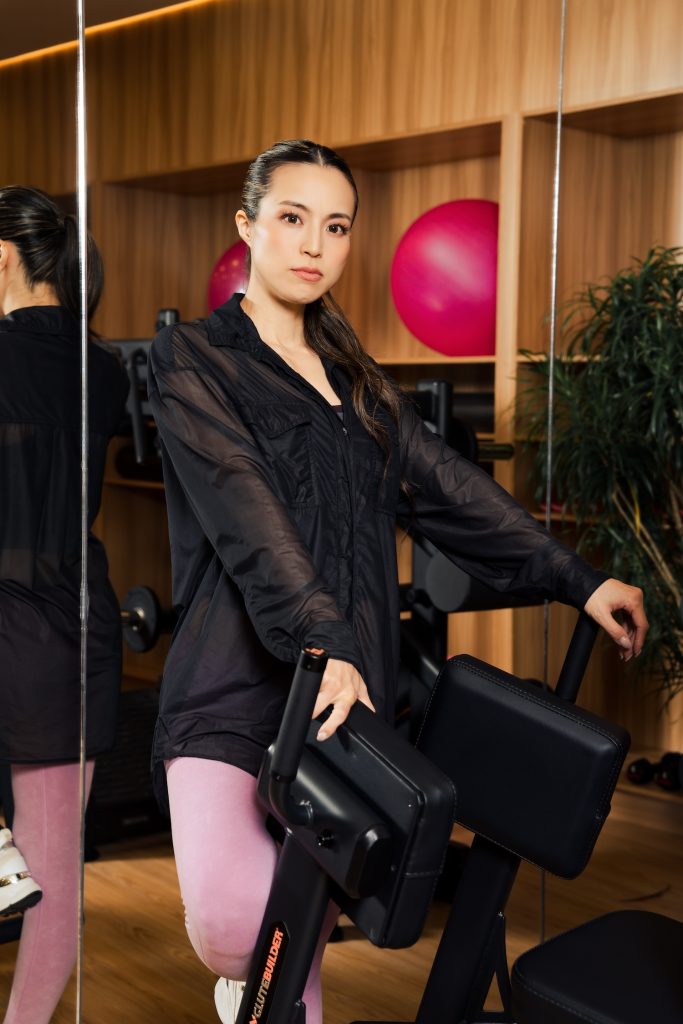
Inside SPICE UP FITNESS, the goal goes beyond workouts and routines. It is about learning to trust your own strength again, physically, emotionally, and mentally.
A little stronger. A little braver. One session at a time.
It is this belief that distinguishes SPICE UP FITNESS from the countless gyms crowding today’s wellness landscape.
Okabe speaks less about aesthetics than she does about self-efficacy, the psychological phenomenon in which people begin believing they are capable of more because they have already succeeded at something difficult.
At SPICE UP FITNESS, training sessions often become emotional conversations. Women speak about stress, relationships, insecurities, disappointments, fears. Okabe listens carefully, then pushes them: physically, mentally, emotionally.
“The training is hard,” she admits with a grin.
Yet somewhere between repetitions, sweat, discipline, and encouragement, something shifts.
Women begin standing differently. Thinking differently. Seeing themselves differently.
“I made women divorce many times,” she jokes at one point, laughing loudly. Then she quickly clarifies what she means: not destruction, but empowerment. Confidence. Independence. The courage to stop settling.
The remarkable thing about Okabe is that despite her success, she still speaks less like a businesswoman and more like someone driven by advocacy.
After returning to Japan from the United States, she began with almost nothing, a tiny rented apartment, basic equipment, and only a handful of clients, many of them friends. For seven years, she trained people relentlessly, sometimes handling as many as fourteen one-on-one sessions in a single day without breaks.
The eventual expansion of SPICE UP FITNESS came only after a health scare forced her to confront a difficult truth: if she truly wanted to change more women’s lives, she could no longer do it alone.
Today, the brand has four branches in Japan, one in Vietnam, and now its newest home in the Philippines. Yet even as the company grows internationally, Okabe insists she never consciously pursued expansion for its own sake.
“I’m not really a business person,” she says candidly. “I just love seeing people change.”
The Philippine branch, opened in partnership with the Viva Group, feels especially timely.
Modern women are exhausted. Burned out. Pressured constantly to improve themselves while simultaneously shrinking themselves, physically, emotionally, socially. Fitness culture, unfortunately, has not always helped. Many gyms still feel intimidating, performative, or disconnected from the realities women carry inside them every day.
SPICE UP FITNESS offers something different.
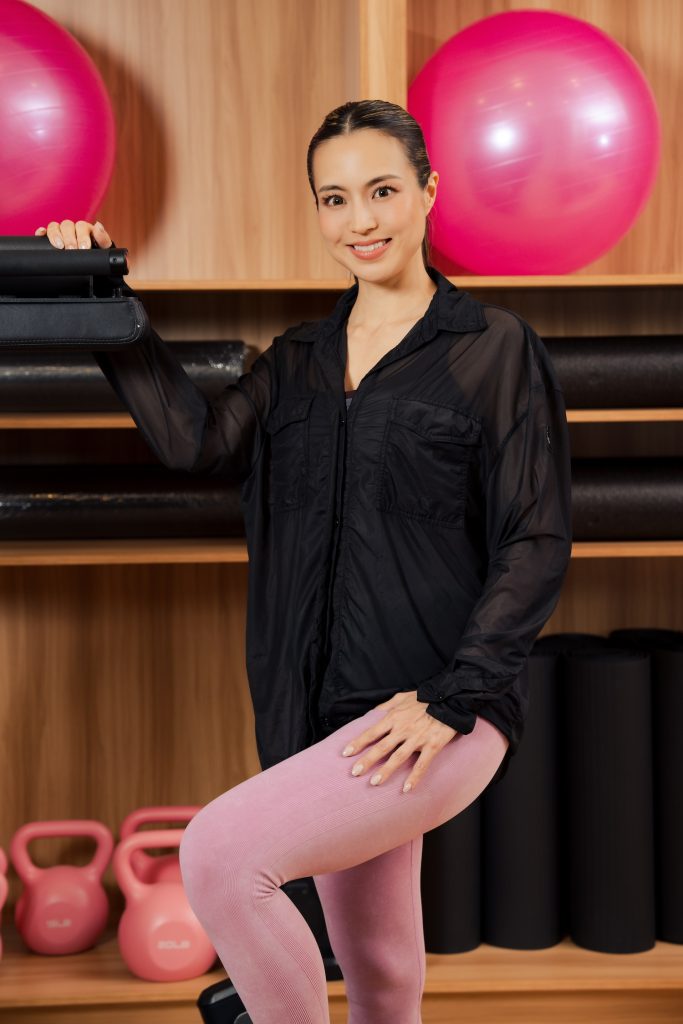
Charming, disciplined, and driven by purpose, Tomo Okabe built SPICE UP FITNESS as a space where women can rediscover their confidence at any age.
Because according to Tomo: “You can always become better than who you were yesterday.”
Its programs focus heavily on biomechanics, posture, female-specific training, and what Okabe calls “mind-muscle connection,” an approach that emphasizes intentional movement and understanding how muscles actually function rather than merely copying exercises mechanically.
She is especially known for glute training, though even that conversation becomes philosophical in her hands.
“We’re all designed differently,” she says. “You can become a better version of yourself, not someone else.”
That line may ultimately capture the spirit of SPICE UP FITNESS more than any machine, program, or transformation photo ever could.
Because beneath the workouts, consultations, and carefully designed routines lies a quieter message; one many women may desperately need to hear.
You are not too old, neither are you stuck. You are not finished becoming.
“At any age,” Okabe says firmly, “you can change.”
Perhaps that is the true reason SPICE UP FITNESS feels less like a gym and more like a movement waiting to happen.
Inside its mirrored walls, women may arrive hoping to lose weight, sculpt curves, or improve posture. But they may leave carrying something far more enduring: the realization that strength hardly lies in appearance.
It is about finally taking up space and becoming the spice, in one’s own life.