
This week’s health news spans global outbreaks, extreme heat, and hospital strain, reminders that public health is no longer something distant or abstract. Increasingly, it shapes daily life, from how safely people exercise outdoors to how quickly hospitals can respond during emergencies.
Here are some of the stories health experts are watching closely and why they matter for Filipinos.
WHO declares Ebola outbreak a global health emergency
The World Health Organization has declared the Ebola outbreak affecting parts of the Democratic Republic of the Congo and Uganda a Public Health Emergency of International Concern (PHEIC), its highest level of global alert. The outbreak involves the Bundibugyo strain of Ebola, for which there is currently no licensed vaccine.
Health authorities are especially concerned because confirmed and suspected cases have already crossed borders, while fragile healthcare systems and regional mobility may complicate containment efforts.
For the Philippines, the immediate risk remains low. Nevertheless, the situation is another reminder that infectious disease outbreaks remain a global concern in an interconnected world. Experts continue to emphasize surveillance, border preparedness, public communication, and trust in science-based health systems.
More broadly, the story highlights something public health experts have warned about for years: outbreaks move faster in a world shaped by migration, urban density, climate stress, and global travel.
Ospital ng Maynila temporarily closes emergency room for repairs
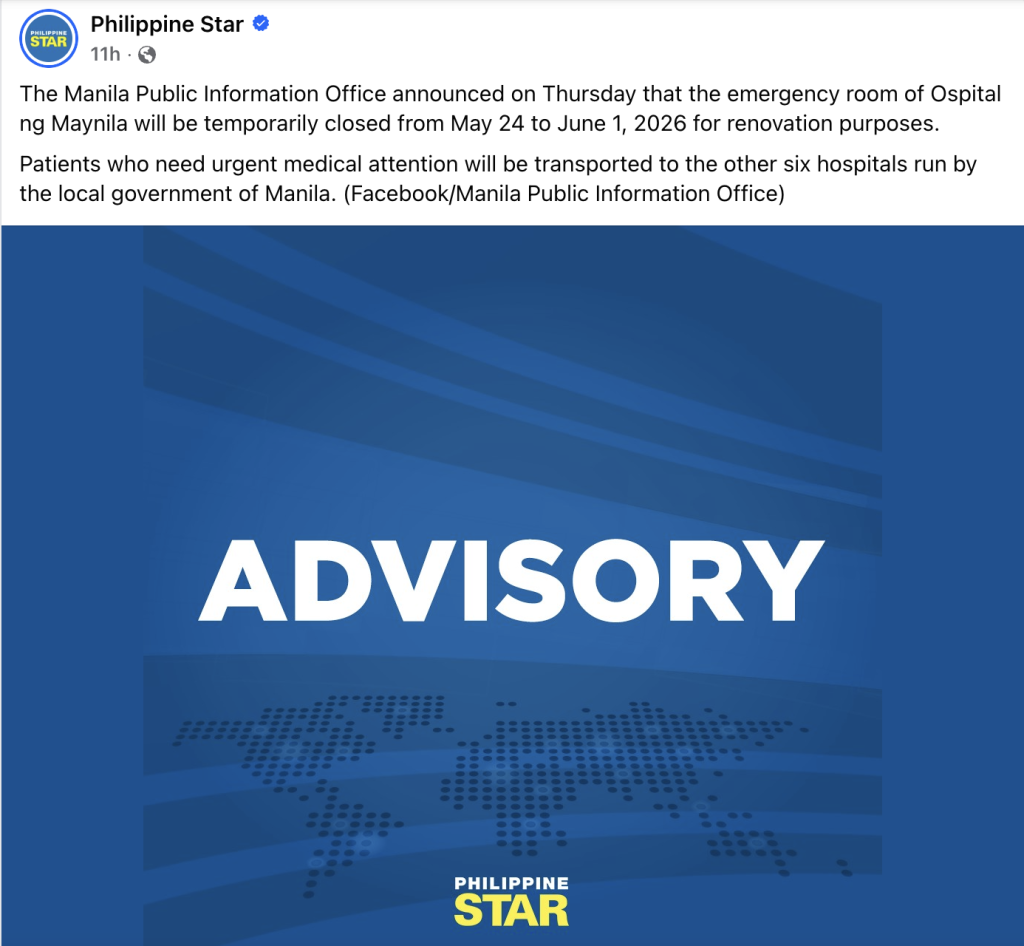
Closer to home, the emergency room of Ospital ng Maynila Medical Center will temporarily shut down from May 24 to June 1 to allow urgent rehabilitation and repair work.
Although temporary, the closure has sparked conversations online about hospital capacity, emergency preparedness, and the strain public hospitals continue to face.
Healthcare experts have repeatedly pointed out that overcrowding, aging infrastructure, workforce shortages, and rising patient demand continue to pressure many hospitals across the country. At the same time, modernization efforts are ongoing, including digital integration, expanded specialty services, and infrastructure upgrades in several government facilities.
The incident also quietly raises a deeper wellness question:
How resilient are healthcare systems when even short interruptions can affect thousands of patients?
DOH warns Filipinos against exercising in extreme heat
As temperatures continue rising across the country, the Department of Health is warning Filipinos to take heat-related illness seriously, especially during outdoor exercise and prolonged exposure to high heat indices.
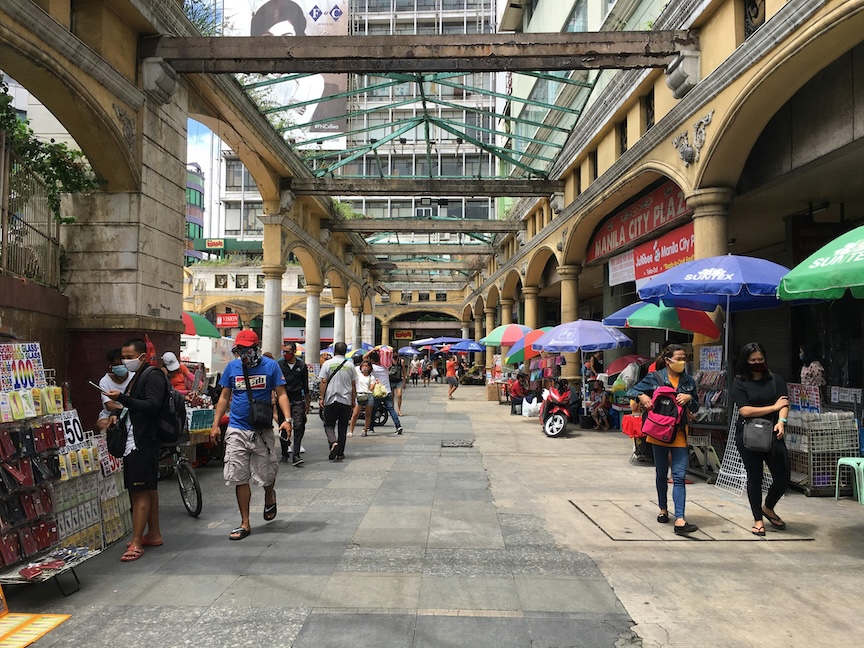
Photo by Kristine Wook on Unsplash
Heat exhaustion and heat stroke can affect even healthy individuals, particularly runners, joggers, outdoor workers, senior citizens, and children.
Doctors advise:
- avoiding outdoor exercise during peak afternoon heat,
- staying hydrated,
- wearing light clothing,
- recognizing dizziness or nausea early,
- and slowing down when humidity and heat become extreme.
This matters because climate-related health risks are no longer seasonal inconveniences. Increasingly, they are becoming part of everyday urban life.
And perhaps this is the larger pattern connecting all three stories:
health is no longer shaped only inside hospitals.
It is shaped by cities, infrastructure, climate, public systems, preparedness, and the environments people move through every day.
The bigger wellness story behind the headlines
At first glance, Ebola outbreaks, ER closures, and heat advisories may seem unrelated.
But together, they point toward the same reality:
modern health is deeply connected to systems.
The strength of hospitals, the resilience of cities.
Even the clarity of public communication and the accessibility of healthcare.
The safety of public spaces.
The ability of governments to respond quickly and transparently.
In many ways, the future of wellness may depend on personal choices as well as on whether societies are prepared to protect people before crisis becomes catastrophe.
getty-images-u9C3llE_D3M-unsplash.jpg
References
Ebola outbreak / WHO declaration
- World Health Organization. Ebola disease caused by Bundibugyo virus, Democratic Republic of the Congo. May 2026.
- Reuters. WHO declares Ebola outbreak in Congo, Uganda a global health emergency. May 17, 2026.
- The Guardian. WHO says Ebola outbreak in DRC and Uganda is ‘emergency’ of international concern. May 2026.
Ospital ng Maynila emergency room closure
- Manila Public Information Office advisory on temporary ER shutdown for urgent repairs. May 2026.
- Ospital ng Maynila Medical Center
Heat warnings / exercising in extreme heat
- Philippine Information Agency. DOH warns of rising heat illness and pet bites as summer temperatures soar. April 2026.
- PAGASA heat index advisories and reports on danger-level temperatures.
- Rizal Medical Center Health Corner. Heat Stroke Prevention.
Additional context on Philippine healthcare strain
- ABS-CBN News. PGH ER operating in overcapacity; public urged to find other hospitals.
- GMA News Online. Ospital ng Maynila announces ER overcapacity.