

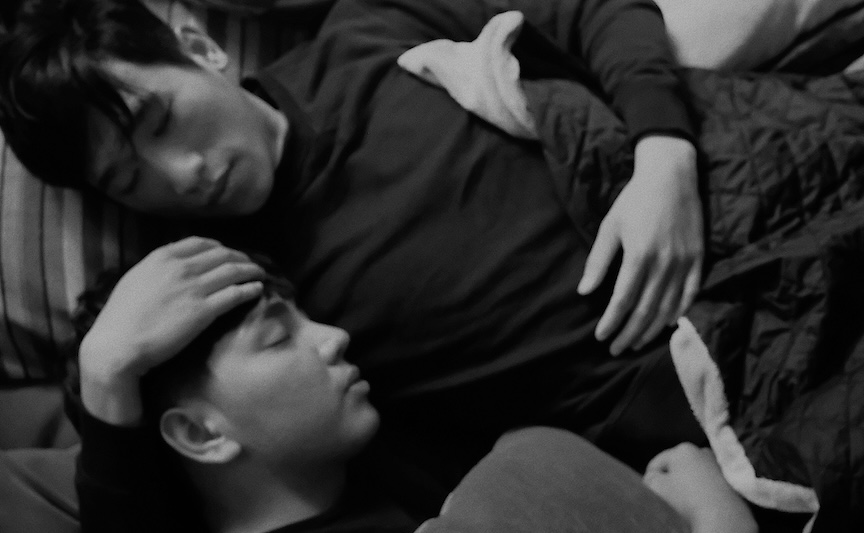
On World Sleep Day, March 13, 2026, sleep specialists again warned that poor sleep should not be brushed aside as a side effect of busy living.
According to the World Sleep Society, which organizes World Sleep Day through its World Sleep Day Committee, the annual campaign serves both as a celebration of sleep and as a call to action on major sleep-related health issues.
The official 2026 theme, “Sleep Well, Live Better,” arrives as clinical guidance from the American Academy of Sleep Medicine (AASM) and the Sleep Research Society continues to recommend that adults obtain seven or more hours of sleep per night on a regular basis to protect overall health.
Meanwhile, a 2019 systematic review and meta-analysis in Sleep Medicine Reviews found that insomnia significantly predicted the later onset of depression and anxiety, with pooled odds ratios of 2.83 and 3.23, respectively.
In the Philippines, where a 2023 Milieu Insight study found that 56% of Filipinos sleep less than seven hours a day, the message carries unusual urgency.
From Symptom to Predictor
For years, sleep problems were often treated as a side effect of stress, anxiety, or depression.
Nevertheless, growing evidence suggests the relationship runs both ways. Sleep disturbance can appear before a mental health condition is formally recognized.
A 2024 study in Sleep Medicine involving 16,699 adults found that sleep disturbance and anxiety were bidirectional. However, the influence of poor sleep on later anxiety was stronger. Individuals with sleep disturbance at baseline had a 1.89-times higher risk of developing anxiety, while anxiety increased the risk of later sleep disturbance by 1.20 times.
Further evidence comes from a 2021 meta-analysis of randomized controlled trials in Sleep Medicine Reviews covering 65 trials, 72 interventions, and 8,608 participants. The analysis found that improving sleep led to significant reductions in depression, anxiety, stress, and rumination.
Hence, sleep is no longer viewed simply as something disrupted by mental distress. It is increasingly treated as a factor that can influence whether psychological distress worsens or improves.
The Philippine Sleep Deficit Is Already Visible
The Philippines does not yet have a nationwide government sleep survey capturing the entire picture. However, credible local and regional studies already show a substantial deficit.
According to Milieu Insight’s 2023 regional sleep study, the Philippines had the highest share in Southeast Asia of people sleeping less than seven hours daily, at 56%.
GMA News, citing the same dataset in July 2024, reported that Filipinos were the most sleep-deprived population in Southeast Asia.
In an April 2025 interview cited by GMA News, Dr. Jimmy Chang of the Philippine Society of Sleep Medicine attributed the pattern to several factors: night-shift work, heavy social media use, traffic congestion, and long daily commutes.
Meanwhile, a 2025 commentary in Sleep Medicine by Philippine researchers described sleep deprivation in the country as reaching “epidemic levels,” reflecting growing concern within the local medical community.
Consequently, the conversation has shifted from whether sleep loss is common to whether the country is taking its health consequences seriously enough.
READ: Heart Health Beyond Cholesterol: Sleep, Stress, and Social Connection
Sleepless in Metro Manila
Nowhere do these pressures collide more clearly than in Metro Manila.
According to the 2020 Census of Population and Housing, the National Capital Region had 13,484,462 residents.
Meanwhile, the TomTom Traffic Index 2025 reported that Manila recorded an average congestion level of 57%. A 10-kilometer drive took about 31 minutes and 45 seconds on average, increasing to 43 minutes and 29 seconds during evening rush hour.
These numbers matter because sleep is shaped by schedules. In Metro Manila, schedules are often dictated not only by work hours but also by time lost before work even begins and after it ends.
Dr. Chang explained in his April 2025 interview that travel time often eats into sleep. He also noted that many Filipinos prioritize social media over sleep, while night-shift work — especially in business process outsourcing sectors — disrupts the body’s natural circadian rhythm.
Meanwhile, the World Health Organization notes that excessive environmental noise can contribute to sleep disturbance and has growing evidence linking it to mental health problems.
In a dense, noisy, high-pressure capital region, this combination can quietly turn urban life itself into a sleep disruptor.
What Lost Sleep Does to Mood
Sleep loss affects the brain systems responsible for emotional regulation.
A 2020 meta-analysis in Psychological Bulletin found that sleep deprivation moderately increases negative mood, has a large effect in reducing positive mood, and weakens the brain’s ability to regulate emotions.
Similarly, a 2022 experimental study in Frontiers in Behavioral Neuroscience found that 24 hours of acute sleep deprivation increased negative emotional states such as anxiety, fatigue, confusion, and depression among healthy young adults.
This helps explain why chronic sleep deprivation often appears ordinary before it becomes clinical.
It may first show up as irritability, emotional sensitivity, poor concentration, and a lower tolerance for stress.
Importantly, research suggests these changes are not simply about attitude or self-control. When sleep is repeatedly shortened or fragmented, the brain’s ability to manage stress and emotion becomes less reliable.
Hence, someone who appears emotionally drained or easily overwhelmed may also be chronically sleep-deprived in ways that deserve attention rather than judgment.
DISCOVER: Stress Less, Glow More: A Practical Guide to Better Sleep and Hydration
The Strain Also Reaches Relationships
Sleep loss rarely stays confined to the individual. It often spills into relationships.
A 2022 study in the Journal of Behavioral Medicine titled Quarreling After a Sleepless Night found that sleep-deprived couples showed higher cortisol levels during conflict and lower positive emotional responses before and after disagreements compared with well-rested couples.
The researchers concluded that sleep deprivation may have a causal negative effect on relationship conflict.
This aligns with broader evidence showing that sleep loss weakens emotional regulation and increases stress reactivity.
In practical terms, chronic poor sleep can shorten patience, intensify irritability, and make everyday disagreements feel heavier than they would otherwise.
In crowded urban households already coping with financial stress, caregiving demands, and long commutes, that matters.
When relationship conflicts rise, they can become another source of nighttime stress, feeding the same cycle that made sleep fragile in the first place.
Philippine Studies Are Pointing in the Same Direction
Local research, though often focused on students, reflects similar patterns.
A 2024 study of students at the University of the Philippines College of Medicine, published in Acta Medica Philippina, found that 79.71% of respondents experienced stress and 59.73% reported poor sleep quality, with a statistically significant correlation between the two.
Another study of Filipino medical students during pandemic lockdowns found that 62.34% had poor sleep quality, while 41.18% experienced excessive daytime sleepiness.
Meanwhile, a 2025 University of the Philippines Los Baños study involving 281 college students reported that participants averaged 7.04 hours of sleep, yet still showed poor sleep quality based on a mean Pittsburgh Sleep Quality Index score of 8.20.
The study also found that better sleep was associated with healthier emotional coping strategies, particularly greater use of cognitive reappraisal.
Although these are not nationwide datasets, they reinforce global evidence: sleep quality is closely linked to how people regulate stress and emotions.
EXPLORE: The Secret to a Longer Life? It Might Just Be Sleep
Screens, Shifts, and the Modern Sleep Squeeze
Technology has made sleep challenges harder to manage.
A 2024 systematic review and meta-analysis in the Journal of Medical Internet Research examined 55 studies involving more than 41,000 participants from over 20 countries. The analysis found that electronic media use was significantly associated with reduced sleep quality and increased sleep problems.
Problematic internet, smartphone, and social media use were especially linked with poor sleep outcomes. The relationship between problematic social media use and sleep problems was also found to be stronger in Eastern cultures.
This finding matters in the Philippines, where internet use is high and bedtime scrolling has become part of everyday life.
Dr. Chang told GMA News that Filipinos frequently prioritize social media over sleep, delaying sleep onset even when they are already tired.
Meanwhile, many workers do not have the luxury of stable sleep schedules. Night shifts in call centers, hospitals, transport, and other sectors require people to sleep against their natural circadian rhythm.
Consequently, the country’s sleep deficit is being driven not only by personal habits but also by work structures and the demands of always-on digital life.
Metro Manila’s Clinics Are Taking Sleep More Seriously
Hospitals in Metro Manila increasingly treat sleep disorders as legitimate medical concerns.
According to St. Luke’s Medical Center, its Comprehensive Sleep Disorders Center diagnoses and treats more than 80 different sleep disorders using a multidisciplinary approach.
In 2019, the hospital also launched what it described as the first multidisciplinary insomnia program in the Philippines, bringing together sleep psychiatrists, neurologists, psychologists, and sleep specialists.
Meanwhile, Makati Medical Center’s Neurophysiology and Sleep Disorders Laboratory evaluates conditions including obstructive sleep apnea and insomnia.
These services do not suggest that every case of sleeplessness is a disorder.
However, they reflect a shift in clinical thinking. Sleep is increasingly understood as overlapping with neurology, psychiatry, cardiometabolic health, and daily functioning.
In other words, Manila’s hospitals are treating sleep problems as a medical issue with mental health implications, not merely an inconvenience.
A Warning Sign the Country Should Stop Ignoring
By the time World Sleep Day arrives each year, advice to sleep more can sound routine. Yet the evidence behind it has become increasingly difficult to ignore.
According to the World Sleep Society, the goal of World Sleep Day is to reduce the burden of sleep problems on society through better prevention and management.
Clinical guidance from the AASM and Sleep Research Society recommends at least seven hours of sleep per night for adults.
Global studies show that insomnia and chronic sleep disturbance can predict later anxiety and depression.
Meanwhile, Philippine studies and reporting show that many Filipinos are already sleeping too little or sleeping poorly. Clinicians in Metro Manila point to night shifts, traffic congestion, long commutes, stress, and digital habits as contributing factors.
The clearest takeaway this World Sleep Day may also be the simplest.
In a city that works late, scrolls late, and travels long, chronic poor sleep may be one of the earliest, most ordinary, and most overlooked signs that mental health is already under strain.
Photo by Hà Nguyễn on Unsplash
References:
Ballebas, T. M., Maraon, J. Q., Janer, C. D., Irisari, P. S., Alucilja, L. K. B., Ko, L. A. T., Minalang, K. G., De Leon, A. S., Castillo, F. R. G., Octavo, E. M., Bacolongan, A. O., Roa, C. C., Jr., & Sison, E. O. D. (2024). Cross-sectional study on the correlation of stress and sleep quality of Learning Unit III (1st year) to VII (5th year) medical students from the University of the Philippines College of Medicine. Acta Medica Philippina, 58(14), 41–49. https://doi.org/10.47895/amp.vi0.6574
Cernadas Curotto, P., Sterpenich, V., Sander, D., Favez, N., Rimmele, U., & Klimecki, O. (2022). Quarreling after a sleepless night: Preliminary evidence of the impact of sleep deprivation on interpersonal conflict. Affective Science, 3(2), 341–352. https://doi.org/10.1007/s42761-021-00076-4
Estacio, J. D., Dy, M. F. R., & Albor, R. G. Z. (2025). Sleep and emotion regulation among Filipino college students. International Journal of Multidisciplinary: Applied Business and Education Research, 6(7), 3251–3263. https://doi.org/10.11594/ijmaber.06.07.03
GMA Integrated News. (2024, July 31). Filipinos are the most sleep-deprived in Southeast Asia — study. GMA News Online. https://www.gmanetwork.com/news/scitech/science/915312/filipinos-are-the-most-sleep-deprived-in-southeast-asia-study/story/
GMA Integrated News. (2025, April 5). EXPLAINER: Why are many Filipinos not getting enough sleep? GMA News Online. https://www.gmanetwork.com/news/lifestyle/healthandwellness/941788/explainer-why-are-many-filipinos-not-getting-enough-sleep/story/
Han, X., Zhou, E., & Liu, D. (2024). Electronic media use and sleep quality: Updated systematic review and meta-analysis. Journal of Medical Internet Research, 26, e48356. https://doi.org/10.2196/48356
Hertenstein, E., Feige, B., Gmeiner, T., Kienzler, C., Spiegelhalder, K., Johann, A., Jansson-Fröjmark, M., Palagini, L., Rücker, G., Riemann, D., & Baglioni, C. (2019). Insomnia as a predictor of mental disorders: A systematic review and meta-analysis. Sleep Medicine Reviews, 43, 96–105. https://doi.org/10.1016/j.smrv.2018.10.006
Makati Medical Center. (n.d.). Neurophysiology and sleep disorders laboratory. Retrieved March 10, 2026, from https://www.makatimed.net.ph/service/neurophysiology-and-sleep-disorders-laboratory/
Milieu Insight. (2024, July 10). Filipinos most sleepless people in Asia, 4th in the world — study. https://www.mili.eu/sg/insights/filipinos-most-sleepless-people-in-asia-4th-in-the-world—-study
Scott, A. J., Webb, T. L., Martyn-St James, M., Rowse, G., & Weich, S. (2021). Improving sleep quality leads to better mental health: A meta-analysis of randomised controlled trials. Sleep Medicine Reviews, 60, 101556. https://doi.org/10.1016/j.smrv.2021.101556
St. Luke’s Medical Center. (2019, July 1). St. Luke’s launches first-ever comprehensive insomnia management program in PH. https://www.stlukes.com.ph/news-and-events/news-and-press-release/st-lukes-launches-first-ever-comprehensive-insomnia-management-program-in-ph
St. Luke’s Medical Center. (n.d.). Comprehensive sleep disorders center. Retrieved March 13, 2026, from https://www.stlukes.com.ph/health-specialties-and-services/institutes-departments-centers-and-services/comprehensive-sleep-disorders-center
Thompson, K. I., Chau, M., Lorenzetti, M. S., Hill, L. D., Fins, A. I., & Tartar, J. L. (2022). Acute sleep deprivation disrupts emotion, cognition, inflammation, and cortisol in young healthy adults. Frontiers in Behavioral Neuroscience, 16, 945661. https://doi.org/10.3389/fnbeh.2022.945661
TomTom International BV. (n.d.). Manila traffic report. TomTom Traffic Index. Retrieved March 13, 2026, from https://www.tomtom.com/traffic-index/city/manila
Velasco, R. I. B., Valenzuela, R. L. G., & Jorge, M. P. P. C. (2023). A cross-sectional study on the sleep quality and excessive daytime sleepiness of Filipino medical students in a state-run university during the Coronavirus Disease (COVID-19) pandemic. Acta Medica Philippina, 57(8), 59–68. https://doi.org/10.47895/amp.vi0.5491
Watson, N. F., Badr, M. S., Belenky, G., Bliwise, D. L., Buxton, O. M., Buysse, D., Dinges, D. F., Gangwisch, J., Grandner, M. A., Kushida, C., Malhotra, R. K., Martin, J. L., Patel, S. R., Quan, S. F., & Tasali, E. (2015). Recommended amount of sleep for a healthy adult: A joint consensus statement of the American Academy of Sleep Medicine and Sleep Research Society. Sleep, 38(6), 843–844. https://doi.org/10.5665/sleep.4716
World Health Organization. (n.d.). Guidance on environmental noise. Retrieved March 13, 2026, from https://www.who.int/tools/compendium-on-health-and-environment/environmental-noise
World Sleep Day. (2026). World Sleep Day March 13, 2026. https://worldsleepday.org/