
The Department of Health (DOH) recorded 6,457 influenza-like illness (ILI) cases nationwide from September 28 to October 11, marking a 39% decrease from the previous two-week period. Despite the decline, health authorities confirmed that the Philippines has entered its regular flu season, which typically coincides with the year’s busiest travel period in November.
DOH noted that flu season consistently aligns with the transition from the southwest to the northeast monsoon, a shift that normally occurs between October and January.
Globally, the World Health Organization (WHO) estimates 1 billion influenza infections yearly, with 3–5 million severe cases and 290,000–650,000 respiratory deaths, underscoring the need for vaccination before large-scale population movement.
With millions of Filipinos expected to travel for balik-probinsya trips and OFW arrivals, DOH emphasized that early vaccination is a critical preventive measure. While there is no flu outbreak, the agency warned that increased mobility and regional travel make influenza spread more likely during the holiday months.
Growing flu burden supports annual vaccination
Seasonal influenza circulates year-round in tropical countries like the Philippines. WHO’s 2025 Influenza Fact Sheet states that the virus infects around a billion people annually, with older adults, young children, pregnant women, healthcare workers, and individuals with chronic illnesses at higher risk for severe disease.
In the Philippines, flu activity usually rises during the rainy season and persists until the northeast monsoon strengthens. Humidity and temperature changes during this period increase the survival and spread of the virus.
DOH Secretary Teodoro Herbosa explained in an October 2025 briefing that despite the recent short-term decline in ILI cases, the pattern is consistent with the country’s normal flu cycle, requiring consistent preventive action.
WHO guidance reinforces the need for annual influenza vaccination, particularly because vaccine-induced immunity wanes and circulating strains change over time. For tropical nations with prolonged flu seasons, WHO stresses aligning vaccination campaigns with periods of increased transmission—such as the Philippines’ October-to-January window.
KNOW MORE: Fighting the Flu: A Guide to Vaccination, Prevention, and Treatment in the Philippines
Surveillance shows continued risk amid high travel volume
As part of its annual monitoring, DOH launched the “Trangkaso Bye-Bye” campaign in late October 2025 to highlight the convergence of flu season and increased travel.
PAGASA declared the arrival of the Amihan season in early October—the period often associated with rising respiratory illnesses. Research in tropical regions shows that influenza peaks correlate more with humidity and rainfall changes than cold temperatures.
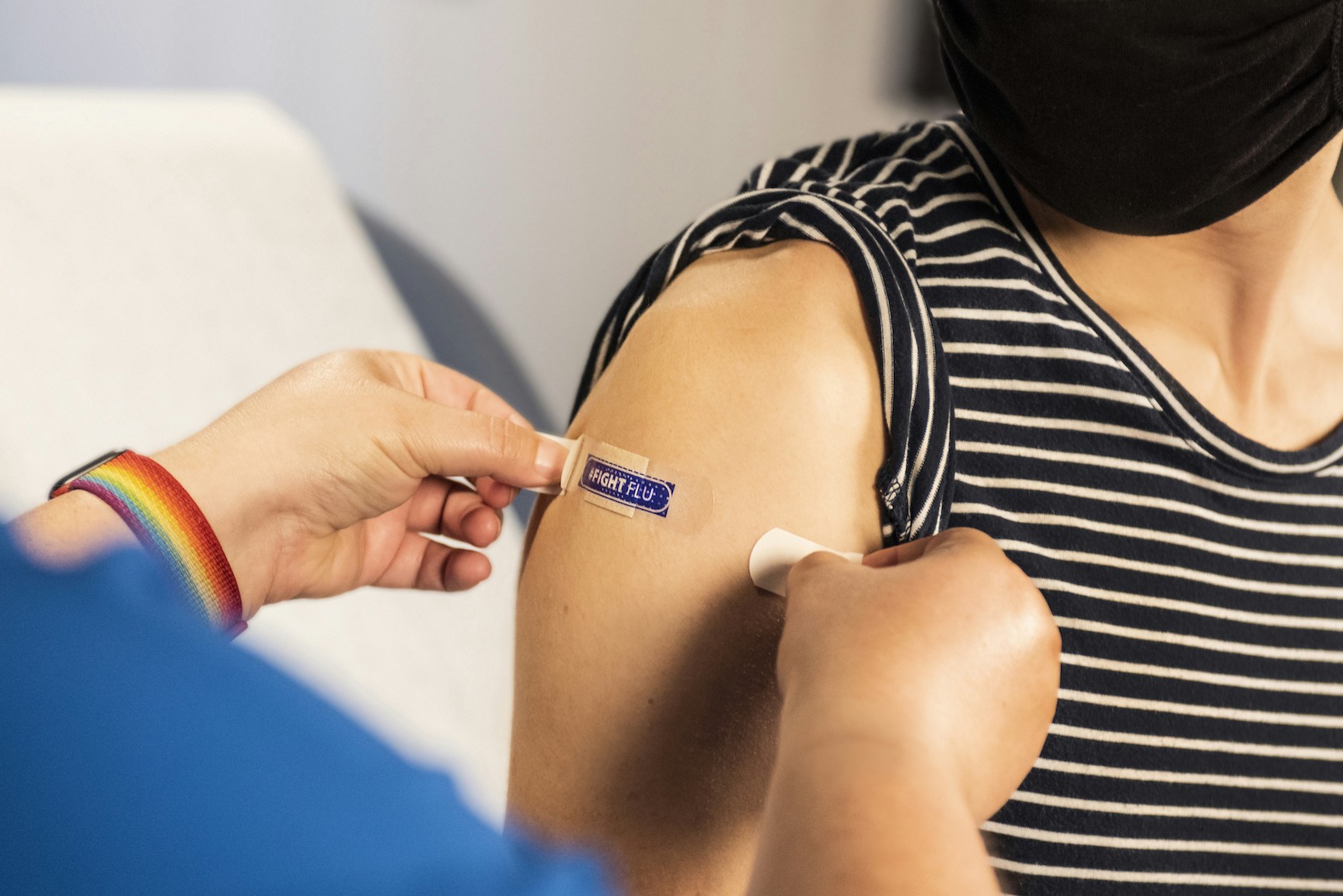
DOH continues to advise the public to practice hand hygiene, avoid crowded indoor spaces, and stay home when sick. Vaccination remains the most effective way to reduce the risk of severe complications.
However, DOH has yet to release a detailed national breakdown of flu vaccination coverage for 2025, making it difficult to assess whether vulnerable groups are receiving adequate protection.
Flu vaccination in the Philippines: Policy and implementation gaps
Influenza vaccination is included in Philippine health policy. Under the Expanded Senior Citizens Act of 2010 (RA 9994), indigent seniors are entitled to free flu and pneumococcal vaccines through the National Immunization Program.
Despite this, adult vaccination rates remain low.
A study published in the Journal of Infection and Public Health reported that adult vaccine uptake in many low- and middle-income countries, including the Philippines, remains limited due to:
- low awareness
- logistical challenges
- inconsistent program execution
Globally, the same gaps persist. A 2025 narrative review in Cureus emphasized that adult influenza vaccination remains far below ideal levels even in high-income countries due to complacency, misinformation, and access barriers.
In the Philippines, older adults who are eligible for free vaccination often remain unaware of the program or face practical barriers such as limited clinic hours, transportation issues, or inconsistent vaccine supply at the barangay level.
For non-indigent seniors and working adults, vaccine cost—typically ₱600 to ₱1,500—remains a deterrent.
Why the holiday season increases the urgency
November marks the start of the country’s peak travel season, with airports and bus terminals experiencing some of the highest passenger volumes of the year.
Influenza spreads easily in crowded areas such as:
- airports
- bus terminals
- jeepneys and trains
- seaports
- shopping malls
Because influenza vaccines take about two weeks to generate optimal immunity, DOH encourages people to get vaccinated early in November.
For seniors and people with chronic illnesses, influenza acquired during travel or gatherings can lead to severe complications such as pneumonia and hospitalization.
Timely vaccination protects individuals and helps prevent post-holiday surges that often strain emergency rooms and healthcare facilities.
Ongoing challenges: Awareness, access, and confidence
Despite long-standing policies and free vaccination for indigent seniors, four major challenges persist:
1. Low awareness
Many adults are familiar only with childhood vaccines and remain unaware of annual adult vaccinations.
2. Uneven access
Wealthier LGUs often purchase additional flu vaccines, while poorer municipalities depend solely on DOH distribution, leading to regional disparities.
3. Logistical limitations
Barangay health centers may have limited hours, limited cold-chain capacity, or insufficient staffing.
4. Vaccine confidence
Misinformation and past controversies continue to affect vaccination behavior, despite DOH assurances of safety and efficacy.
Strengthening adult flu vaccination is a public health priority
WHO’s global data reiterate influenza’s threat, causing up to 650,000 deaths annually. Philippine policy recognizes this through RA 9994, yet the lack of transparent national coverage data makes it difficult to determine if high-risk groups are adequately protected.
International benchmarks often recommend 75% vaccination coverage for older adults—a target that is difficult to evaluate locally due to incomplete reporting.
Strengthening surveillance, publishing detailed vaccination data, and improving accessibility can help policymakers address gaps through targeted campaigns.
Why this flu season matters
As flu season intensifies and travel increases, DOH warns that the convergence of these factors can strain healthcare facilities. Influenza outbreaks, even mild ones, can rapidly escalate when transmission accelerates in crowded travel hubs.
For high-risk groups—older adults, pregnant women, and those with chronic illnesses—vaccination is a critical line of defense.
Reducing influenza incidence also supports healthcare resilience by freeing up hospital resources for other challenges such as dengue, tuberculosis, and chronic disease management.
With 6,457 ILI cases already documented in early October 2025, health officials emphasize that expanding flu vaccination is essential not just seasonally, but as part of a long-term strategy to normalize adult preventive care.
Without stronger vaccination uptake, influenza may continue to accompany Filipinos across regions during the busiest travel period of the year—making a preventable illness a nationwide burden.