

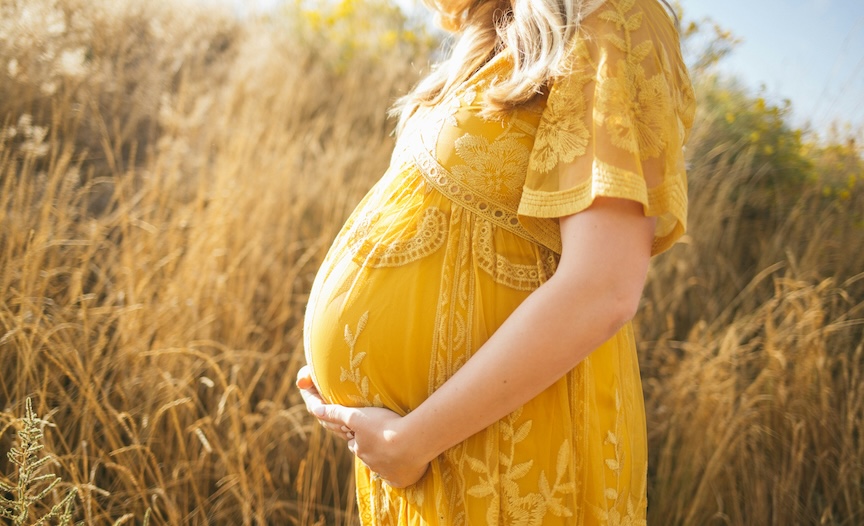
The first signs of child malnutrition in the Philippines do not always appear in a feeding center or a pediatric ward. More often, they begin quietly, in pregnancy, long before a child is measured to height or weight.
According to the 2023 National Nutrition Survey of the Department of Science and Technology–Food and Nutrition Research Institute, 19.1% of pregnant women were nutritionally at risk of delivering a low-birth-weight infant, while 21.8% were anemic. In the same survey, 23.6% of children under five were stunted, 15.1% were underweight, 5.6% were wasted, and 11.4% of children aged 6 to 59 months were anemic. Among infants aged 6 to 11 months, anemia reached 35.0%.
These are not scattered anecdotes. FNRI said the 2023 survey covered 36,703 households and 115,651 individuals nationwide, making it one of the country’s most important official nutrition references.
Why a mother’s nutrition is also a child’s story
This is why maternal nutrition cannot be treated as a narrow women’s health topic. It is also a child survival issue, a growth issue, and a development issue.
According to the World Health Organization’s low birth weight indicator page, the share of infants born with low birth weight reflects a broader public health problem that includes long-term maternal malnutrition, ill health, and poor health care in pregnancy.
WHO also says low birth weight is associated with fetal and neonatal mortality and morbidity, inhibited growth, cognitive development problems, and later noncommunicable disease, and that low-birth-weight infants are about 20 times more likely to die than heavier infants.
Meanwhile, the Philippines has already built this understanding into law. Republic Act No. 11148, or the Kalusugan at Nutrisyon ng Mag-Nanay Act, frames the first 1,000 days of life as a critical period and specifically covers those who are nutritionally at risk, including pregnant and lactating women, women of reproductive age, adolescent girls, and children from birth to 24 months.
Hence, the logic is simple: if the country wants healthier children, it cannot wait until a child is already visibly undernourished.
The burden many women bring into pregnancy
The problem often starts even before conception. Based on the 2023 National Nutrition Survey, 10.9% of non-pregnant, non-lactating women of reproductive age were anemic, while 51.5% were overweight or obese under the Asia-Pacific BMI classification.
In other words, many Filipino women enter pregnancy already carrying some form of nutritional risk, either from deficiency or from excess weight.
A more recent Philippine study points in the same direction. The 2025 pilot study Assessment of maternal nutritional status in early pregnancy and gestational weight gain in selected areas in the Philippines, published in Women’s Health, followed 176 pregnant women recruited from 35 locations and found that 15.3% were underweight and 27.8% were overweight or obese in early pregnancy. The authors noted that pre-pregnancy body mass index is a known determinant of pregnancy outcomes.
On the other hand, pregnancy in adolescence adds another layer of vulnerability. According to the 2022 Philippine National Demographic and Health Survey, 5% of girls aged 15 to 19 had been pregnant.
Consequently, maternal nutrition in the Philippines is shaped not only by food intake, but also by age, poverty, education, and the conditions in which pregnancy happens.
Reaching women is not the same as fully protecting them
The Philippines has, to its credit, expanded contact with pregnant women through antenatal care. According to the 2022 Philippine National Demographic and Health Survey, 86% of women with a recent live birth received antenatal care from a skilled provider, 83% had four or more antenatal visits, and 67% had their first antenatal visit in the first trimester.
Furthermore, 86% reported taking iron-containing supplements during pregnancy. Nevertheless, the same survey showed that only 31% took iron-containing supplements for 180 days or more. That gap matters because, according to WHO guidance on daily iron and folic acid supplementation in pregnancy, pregnant women need additional iron and folic acid for themselves and for the developing fetus, and daily supplementation helps reduce the risk of maternal anemia, low birth weight, and preterm birth.
Hence, a woman may appear in the health system, be counted in official coverage, and still miss the full nutritional protection that pregnancy requires.
READ: Family Planning and Wellness: Building Healthier Lives for Parents and Children
Low birth weight is where the damage first shows
One of the clearest ways maternal nutrition appears in child outcomes is through low birth weight. Based on a 2024 analysis by the UP Population Institute of the 2022 Philippine birth statistics, about 13% of births in the country were classified as low birth weight. That figure matters because, as WHO explains, low birth weight usually reflects restricted fetal growth, prematurity, or both, and it is tied to higher risks of illness, death, poor growth, and weaker developmental outcomes later on.
In other words, by the time a child is recorded as being born too small, the disadvantage has often already been building for months.
Likewise, the Philippines’ latest nutrition figures suggest that these risks do not end at birth. They continue into infancy and early childhood, especially in households already facing economic strain.
EXPLORE: The First 1,000 Days: Why Breastfeeding and Early Nutrition Still Matter
By childhood, the inequality is already visible
That pattern becomes even clearer when children are finally measured. Based on the 2023 National Nutrition Survey, 23.6% of Filipino children under five were stunted. Yet the burden was not shared evenly. Among the poorest children, stunting reached 37.2%; among the richest, it was 13.0%. Underweight affected 15.1% of under-five children, and anemia affected 11.4% of children aged 6 to 59 months, rising to 35.0% among infants aged 6 to 11 months.
According to WHO, stunting reflects chronic or recurrent undernutrition, often associated with poor maternal health and nutrition, repeated illness, poverty, and poor feeding in early life.
Consequently, what appears in a child’s height or hemoglobin level is often the visible continuation of what happened earlier in the mother’s body, in the household budget, and in access to care.
Cycle is real
Local research helps explain why the cycle can repeat from one generation to the next.
Based on the peer-reviewed study “What explains the large disparity in child stunting in the Philippines? A decomposition analysis,” maternal factors accounted for more than half of the gap in child stunting between poor and non-poor households. Specifically, maternal height explained 26% of the gap, maternal education 18%, maternal BMI 17%, and quality of prenatal care 12%.
That finding is striking because it shows that child stunting is not only about feeding practices after birth. The mother’s nutritional and social condition is already shaping the child’s outcome.
Another Philippine study, “LBW and SGA Impact Longitudinal Growth and Nutritional Status of Filipino Infants,” published in PLOS ONE, followed infants in Leyte and found that low-birth-weight infants had significantly increased odds of stunting, wasting, and underweight persisting to 12 months of age and did not exhibit catch-up growth by 12 months.
The same study also found that maternal educational attainment and exclusive breastfeeding lowered the risk of poor growth. In addition, that finding offers a more human truth: biology matters, but care, knowledge, and support after birth still matter too.
The global picture is also alarming
The Philippine story, however, is not unfolding in isolation. Based on the WHO Global Anemia Estimates 2025 edition, 35.5% of pregnant women worldwide were anemic in 2023, while 30.7% of women aged 15 to 49 overall were affected.
WHO says anemia has “vicious intergenerational consequences,” including adverse pregnancy and birth outcomes and poor cognitive and motor development in children.
Moreover, WHO reported that only 18 countries, or about 10% of all countries, have shown progress toward the global anemia target, meaning the world is off track.
Meanwhile, according to UNICEF’s Low Birthweight Data page, 19.8 million newborns, or 14.7% of all babies born globally in 2020, were born with low birth weight. UNICEF says these newborns were more likely to die in the first month, and those who survived faced higher risks of stunted growth, lower IQ, and adult-onset chronic conditions.
Furthermore, UNICEF noted that progress in reducing low birth weight has been slow and that most countries are not on track to meet the global target.
Where the numbers finally lead
A child does not begin life as a blank slate. Long before a health worker records “stunted” on a chart, before a teacher notices weak concentration, or before a family worries that a toddler is not growing well, the foundations may already have been laid in the mother’s nutrition, iron status, weight, and access to care.
Nevertheless, this is not a story that should end in blaming women. The data point instead to something larger: the quality of food available to women, the timeliness of prenatal care, the continuity of supplementation, the poverty that limits diet, and the policies that decide whether support comes early enough.
Based on the latest 2023 National Nutrition Survey, the 2022 Philippine National Demographic and Health Survey, recent Philippine research, and the newest global estimates from WHO and UNICEF, the message is consistent. If the Philippines wants to reduce low birth weight, child anemia, and stunting, it must care for women before and during pregnancy with far more urgency than it does now.
Hence, maternal nutrition is not a side issue in development. It is one of the earliest and clearest places where the future health of the next generation is either protected or put at risk.
Photo by Anna Hecker on Unsplash
References:
Blake, R. A., Park, S., Baltazar, P., Ayaso, E. B., Monterde, D. B. S., Acosta, L. P., Olveda, R. M., Tallo, V., & Friedman, J. F. (2016). LBW and SGA impact longitudinal growth and nutritional status of Filipino infants. PLOS ONE, 11(7), e0159461.
Department of Science and Technology–Food and Nutrition Research Institute. (2025, February 11). DOST-FNRI presents the latest PH nutrition situation.
Frane, R. D., Duante, C. A., Goyena, E. A., Delos Santos, M. C., Lat, H. T., Mendoza, D. K. C., Labrador, J. P. H., Tajan, M. G., Benavidez-Fabi, K. M. N., & Padolina, C. S. (2025). Assessment of maternal nutritional status in early pregnancy and gestational weight gain in selected areas in the Philippines: A pilot study. Women’s Health, 21, 17455057251379225.
Philippine Statistics Authority, & ICF. (2023). 2022 Philippine National Demographic and Health Survey: Final report.
Republic of the Philippines. (2018). Republic Act No. 11148: An act scaling up the national and local health and nutrition programs through a strengthened integrated strategy for maternal, neonatal, child health and nutrition in the first one thousand (1,000) days of life, appropriating funds therefore and for other purposes.
Ulep, V. G. T., Uy, J., & Casas, L. D. (2022). What explains the large disparity in child stunting in the Philippines? A decomposition analysis. Public Health Nutrition, 25(11), 2995–3007.
UNICEF. (n.d.). Low birthweight. UNICEF Data.
UP Population Institute. (2024, March 14). What to make of the 2022 Philippine Birth Statistics?
World Health Organization. (2025). Anaemia in women and children. Global Health Observatory.
World Health Organization. (n.d.). Low birth weight. Nutrition Landscape Information System.