

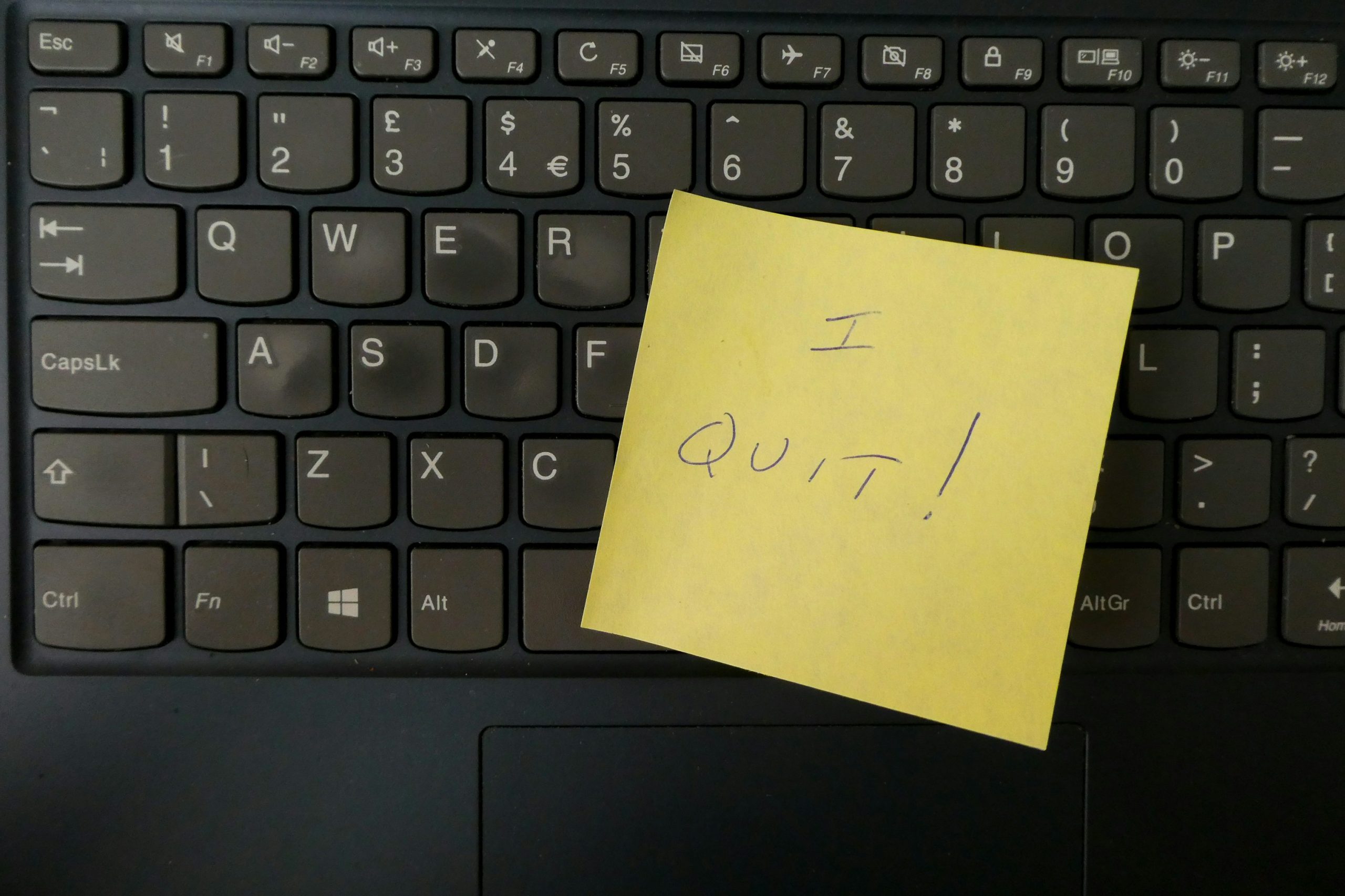
Filipino workplaces are bracing for what labor groups now describe as an “exit-heavy fourth quarter,” as November shows a marked rise in resignations, job-hunting activity, and burnout-related complaints across major industries.
According to monitoring by HR associations and recruitment platforms—including the JobStreet by SEEK Philippines 2024 Labor Market Report—job-application traffic typically surges in November as employees prepare to move on after securing year-end incentives.
This shift unfolds amid worsening worker fatigue nationwide. The Philippines posts one of the highest burnout rates in Southeast Asia at 70.71%, based on a 2023 peer-reviewed study in the International Journal of Environmental Research and Public Health that assessed 4,338 ASEAN employees. The study identifies long work hours, heavy workloads, and job dissatisfaction as the strongest predictors of Filipino burnout.
Moreover, new 2024 data show Filipino workers entering the year-end stretch in increasingly fragile psychological health. MindNation’s National Employee Well-Being Survey 2024 reports that 79% of Filipino employees experienced mental-health struggles—ranging from stress and worry to fatigue and difficulty concentrating. Meanwhile, the Aon Asia Mental Health Index (2023–2024) shows that 78% of Filipino workers fall under moderate to high mental-health risk, one of the highest profiles in the region.
HR practitioners warn that these pressures escalate sharply between November and December, when companies commonly record spikes in performance warnings, interpersonal conflict, absenteeism, and medical-leave filings. These behaviors coincide with what human-resource officers describe as “holding-pattern employment”—workers staying in their roles just long enough to qualify for 13th-month pay and bonuses mandated under Presidential Decree 851.
DOLE advisories reinforce this pattern, repeatedly clarifying that employees who resign before year-end remain entitled to pro-rated 13th-month pay, further encouraging strategic resignations.
This convergence of burnout, financial necessity, and timed departures has led recruiters to label the trend “Quiet Quitting 2.0.” Unlike the original quiet-quitting movement focused on doing the bare minimum, this new phase reflects a workforce enduring toxic or exhausting environments only until benefits are released—transforming resignation into a mental-health survival strategy.
A new phase of disengagement: Why “Quiet Quitting 2.0” emerged
“Quiet quitting” once referred to employees performing only required tasks, a global response to pandemic-era burnout and stagnant compensation. However, Filipino labor researchers say the phenomenon has evolved into something more strategic.
According to a 2024 report by the Institute for Labor Studies (ILS-DOLE), many Filipino employees plan their resignation months ahead but delay actual turnover to avoid forfeiting financial benefits such as bonuses and incentives. The ILS describes this pattern as a “state of presence without engagement,” where employees are physically present but mentally detached due to stress, workload pressure, or poor management practices.
Burnout further drives this detachment. The 2023 IJERPH Southeast Asia burnout study found that the Philippines had the highest burnout prevalence among six ASEAN countries, with emotional exhaustion and job-related stress identified as major contributors to withdrawal behaviors and turnover intention.
The Aon Asia Mental Health Index reinforces this trend, consistently classifying the Philippines as a high-risk location, with financial pressure, job insecurity, and work-related exhaustion among the top drivers of deteriorating well-being.
Academic research supports these findings. A 2023 Philippine study in the Asia Pacific Journal of Multidisciplinary Research found that academic employees exhibiting quiet-quitting behaviors did so because of heavy workloads, limited career growth, and poor institutional support—factors that also influenced long-term plans to resign.
Taken together, these studies reveal that “Quiet Quitting 2.0” is no longer about minimal
engagement. It is a survival-driven strategy shaped by burnout, economic realities, and the timing of mandated benefits.
Burnout by the numbers: A workforce under mental strain
Recent global and local studies paint a clear picture: Filipino employees are experiencing unprecedented levels of fatigue. The IJERPH study identified the Philippines as the most burnout-affected workforce in Southeast Asia, driven by excessive workloads and prolonged working hours.
Complementing this, the Aon Asia Mental Health Index shows Filipino workers scoring lower than regional averages in resilience, productivity, and psychological safety.
Mental-health challenges are also widespread. MindNation’s 2024 survey found that financial stress, workload pressure, and job insecurity were the top triggers—pressures that intensify during the year-end when expenses rise and deadlines pile up.
Younger employees are particularly vulnerable. According to the Deloitte 2024 Gen Z and Millennial Survey, 70% of Filipino Gen Zs and 63% of millennials report feeling burned out due to heavy workloads—far above global averages of roughly 45% and 40%. Deloitte notes that
Filipino young professionals face rapid inflation, high cost of living, and limited access to mental-health services, making them especially susceptible to disengagement.
Systemic constraints further complicate recovery. The WHO Philippines Mental Health Situationer (2024) estimates that the country has only 2–3 mental-health workers per 100,000 people, making psychological support difficult to access. The WHO also reports sustained levels of depression and anxiety in the post-pandemic period, with workplaces frequently cited as persistent stressors.
November as “Breaking Point”: The bonus effect
The mandated 13th-month pay is a crucial lifeline. Under Presidential Decree 851 and recent DOLE advisories, all rank-and-file employees who worked at least one month in the calendar year are entitled to this benefit by December 24. Workers who resign before payout remain entitled to pro-rated 13th-month pay.
This reality shapes workforce behavior. Industry observers note that many companies anticipate elevated turnover from late December to mid-January, as workers wait for payouts before finalizing resignations.
In this climate, many employees remain in draining roles until after bonuses are released, deepening feelings of entrapment and contributing to the year-end burnout surge.
READ: The New Social Media: Why Journaling Is the Friend Who Actually Listens
The human toll of staying ‘just until the bonus’
Mia, 31, a customer support specialist in Pasig City, has woken up with chest tightness for two months. Her workload doubled after two coworkers resigned. She has taken five sick leaves since September.
“I know I’m resigning,” she says. “But if I leave now, I won’t have money for my child’s tuition. I just need to last until mid-December.”
Her experience reflects the WHO 2024 Philippines Mental Health Situationer, which highlights extremely limited access to mental-health support.
Luis, 28, a marketing associate from Manila, describes himself as “mentally checked out, physically present.” He accepted a new job in October but refuses to resign until after receiving his 13th-month pay.
For Karen, 42, a retail manager in Cainta, Rizal, the holiday season means 11-hour shifts and constant crowds.
“This is the most stressful part of the year,” she says. “But this is also payout season. You endure because you can’t lose that money.”
The psychological cost of “Quiet Quitting 2.0”
Mental-health professionals say October to December is among the busiest seasons for burnout consultations. Workers face toxic management behaviors, understaffing, and financial pressure to delay resignation.
The 2023 Aon–TELUS Asia Mental Health Index found the Philippines scoring 65.0 on its mental-health risk index, above the regional average of 62.4. Work-related exhaustion and financial insecurity are cited as leading drivers.
Globally, the WHO estimates that depression and anxiety cost 12 billion working days annually—a staggering economic toll. A 2022 public-health meta-analysis found that long working hours increased the odds of poor mental health by 36%, underscoring the risks faced by
Filipino employees trapped in stressful roles while waiting for year-end benefits.
Meanwhile, implementation of mental-health systems remains uneven, especially among MSMEs with limited resources.
HR’s warning signs: The November–December exit wave
Human-resource managers describe the fourth quarter as a “pressure cooker,” marked by:
- rising sick leaves
- declining performance
- more requests for salary certificates
- heightened interpersonal conflict
These trends align with the ILS-DOLE 2024 Workplace Stress Report, which identifies heavy workloads, micromanagement, unclear expectations, and workplace conflict as top contributors to disengagement.
Can companies break the cycle?
Experts warn that addressing “Quiet Quitting 2.0” requires structural reform.
Aon’s 2023 Index shows that financial stress is among the strongest contributors to poor mental health among Filipino workers.
International research offers guidance: a 2024 study in Administrative Sciences found that toxic leadership significantly increases burnout and turnover due to reduced psychological safety.
Companies must move beyond token wellness efforts and instead invest in workload audits, financial-well-being programs, and leadership capability-building.
Mental-health systems must be institutionalized
The Philippine Council for Mental Health Strategic Framework 2024–2028 calls for confidential counseling systems, mental-health literacy training for managers, anti-stigma campaigns, and stronger psychological-safety policies. But implementation remains uneven nationwide.
What workers can do
DOLE reminds workers that they remain entitled to pro-rated 13th-month pay even if they resign before year-end. Under Labor Advisory 06-20, final pay must be released within 30 days of separation.
Mental-health support is available through the NCMH Crisis Hotline (1553), Hopeline, In Touch, and #MentalHealthPH.
A workforce at a crossroads
The convergence of burnout, financial strain, and year-end pressure has reshaped the Philippine workplace. “Quiet Quitting 2.0” has become a survival instinct—a strategic calculation made by workers enduring conditions long enough to secure what their labor is worth.
As November pushes employees through their most demanding stretch, the question is no longer “Should I leave?” but “How long can I afford to stay?”
Until companies confront the systemic roots of burnout—unmanageable workloads, harmful management practices, financial insecurity, and limited mental-health access—the cycle will persist. Each December, departures will continue, not as rebellion, but as quiet acts of self-preservation.
In the end, these stories reveal a workforce standing at a difficult crossroads: resilient, exhausted, and still hopeful that change is possible.
Photo by Nick Fewings on Unsplash