
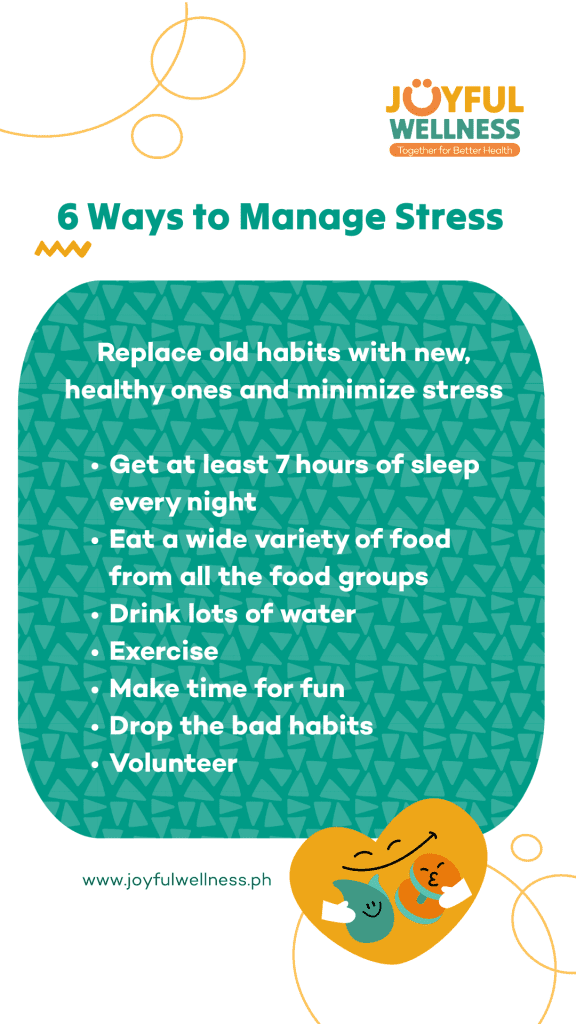
Replace your old habits with new, healthy ones. Keep the stress to a minimum so you can enjoy your life.
Sleep well and enough. Get at least 7 hours of sleep every night. You need 2 hours of deep sleep and 2 hours of REM sleep.
Have a balanced diet. Eat a wide variety of food from all the food groups. Prioritize fruits, vegetables, whole grains, and lean proteins. Drink lots of water.
Exercise. Movement clears your head and boosts the production of endorphins, which reduce the negativity brought about by stress.
Make time for fun. Balance is key. Work smart so you can have enough time to pursue your interests.
Drop the bad habits. Quit smoking and drinking. To cope with negativity, pick up long-term healthy habits instead, like meditation.
Volunteer. When you help other people, you become more resilient against stress and anxiety.
Sources:
NHS UK
https://www.nhs.uk/mental-health/self-help/guides-tools-and-activities/tips-to-reduce-stress/
Harvard Health Publishing
https://www.health.harvard.edu/heart-health/5-ways-to-de-stress-and-help-your-heart
Featured Photo by Jamie Street on Unsplash
DISCLAIMER
This article provides general information and does not constitute medical advice. Consult your healthcare provider for personalized recommendations. If symptoms persist, consult your doctor.