
Filipino seniors are increasingly at the heart of the country’s long holiday season, as local governments weave fall-prevention, community exercise, and digital health tools into November’s rich cultural traditions to support healthier, more active aging.
By late November—when parols glow above traffic and carols drift from mall speakers—Filipino seniors once again move to the center of the world’s longest Christmas season. They are leading reunions, organizing parish events, and filling barangay gyms for year-end programs just as December’s calendars begin to overflow.
This renewed visibility comes at a pivotal demographic moment. According to the Philippine Statistics Authority (PSA), more than 9.22 million Filipinos aged 60 and above, or 8.5% of the population, were recorded in the 2020 Census. Local health officials note that this cohort is more active and mobile than ever, even as they face heightened risks of falls, hypertension, and chronic-disease flare-ups during the “Ber months.”
In response, local governments are accelerating “active aging” programs inspired by the World Health Organization’s (WHO) healthy-aging framework—integrating community exercise, fall-prevention drills, and digital health tools into the familiar rhythm of November gatherings.
The Long Holiday Season, With Elders at the Center
The Philippines is often called home to the world’s longest Christmas season—stretching from September to early January. Cultural experts from the National Commission for Culture and the Arts note that this extended cycle is anchored in deep Catholic traditions and strong family ties that frame the last quarter of the year as a prolonged season of preparation and reunion.
Undas, observed from October 31 to November 2, remains one of the busiest travel periods of the year, with gatherings often extending into mid-November. As parish choirs rehearse and Advent activities begin, seniors are almost always in front—organizing logistics, leading devotions, and keeping cherished traditions intact.
An Aging Nation Meets Longevity Science
Demographers say these cultural patterns now intersect with a rapidly shifting age structure. A 2025 Philippine Institute for Development Studies (PIDS) analysis notes that the Philippines is on track to become an “ageing society” by 2030, when at least 7% of the population will be 65 or older.
The UN’s World Population Prospects 2022 projects that Filipinos aged 60 and above could reach 23.7 million by 2050—more than double current levels.
While the World Bank estimates life expectancy at about 71 years, WHO places healthy life expectancy (HALE) at roughly 59 years, leaving an average of more than a decade lived with illness or functional decline.
Closing this gap sits at the heart of WHO’s Decade of Healthy Ageing, which emphasizes social participation and community engagement—not just disease prevention.
A 2024 Lancet Healthy Longevity study found that strong “social health” and group participation were linked to better cognition and slower decline. Meanwhile, a 2025 BMC Geriatrics review associated low social participation with higher frailty risk.
In the Philippine context, November’s dense web of reunions and parish activities serves as an informal “activation period” that keeps millions of older adults socially connected and physically engaged before the December peak.
Falls: A Hidden Risk Amid Gatherings and Crowds
Yet these gatherings also introduce hazards, particularly for seniors with limited mobility, vision impairment, or balance issues.
According to WHO, falls are the second leading cause of accidental deaths worldwide, with adults over 60 at highest risk. In the Philippines, uneven cemetery pathways, wet pavements, and crowded church steps can be risky during peak holiday movement.
Local research echoes this concern. A study in Acta Medica Philippina found that nearly one in three community-dwelling seniors had experienced at least one fall in the past year. A 2024 BMC Geriatrics analysis across Southeast Asia similarly linked fall risk to mobility challenges and unsafe environments.
Fortunately, global evidence offers clear solutions: A 2022 Lancet Public Health meta-analysis found that structured balance and strength-training programs can reduce falls by up to 40%, especially when delivered through group sessions.
LGUs Begin to Integrate Fall Prevention Into Barangay Life
LGUs are acting on this evidence. Elderly Filipino Week every October 1–7 often leads directly into November wellness activities, creating continuity in community health efforts.
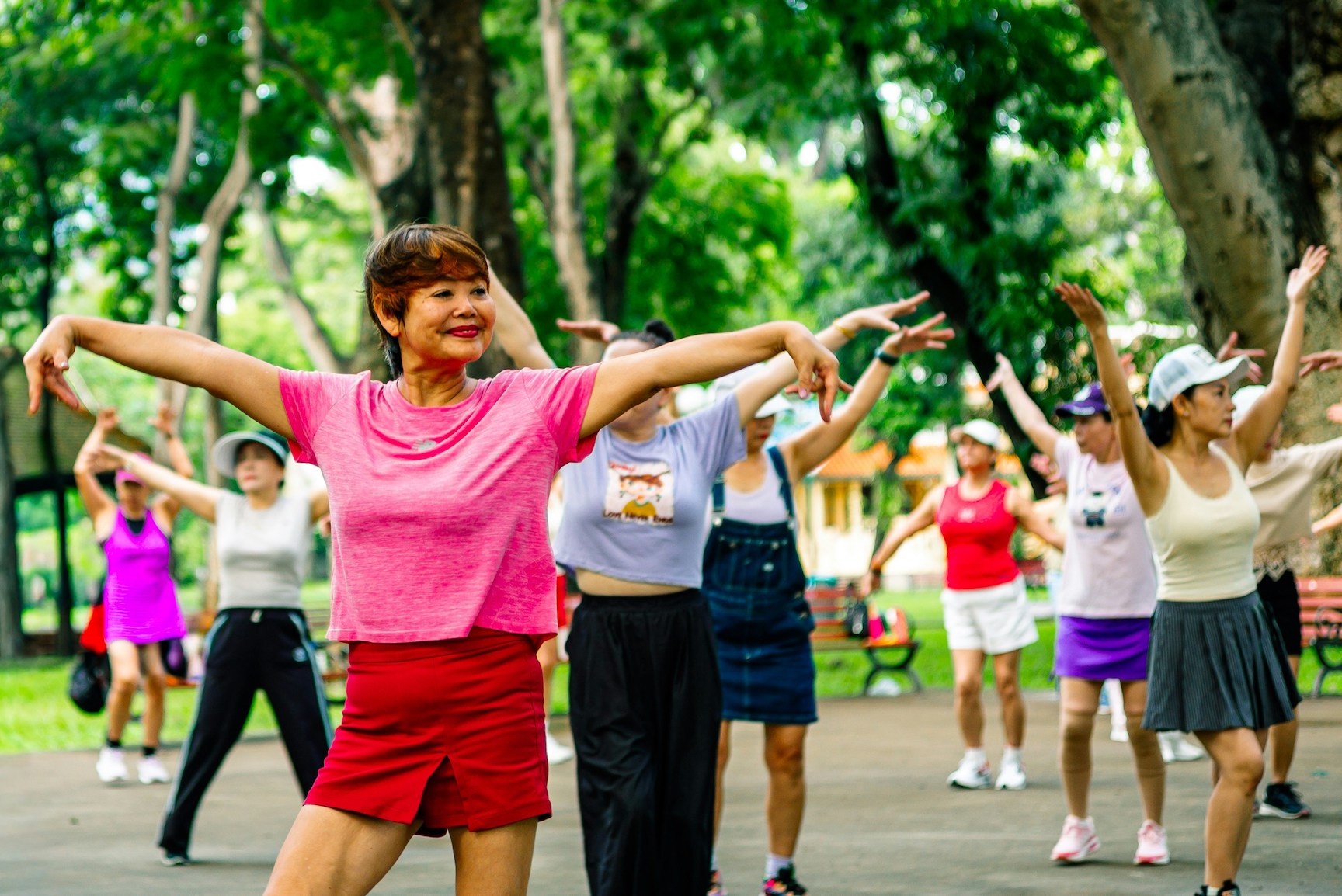
In Quezon City, early-morning Zumba and low-impact aerobics at the Quezon Memorial Circle regularly draw hundreds of seniors, with health workers monitoring blood pressure and safe movement. In Baguio, plans are underway to expand senior day centers offering fall-prevention orientation and chronic-disease monitoring.
The Department of Social Welfare and Development’s (DSWD) Home Care Support Services framework also emphasizes home-safety assessments and caregiver training as core elements of community-based elder care.
During November wellness caravans, many LGUs integrate these principles—demonstrating safe stair-climbing, offering mobility checks, and distributing fall-prevention guides.
Zumba, Worship, and “Active Ageing” in Motion
Physical activity is now woven into many barangays’ November routines. ABS-CBN News highlighted how LGUs in Quezon City, Pasig, and Manila have institutionalized Zumba and low-impact aerobics—often with seniors forming the most consistent groups.
The WHO notes that aerobic activity combined with balance and strength exercises helps reduce chronic-disease risk and maintain independence in older age.
In the Philippines, religious routines also promote natural movement: walking to Mass, standing and kneeling during liturgy, singing in choirs, and joining devotional groups. The DOH’s Healthy Pilipinas campaign affirms that these traditions reinforce cardiovascular and mental well-being.
Meanwhile, the FNRI’s 2023 Expanded National Nutrition Survey found that physically active seniors report better balance and fewer functional limitations, underscoring the value of culturally integrated routines.
Digital Health Tools Gain Ground
Mental-health support is also evolving. The Lusog-Isip app—developed with DOH and local research councils—is the Philippines’ first culturally adapted mental-health mobile platform. It offers mood tracking, guided exercises, and self-help resources.
However, PSA’s ICT Household Survey shows seniors remain the least digitally connected demographic. To bridge this gap, LGUs are beginning to introduce apps and telehealth tools during November assemblies, often with younger family members assisting.
Digital IDs are also improving benefits security. In 2023, Valenzuela City rolled out QR-coded Senior Citizen IDs and an online verification system to help prevent fraud—supporting seniors’ financial security during the costly holiday season.
Opportunities and Gaps
The National Commission of Senior Citizens (NCSC) estimated in early 2024 that around 12 million Filipinos are already in older-age brackets, though only roughly 4 million indigent seniors were enrolled in the social pension program.
Healthy-life-expectancy gains remain limited, and preventive services outside major cities remain uneven. Falls are still under-reported, and the digital divide persists.
November as a Living Laboratory for Active Aging
Despite these challenges, health advocates see November as a powerful catalyst for longevity. The Philippine Plan of Action for Senior Citizens 2023–2028 emphasizes “culturally grounded community spaces” as ideal foundations for healthy-aging programs.
As UN projections show older adults forming a growing share of the population in the 2030s, embedding longevity strategies into everyday life becomes urgent.
Across the Philippines, the candles of Undas and the carols of Christmas are now intertwined with balance drills, blood-pressure checks, teleconsultations, and digital ID scans.
In barangay halls, church patios, Zumba circles, and cemetery walkways, Filipino seniors are showing that healthy aging is lived—in movement, in faith, in culture, and in community.
The Philippines may not yet have the geriatric infrastructure of wealthier nations, but it has something equally powerful: deep social ties and rituals that bring generations together. If these cultural foundations are paired with evidence-based health programs, the country’s long holiday season may become its strongest ally in closing the gap between living long and living well.