
An Easter Reflection, A season of moving forward—together
The first quarter of the year has passed.
In the months behind us, Joyful Wellness set out to do something simple, but necessary: to offer readers meaningful, science-informed stories that make health easier to understand and, more importantly, easier to practice. We spoke of awareness, of screenings, of prevention, of the many small decisions that quietly shape long-term wellbeing.
But this was only the beginning.
There is still much to be done.
The Season of Renewal
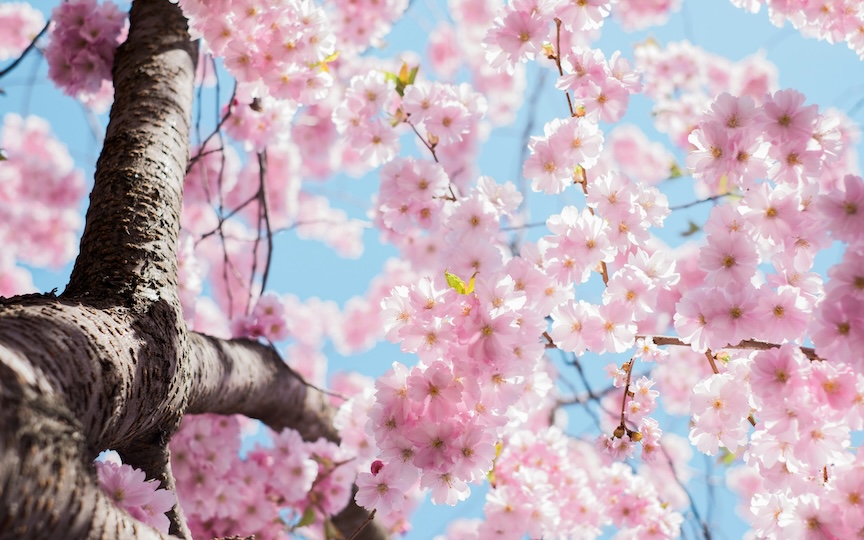
It is perhaps fitting that we arrive here just after Holy Week, and at the start of a season often associated, elsewhere in the world, with cherry blossoms.
In Japan, the brief blooming of sakura has long been understood as a reflection of life itself—beautiful, fleeting, and impossible to hold for long. For a few days each year, people gather beneath these trees not to preserve the moment, but to witness it.
Then, just as quickly, the petals fall.
People see it beyond loss.
It is understood as renewal.
What the Body Understands
Science, in its own language, describes something similar.
The body is not designed for constant output. It relies on cycles of activity and rest, stress and recovery, effort and restoration. When these rhythms are respected, the nervous system regulates, inflammation lowers, and mental clarity improves.
Even brief pauses, moments of reduced stimulation, slower breathing, or quiet reflection, can shift the body out of stress response and into recovery.
In other words, what traditions have long practiced, physiology now explains:
We function best in cycles.
READ: Weekends Well Spent: Small Rituals That Help Us Live Better
From Insight to Experience
If the first quarter was about understanding, the months ahead will ask something more.
To live it.
Joyful Wellness now moves into a new phase: one that brings these conversations beyond the page and into experience. In the coming weeks, we begin shaping the Joyful Wellness Experience: a series of small, intentional gatherings designed to make wellness something felt, not simply read.
Because knowledge, while important, is only the beginning.
Practice is what stays.
“Renewal begins quietly—often in the simple courage to begin again.”
The Practices We Carry Forward
As we move into the second quarter, we return to what matters—with a clearer sense of how to live it:
- Beauty in restoration, in rest, in returning to natural rhythm
- Nutrition in simpler meals, mindful intake, nourishment over excess
- Disease Prevention in slowing down and allowing the body to recover
- Mental Health in reflection, quiet, and emotional clarity
- Health & Innovation in understanding how rest shapes the brain and body
- Longevity in small, consistent resets that protect long-term wellbeing
- Joy & Happiness in rediscovering calm in everyday life
These are more than ideals, they are practices that are repeated, imperfect sometimes, but meaningful.
A Season That Invites Movement
Summer invites movement.
Intentional, unhurried, never forced.
To step outside.
And gather.
To notice what has always been available: breath, light, space, connection.
Like the sakura, the moment is fleeting, no promise of forever.
Which may be precisely why it matters.
The Reminder
If the past months have taught us anything, it is this:
Health is something we return to again and again.
In small decisions. In quiet pauses. And in the willingness to begin, even when nothing feels perfect.
And now, after the pause, we move forward.
Together.
Editor’s Note:
This article draws from research in preventive health, neuroscience, and behavioral science, exploring how rest, reflection, and daily habits contribute to long-term wellbeing.
Photo by Arno Smit on Unsplash
References and Further Reading
World Health Organization (WHO). Mental Health and Wellbeing.
— Supports the importance of rest, emotional regulation, and balanced living.
McEwen, B. S. (2007). Stress, adaptation, and allostasis.
— Explains how the body relies on cycles of stress and recovery.
Walker, M. (2017). Why We Sleep.
— Highlights how rest supports brain function, immunity, and longevity.
Kabat-Zinn, J. (2003). Mindfulness-Based Interventions.
— Connects present-moment awareness with improved mental health.
Japanese cultural studies on Sakura symbolism and mono no aware
— The concept of appreciating the impermanence of life and beauty.