

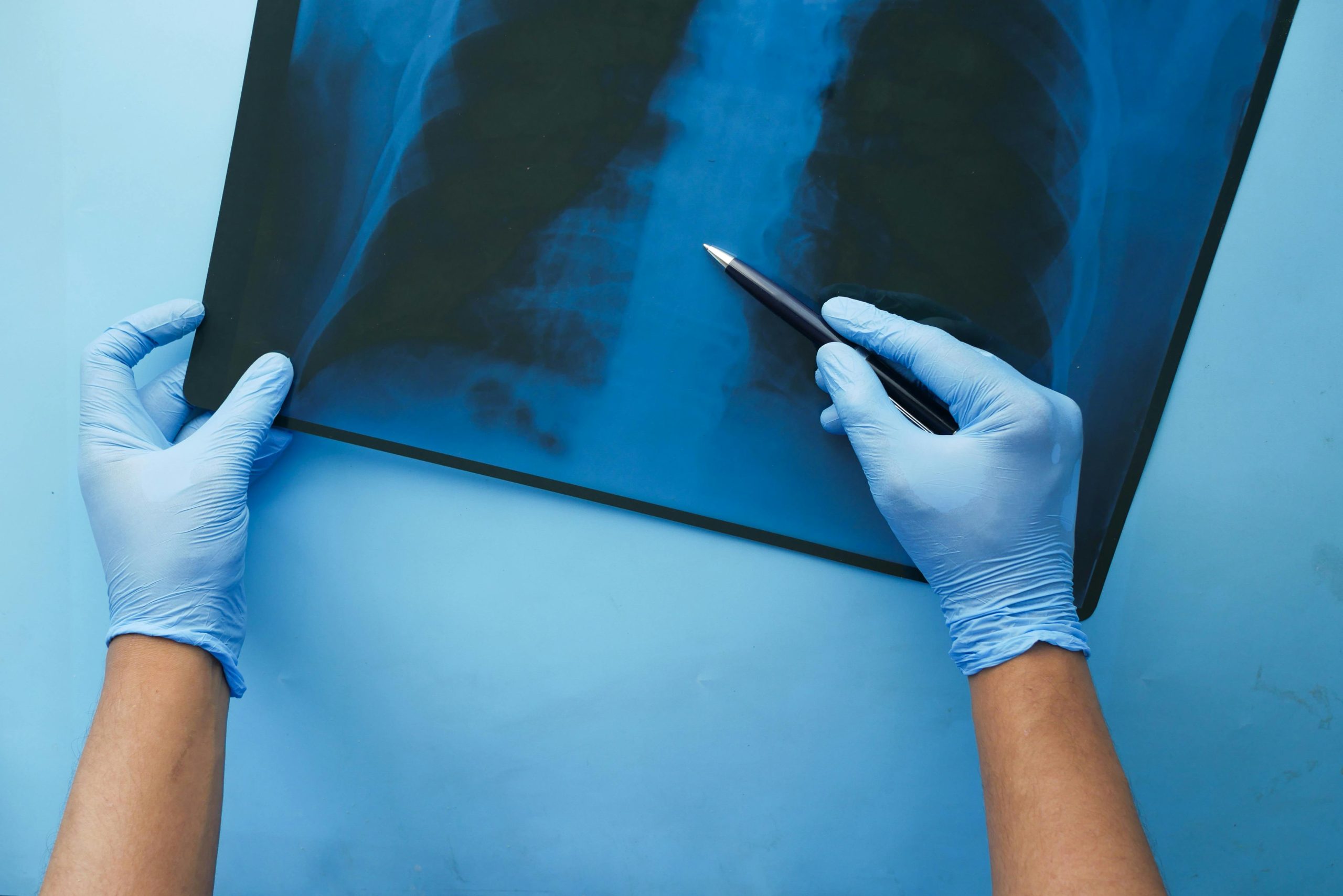
Marking National Lung Month and National TB Day, the Department of Health (DOH) has launched on Friday a nationwide tuberculosis (TB) active case-finding campaign across 29 provinces, offering free chest X-rays and immediate sputum testing to fast-track diagnosis and treatment.
According to DOH data, the Philippines records an incidence of 643 TB cases per 100,000 population, among the highest in the region. The new campaign aims to reach communities where TB transmission remains persistent, reflecting the goals of the PhilSTEP2 national strategy, which targets reducing incidence to 300 per 100,000 by 2030.
To reach this ambitious goal, the DOH is now deploying portable AI-assisted X-rays and rapid molecular tests, including van-based mobile clinics, to bring early detection into remote and underserved areas.
These suitcase-sized devices can shorten the diagnostic process from several days to under an hour, allowing patients to begin treatment before they return home.
A Persistent Health Threat
Tuberculosis continues to be one of the world’s deadliest infectious diseases. According to the World Health Organization (WHO) Global Tuberculosis Report 2024, around 8.2 million people developed TB globally in 2023, the highest annual figure since monitoring began in 1995.
In the Philippines, TB remains a national emergency. Based on WHO estimates, around 739,000 Filipinos fell ill with TB in 2023, ranking the country among the world’s eight highest-burden nations. DOH’s PhilSTEP2 (2025) notes that the Philippines continues to face a major “missing cases” gap—individuals who are infected but remain undiagnosed—particularly in overcrowded communities, impoverished households, and geographically isolated and disadvantaged areas (GIDAs).
However, the issue is not only numerical but systemic. A Stop TB Partnership case study in 2024 on portable AI X-ray and Truenat deployment in the Philippines found that delays in diagnostics and logistical bottlenecks were fueling ongoing transmission. Prolonged waiting times often led to patients abandoning testing altogether, underscoring the urgency of bringing diagnosis closer to the people.
What’s Inside the Suitcase
The portable diagnostic kits aim to break through these barriers. Each kit typically includes:
- An ultra-portable digital chest X-ray system. Lightweight and battery-powered, these can be carried into sitios without stable electricity. Images are processed by computer-aided detection (CAD) software, which flags abnormalities within minutes. WHO’s consolidated TB screening guidelines (2021, reaffirmed in 2025) recognize CAD as comparable in accuracy to radiologists for triage in adults.
- A rapid molecular test. Platforms like GeneXpert MTB/RIF Ultra and Truenat can confirm TB infection and detect drug resistance in about an hour. WHO’s 2023 operational handbook on TB diagnostics highlights that these nucleic acid amplification tests are significantly more sensitive than smear microscopy. Truenat’s battery-operated design makes it especially fit for rural or off-grid areas.
Together, this pairing transforms TB detection. In the same ‘Stop TB Partnership case study (2024)’, report shows that using CAD-assisted X-rays to triage followed by Truenat confirmation cut diagnostic turnaround from five days to one day, making same-day treatment initiation possible.
The Philippines’ strategy mirrors innovations elsewhere. A 2023 BMJ Global Health study in India found that mobile vans using CAD-assisted X-rays and Truenat successfully expanded screening in rural areas.
In addition, a 2022 FIND evaluation in Kenya, Nigeria, and South Africa reported that CAD-equipped vans significantly improved detection while maintaining diagnostic accuracy.
Meanwhile, the BRAC TB Program in Bangladesh (2023) showed that combining AI-assisted X-rays with GeneXpert testing raised diagnostic yield among garment workers and slum dwellers—communities that often fall outside formal health systems.
Rolling Out Across the Country
The Philippine rollout of suitcase labs has gained momentum across diverse regions:
- Metro Manila. In 2024, Valenzuela City deployed suitcase kits pairing AI-assisted X-rays with rapid molecular testing to cope with its dense urban TB caseload.
- Cordillera. DOH-CAR (February 2024) launched a mobile clinic under the PBSP ACCESS TB Project, outfitted with AI-enabled X-rays and Truenat to reach upland barangays.
- Luzon Provinces. PBSP and Siemens Healthineers (2024) established 28 AI-equipped X-ray sites across NCR, Central Luzon, and Calabarzon, with a projected capacity to screen 120,000 people per month.
- Calabarzon. As early as 2021, USAID’s TB Platforms pilot used portable X-rays in community sweeps, laying the groundwork for AI-driven expansion.
- Peripheral facilities. DOH Calabarzon (2022) confirmed that Truenat machines had been distributed to rural health units and GIDA hospitals, where battery power ensured continued use.
- Makati City. In 2024, Makati lent its portable X-rays to neighboring LGUs, showing how local governments can share resources for early TB detection.
The same study explained that that integrating these technologies in caravans significantly reduced patient loss to follow-up by providing same-day results and treatment initiation.
But does AI Actually Work?
Although some remain skeptical of machines interpreting chest X-rays, evidence increasingly supports the effectiveness of AI, especially when applied carefully and locally.
WHO’s policy statement (June 2025) confirmed that six CAD products met performance benchmarks for TB triage in adults, matching or even surpassing human readers in some cases. Furthermore, a Scientific Reports study (July 2025) comparing CAD with radiologists across multiple countries showed that top-performing CAD matched or exceeded diagnostic accuracy in diverse settings.
Meanwhile, the Stop TB Partnership Philippines case study (2024) stressed the need for context-specific calibration. Setting thresholds too low overwhelmed confirmatory testing with false positives; setting them too high risked missing early cases.
Globally, a 2024 systematic review in Clinical Infectious Diseases found CAD had pooled sensitivity of 87% and specificity of 74%, aligning closely with WHO targets.
And so, the consensus: AI is not a replacement for confirmatory testing, but it is an indispensable triage tool in resource-limited, high-burden contexts.
Why Speed Matters
In TB care, every single day matters. Traditional diagnostic pathways require multiple clinic visits for sputum collection, lab results, and treatment initiation, and many patients never return. But portable kits compress this into a single day:
- AI triage in under a minute
- Molecular confirmation in an hour
- Treatment initiation before the patient leaves
Beyond clinical benefits, speed reduces household financial ruin. The Philippine National TB Patient Cost Survey (2022) found that 42.4% of TB-affected households experienced catastrophic costs, rising to 89.7% among drug-resistant TB patients. The bulk came from non-medical expenses (42.7%) such as transport and food, and income loss (40.4%). Many families resorted to loans or asset sales to cope.
PhilSTEP2 (2025) commits to “zero catastrophic costs” through expanded community screening, rapid diagnostics, and workplace protection.
Globally, similar outcomes have been documented. The Lancet Global Health (2023, India) reported that combining mobile X-rays with same-day molecular testing reduced diagnostic delays by over 60%.
Moreover, FIND’s multicountry evaluation (2022) in Africa showed most patients diagnosed and treated within 24 hours. WHO’s Global TB Report (2024) noted that Bangladesh and Ethiopia saw substantial drops in patient drop-outs after scaling up one-stop diagnostic models.
Barriers to Scale
Despite encouraging results from portable TB diagnostic tools, several challenges continue to hinder full-scale deployment:
- Logistics. DOH PhilSTEP2 (2025) cites persistent difficulties in transporting portable X-rays to islands and uplands, maintaining batteries, and securing connectivity. The 2024 Stop TB Partnership case study also flagged equipment reliability and data transfer issues in rural deployments.
- Supplies. The Global Drug Facility (September 2023) announced a price reduction for GeneXpert cartridges to US$7.97, but WHO’s Global TB Report (2024) confirmed supply disruptions and procurement delays in 2024–2025.
- Calibration. WHO’s 2025 guidelines highlight the need for continuous threshold adjustments in CAD. Philippine pilots showed poor calibration either overwhelmed testing capacity or missed cases.
- Funding. While USAID and the Global Fund supported initial rollouts, PhilSTEP2 (2025) stresses that sustainability hinges on domestic budgets for staff, consumables, and mobile operations.
Human Side of the Equation
Technology cannot alone dismantle TB stigma. Many Filipinos still avoid screening for fear of workplace dismissal or community gossip.
Philippine National TB Patient Cost Survey in 2022 emphasized that stigma was one of the most frequently cited barriers to seeking care. The Stop TB Partnership Philippines case study (2024) observed that one-visit caravans helped protect confidentiality, encouraging participation in workplaces and urban neighborhoods.
With these, PhilSTEP2 (2025) outlines health promotion campaigns, counseling, and employer partnerships to protect workers’ rights and reduce stigma. In Makati, sharing portable X-rays with nearby LGUs showed that when services are discreet and convenient, community trust grows.
Globally, stigma reduction is equally vital. A 2023 Global Fund and KNCV Tuberculosis Foundation survey found that more than 50% of TB patients in India and Nigeria experienced discrimination after diagnosis. The BRAC TB Program evaluation (2023) in Bangladesh showed that pairing screening with peer counseling and livelihood protection boosted participation among garment workers.
And so, what’s next?
Experts suggest five priorities to sustain momentum:
- Standardize the one-stop model. Universal triage with AI X-ray followed by on-site molecular testing should be the norm. Success should be measured by same-day treatment starts.
- Secure supply chains. Invest in cartridge procurement and buffer stocks; equipment without consumables is useless.
- Localize AI calibration. Provinces should set thresholds based on their TB prevalence and lab capacity.
- Target equity. Prioritize screenings in GIDAs and workplaces where access is most limited.
- Plan for the future. As WHO introduces next-generation sequencing for drug-resistant TB, referral systems must be prepared.
TB has haunted the Philippines for decades. Yet suitcase-sized labs, offering rapid, community-based diagnosis, are shifting the narrative from weeks of waiting to minute of certainty.
The challenge ahead is not the technology itself but sustaining it, ensuring funding, training, and public trust. If those pillars hold, the humble suitcase could well become the symbol of how the Philippines finally caught up in its fight against TB.
DISCLAIMER
This article provides general information and does not constitute medical advice. Consult your healthcare provider for personalized recommendations. If symptoms persist, consult your doctor.