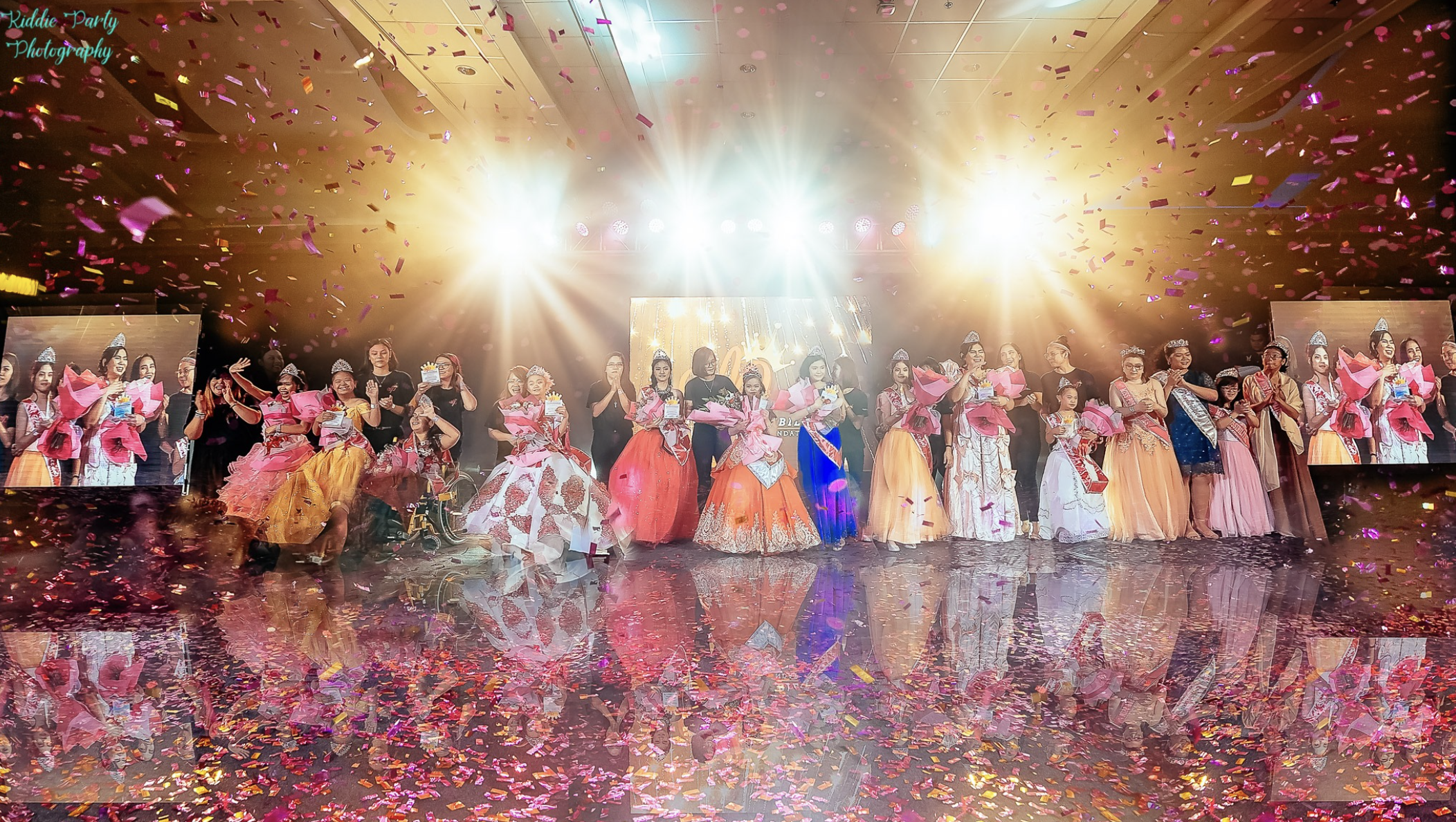
The Philippines’ pioneering beauty pageant for young women with special needs, ‘Miss Possibilities’, celebrated its 10th anniversary just this May 17, at the Henry Lee Irwin Theater in Ateneo de Manila University.
Launched in 2015, it remains the only program of its kind in Asia, designed to challenge stereotypes about beauty and ability.
Each year, contestants with Down syndrome, autism, and other conditions step on stage in gowns, talent showcases, and interviews, with all participants receiving crowns and titles. Organizers emphasize that the event has grown beyond coronation night into a platform offering medical check-ups, therapy programs, and inclusive fashion shows.
This milestone comes at a time when national data show that 8.7% of Filipinos aged five and older reported at least one functional difficulty in the 2020 Census, underscoring the urgency of disability inclusion, according to Philippine Statistics Authority.
READ: Allure Philippines Launches to Tackle Beauty and Wellness Misinformation Online
A Decade of Possibilities
The said pageant was founded by Suzanna Pavadee Vicheinrut Yuzon, a former Mrs. World 2003 and Miss Thailand USA, after her eldest daughter was diagnosed with Down syndrome.
The first ‘Miss Possibilities’ in 2015 took place in a restaurant in Taguig City with only 15 participants and a small audience. By 2017, it was drawing more than a thousand spectators and had to be staged in larger venues.
From the start, the format mirrored mainstream pageants, long gowns, talent rounds, and Q&A, but with a critical twist: no one loses. Each participant leaves with a crown and a title such as Miss Amazing or Miss Inspirational.
As Yuzon explained in an earlier Channel NewsAsia interview, the event is never “a real competition” but a celebration of confidence and dignity.
Beyond the spotlight, ‘Miss Possibilities’ has expanded into advocacy, organizing medical, dental, and eye check-ups; therapy for children; and even hippotherapy, where horseback riding is used for rehabilitation. Its inclusive fashion show, often featuring celebrity escorts, has become another highlight.
READ: Skincare-Infused Makeup Drives Philippine Beauty Boom
Why Representation Matters
Representation on stage addresses a larger social issue. Based on the 2019 National Disability Prevalence Survey, 12% of Filipinos aged 15 and older live with severe disabilities, millions of people facing barriers in education, employment, and civic life.
Globally, the World Health Organization estimates that 1.3 billion people, or 16% of the world’s population, live with significant disabilities, making inclusion a global imperative. A comparative analysis by the Disability Data Initiative places the median prevalence of disability across 41 countries at 12.6%, showing the Philippines aligns with international patterns.
However, the challenge is not just symbolic but economic. A 2022 UNICEF–DSWD study reports that families raising children with disabilities in the Philippines face 40% to 80% higher household costs than families without, underscoring the concrete burdens of exclusion.
This is why ‘Miss Possibilities’ matters. A stage that cheers for girls with special needs sends a signal: they are not invisible, they belong in schools, workplaces, and communities.
Furthermore, ‘Miss Possibilities’ is more than symbolic. In adapting venues for the pageant, institutions install ramps, provide interpreters, and adjust lighting and sound for sensory needs. Once in place, these changes benefit all users, from students at graduation ceremonies to audiences at concerts. Inclusivity is not charity; it is infrastructure.
WHAT DO YOU THINK ARE THE CHALLENGES OF DIFFERENTLY-ABLED WOMEN? WRITE YOUR THOUGHTS HERE.
Barriers Remain
Yet pageantry cannot erase systemic gaps. Despite Republic Act 11650’s mandate to establish Inclusive Learning Resource Centers (ILRCs) nationwide, implementation is lagging.
A 2024 report from the Second Congressional Commission on Education (EDCOM II) shows that only 32 Special Education centers have been converted into ILRCs, with just two per region. During the 2023–2024 school year, only 324,968 learners with disabilities were enrolled, about 20% of the estimated 1.6 million Filipino children with disabilities aged 2 to 17.
In addition, access to therapy is another challenge. Based on a 2024 report by the International Institute of Social Studies, speech, occupational, and physical therapy services remain concentrated in urban centers, and when available, they are prohibitively expensive.
In addition to this, stigma persists in daily life. Parents continue to report judgment in schools, workplaces, and public spaces.
And the psychological toll is clear. WHO reports show that mental health conditions such as anxiety and depression are among the leading causes of illness and disability among adolescents, with half of all lifelong mental disorders beginning by age 14. Suicide remains a leading cause of death among those aged 15 to 19. And so, these risks are amplified when adolescents with disabilities are excluded from opportunities to participate and belong.
Exclusion and lack of access to support services not only limit opportunities for Filipino youth with disabilities but also increase their risk of long-term mental health challenges.
Pageant as Platform
‘Miss Possibilities’ deliberately mirrors mainstream pageantry, offering styling, rehearsals, and stage presence training. But its deliberate design, crowning everyone, turns the stage into affirmation rather than competition. It is enhancing their confidence, strengthening their roles in society, and validating and affirming their contributions to “the world, the universe, rather.”
Notable winners include Samantha Pia Cabanera (2018), Cielo Marie Guico (2019), and Angela Gabrielle Santiago (2023). Their images, widely shared online, inspire families across the country, especially in areas where opportunities for children with disabilities remain limited.
Corporate partners have also used the platform to advance advocacy campaigns, including those discouraging derogatory terms like the “R-word.” By linking branding with advocacy, companies extend inclusivity into advertising, workplaces, and consumer culture.
The 10th Year
The 2025 anniversary edition drew families, supporters, and alumni to Ateneo’s Irwin Theater. According to ABS-CBN News, the event was covered widely as both a cultural and advocacy milestone. TV Patrol, the network’s flagship news program, also featured the celebration, underscoring its place as a nationally recognized event.
Yuzon’s vision remains unchanged. As she noted in earlier interviews, the goal is to give participants “all the life experiences of a typical person”, from photo opportunities to learning resilience in the face of setbacks.
Ripples Beyond Manila
‘Miss Possibilities’ has inspired local governments to hold pageants for Persons with Disabilities (PWDs) during National Disability Prevention and Rehabilitation Week. Schools and youth groups increasingly invite winners as speakers, expanding awareness.
This ripple effect is reflected globally. In recent years, mainstream pageants have opened doors to married women, mothers, and transgender candidates. The broader shift toward inclusivity across pageantry reinforces the idea that representation must extend to every sector of society.
What’s Next
Advocates point to several ways forward:
- Accessibility standards: Regular event venues should adopt permanent accessibility measures—ramps, signage, seating, and backstage accommodations.
- Support for families: Travel stipends and caregiver assistance can widen participation beyond Metro Manila.
- Impact tracking: Annual reports on participants served, therapies accessed, and partner contributions can help local governments integrate similar programs.
- Education and language: Respectful terms should be institutionalized in schools, media, and workplaces to sustain gains made by advocacy campaigns.
- Alumni engagement: Past participants can serve as mentors, volunteers, and ambassadors, sustaining momentum beyond the crown.
The Bigger Picture
In the Philippines, beauty pageants are more than entertainment, they are actually a cultural institution. By placing young women with special needs at the center of a stage typically reserved for conventional ideals, ‘Miss Possibilities’ challenges society to rethink who deserves applause, visibility, and respect.
Ten years on, the pageant has proven that inclusion is not a side story but the story. What began in 2015 as a small initiative has become a national platform where young women with disabilities are celebrated. The numbers, from millions of Filipinos with functional difficulties to the billions of people with disabilities worldwide, show that this is not a marginal issue but a global imperative.
Each crown, each cheer, and each adaptation in the theater is a reminder that representation is not charity, and inclusivity is not optional. It is the foundation of a society that values everyone.
Photo from the Miss Possibilities Foundation Facebook page
DISCLAIMER
This article provides general information and does not constitute medical advice. Consult your healthcare provider for personalized recommendations. If symptoms persist, consult your doctor.