
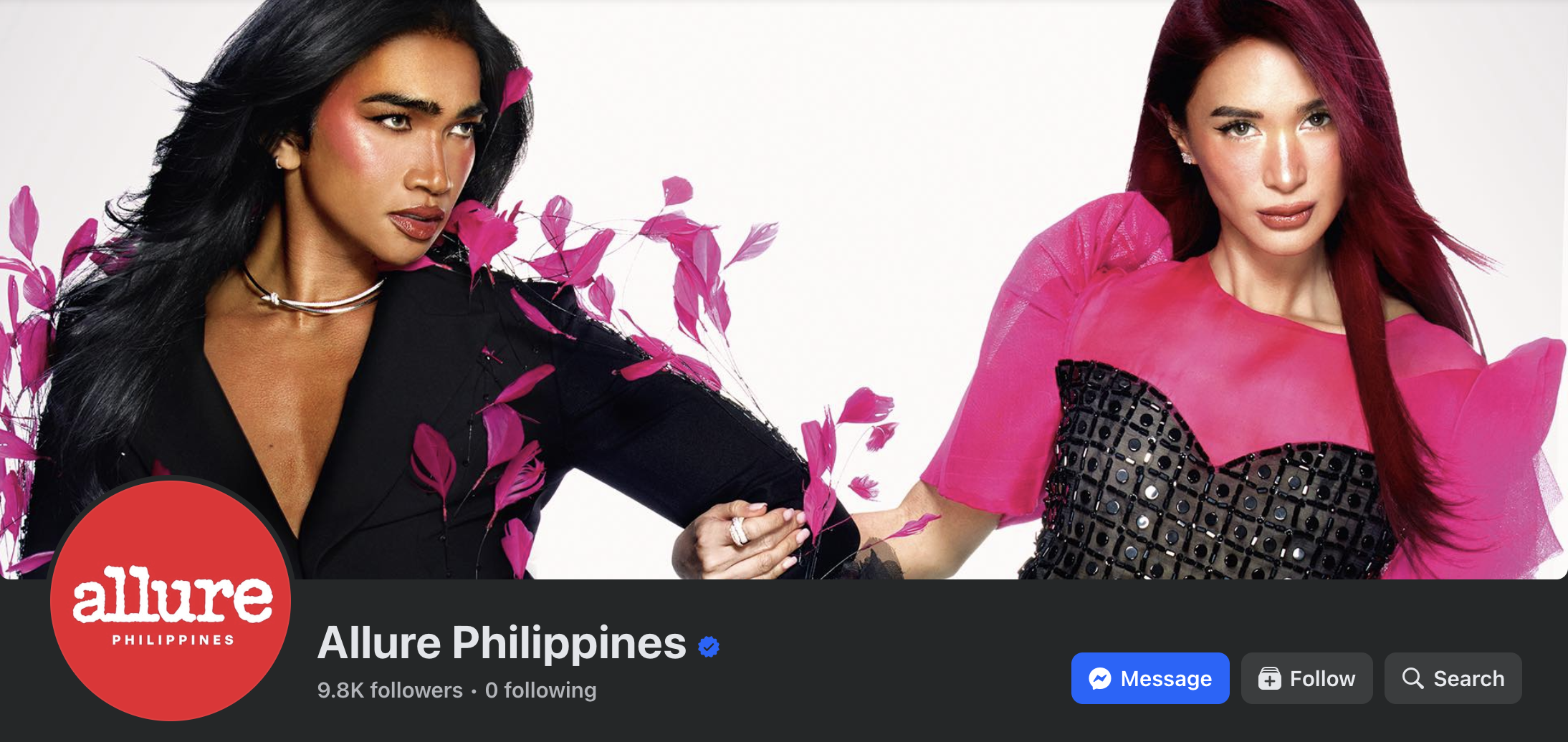
In the first quarter of 2025, Allure Philippines was officially launched under the leadership of fashion entrepreneur and advocate Rissa Mananquil Trillo, bringing the global beauty authority into the local market.
The publication seeks to counter the country’s growing “infodemic” of misleading beauty and wellness advice, which has spread rapidly across social media platforms. According to the Food and Drug Administration (FDA), more than 80 unregistered or unsafe cosmetic products were flagged in 2023, including whitening creams with toxic mercury content.
The Philippine beauty and personal care industry, valued at ₱270 billion ($4.7 billion) in 2024, continues to expand. However, this growth has been accompanied by rising risks from counterfeit and unregulated products.
By positioning itself as a trusted, fact-checked source, Allure Philippines hopes to empower readers with credible information and set higher standards for beauty journalism.
Beauty in the Age of Misinformation
The Philippines remains one of the world’s heaviest social media users. According to Meltwater’s June 2025 Social Media Statistics report, Filipinos spend an average of 3 hours and 32 minutes daily on social platforms, well above the global average of 2 hours and 21 minutes.
In addition, DataReportal’s Digital 2024: The Philippines noted that the country had 86.75 million social media accounts in early 2024, equivalent to 73% of the population. Much of this activity revolves around beauty and wellness, where TikTok “skinfluencers” promote quick-fix regimens and Facebook groups share do-it-yourself lightening treatments.
However, experts warn that not all beauty advice online is safe.
A 2025 study in Food and Chemical Toxicology titled “Mercury in Online Skin-Lightening Cosmetics: A Health Risk Assessment of Products from Selected Asian Countries” tested 134 products sold on e-commerce sites across seven Asian nations, including the Philippines. It found that 58% contained mercury above the international safety limit of 1 mg/kg, with some products reaching 144,893.9 mg/kg. Furthermore, more than 94% of mercury-positive samples posed significant health risks, even under conservative exposure models.
These findings align with global evidence. A 2022 systematic review in Environmental Health Perspectives, which examined 787 product samples across 22 countries, found mercury contamination to be widespread in whitening creams, exposing users to risks of kidney damage, neurological disorders, and skin conditions.
While the World Health Organization’s Minamata Convention prohibits cosmetics containing more than 1 mg/kg of mercury, unsafe products continue to circulate both locally and internationally.
As health experts note, while social media has democratized beauty, it has also democratized misinformation.
The Arrival of Allure Philippines
Against this backdrop, Allure Philippines positions itself as one of the trusted voices. At its launch in Makati City, the magazine framed its mission as “celebrating Filipino beauty while championing truth in reporting.”
Its editorial agenda includes:
- Fact-checked features reviewed by dermatologists, nutritionists, and health experts
- Inclusive representation of diverse skin tones, body types, and regional identities
- Spotlights on Filipino talent in beauty, wellness, and sustainable innovation
- Wellness coverage grounded in science, not marketing hype
In addition, in the feature article “The Beauty Expert Has Landed: The Launch of Allure Philippines” (May 2025), Trillo described the mission as championing expert-backed storytelling, investigative journalism, and inclusivity, while ensuring every story “reflects both global excellence and local relevance.”
Globally, Allure is known for its rigorous Review Process & Methodology, where products are tested and evaluated by dermatologists, cosmetic chemists, and medical professionals before being featured, including in its acclaimed “Best of Beauty” awards. This credibility, on the other hand, gives the Philippine edition a strong foundation to position itself as a reliable voice in the local market.
Global Brand, Local Mission
Allure has long been called “The Beauty Bible,” reflecting its role as a leading source of beauty knowledge and cultural commentary, from product reviews to investigative reporting.
Since its founding in 1991 by Linda Wells, the U.S. edition distinguished itself by treating beauty as a subject worthy of serious journalism, covering health concerns, diversity, and industry shifts. By launching Allure Philippines, the brand now extends that legacy of credibility into a locally nuanced context, combining authority with relevance.
Colonial Hangovers: Colorism and Whitening
One of the most entrenched issues in Philippine beauty culture is what we call ‘colorism’. Whitening creams, glutathione drips, and injectables remain in demand, reflecting deep-seated colonial ideals that equate lighter skin with social mobility and success.
However, attitudes may be shifting. According to a May 2025 study titled Glow-Up or Fade Out? attitudes toward colorism and even celebrity endorsements showed no significant influence on glutathione soap use among 207 young Filipina professionals in Metro Manila. The findings suggest that some consumers are exercising greater agency and discernment in their choices.
Meanwhile, some global overviews further underscores that colorism’s roots are systemic and colonial. This reinforces the critical role of platforms like Allure Philippines in broadening representation and affirming that Filipina beauty is not one-size-fits-all.
Fighting Myths in the Same Arena
Recognizing that misinformation thrives on platforms where beauty trends spread fastest, Allure Philippines is deliberately entering digital spaces such as TikTok, Instagram, and YouTube with expert-led, evidence-based content.
Supporting this strategy, a December 2024 study titled Debunk-It-Yourself: Health Professionals’ Strategies for Responding to Misinformation on TikTok documented how health professionals are countering false claims by using features like duets and stitches to directly engage with misleading videos.
In addition, this mirrors Allure Philippines’ digital strategy, which includes a TikTok series debunking DIY sunscreen myths, an FDA-backed explainer on mercury in whitening creams, and a feature on a Mindanaoan makeup artist incorporating indigenous patterns into contemporary beauty.
Experts See Potential
Dermatologists cautiously welcome the new platform as the Philippines faces a significant health literacy challenge.
A 2022 nationwide study by IDinsight found that over 51% of Filipino adults struggle to access or interpret health information, with some regions recording even higher difficulty levels. And with this, the Department of Health, together with IDinsight, has begun the five-year Health Promotion and Literacy Longitudinal Study (HPLS) to track knowledge, attitudes, and health behaviors over time.
Globally, the risks of misinformation are also well documented. In fact, a 2025 international survey in Social Science & Medicine revealed that 58% of individuals aged 18–34 regretted medical decisions influenced by misinformation online. On the other hand, this shows that trusted media, when grounded in expertise and fact-checking, can prevent harmful choices and even save lives.
The Uphill Battle
Still, the challenges are formidable. Viral content promising instant results often overshadows careful, evidence-based explanations. Furthermore, in the attention economy, sensationalism tends to win.
Accessibility adds another hurdle. While Allure Philippines primarily reaches middle- and upper-class audiences, misinformation disproportionately harms lower-income groups who lack both financial means and the media literacy to vet sources.
According to a 2023 study in the Journal of Media Literacy Education, many Filipino students demonstrated only “beginning” competency in fact- and bias-checking, with particularly low performance in under-resourced provinces in the country.
In addition, a 2025 Data & Policy analysis stressed that the Philippines remains highly vulnerable to disinformation due to limited digital literacy and infrastructure. Both studies point to the urgent need for human-led education initiatives to close the gap.
Looking Ahead
The launch of Allure Philippines is a meaningful step in reshaping the beauty conversation toward credibility, inclusivity, and accountability. However, it cannot dismantle misinformation overnight. What it can do is set a higher bar for beauty journalism in a market where sensational claims often overshadow science.
With over half of Filipinos struggling with health literacy and studies showing that younger and lower-income groups are most vulnerable to online misinformation, the stakes are high. Ultimately, the promise of Allure Philippines lies in its ability to balance aspiration with accountability, to celebrate Filipino beauty while equipping audiences with tools for safer, informed choices.
If successful, it could help foster a culture where beauty is no longer defined by myths and colonial legacies, but by empowerment, diversity, and truth.
Screen from the Allure Philippines Facebook page
DISCLAIMER
This article provides general information and does not constitute medical advice. Consult your healthcare provider for personalized recommendations. If symptoms persist, consult your doctor.