What Artificial Intelligence in Global Conflict Really Means for Everyday Life
Artificial intelligence has quietly woven itself into everyday life.
It recommends what we watch, helps doctors detect diseases earlier, assists drivers on the road, and finishes our sentences when we type messages. But AI is also beginning to appear in a space that feels far more serious: modern warfare.
That phrase alone can sound unsettling.
Images of autonomous machines or futuristic battlefields often come to mind. Yet the reality is less dramatic and more technical. Most artificial intelligence used in military settings today is designed to analyze information that helps humans understand complex situations faster.
Understanding how this works can actually make the topic feel less frightening and far more manageable.
What AI Is Doing in Modern Warfare
In simple terms, AI excels at finding patterns in enormous amounts of data.
Modern defense systems collect information from satellites, radar, sensors, and communication networks. Human analysts would take days or even weeks to process all of it.
AI can do this in minutes.
This technology is currently used to help:
• analyze satellite images
• detect unusual activity in cybersecurity networks
• monitor missile systems
• assist with logistics and supply coordination
In most cases, artificial intelligence acts as a decision-support tool, helping humans make faster and more informed choices.
The key word here is support.
Human oversight still plays the central role.
READ: Artificial intelligence and arms control in modern warfare
Why the Topic Is Suddenly Everywhere
Recent global tensions have brought attention to how rapidly technology is evolving.
Governments around the world are investing heavily in artificial intelligence research—not only for defense but also for cybersecurity and information protection. At the same time, international organizations are discussing ethical guidelines to ensure AI systems remain under human control.
The United Nations, technology experts, and policy leaders are actively working on frameworks that prevent autonomous weapons from operating without human judgment.
In other words, the conversation about AI is about responsibility.
What This Means for Everyday People
For most individuals, artificial intelligence in defense systems will not affect daily routines directly.
However, the broader technological progress connected to AI often finds its way into civilian life.
Many tools we rely on today began as research projects tied to national security. The internet itself, GPS navigation, and satellite technology all started in similar contexts before becoming everyday conveniences.
AI research may follow the same path.
Advances in computing power and data analysis are already improving medical diagnostics, climate research, transportation safety, and disaster response.
Sometimes the technologies developed for protection become tools that improve everyday life.
EXPLORE: How Innovation Is Transforming Filipino Wellness
Keeping Perspective in a Fast-Changing World
News about global conflicts and emerging technologies can easily trigger anxiety. The human brain is wired to react strongly to perceived threats.
Psychologists call this the negativity bias, our tendency to focus more intensely on alarming information.
A healthier approach is to stay informed while maintaining perspective.
The world has always navigated technological turning points. From nuclear energy to the internet revolution, humanity has faced moments when innovation seemed both promising and uncertain.
Each time, societies eventually developed rules, ethics, and safeguards to guide these powerful tools.
Artificial intelligence will likely follow a similar path.
Why Human Values Still Matter Most
Despite rapid advances in technology, one truth remains unchanged: machines do not decide the future.
People do.
Most discussions about AI in security emphasize the importance of keeping humans “in the loop”—ensuring that ethical responsibility stays firmly in human hands.
Technology can process data at incredible speed. It cannot replace empathy, judgment, or moral reasoning.
Those qualities belong uniquely to human beings.
A Thought for International Women’s Month
This conversation about technology is also expanding to include voices that were often absent in the past.
Women scientists, engineers, policymakers, and researchers are playing an increasingly important role in shaping how artificial intelligence is developed and governed.
Their perspectives are helping guide discussions about responsibility, safety, and human wellbeing in the age of AI.
The future of technology is being shaped by men and women alike, who believe innovation should ultimately serve humanity.
Looking Ahead
Artificial intelligence will continue to evolve. Its influence will extend across industries, from healthcare and transportation to climate science and education.
Understanding these changes helps reduce fear and replace it with curiosity.
Technology will always carry risks, but it also carries enormous possibilities.
And perhaps the most reassuring truth is this: the future still depends on human wisdom.
The same creativity that builds powerful machines also builds cooperation, ethics, and peace.
For now, that remains our greatest advantage.
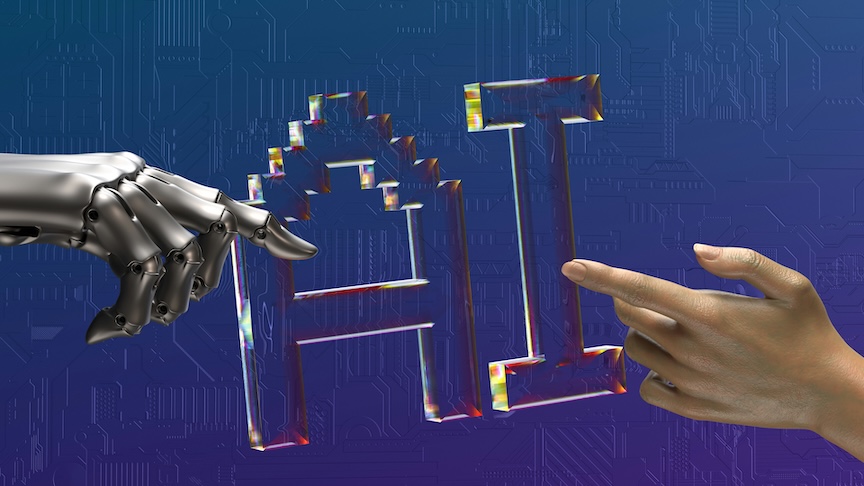
Photo by Igor Omilaev on Unsplash
References:
• United Nations Institute for Disarmament Research (UNIDIR) – AI and international security
• Stockholm International Peace Research Institute (SIPRI) – Artificial intelligence in military systems
• RAND Corporation – AI and national security research
• International Committee of the Red Cross – Autonomous weapons and ethics
• World Economic Forum – AI governance and global technology trends