

There has never been more health information available to the public.
The Problem of Health Information Overload
Scroll through any given day and you will encounter warnings about sugar, sleep, stress, microplastics, posture, inflammation, gut flora, blue light, burnout. Advice arrives in fragments—thirty seconds of instruction, a graphic promising transformation, a headline that turns the body into a battlefield.
And yet, despite the abundance of guidance, many people report feeling more confused than empowered.
The paradox is difficult to ignore: we know more about health than ever before, and still struggle to feel in control of it.
Part of the problem may be ignorance, and yes, overload.
DISCOVER: Your Journey to Wellness Starts Here
When Awareness Becomes Anxiety
Public-health researchers have long observed that information alone rarely changes behavior. Knowledge must be contextualized, repeated, and translated into something usable. Without that translation, awareness turns into anxiety.
In recent years, wellness has expanded beyond clinics and laboratories. It has moved into lifestyle, productivity, food, art, sport, even travel and tourism. Some critics see this as dilution. Others recognize it as something more accurate: health is cumulative. It unfolds through small, daily decisions—how we move, how we gather, how we rest, how we eat.
Disease Prevention Beyond Headlines
Disease prevention, for example, lives in screenings scheduled before symptoms appear, in habits maintained consistently, in policies that allow workers to rest before exhaustion becomes pathology.
Mental health, too, resists the noise. It improves in the quiet of regulation—breathing slowed, sleep restored, routines stabilized.
And joy—often dismissed as indulgent—may be one of the most reliable indicators of well-being. Neuroscience suggests that shared experiences, music, movement, and communal rituals recalibrate the nervous system in ways lectures cannot.
Why Discernment Matters in Modern Wellness
The challenge, then, is to cultivate discernment. To ask: What matters? What is evidence-based? What is sustainable?
In a media landscape driven by urgency, clarity becomes a public service.
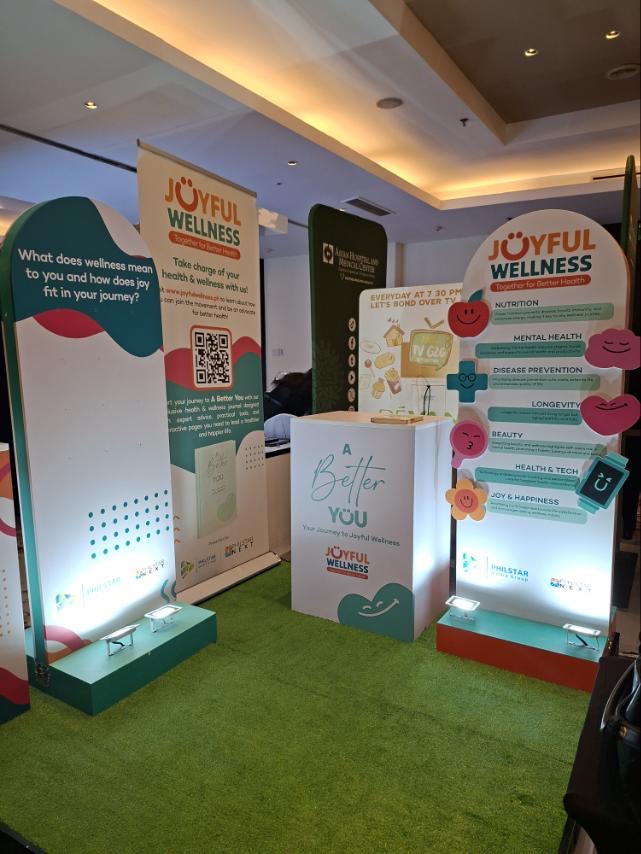
That is the premise behind Joyful Wellness.
This is an editorial space devoted to translation—grounded in evidence, attentive to prevention, and responsive to the psychological realities of contemporary life. Here, public-health reporting appears alongside reflections on movement, dining, sport, and culture, examining how daily habits accumulate into long-term health outcomes.

If well-being unfolds across biological, social, and environmental forces, media carries a responsibility to provide orientation. Research findings require context. Trends require evaluation. New recommendations require proportion.
Joyful Wellness begins with that discipline. The aim is to organize information into frameworks people can use and to approach health as an ongoing engagement shaped by routine decisions, community life, and lived experience.
In an era defined by accelerated publication cycles, discernment grows increasingly valuable. Readers benefit from perspective shaped by deliberation and care.
That is the work Joyful Wellness undertakes.
Photo by Margaret Young on Unsplash and Joyful Wellness Team