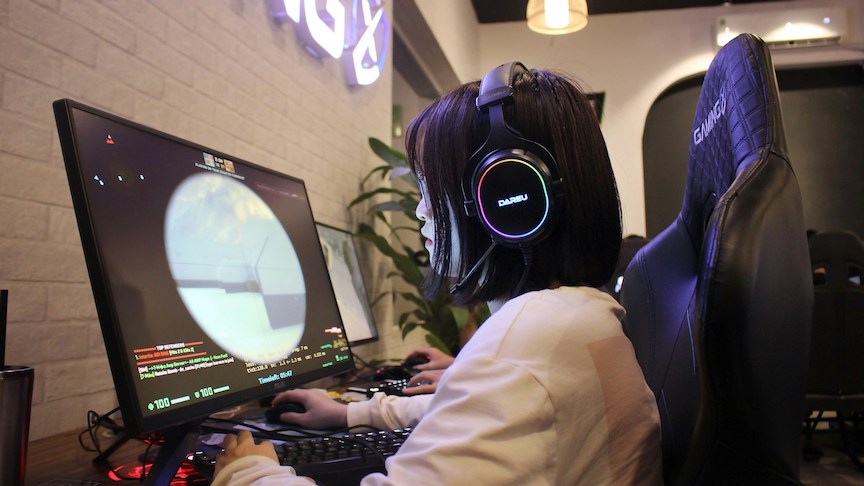
Filipino educators, health officials, and development partners are increasingly harnessing gamified and interactive digital tools to strengthen health education among young people, as national evidence points to persistent gaps in health comprehension.
According to the first National Health Literacy Survey in the Philippines, 51.5% of Filipinos aged 15 to 70 have limited health literacy, meaning they struggle to access, understand, appraise, and use health information and services to make effective health decisions.
Meanwhile, the Department of Education’s 2024 Functional Literacy, Education, and Mass Media Survey (FLEMMS) reported a basic literacy rate of 93.1% among Filipinos aged 10 to 64, but only 70.8% functional literacy when higher comprehension standards were applied.
At the same time, digital use in the country has become nearly universal. DataReportal’s Digital 2025: The Philippines estimates 97.5 million internet users and 90.8 million social media user identities as of January 2025, equivalent to about 78% of the population.
Together, these trends explain why health educators are trying to meet learners where they already engage: on mobile devices and digital platforms. Emerging global research suggests that well-designed gamification can improve specific health-related outcomes among children and adolescents.
National literacy, health literacy, and the comprehension gap
Basic literacy—the ability to read, write, and compute—is widespread in the Philippines. Functional literacy, however, presents a more complex challenge. Learners may decode text but still struggle to process and apply information in real-world contexts such as health decision-making.
Health-literacy research consistently shows that effective health behavior depends not only on exposure to information, but also on the ability to interpret and use it. The National Health Literacy Survey found that difficulty accessing and appraising information ranked among the strongest contributors to limited health literacy.
This gap does not affect adults alone. Targeted school-based surveys show lower health-literacy levels among adolescents in areas such as nutrition and disease prevention, indicating that younger learners may benefit most from alternative educational approaches.
FLEMMS data reinforce this pattern: even with high basic literacy, lower functional literacy limits comprehension skills that are critical for interpreting health information. These findings suggest that increasing information volume alone is insufficient without improving how information is delivered and understood.
READ: How Innovation Is Transforming Filipino Wellness
The digital environment: opportunity and equity challenges
Filipino children enter the digital world early. UNICEF’s Philippines Kids Online Survey reports that children go online at an average age of 10 years and spend about two hours daily engaging with content for learning, communication, and entertainment.
This digital immersion creates opportunities for health education tools that align with existing habits. At the same time, UNICEF data highlight equity constraints, including shared devices and intermittent connectivity, which shape who can reliably access digital resources.
Broader structural factors also matter. Socioeconomic disparities influence access to high-speed internet and modern devices, potentially limiting the reach of digital health innovations among the most vulnerable learners.
As a result, while digital delivery enables scale, it also requires intentional design choices—such as offline functionality and low-data requirements—to ensure inclusive access.
What gamification means in health education
Gamification integrates elements commonly found in games—such as feedback loops, progression levels, narrative challenges, and incentivized tasks—into non-game contexts to enhance engagement and learning.
In health education, the goal is not entertainment alone, but structured practice that reinforces comprehension, decision-making, and retention. Interactive modules can highlight correct nutrition choices or symptom recognition through immediate feedback, while simulations allow learners to practice health decisions in low-risk environments.
Gamification is not a universal solution. It works best when grounded in behavior-change theory, tailored to developmental stages, and rigorously evaluated. Global research illustrates both its promise and its limitations.
Evidence from global research
The most recent high-quality synthesis of randomized controlled trials on gamification in youth health education appeared in JMIR Serious Games (2025). The meta-analysis reviewed 16 trials involving 7,472 participants aged 6 to 18.
The study found that gamified interventions significantly increased moderate-to-vigorous physical activity and reduced body mass index compared with control groups. However, researchers observed no significant effects on sedentary behavior, light activity, or daily step counts, indicating that benefits may be outcome-specific.
Importantly, effectiveness varied based on the theoretical framework, game mechanics, and intervention duration. Design quality directly influenced outcomes.
A separate 2024 systematic review in Nutrients reported similar findings, noting that serious games show potential for increasing physical activity and improving body composition, though longer interventions may be needed to sustain behavior change.
Together, these studies support a growing consensus: gamification can enhance engagement and targeted outcomes, but sustainability depends on thoughtful design and evaluation.
Policy context in the Philippines
Several policy initiatives intersect with health literacy and digital innovation. The Department of Health’s National Objectives for Health 2023–2028 identify insufficient physical activity among adolescents as a persistent concern and call for expanded promotion across settings.
In parallel, longitudinal initiatives such as the Health Promotion and Literacy Longitudinal Study (HPLS) aim to track health literacy and behavior over time, reflecting a shift toward data-driven policy.
Education reforms also shape this landscape. The Second Congressional Commission on Education (EDCOM II) reported in early 2025 that many students lag behind expected learning benchmarks in foundational years, underscoring broader challenges in comprehension and cognitive development.
Aligning gamified health education with literacy and learning reforms may improve both reach and sustainability.
GOOD TO KNOW: DOST-PCHRD Drives AI, Immersive Tech to Transform Healthcare
Practical considerations for implementation
Evidence points to several practical requirements for effective use of gamification in Philippine health education:
- Equity by design: Tools should work on low-end devices and use minimal data, reflecting UNICEF recommendations for inclusive digital learning.
- Outcome-focused evaluation: Programs must measure learning and behavior change, not just engagement metrics such as screen time.
- Privacy and safety: Sensitive topics, including mental and reproductive health, require strong data protection and user safeguards to maintain trust.
National data show that more than half of Filipino adults have limited health literacy, while functional literacy lags behind basic literacy. At the same time, children engage with digital platforms at increasingly young ages.
Global research confirms that gamified approaches can improve specific outcomes when designed and evaluated carefully. They are not a silver bullet, but they offer a practical bridge between information delivery and real-world application.
Ultimately, the success of gamification in health education will depend on whether it helps young people translate knowledge into healthier choices and behaviors. Used strategically, grounded in evidence, and designed for equity, these tools can help narrow the gap between knowing and doing in Filipino health education.