
Cities across the Philippines have begun switching on public holiday lighting installations in November, with major displays in heritage and central business districts relying on energy-efficient LED and solar technology.
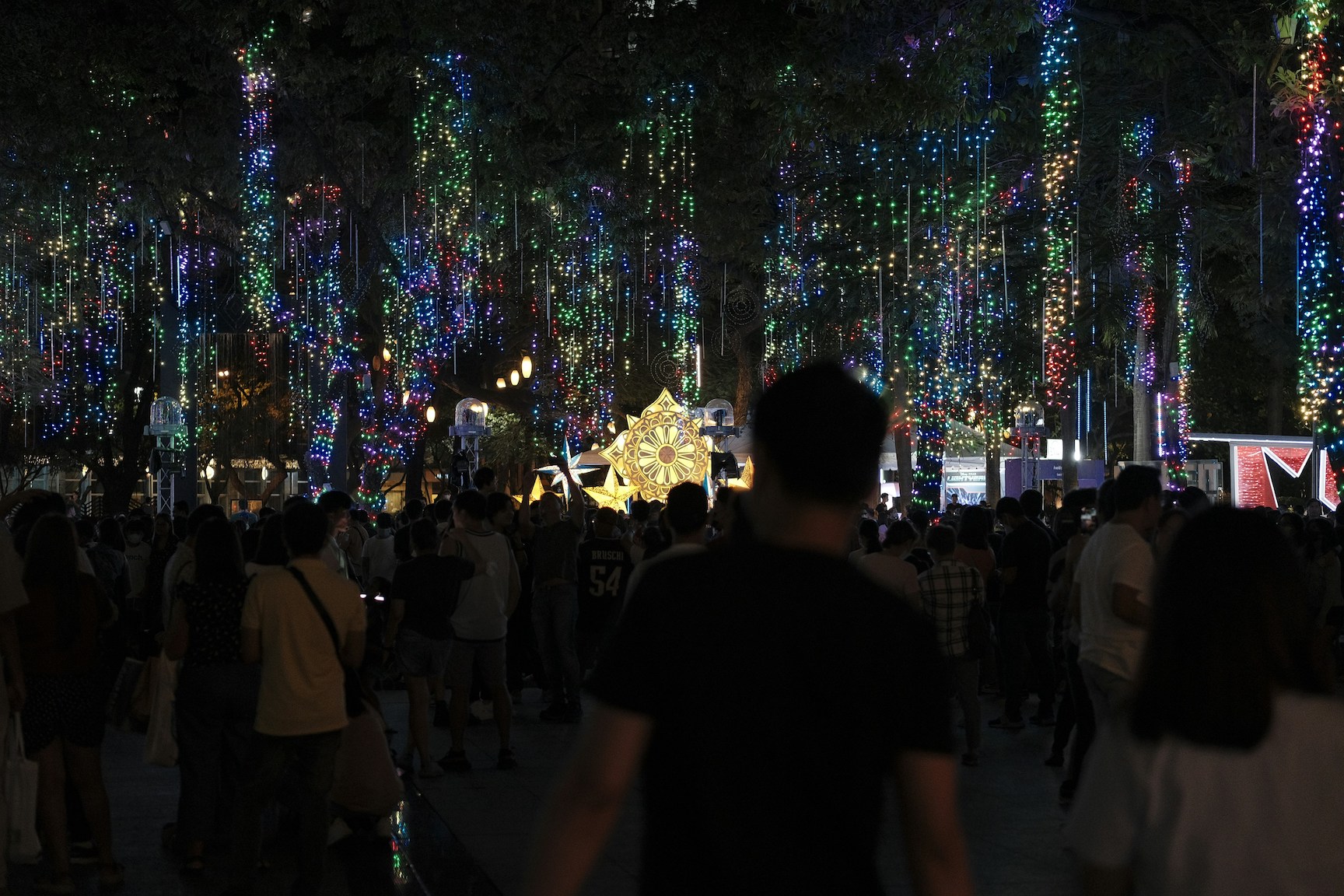
The historic district of Intramuros in Manila marked the 2025 reopening of Meralco Liwanag Park at Plaza Roma, a holiday attraction described by organizers as “eco-friendly,” featuring a 20-foot Christmas tree made from recycled electric meter covers, LED-illuminated decorations, solar lamps along pathways, and programmable lighting sequences.
According to a Meralco-issued release published by PHILBIZ News on November 27, 2025, the display is open every evening from 6:00 p.m. to 11:00 p.m. until January 4, 2026.
Meanwhile, the Festival of Lights at Ayala Triangle Gardens in Makati resumed its nightly run with light-and-music shows as part of the 2025 holiday season, with scheduled performances every 30 minutes between 6:00 p.m. and 10:00 p.m., a format that organizers have maintained in recent years based on BusinessWorld’s reporting on the annual attraction.
These choices reflect a broader shift toward LED-based public lighting, whose efficiency advantages are well documented. According to the U.S. Department of Energy (DOE), LED bulbs “use at least 75 percent less energy” and last “up to 25 times longer” than traditional incandescent lights. The DOE also notes that LEDs emit significantly less heat, making them the preferred lighting technology for extended nightly operation in public spaces.
Furthermore, national regulators continue to emphasize safety and compliance. The Department of Trade and Industry’s Bureau of Philippine Standards (DTI-BPS) requires that all Christmas lights sold in the Philippines carry either a Philippine Standard (PS) mark or an Import Commodity Clearance (ICC) sticker.
Meanwhile, the Bureau of Fire Protection (BFP) regularly issues seasonal advisories urging households and public-display organizers to use certified lighting products, avoid overloading circuits, and ensure correct wiring and installation.
READ: Watchdogs Warn Filipinos on Toxic Christmas Lights, Toys
In the background, the Philippine government’s 2023 policy framework on urban development, Joint Administrative Order (JAO) 2023-0001—issued by the Department of Health (DOH), Department of the Interior and Local Government (DILG), and Department of Public Works and Highways (DPWH)—promotes the creation and maintenance of “healthy public open spaces,” such as parks and plazas, which may be used for leisure, social interaction, and public events. Holiday lighting displays in public plazas now operate within that broader institutional context, even as formal data on their social or health impacts remain limited.
Regulation and safety amid increasing holiday lighting
As holiday lighting becomes more ambitious and widespread, regulators and safety agencies have increased reminders regarding safety standards. The DTI-BPS maintains that all Christmas-light products—including string lights, LED displays, and commercially sold décor—must carry a valid PS mark or ICC certification before they can be sold or used.
According to multiple Philippine News Agency reports from 2024–2025, DTI regional officers have repeatedly warned consumers that uncertified lights can fail electrical testing and pose significant fire risks.
Meanwhile, the Bureau of Fire Protection has issued annual advisories urging both households and public-display organizers to inspect wiring, avoid using damaged lights, refrain from overloading outlets, and ensure that installations meet electrical code requirements.
In its holiday advisory issued in 2024, the BFP reiterated that while LED lights generally emit less heat compared with incandescent bulbs, safe installation and certified wiring remain essential. The agency also noted that the bulk of holiday-related fire incidents usually involve substandard or non-certified lights rather than those that have passed BPS testing.
Therefore, regulatory controls and public advisories add a crucial layer of scrutiny to increasingly large public light displays, particularly in heritage districts and high-density commercial areas where visitor volume surges during December.
Public-space policy provides institutional context, but impact data remains limited
Since the release of JAO 2023-0001, Philippine authorities have framed parks, plazas, and open spaces as essential components of urban livability and public health.
The policy outlines guidelines for developing “healthy public open spaces,” including requirements related to accessibility, safety, amenities, walkability, and cultural value.
Although the order does not specifically address holiday lighting, displays erected in plazas such as Plaza Roma in Intramuros and Ayala Triangle Gardens in Makati may be considered aligned with its principles because they open public spaces for shared use during the evening.
Urban green spaces
Although there is no published research specifically evaluating holiday-light installations, studies on urban green spaces and public-open-space usage offer relevant context.
A 2024 peer-reviewed study by D. G. Castilla and colleagues, Urban Green Spaces and Human Wellbeing: Assessing the Carrying Capacity of Urban Parks and Recreation Areas in Danao City, assessed four major parks in Danao City—Boardwalk, Rizal Plaza, Children’s Paradise, and Sands Gateway.
The researchers found that the Boardwalk had the highest carrying capacity at 909 visitors per day, while other parks registered between 131 and 291 visitors daily. Moreover, visitor satisfaction and perceived health benefits were strongly associated with environmental cleanliness, availability of amenities, and overall maintenance.
Globally, a 2021 systematic review published in Sustainability concluded that urban green spaces contribute to human well-being across psychological, physical, social, environmental, and subjective dimensions.
Furthermore, a 2025 review examining associations between urban green-space quality and mental well-being found that higher-quality green spaces correlated with better mental health outcomes, although the authors highlighted variability in measurement methods across studies.
These findings suggest that well-maintained public spaces play an important role in supporting community well-being. Additionally, a 2023 Philippine study examining green-space proximity during the COVID-19 pandemic found that individuals living near green spaces reported reduced stress levels and higher rates of walking and biking.
As the 2025 holiday season unfolds, the country’s brightest displays remain grounded not in spectacle alone but in verifiable shifts—LEDs replacing wasteful incandescent bulbs, heritage plazas turning into regulated public spaces, and safety rules tightening around every strand of wire and bulb.
What stands out this year is not the scale of the installations but the direction they signal: cities are deliberately choosing technology that lasts longer, consumes less, and adheres to national safety and environmental standards.
Furthermore, in historic Intramuros and the commercial canyons of Makati, thousands of small, efficient bulbs now illuminate spaces that the government has formally classified as vital to urban life—public plazas meant to be open, safe, and shared.
The country’s move toward energy-efficient, well-regulated holiday lighting sends a clear message in the night sky: the future of Philippine Christmas is not only bright, but responsibly, deliberately, and sustainably lit.
Photo by Dan Suzuki on Unsplash