
Why “Clean After Feeding” is an act of love this Oral Health Month
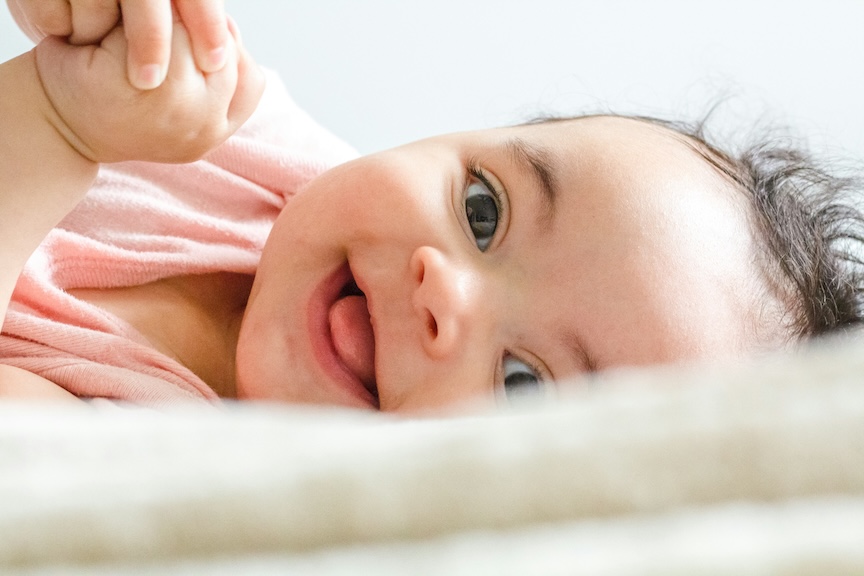
A baby’s first smile is mostly gums.
It arrives unannounced — sudden, luminous, almost mischievous. For a while, parents marvel at it without thinking about teeth. Teeth feel distant, like homework or college applications. Something to worry about later.
But oral health, like character, begins quietly
This National Oral Health Month, the Philippine Pediatric Dental Society, Inc. (PPDSI) has launched a campaign with a name that sounds almost too simple to matter: Clean After Feeding — part of its broader advocacy, Ngiting Bulilit 3–20.
The goal is clear and beautifully specific: 20 healthy baby teeth by age 3.
It is both modest and radical.
The Trouble With “Later”
Early childhood caries — more commonly known as tooth decay in young children — remains one of the most common chronic diseases worldwide. The World Health Organization estimates that untreated dental caries in primary teeth affects hundreds of millions of children globally. It is not cosmetic. It can impair eating, sleep, speech development, school performance, and quality of life.
In the Philippines, oral disease remains a significant public health concern, with surveys by the Philippine Department of Health showing high prevalence of dental caries among children.
Tooth decay does not begin with sugar alone. It begins with bacteria interacting with carbohydrates left in the mouth. After feeding — whether breast milk, formula, or solid food — residual sugars can linger. In the warm, moist ecosystem of a baby’s mouth, bacteria metabolize these sugars and produce acid. Acid weakens enamel. Over time, decay forms.
Which brings us back to the campaign’s quiet instruction:
Clean after feeding.
Before the First Tooth
Oral care does not wait for teeth to appear.
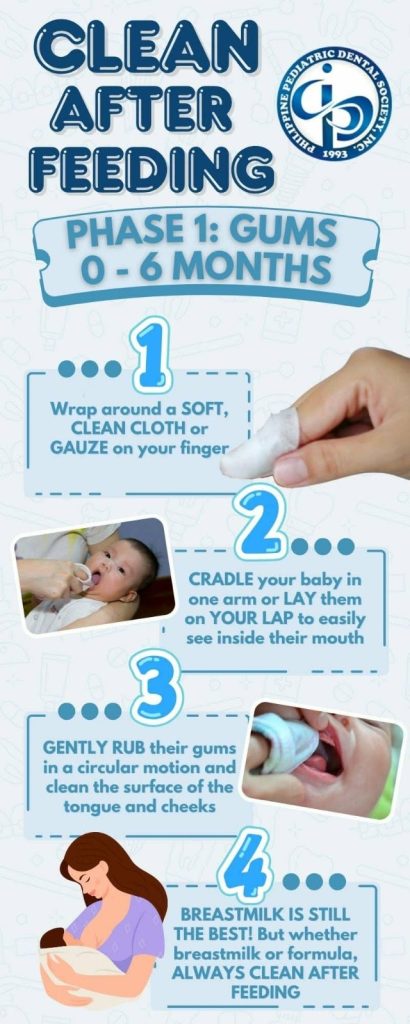
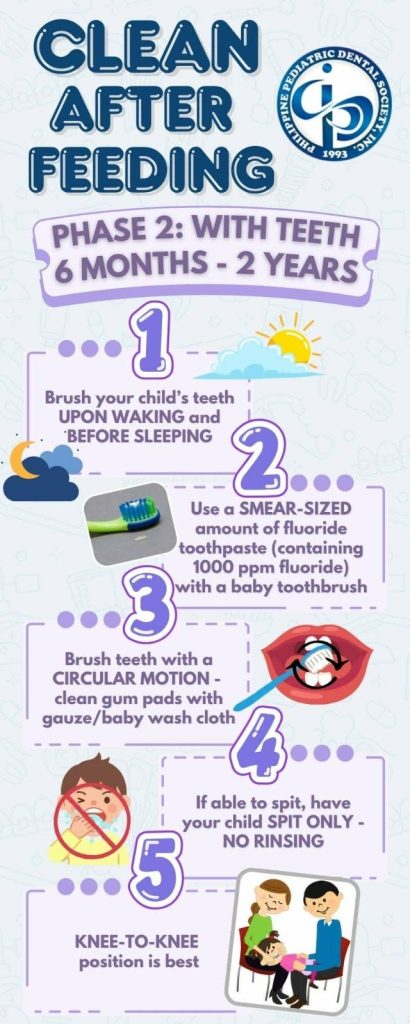
The American Academy of Pediatric Dentistry recommends cleaning an infant’s gums with a soft, damp cloth even before the first tooth erupts. Once teeth appear — often around six months — parents can use a small, soft-bristled toothbrush with a smear of fluoride toothpaste (about the size of a grain of rice for children under three).
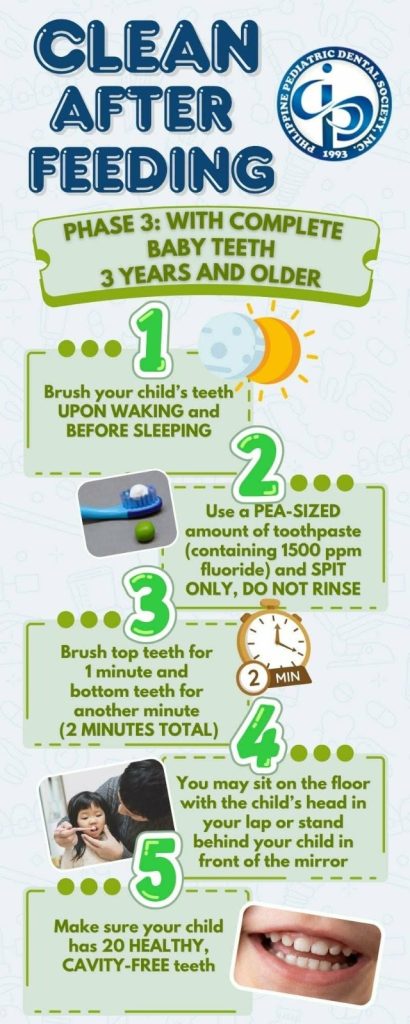
By age three, when most children have their full set of 20 primary teeth, the habit should already feel ordinary.
The milestone — 20 by 3 — is not about perfection. It is about prevention.
More Than Teeth
Healthy baby teeth do more than fill a smile.
They support proper chewing and nutrition and help children articulate words clearly as speech develops. They preserve space for permanent teeth. And they influence confidence, especially as children begin interacting with peers.
Neglected oral health, by contrast, can mean pain, missed school days, costly treatment, and long-term complications.
Prevention is gentler than repair.
The Habit That Builds a Future
There is something deeply democratic about brushing a child’s teeth. It does not require advanced technology. Nor does it demand expensive equipment. It asks for consistency.
A damp cloth.
A small toothbrush.
Two minutes.
Every feeding.
The science is steady. The act is simple. The impact is lifelong.
The Clean After Feeding campaign reminds us that health does not begin in hospitals. It begins in kitchens, in cradles, in the patient repetition of daily care.
This Oral Health Month, perhaps the most powerful thing a parent can do is not difficult at all.
It is to wipe a tiny mouth gently after milk.
To brush small teeth patiently before sleep.
To aim — faithfully, quietly — for twenty healthy baby teeth by three.
Because a child’s smile is pure and irresistible, not a luxury at all.
It is a foundation.
And foundations are built one careful habit at a time.
Photo by Daniel Thomas on Unsplash
Joyful Wellness proudly supports the Clean After Feeding campaign of the Philippine Pediatric Dental Society, Inc. (PPDSI) in celebration of National Oral Health Month. By amplifying science-based, child-centered initiatives like Ngiting Bulilit 3–20, we hope to empower Filipino families with practical knowledge that protects children’s smiles from the very start. Public health begins at home — and collaboration makes prevention stronger.
References:
- World Health Organization. Oral health fact sheets and global burden of dental caries.
- American Academy of Pediatric Dentistry. Policy on Early Childhood Caries and Infant Oral Health Care.
- Philippine Department of Health. National Oral Health Program data and reports.
- Kassebaum NJ et al. (2017). Global burden of untreated caries: A systematic review. Journal of Dental Research.
- Centers for Disease Control and Prevention (CDC). Children’s Oral Health and Prevention Guidelines.