As the Philippine cosmetics industry surpasses USD 1.8 billion in 2024, driven largely by imported, chemical-based products, Indigenous communities across the archipelago are quietly reviving their centuries-old beauty rituals rooted in local plants and oils.
In Mindanao, coconut-oil scalp massages and lawat leaf infusions remain trusted remedies for strong, healthy hair. In the Cordilleras, artisans continue to extract indigo from malatayun and red dye from sapang wood, echoing ancestral practices that long pre-date modern beauty trends.
These plant-based traditions, well documented in studies by the Department of Science and Technology (DOST) and the National Academy of Science and Technology (NAST), reflect a sustainable form of “clean beauty” that existed long before the term was coined in the West. Philippine dermatology research has even confirmed that virgin coconut oil (VCO) performs as effectively as mineral oil in moisturizing dry skin, lending scientific validation to what Filipino families have practiced for generations.
Amid rising concerns about mercury-laced whitening creams and microplastic pollution from cosmetic packaging, advocates say the return to Indigenous self-care is not just about wellness—it is a reclamation of cultural identity.
READ: Washing Away Illusions: The Philosophy of Clean Hands
Traditional Scalp Oils
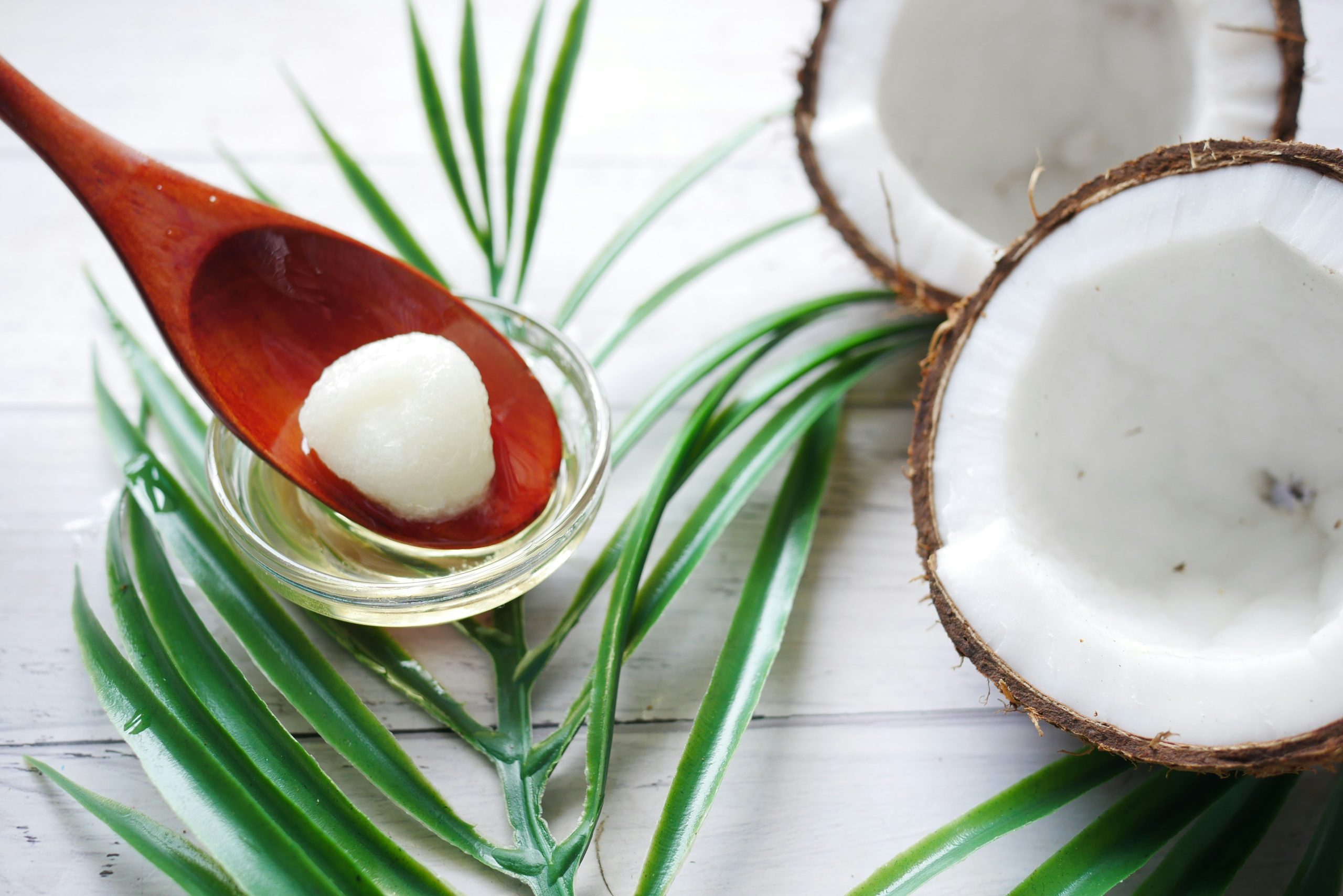
At a weekend tabo (community market) just outside Davao City, 62-year-old coconut-oil maker ‘Nanay Loring’ sat behind rows of freshly pressed lana, her family’s signature product. She warmed a few teaspoons between her palms before massaging it into her granddaughter’s scalp.
“Ito ang gamit namin noon pa,” she said. “Para kumintab at humupa ang kati sa anit.”
Around her, coils of gugo bark, the natural shampoo of generations, lay beside sachets of achuete and sapang powder, once used as natural dyes.
“In the past halos walang bumibili,” she said. “Ngayon, marami nang naghahanap.”
Across Mindanao, families continue to use coconut oil to relieve scalp dryness and itch, a practice reinforced by science. A 2004 randomized controlled trial by Agero & Verallo-Rowell (University of the Philippines) found that virgin coconut oil was as effective and safe as mineral oil in improving hydration and barrier function for mild to moderate dry skin (Journal of Dermatology).
Meanwhile, in Northern Luzon, dye artisans in Abra continue to extract blues from indigo plants and reds from sapang wood, methods intertwined with the region’s textile heritage.
READ: Sightlines — How the World Looks When Vision Fades
A Clean Beauty Trend Rooted in Filipino Memory
The Philippine cosmetics market, according to IMARC Group, was valued at USD 1.83 billion in 2024 and is projected to reach USD 2.69 billion by 2033, a steady 4.4 % annual growth. The broader beauty and personal-care sector reached USD 6.37 billion, with increasing consumer preference for natural and plant-based products.
Amid this surge, traditional botanical practices remain relevant. The National Museum of the Philippines documents gugo (Entada phaseoloides) as a heritage hair cleanser, used by soaking bark to create a foamy lather. Vogue Philippines has likewise featured gugo’s revival among younger Filipinos as a scalp cleanser and anti-dandruff remedy.
On the research front, a DOST-supported project, “Development of VCO-Based Personal Care Products for Hair and Skin,” is currently testing formulations for safety and efficacy. However, scientists note that rigorous clinical trials for many Indigenous ingredients, such as plant dyes and lawat leaf infusions, remain limited, making these practices emerging rather than established science.
READ: Beauty Without Barriers — Breaking Stereotypes with Cerebral Palsy
Mindanao’s Scalp Oils and the Lore of Lawat
In coastal and upland Mindanao, coconut oil holds enduring cultural and medicinal value. It is commonly warmed and massaged into the scalp after sea exposure to relieve dryness. Dermatological evidence supports its barrier-repair and moisturizing effects, echoing the 2004 Philippine trial confirming VCO’s efficacy for xerosis.
Locally known lawat leaves (Litsea glutinosa) also appear in traditional scalp-care lore. A PhilStar feature (2012) cited their use among southern Indigenous groups for cleaning the scalp and reducing hair fall. Scientific validation, however, remains limited.
Furthermore, experimental research is expanding the discussion on local bioresources. A 2022 study published in Frontiers in Pharmacology showed that Philippine stingless-bee propolis stimulated hair growth in mice by activating the Wnt/β-catenin pathway, suggesting potential applications for future hair-care formulations.
Cordillera Color: From Textiles to Hair
In Abra, often called the “Natural Dye Capital of the Philippines,” Itneg/Tingguian communities still prepare indigo and sapang dye vats from locally grown plants.
According to the Habi Philippine Textile Council, these natural dyes produce blue, red, and orange hues without petrochemicals, preserving ecological balance and ancestral knowledge.
While such dyes are primarily for textiles, there is no scientific evidence yet confirming their safe use as hair colorants. Some artisans and hobbyists experiment with diluted rinses, but experts advise caution until proper dermatological testing is done.
Recent ethnobotanical work, such as Galvez et al. (2024) on the Tuwali of Ifugao, catalogued 87 medicinal plant species, underscoring the depth of Indigenous plant knowledge that could guide culturally respectful, science-based applications in the future.
Why Return to Tradition Now?
Several forces are driving renewed interest in Indigenous self-care:
Health and safety concerns about chemical-heavy cosmetics. Regulators continue to warn about mercury and hydroquinone in unauthorized skin-lightening products. The U.S. FDA bans mercury in cosmetics except under strict preservative limits, and over-the-counter hydroquinone lighteners are unapproved.
The Philippine FDA Advisory No. 2020-2081 likewise prohibits hydroquinone and tretinoin in cosmetics, classifying them as drug ingredients. Recent advisories have recalled violative products such as Aneeza Gold Beauty Soap containing excess mercury.
Environmental pressure. Scientific studies confirm widespread microplastic contamination. Research published in Frontiers in Environmental Science found microplastic levels of 1,580–57,665 particles per m³ in river mouths draining into Manila Bay, while a 2025 Science of the Total Environment study reported 2,700–28,250 particles/kg in Pasig River sediments.
In Mindanao, the first baseline survey of Cagayan de Oro River microplastics documented measurable contamination, prompting calls for plastic-reduction measures in packaging.
Cultural re-centering. As imported K-beauty and Western brands dominate social feeds, Filipino advocates are reclaiming local identity through gugo rinses, coconut-oil scalp care, and plant dyes. Although large-scale survey data are lacking, media features and artisan collectives reveal a growing shift toward homegrown, heritage-based beauty.
What the Science Says, So Far
While no single plant remedy is a cure-all, several ingredients central to Filipino tradition show measurable promise:
- Gugo (Entada phaseoloides): Traditional shampoo and anti-lice wash containing saponins that cleanse the scalp; its long-documented ethnobotanical safety supports continued topical use.
- Virgin Coconut Oil: In a Philippine randomized controlled trial, VCO applied twice daily improved xerosis in 43 % of users versus 22 % with mineral oil, confirming comparable efficacy and safety.
- Propolis from Philippine Stingless Bees: A 2022 Frontiers in Pharmacology study showed hair-growth stimulation in mice through Wnt/β-catenin activation—an early indicator of potential bioactivity.
- Plant-Based Dyes: Used for centuries in Cordillera weaving; however, safety data for direct hair use are lacking and require controlled testing.
The Market Reality: Imports, Plastics, and Opportunities
According to the U.S. Trade and Market Intelligence profile, American, Korean, and Japanese skincare brands collectively dominate the Philippine market. From October 2023 to September 2024, 13,876 cosmetic shipments were imported from 360 foreign exporters, highlighting dependence on global supply chains.
At the same time, Euromonitor reports a shift toward recyclable and refillable packaging, while the Philippine plastic market, valued at USD 2.9 billion in 2024, continues to grow, driven by packaging and consumer goods demand.
Nevertheless, ethically scaling Indigenous ingredients could carve out a distinctly Filipino clean-beauty niche. Experts caution that commercialization must not exploit local ecosystems or artisans. As Abra’s dyers remind visitors, indigo vats depend on time, soil health, and skilled hands. Brands seeking to use gugo bark or dye plants should invest in community replanting, fair-trade sourcing, and women-led cooperative partnerships.
Building an Ethical, Science-Backed Pathway
Experts and Indigenous advocates outline a roadmap grounded in Philippine law and scientific practice:
- Source with consent and benefit-sharing. Under the Indigenous Peoples Rights Act (RA 8371) and NCIP Administrative Order No. 3 s. 2012, communities must give Free, Prior, and Informed Consent (FPIC) before any commercialization of traditional knowledge or plant resources.
- Invest in safety and efficacy testing. The Philippine FDA and ASEAN Guidelines require cosmetic products to undergo toxicity, microbial, and stability testing under Good Manufacturing Practices (GMP).
- Cut plastics across the value chain. With microplastic contamination now well-documented, refillable, biodegradable, or solid formats (bars, balms) should replace single-use bottles whenever possible.
- Label with radical transparency. Ingredient lists and batch-level test data should be public. The ASEAN Guidelines on Contaminant Limits in Cosmetics support transparent finished-product testing.
- Tell the story—without erasing the storytellers. Under NCIP Administrative Order No. 1 s. 2012, Indigenous Knowledge and Systems (IKSPs) remain community property. Marketing should highlight and compensate culture bearers—weavers, herbalists, and midwives—rather than replace them.
How to Try These Traditions, Safely and Respectfully
Gugo rinse: The National Museum describes soaking and squeezing gugo bark to produce a natural foamy cleanser. Experts confirm its saponin-based cleansing properties but caution against contact with eyes. Always patch test and rinse thoroughly.
VCO for scalp and skin: A Philippine clinical trial verified VCO’s moisturizing efficacy for xerosis. Use food-grade, cold-pressed oil sparingly; discontinue if irritation occurs.
Plant-based dyes: Begin with rinses rather than permanent dyes. “Natural” does not always mean non-reactive—patch testing is essential.
Lawat rinses: Because “lawat” can refer to different plant species, verify its identity through local herbalists before use.
Avoid unverified whitening products: A 2025 Environmental Science & Pollution Research study found mercury levels exceeding limits in 58 % of skin-lightening products sold online in Asia, including the Philippines. The Philippine FDA continues to warn against unauthorized creams containing high mercury concentrations.
The Philippine beauty market will continue to expand, algorithms will keep pushing imported “miracle” products, and e-commerce will feed the dopamine loop. However, the next beauty movement need not be foreign. It can begin in coconut groves and dye vats, in bark and leaf, guided by elders who know when to harvest and how long to wait.
With science as a partner, policy as guardrail, and fair trade as foundation, Indigenous Filipino self-care can do more than cleanse and color, it can re-root a nation in its own reflection.
Photo by Towfiqu barbhuiya on Unsplash