
Living in a tech-savvy world, cosmetic procedures and digital beauty enhancements are more accessible than ever. You open the camera, adjust the angle, tap a filter—and there it is: a version of yourself with smoother skin, brighter eyes and perhaps a slightly altered face.
Then you look in the mirror.
You notice the visible pores, uneven skin tone, a few blemishes, dark circles or the slight asymmetry that makes one side of your face different from the other.
And after seeing an altered version of yourself, these ordinary features can begin to feel like imperfections.
Nothing about your face has necessarily changed. But something about the way you see it might have.
More Than Just a Pretty Picture
It is easy to assume that people use beauty filters simply because they are unhappy with how they look. But the relationship between appearance, confidence and digital enhancement is more complicated.
For some, filters are simply a playful way to present themselves. For others, an edited photograph may offer a temporary sense of control over how they are perceived—particularly in online spaces where appearance can attract likes, comments and public approval.
A 2022 study presented at De La Salle University’s Senior High School Research Congress, titled “IGotchu Covered: Understanding Female Instagram Users’ Reliance on Beauty Filters,” explored the factors associated with late-adolescent female Instagram users’ reliance on beauty filters.
The research identified several influences, including social media engagement, self-esteem, social comparison and the gap between one’s perceived appearance and ideal image. It also found that using filters could make participants feel more confident and attractive.
The findings offer an interesting glimpse into why filters appeal to young users: they can provide reassurance, even as they reinforce certain expectations about appearance.
READ: The Week We Stop Chasing More
Falling for Our Filtered Selves
The concern, then, is not necessarily the act of using a filter. It is what happens when our comfort with our appearance begins to depend on one.
There is a difference between enjoying an enhanced photograph and feeling that the unedited version of yourself is no longer suitable for other people to see.
When the latter happens, the filter can become more than a tool for presentation. It can become a standard against which the real face is continually measured.
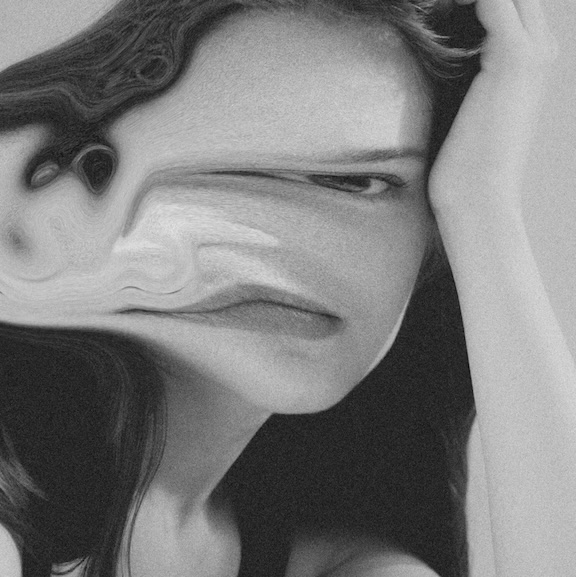
This is where the idea of “catfishing ourselves” takes on a different meaning. We may not be deliberately deceiving other people. Instead, we may be growing accustomed to an image that becomes increasingly difficult to reconcile with the person looking back at us.
Chasing a Face That Doesn’t Exist
There is a term often used in discussions about this phenomenon: “Snapchat dysmorphia.”
The expression gained attention in 2018 after reports emerged of patients bringing filtered selfies to cosmetic surgeons as references for the appearance they wanted to achieve through procedures.
It is important to clarify that Snapchat dysmorphia is not a formal psychiatric diagnosis. Rather, it describes a concern about how digitally altered images may influence expectations of physical appearance. It should also not be confused with body dysmorphic disorder (BDD), a recognized mental health condition involving persistent, distressing preoccupation with perceived flaws in one’s appearance.
A 2019 study published in JAMA Facial Plastic Surgery examined the relationship between social media use, photo-editing applications, self-esteem and attitudes toward cosmetic surgery among 252 participants.
Researchers found associations between the use of certain social media and photo-editing applications and greater consideration or acceptance of cosmetic procedures. The study did not establish that using filters causes people to pursue cosmetic surgery, nor does it suggest that everyone who edits selfies will eventually want to change their appearance.
Still, it raises an important question about how repeated exposure to digitally enhanced images may shape our expectations of what we should look like.
Making Peace With the Face in the Mirror
None of this is meant to villainize cosmetic procedures, beauty filters or social media. There is nothing inherently wrong with wanting to feel good about how we look, experimenting with an image or choosing to undergo a cosmetic procedure.
The more meaningful question is this: Is editing still a choice, or has it become a requirement?
If worries about appearance become persistent or begin to interfere with everyday activities, relationships or self-worth, speaking with a qualified mental health professional can help. A person who experiences intense preoccupation with perceived physical flaws may benefit from an assessment and appropriate support. Seeking help is not an admission of weakness; it is a way of understanding what may be happening beneath the surface.
The natural face we see in the mirror is not an unfinished version of a filtered photograph. It is a human face—one that changes with sleep, stress, hormones, laughter, illness and time.
We do not have to feel beautiful every time we look in the mirror. Confidence does not always mean loving every feature or finding something flattering to say about ourselves.
Sometimes, it begins with something quieter: allowing ourselves to exist without constantly looking for something to correct.
Because the goal is not to become the edited version of ourselves. It is to reach a point where we can look at our real faces, recognize them, and feel that we belong in them.
*Photo by Samuele Giglio on Unsplash
References
- Audije, A. A., Carpena, L. F. M., Leonizo, K. A. M. A., and Astudillo, L. R. (2022). IGotchu Covered: Understanding Female Instagram Users’ Reliance on Beauty Filters. De La Salle University Senior High School Research Congress. Read the research paper.
- Chen, J., et al. (2019). Association Between the Use of Social Media and Photograph Editing Applications, Self-esteem, and Cosmetic Surgery Acceptance. JAMA Facial Plastic Surgery, 21(5), 361–367. Read the full study.
- Ramphul, K., and Mejias, S. G. (2018). Is “Snapchat Dysmorphia” a Real Issue? Cureus, 10(3), e2263. Read the article.