Do women avoid medical tests such as cervical cancer screening out of negligence or lack of care about their health? .
Or is it because the test carries something heavier than discomfort: fear, embarrassment, silence, and in many communities, judgment?
As the Philippines continues its push for HPV vaccination and cervical cancer prevention, health experts are increasingly confronting a reality that science alone cannot solve. Cervical cancer is a medical issue and also a cultural one.
And for many women, the hardest part other than the procedure itself is the stigma surrounding it.
A preventable disease women still die from
Cervical cancer remains one of the most preventable cancers affecting women. According to the World Health Organization (WHO), nearly all cervical cancer cases are linked to persistent infection with high-risk types of the human papillomavirus (HPV), a common virus transmitted through intimate skin-to-skin contact.
WHO says vaccination, regular screening, and early treatment can dramatically reduce deaths from the disease.
Yet many women still delay screening.
In the Philippines, the conversation around Pap smears and HPV testing remains shaped by discomfort, misinformation, and moral judgment. The result is a dangerous silence around one of the most treatable forms of cancer when detected early.
READ: Free Cervical Cancer Screening in QC and Taguig This May
The stigma women carry into the clinic
A 2023 study later updated in BMC Public Health explored stigma surrounding HPV and cervical cancer in a low-resource healthcare setting in Peru before the rollout of an HPV screen-and-treat program.
Researchers identified three recurring themes:
- women being blamed for HPV infection through labels like “easy” or “promiscuous”
- men being associated with infidelity and carelessness
- HPV becoming something shameful that should be hidden
Consequently, some women avoided screening altogether.
What makes the findings powerful is how familiar they feel far beyond Peru.
The stigma exist among patients, across families, relationships, healthcare systems, and even parts of public messaging itself. In other words, the fear surrounding cervical cancer screening was social before it was medical.
That matters because shame changes behavior.
Women who worry about being judged may postpone testing. Some avoid conversations entirely. Others wait until symptoms appear, even though cervical cancer prevention works best long before symptoms begin.
HPV is common. Silence should not be.
One of the most important facts often lost in public discussion is this: HPV is extremely common.
According to the US Centers for Disease Control and Prevention (CDC), most sexually active people will be exposed to HPV at some point in their lives. In many cases, the immune system clears the infection naturally without causing disease.
This is precisely why experts argue against framing HPV as a reflection of morality or character. The virus can remain dormant for years. A positive HPV test does not reveal when exposure happened, nor does it define a person’s behavior or worth. Yet stigma persists because women’s health issues are often filtered through social expectations about sexuality, purity, and “good behavior.”
And so, a medical screening becomes emotionally loaded long before a woman enters the clinic.
Prevention works – but only if women feel safe enough to access it.
Science has already given medicine powerful tools against cervical cancer.
WHO’s global elimination strategy recommends:
- HPV vaccination for girls before exposure to the virus
- regular screening for women
- early treatment of precancerous changes
The challenge now is behavioral and cultural.
Women are more likely to participate in screening when:
- information feels nonjudgmental
- healthcare environments feel respectful
- conversations are normalized rather than whispered
- prevention is framed as empowerment, not suspicion
This is especially important in countries like the Philippines, where discussions about reproductive health still carry discomfort in many households.
Meanwhile, newer public health messaging is beginning to shift the tone.
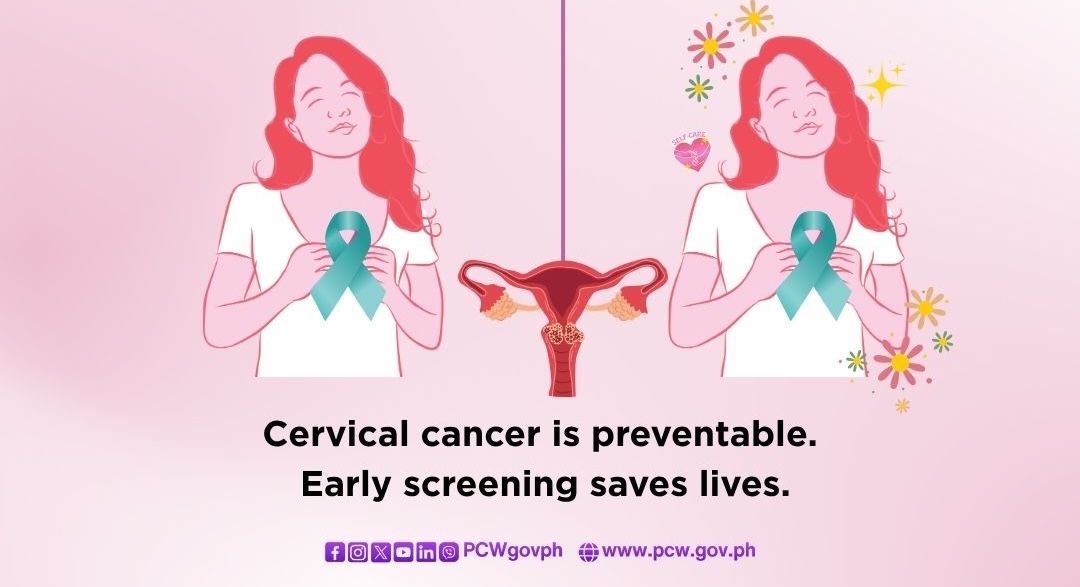
The Philippine Commission on Women recently reminded Filipinas that cervical cancer is preventable and that early screening saves lives. The message was simple but important: prioritize your health, start the conversation, and protect yourself early.
Sometimes prevention begins not with a hospital visit, but with removing shame from the discussion.
Women’s health is also environmental health
As Joyful Wellness enters a week focused on Prevention, Women’s Health, and the Green Revolution, cervical cancer prevention becomes part of a bigger story: the relationship between biology and environment.
Health is shaped by biology as it is also shaped by the environments people move through:
- homes where reproductive health is difficult to discuss
- online spaces filled with misinformation
- healthcare systems that feel intimidating
- communities where women are taught endurance before self-care
In this sense, stigma itself becomes a health environment. And changing that environment may be just as important as improving medical technology. Because a screening test only works when women feel safe enough to take it.
The quiet power of early action
A Pap smear or HPV test may seem small. Quiet, even. But early screening remains one of the most powerful acts of prevention available in women’s health today.
Because it creates time:
- time to detect changes early
- time to intervene before cancer develops
- and time to protect future health
The science behind cervical cancer prevention is already strong.
The next challenge is making sure fear, shame, and outdated assumptions do not stand between women and the care that could save their lives.
Sometimes the most radical form of prevention is simply refusing to treat women’s health like something embarrassing.
And sometimes wellness begins with one decision:
to get screened anyway.
Editor’s Note
Joyful Wellness provides general, science-informed health information to help readers make informed decisions about their well-being. Our content is intended for educational purposes and does not replace professional medical advice. For personal health concerns or symptoms, readers are encouraged to consult a licensed healthcare professional.
Photo from Philippine Commission on Women Facebook page
References:
- Morse RM, et al. “Easy women get it”: Pre-existing stigma associated with HPV and cervical cancer in a low-resource setting prior to implementation of an HPV screen-and-treat program. BMC Public Health. 2023.
- World Health Organization (WHO) – Cervical Cancer Fact Sheet
- US Centers for Disease Control and Prevention (CDC) – HPV and Cancer
- Philippine Commission on Women – Cervical Cancer Awareness Campaign