March is again pushing parts of the Philippines into dangerous heat conditions, and the health threat goes beyond the risk of heat stroke on a single hot day.
Based on PAGASA monitoring cited by GMA News on March 7, 2026, Dagupan City and Catarman reached the “danger” heat-index category at 43 °C and 42 °C, respectively, while several other areas were under “extreme caution.” PAGASA classifies 42 °C to 51 °C as “danger,” a range associated with likely heat cramps and heat exhaustion, and possible heat stroke with continued exposure.
Meanwhile, the World Health Organization (WHO) warns that prolonged periods of high daytime and nighttime temperatures create cumulative stress on the body and increase the risk of illness and death from heat exposure.
These warnings sharpen a broader public-health question for the Philippines: whether repeated exposure to extreme heat especially in dense urban areas is quietly eroding healthy aging for older adults.
Heat Is No Longer Just a Dry Season Discomfort
Heat is often treated as a seasonal inconvenience in the Philippines, something to endure until the rains arrive. Yet medical and climate evidence increasingly points to a more serious reality.
According to WHO’s 2024 fact sheet on heat and health, heat stress is the leading cause of weather-related deaths. Extreme heat can worsen cardiovascular disease, diabetes, mental health conditions, and acute kidney injury. The WHO also reports that heat-related mortality among people older than 65 rose by about 85% between 2000–2004 and 2017–2021.
In addition, climate change is increasing the frequency, intensity, and duration of extreme heat events, making the danger less episodic and more structural.
This warning has clear relevance in the Philippines, where the population itself is aging.
According to the 2025 report Ageing and Health in the Philippines: Wave 2 from the Economic Research Institute for ASEAN and East Asia (ERIA), the country is projected to become an ageing society by 2030, when people aged 60 and older will account for more than 10% of the population.
The nationally representative study also notes that population aging will increasingly reflect the numeric dominance of women, with many surviving older women widowed. Around 12% of older Filipinos live alone.
Meanwhile, the report describes older Filipinos as already facing significant health and socioeconomic pressures, including chronic disease, care needs, and uneven access to resources.
Hence, the dry season is colliding with a demographic reality the country can no longer treat as distant.
Why Older Bodies Struggle More in the Heat
Aging changes how the body responds to heat.
According to WHO, the body cools itself by moving heat away from its core. When that process becomes overwhelmed, strain falls heavily on the cardiovascular and renal systems.
The U.S. National Institute on Aging similarly notes that older adults do not adjust as well as younger people to sudden temperature changes. They are also more likely to live with chronic illnesses or take medications that alter normal heat responses.
The U.S. Centers for Disease Control and Prevention (CDC) adds that people aged 65 and older face higher risks of heat-related illness because medications and underlying diseases can affect hydration, sweating, and temperature regulation.
In practical terms, heat does not arrive on a blank slate. It affects bodies already carrying hypertension, diabetes, heart disease, and age-related physiological decline.
Philippine data illustrate how common that vulnerability already is.
According to the executive summary of ERIA’s 2025 ageing survey, hypertension is the most commonly diagnosed illness among older Filipinos, affecting 48% of respondents, followed by cataracts at 19%.
Another section of the report indicates that at least 69% of older Filipinos have hypertension, and 38% of them are unaware of the condition.
The report also highlights high prevalence of noncommunicable diseases, pain, falls, and healthcare needs among older adults.
Consequently, rising heat is not simply an environmental change for this age group. It is an additional strain layered onto a population already carrying a heavy cardiovascular burden.
Evidence of Organ Stress From Heat
The health effects of heat extend beyond visible emergencies.
A 2024 JAMA study, Kidney Function Biomarkers During Extreme Heat Exposure in Young and Older Adults, found that older adults experienced increases in plasma creatinine and cystatin C after three hours of extreme dry-heat exposure. These findings were consistent with reduced kidney function, even though participants had access to water during the experiment.
The study also noted that older adults are already known to be vulnerable to heat-related morbidity and mortality.
Kidney strain does not occur in isolation. Cardiovascular and renal stress often interact, particularly in older adults with pre-existing disease.
Repeated heat exposure may therefore contribute not only to short-term illness but also to long-term physiological stress affecting organ function.
Metro Manila’s Built Environment Deepens the Risk
The danger becomes magnified in cities, where the built environment traps and amplifies heat.
A 2020 study in Nature Communications titled Heat Health Risk Assessment in Philippine Cities Using Remotely Sensed Data and Social-Ecological Indicators found that cities with high or very high heat-health risk were concentrated in Metro Manila.
Manila City emerged as the only city among 139 studied to reach a “very high” heat-health risk index, while five other high-risk cities were also located in Metro Manila.
The study evaluated heat risk during the hot dry season across cities containing roughly 40% of the Philippine population.
In other words, the country’s urban core is not only warmer, it is measurably more dangerous from a heat-health perspective.
Urbanization itself is contributing to the problem.
A 2024 study in Sustainable Cities and Society examining extreme heat in Metro Manila found that simulations including urban land-use patterns produced higher temperatures, particularly at night, compared with simulations without urban land cover.
Similarly, a 2022 study in Atmosphere demonstrated that urban canopy modeling could replicate urban heat-island conditions during the April 2018 heat event in Metro Manila.
Meanwhile, WHO warns that cities are often not designed to minimize heat accumulation. The loss of green space, dense construction, and heat-absorbing materials can intensify exposure.
Older adults in built-up communities may therefore receive little relief even after sunset — precisely when the body most needs to recover.
Climate Inequality and Urban Heat
Urban heat exposure is not shared equally.
According to World Weather Attribution’s May 14, 2024 analysis of the April 2024 Asian heat event, the heatwave affecting the Philippines would have been “virtually impossible” without human-caused climate change.
The analysis estimated that climate change made the event about 1 °C hotter.
The group also noted that extreme heat disproportionately affects people living in informal housing and outdoor workers, who have limited access to cooling.
Meanwhile, the Philippine Climate Change Commission, citing the Department of Health’s Event-based Surveillance and Response System, reported 34 heat-related illnesses and six deaths from January 1 to April 18, 2024. In 2023, the Department of Health recorded 513 heat-related illnesses nationwide.
These are not merely climate indicators. They are early signals of a health system confronting heat as a recurring public-health hazard.
What the Latest Science Says About Heat and Aging
Recent research is also expanding the conversation from heat illness to biological aging itself.
A 2025 study in Science Advances titled Ambient Outdoor Heat and Accelerated Epigenetic Aging Among Older Adults in the US examined 3,686 adults aged 56 and older.
Researchers found that higher ambient heat exposure was associated with accelerated epigenetic aging, a molecular indicator linked to long-term health outcomes.
Longer-term exposure at the “extreme caution” level of the heat-index scale was associated with measurable increases across multiple epigenetic aging markers.
The study was not conducted in the Philippines, and the researchers did not claim that heat alone determines lifespan. However, the findings provide a credible signal that repeated heat exposure may influence biological processes associated with aging, morbidity, and mortality.
Heat increases cardiovascular workload, worsens dehydration, and can impair kidney function.
At the same time, the body’s resilience declines with age, especially among individuals living with chronic disease.
In cities where temperatures remain elevated because of concrete surfaces, traffic emissions, and limited green space, exposure becomes cumulative rather than occasional.
Even without a Philippine study calculating the precise number of healthy years lost, the evidence increasingly points in one direction: repeated heat exposure may be shrinking healthspan, the number of years people remain healthy even before it shortens lifespan.
The Philippine Warning Is Already Here
The Philippines does not yet have a longitudinal study quantifying how many years of healthy life may be lost due to repeated urban heat exposure.
Nevertheless, the country already has enough verified evidence to show that extreme heat can no longer be dismissed as a routine dry-season complaint.
PAGASA monitoring in March 2026 shows dangerous heat building early.
According to ERIA’s ageing survey, older Filipinos are entering this hotter future with high rates of hypertension, an increasing longevity among women, and a significant minority living alone.
Studies in Nature Communications, JAMA, and Science Advances, along with WHO guidance, all point toward a consistent conclusion: extreme heat strains the heart and kidneys, worsens chronic disease, and may even accelerate biological aging.
Climate change has not yet been translated into a precise lifespan figure for older Filipinos.
But it is already making the conditions for healthy aging harder to sustain — particularly in Metro Manila and other built-up cities where heat lingers, recovery is uneven, and vulnerability is concentrated among older adults with chronic disease, limited cooling, or social isolation.
March, then, is not just the start of hotter weather.
In an aging and warming Philippines, it is becoming a reminder that extreme heat is no longer only a weather story — it is also a longevity story.
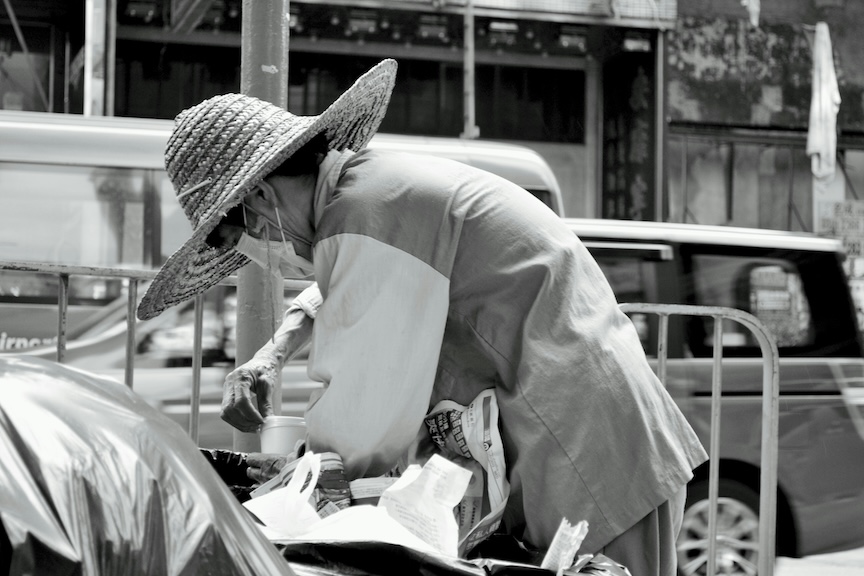
Photo by Jonathan Ramalho on Unsplash
References:
Arguelles-Cruz, A. J., Matsumoto, J., Kubota, T., Santisirisomboon, J., Doan, Q.-V., Cinco, T. A., & Dado, J. B. (2024). Potential effect of urbanization on extreme heat events in Metro Manila, Philippines using WRF-UCM. Sustainable Cities and Society, 109, 105505. https://doi.org/10.1016/j.scs.2024.105505
Economic Research Institute for ASEAN and East Asia. (2025). Ageing and health in the Philippines: Wave 2. https://www.eria.org/uploads/Ageing-and-Health-Philippines-Wave-2-web.pdf
Gavino, J. C. V., Mainal, T., & Hosaka, T. (2020). Heat health risk assessment in Philippine cities using remotely sensed data and social-ecological indicators. Nature Communications, 11, Article 1581. https://doi.org/10.1038/s41467-020-15218-8
GMA Integrated News. (2026, March 7). Heat index: Dagupan, Catarman hit danger level on Saturday, March 7, 2026.
Philippine Atmospheric, Geophysical and Astronomical Services Administration. (n.d.). Heat index. Retrieved March 9, 2026, from https://www.pagasa.dost.gov.ph/weather/heat-index
Ravanelli, N., Gagnon, D., Imbeault, P., Lu, S., Jay, O., & Kenny, G. P. (2024). Kidney function biomarkers during extreme heat exposure in young and older adults. JAMA, 332(3), 233–245. https://doi.org/10.1001/jama.2024.11380
World Health Organization. (2024). Heat and health. https://www.who.int/news-room/fact-sheets/detail/climate-change-heat-and-health
World Weather Attribution. (2024, May 14). Climate change made the deadly heatwaves that hit millions of highly vulnerable people across Asia more frequent and extreme. https://www.worldweatherattribution.org/climate-change-made-the-deadly-heatwaves-that-hit-millions-of-highly-vulnerable-people-across-asia-more-frequent-and-extreme/