

What Wearables Really Do — and What They Don’t
On a humid afternoon in Manila, a 56-year-old accountant glanced at his wrist and saw a message he hadn’t expected: Irregular rhythm detected.
He felt fine. No dizziness. Without chest pain. No shortness of breath. Just an ordinary day interrupted by a quiet vibration.
By evening, he was in a clinic.
The electrocardiogram confirmed atrial fibrillation — an abnormal heart rhythm that increases stroke risk. He began treatment within days.
Stories like his circulate widely and give wearable technology its aura of quiet heroism. Devices that once counted steps now monitor pulse continuously and, in some models, generate single-lead electrocardiograms. They offer something intimate: a window into the electrical choreography of the heart.
The promise is real. So are the limits.
How the Technology Works
Most smartwatches measure heart rate through photoplethysmography, a method that uses light to detect changes in blood flow under the skin. When blood pulses through vessels, light absorption shifts; the device translates that fluctuation into beats per minute.
Higher-end models include an ECG function. By touching a sensor, the wearer completes a small electrical circuit, allowing the watch to record a single-lead tracing. It is not the twelve-lead system used in hospitals, but it can detect certain rhythm abnormalities.
In 2019, researchers published results from the Apple Heart Study in the New England Journal of Medicine. Among participants who received irregular pulse notifications and followed up with confirmatory monitoring, a meaningful percentage were found to have atrial fibrillation.
That finding moved wearables from novelty to potential screening tool.
It did not convert them into diagnostic authorities.
EXPLORE: How Can a Smart Ring — and Other Wearables — Make You Healthier?
Where Wearables Add Value
For older adults and individuals with cardiovascular risk factors — hypertension, diabetes, prior stroke — rhythm notifications may prompt earlier medical evaluation. In those populations, early detection matters.
Beyond rhythm screening, wearables influence behavior. Resting heart rate trends can reflect improved fitness. Exercise zone tracking refines training intensity. Step counts nudge sedentary users toward movement.
Behavioral research consistently shows that self-monitoring improves adherence. When people see data, they adjust habits.
Awareness, in this context, becomes leverage.
READ: The Digital Prescription: AI, Apps, and Tools Shaping Smarter Healthcare
The Blind Spots
Accuracy fluctuates. Motion, poor skin contact, and certain physiological differences can interfere with readings. False positives occur, particularly among younger, low-risk users.
A notification does not equal a diagnosis.
There is also the psychological dimension. Continuous data can sharpen health literacy, but it can also magnify anxiety. A late-night alert, followed by online searching, may generate more stress than insight.
Ironically, stress elevates heart rate — creating a feedback loop between perception and physiology.
No algorithm accounts for context: caffeine intake, dehydration, emotional strain, or even a brisk walk up the stairs.
Data without interpretation can mislead.
DISCOVER: Philippine Health Research and Wellness Technology Trends 2025
Who Benefits Most
Cardiology societies increasingly acknowledge the role of wearable devices in opportunistic screening for atrial fibrillation, especially in people over fifty or those with elevated cardiovascular risk.
For younger, healthy individuals, the benefit is less about disease detection and more about fitness tracking and habit reinforcement.
Risk profile shapes relevance.
What Still Protects the Heart
Technology does not replace fundamentals.
Long-term cardiovascular protection rests on blood pressure control, lipid management, regular physical activity, tobacco avoidance, balanced nutrition, restorative sleep, and stress regulation. These variables influence heart disease far more than the presence or absence of a wrist notification.
A smartwatch can highlight patterns. It cannot substitute for medical judgment or lifestyle discipline.
A Measured Way to Use Wearables
Experts advise reviewing trends rather than reacting to isolated readings. Concerning patterns deserve professional evaluation. Sudden symptoms — chest pain, fainting, severe shortness of breath — warrant immediate medical attention regardless of what a device reports.
Absence of alerts should not override bodily warning signs. Conversely, an alert in a symptom-free individual calls for calm assessment, not panic.
Technology extends awareness. Responsibility remains human.
The Quiet Truth
The heart has kept time for decades before digital dashboards appeared. Wearables offer a new lens, not a new organ.
Trust lies neither in blind faith nor in dismissal. It lies in understanding capability, respecting limitation, and allowing data to inform rather than dominate.
The vibration on the wrist may be useful.
The decision that follows still belongs to the person wearing it.
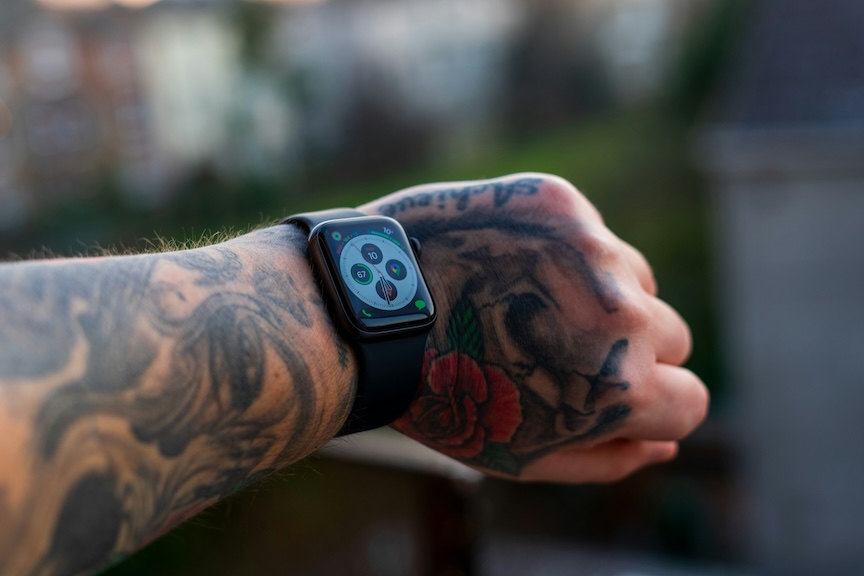
Photo by Ryan Grice on Unsplash
References:
- Perez, M. V., et al. (2019). Large-Scale Assessment of a Smartwatch to Identify Atrial Fibrillation. New England Journal of Medicine.
- American Heart Association – Consumer guidance on wearable heart monitoring
- European Society of Cardiology – AFib screening recommendations
- National Institutes of Health – Digital health research updates