Or: The science of why the wrong name can make everything right
Traffic in Manila is many things and rarely poetic— a test of patience, a test of suspension systems, occasionally a test of faith. But that afternoon, it became something else: a time machine, a memory vault even.
I had my nephews in the car, 31 and 33 now, grown men with adult lives, burdens, responsibilities and calibrated adult opinions. We hadn’t seen them in years. To fill the air — and perhaps to soften the awkwardness — I asked them a question that always works when you want to open a window into someone’s soul:
“What childhood memory still replays in your mind?”
They paused.
Then they began laughing.
They told me about their youngest brother Ken’s seventh birthday — a rare experience in cross-cultural mingling. It was a day that began with excitement and ended in accidental legend. They grew up in an environment that discouraged mingling too freely with children from the smaller alleys nearby. Affluence can build invisible fences. But they recalled how their mother reminded them that charity and inclusion mattered.
That time though, they were with their mother’s family and the gates opened.
Ken’s birthday would include neighborhood kids from the small alley across the street. There was pabitin. And there was palayok. There was sugar and chaos and a rare crossing of social lines. Before the games began, the children were asked to line up and greet the celebrant.
Ken stood ready. It was his day. His moment.
The oldest, tallest girl stepped forward, smiled wide, and declared:
“Happy Birthday, Michael!”
The brothers froze.
Ken blinked.
Who on earth was Michael?
But it didn’t stop there. One by one, the children chimed in:
“Happy Birthday, Michael!”
“Happy Birthday, Michael!”
And Ken — still very much Ken — not Michael, stood there in confusion absorbing birthday wishes meant for a stranger.
They never corrected the kids. They never discussed it afterward. It simply became family folklore.
And in the car that day, decades later, we laughed so hard, the kind that makes your ribs ache. The kind that clears months of emotional fog.
For a few minutes, nothing else mattered, everything was well.
The Science of Shared Absurdity
Why Moments Like This Matter?
Research has something to say about this kind of laughter.
Shared laughter releases endorphins — the brain’s natural opioids — strengthening social bonds. Studies in social neuroscience show that synchronized laughter increases feelings of belonging and trust. It lowers stress hormones. It softens memory’s edges.
But here’s what the science can’t quite measure:
The way laughter suspends time.
For a moment in that car, there were no anxieties, no deadlines. No political noise. No performance metrics. Just four adults and a story about Michael who wasn’t Michael.
Joy doesn’t always arrive dressed as success. Sometimes it comes disguised as absurdity.
How to Carry Joy Through Rough Seas
You don’t need a dramatic breakthrough. You need:
1. Memory mining.
Ask someone: “What’s a ridiculous story from our past?” Shared history is emotional glue.
2. Allow imperfection to be funny.
The wrong name. And the wrong cake. The wrong song. Let life’s small misfires become material, not mistakes.
3. Revisit stories out loud.
Memory strengthens when retold. So does connection.
4. Linger in the laughter.
Don’t rush back to seriousness. Let joy stretch a little longer than necessary.
5. Store the moment.
When the rough days come — and they will — recall the car ride. The traffic. The chorus of “Happy Birthday, Michael!” Joy, once felt deeply, can be summoned again.
It doesn’t take much to be well.
– Joyful Wellness Stories
Sometimes it takes a wrong name, a child’s birthday, and a Manila traffic jam.
Sometimes it takes remembering that joy is not found in perfection — but in shared humanity.
And somewhere out there, I hope Michael is having a wonderful life.
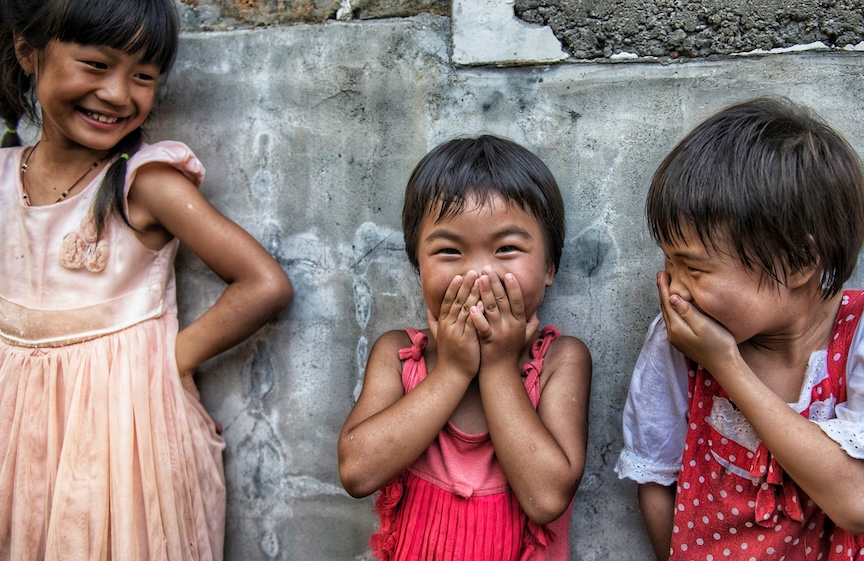
Photo by Wei CHEN 陈威 on Unsplash