The Philippines recorded an estimated 188,976 new cancer cases and 113,369 cancer deaths in 2022, according to the International Agency for Research on Cancer (IARC) through its Global Cancer Observatory (GLOBOCAN 2022) country fact sheet for the Philippines.
The same dataset identified breast, lung, colorectal, liver, and prostate cancers as the leading cancers by new cases nationwide, while lung cancer ranked as the country’s top cause of cancer-related deaths.
IARC estimates also show that about 466,012 Filipinos were living with cancer within five years of diagnosis in 2022, reflecting not only incidence but sustained demand for treatment, monitoring, and follow-up care.
Meanwhile, cancer continues to rank among the country’s leading causes of death, based on mortality statistics compiled by the Philippine Statistics Authority (PSA) and reported by state media.
As the world marks World Cancer Day every February 4, the Philippines confronts a cancer burden that is no longer episodic but structural.
What the numbers reveal about cancer in the Philippines
Recent data estimate the lifetime risk of developing cancer before age 75 at 19.2% for both sexes combined.
The cancer profile also shows a sharp divergence between incidence and mortality. Breast cancer leads in new cases, yet lung cancer remains the deadliest, a pattern public health experts often link to delayed diagnosis and unequal access to timely treatment.
National averages, however, can obscure local realities. The Philippines’ archipelagic geography and uneven distribution of oncologists, diagnostic services, and radiotherapy facilities mean that where a patient lives can strongly influence when—and whether—treatment begins.
As a result, cancer outcomes reflect not only biology, but also distance, income, and health system capacity.
EXPLORE: Sniffing Out Cancer: The Amazing Ability of Dogs
The global context
Globally, cancer remains one of the world’s most pressing health challenges. According to GLOBOCAN 2022 global estimates published by IARC, 19.98 million new cancer cases and 9.7 million cancer deaths occurred worldwide in 2022.
Governments and multilateral agencies widely use these figures as benchmarks for measuring national cancer burdens, including that of the Philippines.
World Cancer Day, led by the Union for International Cancer Control (UICC), has adopted the theme “United by Unique” for its 2025–2027 campaign cycle. The theme emphasizes people-centered cancer care and recognition of unequal experiences across communities, based on official UICC campaign materials.
Prevention gains sharper focus in global research
Beyond counting cases and deaths, recent global research has strengthened the focus on prevention.
A large-scale analysis published on February 3, 2026, in the peer-reviewed journal Nature Medicine and conducted by researchers affiliated with IARC estimated that 37.8% of new cancer cases worldwide in 2022—about 7.1 million cases—were attributable to 30 modifiable risk factors.
The study identified tobacco use, infections, alcohol consumption, high body mass index, physical inactivity, and air pollution as leading contributors.
IARC echoed these findings in a public statement, noting that up to four in ten cancer cases could be prevented globally through effective prevention strategies.
Likewise, the World Health Organization (WHO) consistently states in its cancer fact sheets that 30% to 50% of cancers are preventable using existing evidence-based measures such as vaccination, tobacco control, and early detection.
For the Philippines, this evidence carries particular weight. Infection-related cancers, including cervical cancer linked to human papillomavirus (HPV), remain part of the country’s cancer burden, reinforcing the role of vaccination and screening as population-level interventions rather than individual choices alone.
READ: Myth vs Fact: 7 Dangerous Untruths About Diabetes and Cancer That May Prove Fatal
Policy framework: the Philippine response to cancer
The country’s primary legal framework for addressing cancer is Republic Act No. 11215, or the National Integrated Cancer Control Act, enacted in 2019.
The law mandates the state to establish an integrated cancer control program covering prevention, early detection, diagnosis, treatment, survivorship, palliative care, and data systems, including a population-based national cancer registry.
In February 2024, the Department of Health (DOH) and WHO Philippines launched the 2024–2028 National Integrated Cancer Control Program (NICCP) Strategic Framework. According to WHO Philippines, the framework aims to strengthen cancer prevention and care through a primary health care approach, improve coordination across levels of care, and reduce inequities in access.
The WHO statement also cited PSA data showing that cancer ranked among the country’s leading causes of death in 2022, underscoring the urgency of implementation beyond legislation.
Prevention in practice: HPV vaccination and schools
One of the clearest examples of prevention translating into policy is HPV vaccination, which protects against cervical cancer.
In October 2024, the Department of Education (DepEd) announced the launch of Bakuna Eskwela, a joint program with DOH. DepEd said the initiative was backed by a ₱853-million budget and aimed to immunize at least 3.8 million public school students, including 973,930 Grade 4 girls in selected public schools for HPV vaccination.
The Philippine News Agency reported the same targets, describing the HPV component as part of efforts to reduce long-term cervical cancer risk among young Filipinas.
Public health authorities continue to stress that the impact of such programs depends on sustained coverage, completion of vaccine schedules, and public trust, factors that determine whether prevention gains appear in cancer statistics years later.
DISCOVER: Alternative Therapies To Ease Cancer Symptoms
Financing care: protection exists, but gaps remain
For patients already diagnosed, treatment costs remain a central concern.
According to PhilHealth Circular No. 2024-0007, the national health insurer enhanced its Z Benefits Package for Breast Cancer, building on benefit packages first introduced in 2012. PhilHealth said the policy aimed to improve access to comprehensive treatment and reduce financial risk.
However, health economists and patient advocates note that formal coverage does not automatically eliminate out-of-pocket spending. Transportation, accommodation near treatment centers, lost income, and caregiving costs often fall outside benefit packages.
As a result, financial strain can still interrupt care, especially for patients living far from tertiary hospitals.
Why World Cancer Day still matters
World Cancer Day serves not only as a moment of awareness, but also of accountability.
Cancer outcomes in the Philippines will continue to reflect how effectively prevention programs are implemented, how early diagnoses are made, and how equitably treatment is financed and delivered.
Failure to close these gaps means that each return of World Cancer Day risks becoming less a marker of progress and more a reminder of opportunities deferred.
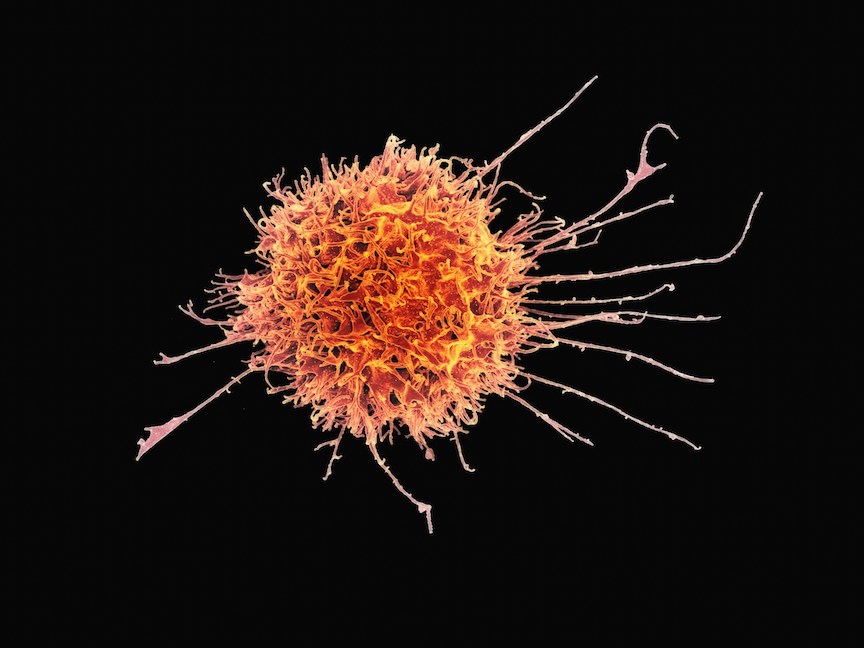
Photo by National Institute of Allergy and Infectious Diseases on Unsplash
References
International Agency for Research on Cancer (IARC). Philippines fact sheet: GLOBOCAN 2022. Global Cancer Observatory.
https://gco.iarc.who.int/media/globocan/factsheets/populations/608-philippines-fact-sheet.pdf
International Agency for Research on Cancer (IARC). World fact sheet: GLOBOCAN 2022. Global Cancer Observatory.
https://gco.iarc.who.int/media/globocan/factsheets/populations/900-world-fact-sheet.pdf
Bray F, Laversanne M, Weiderpass E, Soerjomataram I. Global cancer statistics 2022: GLOBOCAN estimates of incidence and mortality worldwide for 36 cancers in 185 countries. CA: A Cancer Journal for Clinicians. 2024.
https://acsjournals.onlinelibrary.wiley.com/doi/10.3322/caac.21834
International Agency for Research on Cancer (IARC). Four in ten cancer cases could be prevented globally. IARC News Release, February 3, 2026.
https://www.iarc.who.int/news-events/four-in-ten-cancer-cases-could-be-prevented-globally/
Laversanne M, et al. Global burden of cancer attributable to modifiable risk factors in 2022. Nature Medicine. Published February 3, 2026.
https://www.nature.com/articles/s41591-026-04219-7
World Health Organization (WHO). Cancer – Key facts. WHO Fact Sheet.
https://www.who.int/news-room/fact-sheets/detail/cancer
World Health Organization Philippines. DOH, WHO launch 2024–2028 National Integrated Cancer Control Program (NICCP) Strategic Framework. February 14, 2024.
https://www.who.int/philippines/news/detail/14-02-2024-doh–who-launch-2024-2028-national-integrated-cancer-control-program-(niccp)-strategic-framework
Republic of the Philippines. Republic Act No. 11215: National Integrated Cancer Control Act. 2019.
https://lawphil.net/statutes/repacts/ra2019/ra_11215_2019.html
Department of Education (DepEd). DepEd, DOH launch “Bakuna Eskwela” to revive school-based immunization. October 7, 2024.
https://www.deped.gov.ph/2024/10/07/deped-doh-launch-bakuna-eskwela-to-revive-school-based-immunization-against-preventable-diseases/
Philippine News Agency (PNA). DepEd targets nearly 1M Grade 4 girls for HPV vaccination. October 2024.
https://www.pna.gov.ph/articles/1234914
Philippine Health Insurance Corporation (PhilHealth). PhilHealth Circular No. 2024-0007: Z Benefits Package for Breast Cancer.
https://www.philhealth.gov.ph/circulars/2024/PC2024-0007.pdf
Philippine Statistics Authority (PSA). 2022 Causes of Death in the Philippines (as reported by Philippine News Agency).
https://www.pna.gov.ph/articles/1209346
Union for International Cancer Control (UICC). UICC launches new three-year World Cancer Day campaign “United by Unique”.
https://www.uicc.org/news-and-updates/announcements/uicc-launches-new-three-year-world-cancer-day-campaign-united-unique
World Cancer Day. The Campaign: United by Unique (2025–2027).
https://www.worldcancerday.org/the-campaign
*Joyful Wellness provides general, science-informed health information to help readers make informed decisions about their well-being. Our content is intended for educational purposes and does not replace professional medical advice. For personal health concerns or symptoms, readers are encouraged to consult a licensed healthcare professional.