The Philippines’ skincare and beauty market is expanding rapidly as consumers increasingly adopt multi-step routines and products with potent “active” ingredients to meet evolving beauty ideals. However, regulators and dermatologists warn that many products on the market—particularly those making whitening or rapid-transformation claims—may pose significant health risks when misused or when they contain prohibited substances.
According to global market forecasts, the Philippine skincare products market was estimated to reach USD 2.7 billion in 2025. This is driven by rising awareness of skin health, anti-aging solutions, and the influence of social media. The market is expected to grow further in the coming decade.
At the same time, Philippine regulators have repeatedly issued public advisories against unauthorized cosmetics containing ingredients not permitted in cosmetic products, including hydroquinone and prescription actives such as tretinoin.
In early 2025, the Food and Drug Administration Philippines flagged multiple imported skin-lightening products sold online that were found to contain extremely high levels of mercury—far above regulatory limits—and that lacked required product notification certificates.
Meanwhile, professional dermatology guidance continues to emphasize basic protective measures such as broad-spectrum sun protection, which remains underused despite its central role in maintaining skin health.
As consumer demand continues to rise, public-health authorities face growing challenges in promoting safe, evidence-based skincare in a market increasingly shaped by aesthetics, online trends, and aggressive marketing.
Skincare growth meets regulatory warnings
The Philippines’ skincare sector forms part of a broader beauty and personal-care industry experiencing sustained growth. Industry analyses show that skincare reached approximately USD 2.7 billion in 2025, supported by rising consumer demand and expanding online distribution.
This growth has influenced consumer behavior, accelerating trends such as multi-step routines, “brightening” regimens, and anti-aging products across physical and digital marketplaces.
However, regulators continue to document cases of unauthorized and violative products. In multiple advisories, the Philippine FDA reported that certain cosmetics tested positive for substances classified as drug components—not cosmetic ingredients—specifically hydroquinone and tretinoin. These substances are not permitted in everyday cosmetics under the ASEAN Cosmetic Directive and require medical supervision.
Their presence in consumer cosmetics poses risks, particularly when users are unaware of the formulation or use them without professional guidance.
In January 2025, the FDA further warned that several imported skin-lightening products sold online contained mercury levels hundreds to tens of thousands of times above the allowable 1 ppm limit under ASEAN standards, with laboratory findings including measurements exceeding 40,000 ppm. Mercury is banned as a cosmetic ingredient, and products lacking notification certificates are unauthorized for sale.
These warnings align with global health concerns. The Minamata Convention on Mercury restricts mercury in cosmetics above 1 ppm, and international authorities have repeatedly raised alarms over mercury-added products circulating through online marketplaces.
What dermatologists advise: fundamentals over extremes
Professional guidance from the Philippine Dermatological Society continues to emphasize basic skin-health practices, particularly daily sun protection.
According to PDS guidance, broad-spectrum sunscreen plays a critical role in preventing sunburn, photoaging, pigmentary disorders, and skin cancer, while also enhancing the effectiveness of other treatments by limiting UV-induced damage.
Dermatologists caution that potent actives—such as exfoliating acids, retinoids, and brightening agents—can be effective when used appropriately and tailored to individual skin needs. However, layering multiple strong ingredients without guidance increases the risk of irritation, barrier disruption, and paradoxical pigmentation.
Local clinical data on misuse remain limited, but academic initiatives, including studies at university-based dermatology departments, suggest that even basic protective practices like sunscreen use require continued education and reinforcement.
READ: Allure Philippines Launches to Tackle Beauty and Wellness Misinformation Online
Risks associated with skin-lightening product misuse
International evidence links skin-lightening practices with dermatologic and systemic risks. A 2020 narrative review in Environmental Health Perspectives reported that cosmetic skin lightening remains widespread globally and is associated with adverse outcomes when active agents such as hydroquinone or corticosteroids are misused.
While not Philippines-specific, these findings are relevant given global supply chains and online retail channels that can bypass local restrictions.
Experts note that substances commonly found in whitening products—such as hydroquinone and tretinoin—can cause irritation, contact dermatitis, and other complications when used without medical oversight. This reinforces regulatory positions that such ingredients should not appear in over-the-counter cosmetics.
Other ingredients, such as kojic acid or alpha-hydroxy acids, may be permitted at regulated concentrations, but improper formulations or combinations can still increase photosensitivity and irritation.
Online sales and enforcement challenges
As demand grows, enforcement becomes more complex. Prohibited products continue to circulate via online platforms and informal channels, making real-time removal difficult.
Environmental watchdog groups and regulators have noted that despite advisories, online sellers may relist flagged products, undermining consumer protection efforts.
Digital retail and influencer-driven marketing further amplify product experimentation. Regional consumer research indicates that social media strongly influences beauty purchasing decisions across Asia, a pattern that likely extends to the Philippines.
Unsafe products, unsafe practices
FDA advisories provide concrete examples of concern. Past warnings have identified cosmetics marketed as “rejuvenating” or “whitening” that tested positive for hydroquinone or tretinoin, despite being sold as ordinary skincare products.
The January 2025 enforcement action highlighting mercury-containing products underscored the continued health risks posed by unauthorized imports. High mercury exposure is associated with neurological and renal toxicity, as documented in global public-health literature and guidance from the World Health Organization.
What consumers can do
Health authorities advise consumers to verify that skincare products are notified with the Philippine FDA. The public must review ingredient lists carefully, and remain cautious of aggressive claims promising instant whitening or dramatic results.
Dermatologists recommend introducing actives gradually. This means using sunscreen everyday and seeking professional advice for persistent concerns such as pigmentation or acne that may require medical evaluation.
Because safety depends on accurate labeling and regulatory compliance—factors not always apparent from packaging or online reviews—checking official FDA databases remains one of the most practical safeguards.
Health literacy as beauty literacy
The Philippine skincare market sits at the intersection of aesthetic aspiration and public-health responsibility. Regulatory actions confirm that unsafe or unauthorized products continue to enter circulation, particularly through online channels.
Dermatology guidance reinforces that foundational habits. Sun protection, barrier care, and measured use of actives—remain the most reliable path to healthy skin.
Balancing beauty goals with safety requires informed decision-making grounded in evidence rather than hype. Health literacy increasingly becomes a form of beauty literacy as the market grow. This ensures that the pursuit of brighter skin does not come at the cost of long-term health.
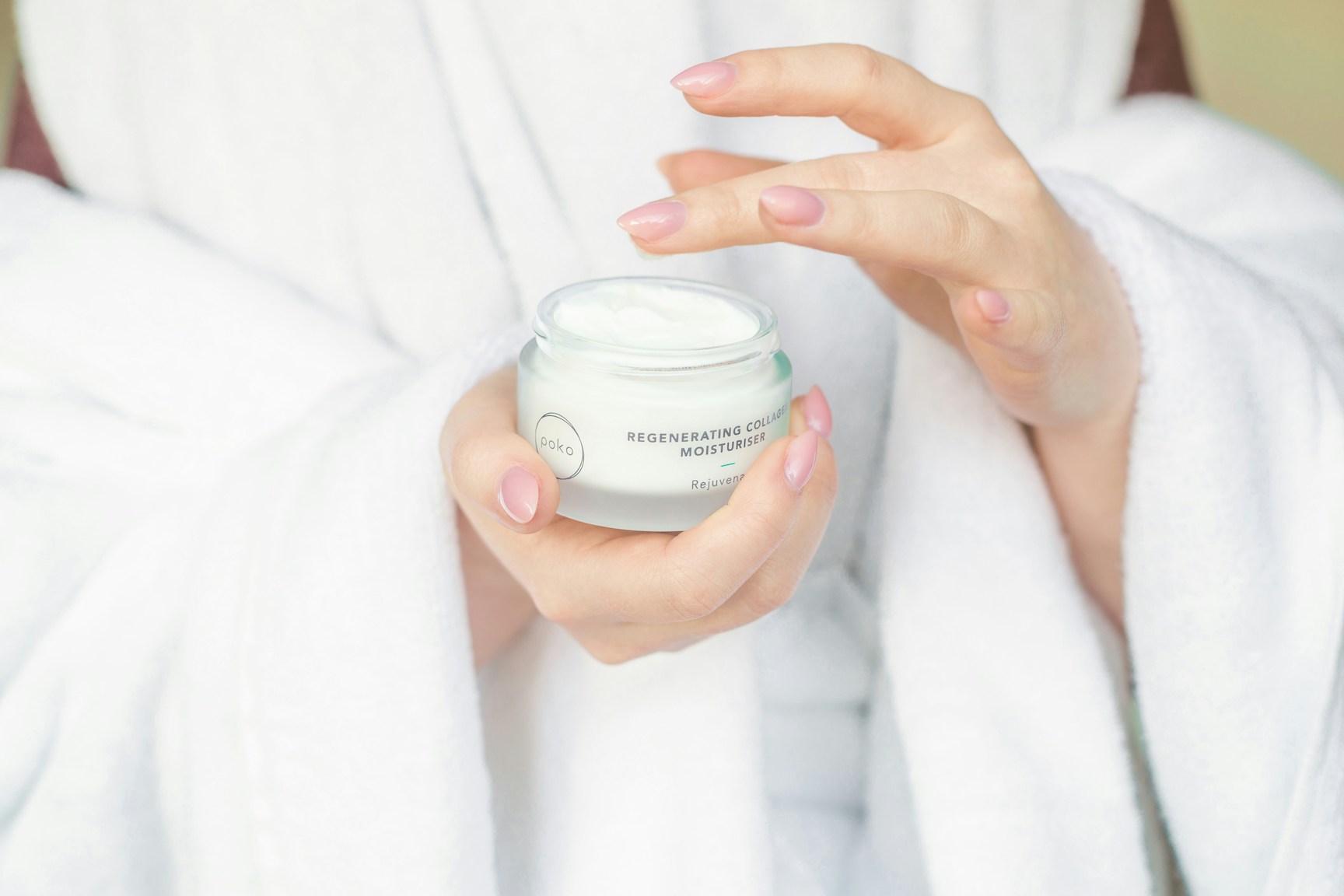
Photo by Poko Skincare on Unsplash