
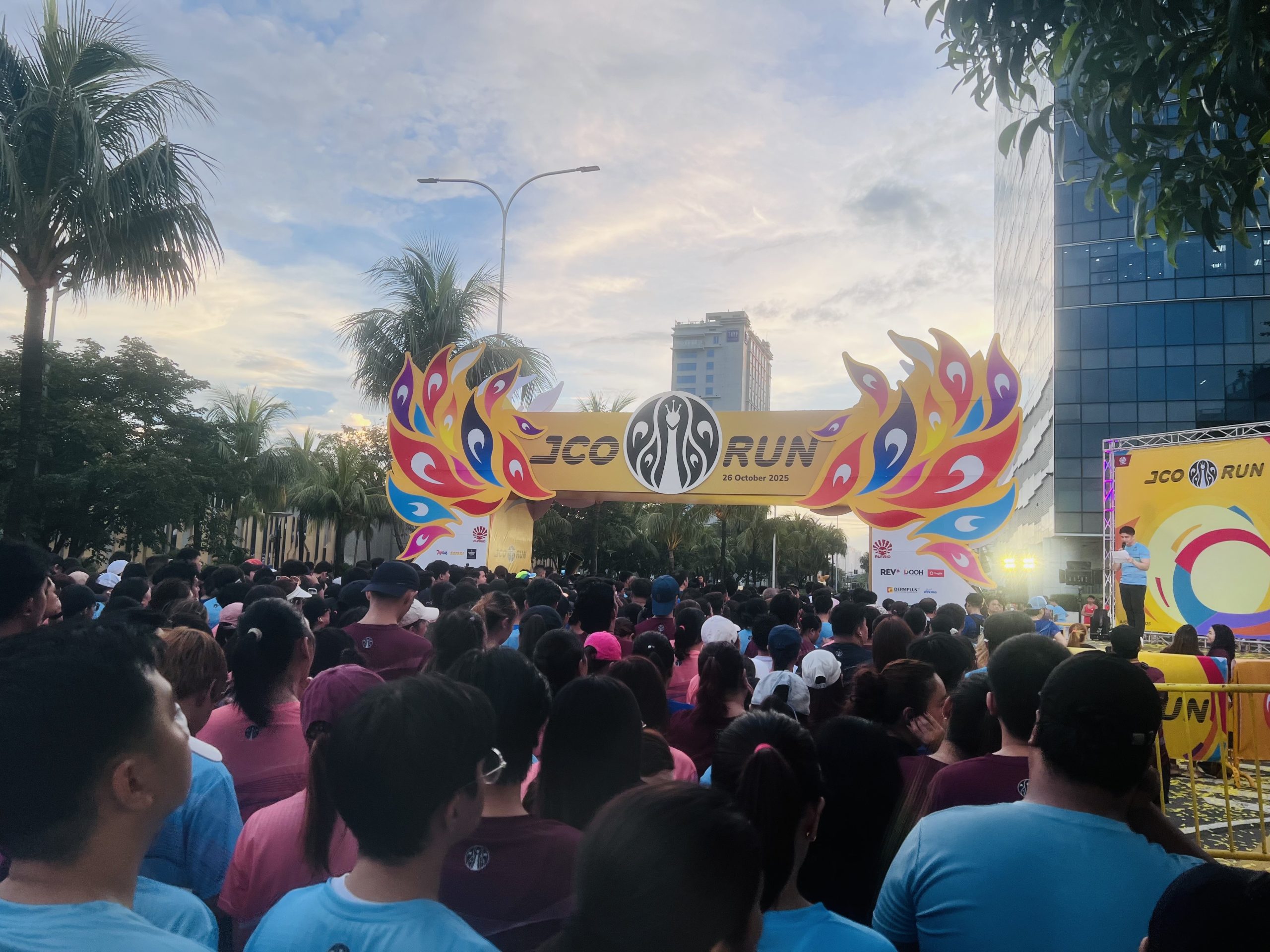
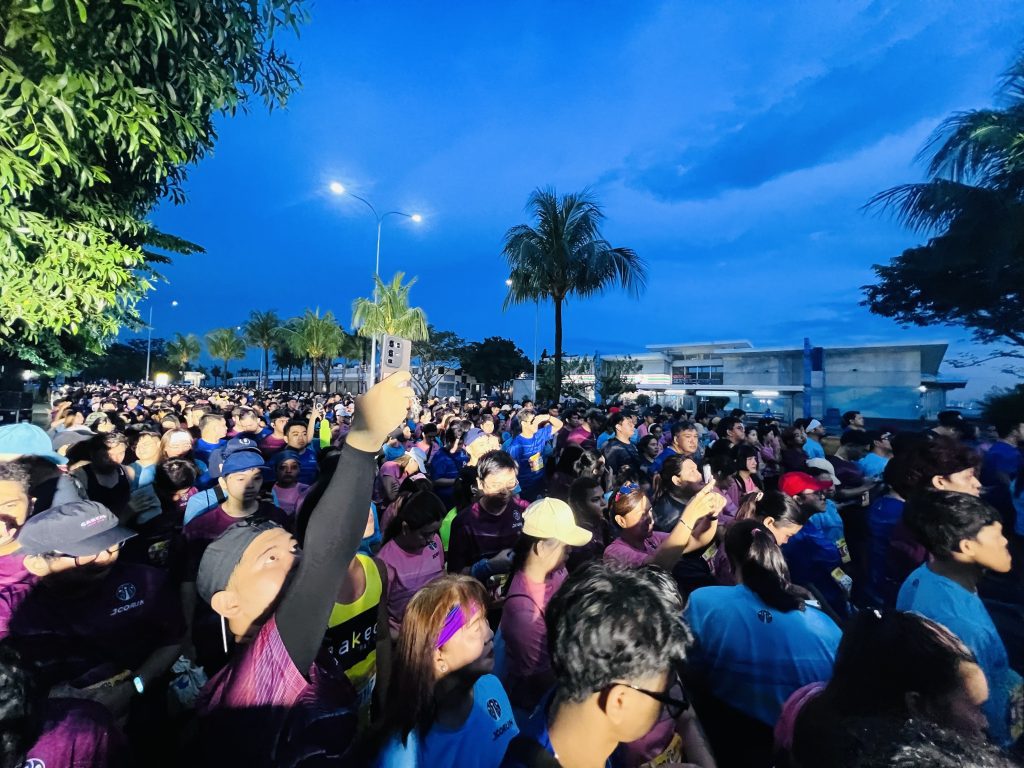
The SM Mall of Asia (MOA) Concert Grounds filled with runners before sunrise on Sunday, October 26, for the second edition of JCO Run PH, a mass-participation event organized by RUNRIO Inc. in partnership with JCO Donuts & Coffee.
The event featured 12-kilometer and 5-kilometer solo races, alongside 3-kilometer and 5-kilometer team categories for groups of four.
The official 4:00 a.m. gun start and strict cut-off periods—two hours for the 12K and one hour for shorter distances.
Participants received race shirts, bibs, hydration support, and medals, along with J. CO’s signature doughnuts, embodying the brand’s goal to “blend fitness and fun” in one accessible event for all ages.
As of publication, the Race Roster results portal remains the official source of record for finish times and podium results. According to verified results posted by RUNRIO, the 5K solo race recorded 5,434 finishers, reflecting turnout levels comparable to the 2024 debut run, which drew over 5,000 participants.
In the men’s 5K division, Cavin Vidal and Mark Angelo Biagtan topped the leaderboard with gun times of 17:10 and 17:38, respectively, based on official timekeeping data.
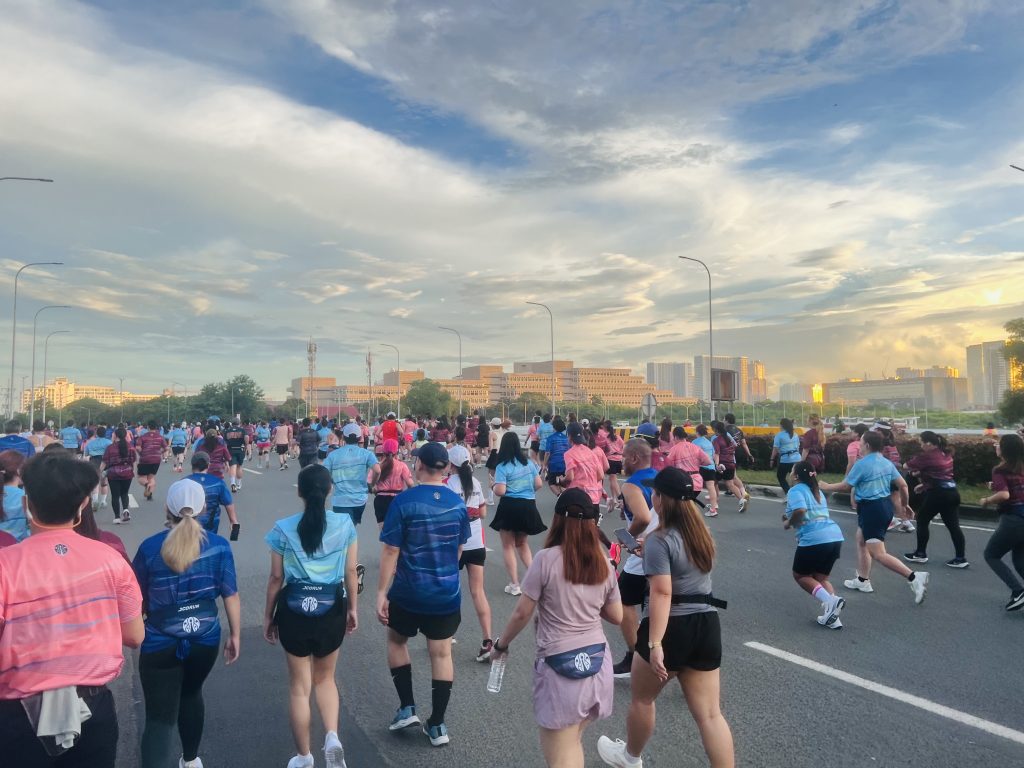
A growing tradition at Manila Bay
JCO Run PH has built on its reputation as one of Metro Manila’s most family-friendly running events. The second-year staging at MOA retained its early morning start to avoid the heat and ensure minimal traffic disruption along Seaside Boulevard.
RUNRIO’s standard safety measures, including hydration stations, on-site medics, and clear timing protocols, remained in place.
The race’s simple mission—to make movement enjoyable, inclusive, and habit-forming, echoes a growing national push to make physical activity more accessible.
According to the Department of Health’s 2023 Philippine Noncommunicable Disease Progress Report, nearly one in three Filipino adults remains physically inactive, increasing risks of obesity, heart disease, and diabetes.
Ando so, by turning running into a celebration rather than a chore, events like JCO Run PH help make fitness less intimidating and more social.
The urgent need to get moving
Globally, physical inactivity continues to rise. A June 26, 2024 report by the World Health Organization (WHO) revealed that 1.8 billion adults, or 31% of the global adult population, failed to meet recommended physical activity levels in 2022—up five percentage points since 2010. WHO reiterates the target of 150–300 minutes of moderate or 75–150 minutes of vigorous activity per week, supported by two days of muscle-strengthening.
In the Philippines, the Expanded National Nutrition Survey (ENNS) by the Department of Science and Technology–Food and Nutrition Research Institute (DOST–FNRI) likewise shows persistently low levels of physical activity, especially among adolescents and working-age adults.
The ENNS 2019–2021 dataset, released in 2023, linked low activity to higher prevalence of hypertension and overweight conditions. This trend underscores the importance of community-based fitness initiatives like fun runs, which provide low-cost, safe “on-ramps” for people to begin exercising regularly.
Moreover, fun runs allow participants to accumulate the recommended minutes of movement through enjoyable, structured activity.
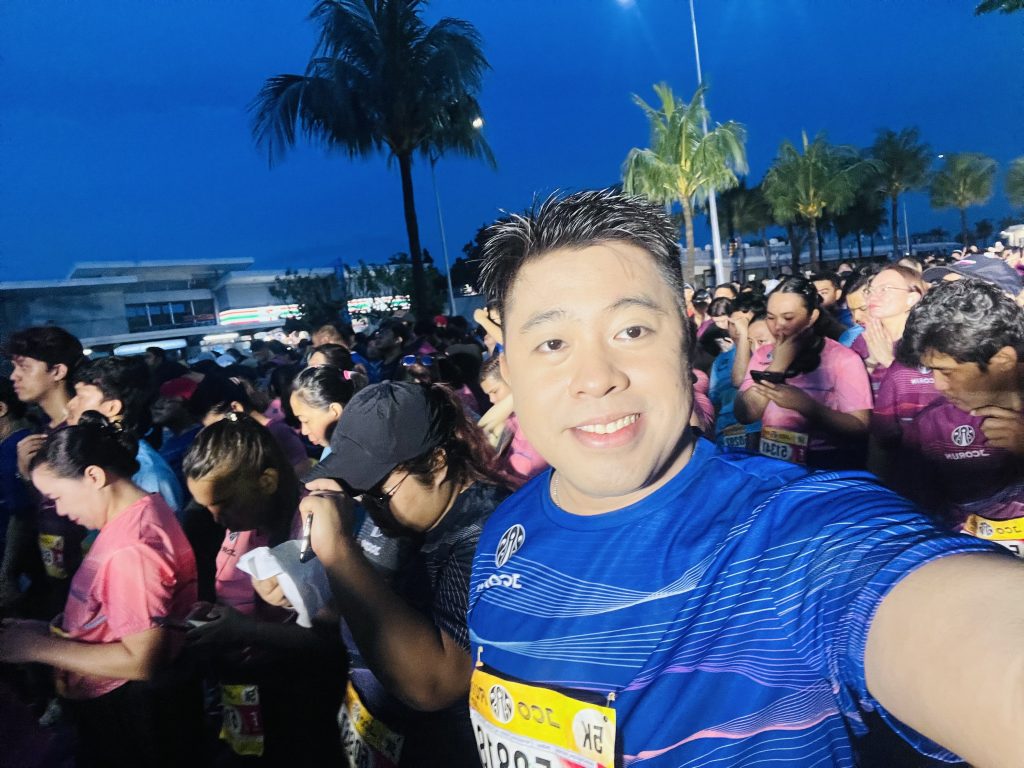
The science behind every step
A growing body of scientific evidence reinforces that even small doses of running and walking bring measurable health benefits.
A landmark study in the Journal of the American College of Cardiology found that running just 5–10 minutes per day at slow speeds significantly reduces all-cause and cardiovascular mortality.
Similarly, a 2025 meta-analysis published in The Lancet Public Health confirmed that mortality risk decreases progressively with every additional 1,000 steps per day, well below the often-cited 10,000-step myth.
Complementing this, a 2024 study in the British Journal of Sports Medicine reported that taking as few as 4,000 steps daily is linked to lower all-cause mortality, and that the benefits continue to rise up to about 8,000–10,000 steps.
Meanwhile, for people who cannot exercise daily, a 2023 JAMA Network Open study found that hitting 8,000 steps just once or twice a week still leads to meaningful reductions in mortality risk.
These findings, backed by longitudinal cohort data, validate what events like JCO Run PH promote: that consistent, moderate activity, even in short bursts, can be life-extending. By providing a scheduled goal and a communal environment, fun runs transform fitness from obligation to motivation.
Running for mind and mood
Beyond physical health, running improves mental wellbeing. A 2023 meta-analysis in JAMA Psychiatry found that moderate aerobic activity, such as running and brisk walking, leads to significant reductions in depressive symptoms across diverse populations. Endorphin release during exercise, often called the “runner’s high,” helps stabilize mood, manage stress, and improve sleep quality.
Furthermore, international studies on parkrun, the world’s largest free weekly 5K event, show that running’s impact extends to social health.
Research by the University of Sydney’s Charles Perkins Centre, published in PLOS Global Public Health (2024), found sustained increases in life satisfaction and lower stress levels among new parkrunners after six months of consistent attendance. A subsequent 2025 UK-wide analysis involving 78,662 respondents confirmed that regular participation and volunteering at parkrun events significantly enhanced participants’ sense of belonging and happiness.
While Manila’s fun runs are commercial rather than free community models, the psychology remains similar. The shared rhythm of running, cheering strangers, collective struggle, and post-race celebration, builds what experts call “collective efficacy,” or the feeling of being part of something larger than oneself.
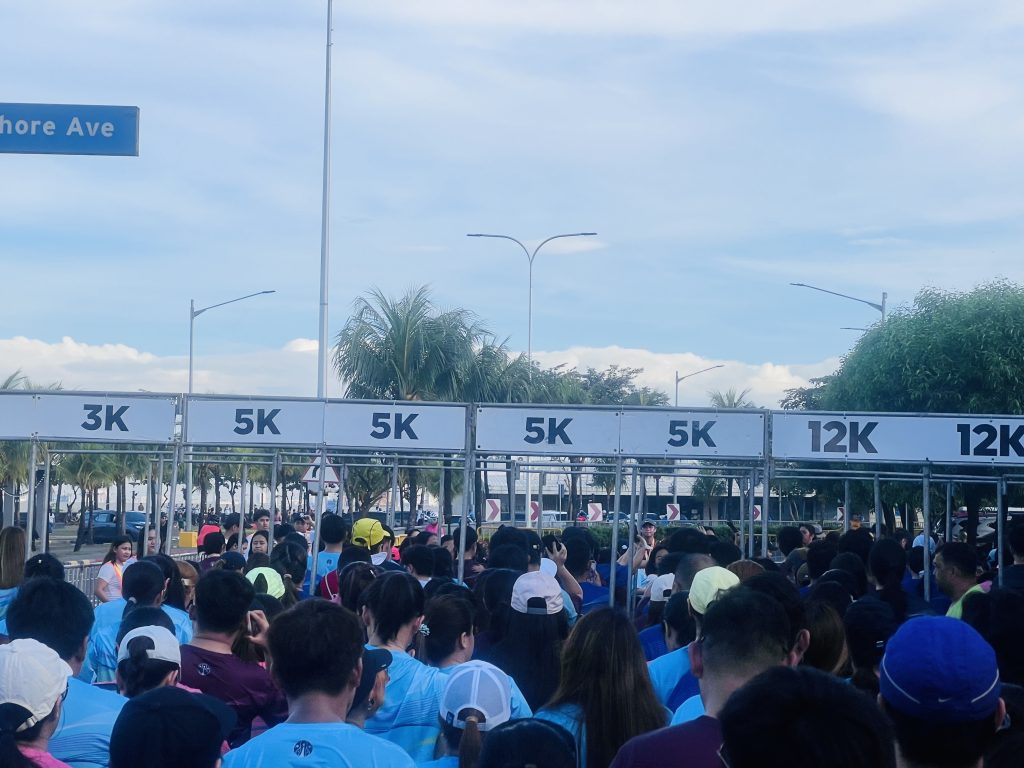
Lessons from global races
The Philippines’ growing fun run culture mirrors global trends in community running.
For instance, the Standard Chartered Singapore Marathon 2023 drew over 44,000 participants, as reported by The Straits Times (Dec. 3, 2023), emphasizing inclusivity and charitable causes. Organizers in Singapore and London have documented that such events boost local tourism, volunteerism, and public health awareness.
Similarly, Pasay City’s MOA bayfront has evolved into a model venue for safe, large-scale urban runs—complete with closed-road systems, medical tents, hydration posts, and early start times that minimize city disruption.
According to RUNRIO, these logistics align with international best practices for urban race management. JCO Run PH 2025 fits perfectly within this template, balancing corporate sponsorship with community engagement.
Why fun runs endure
Behavioral research helps explain why events like JCO Run PH continue to thrive. According to a 2023 British Psychological Society review, enjoyment and social accountability are the two strongest predictors of adherence to physical-activity routines. When individuals associate fitness with fun and social connection, rather than obligation, they are more likely to maintain the habit.
Moreover, a 2024 University College London study found that people who exercised in social settings were twice as likely to sustain long-term physical activity compared to those who exercised alone.
This social reinforcement, celebrating milestones, sharing photos, and receiving recognition, creates what behavioral scientists call “habit architecture,” a structure that keeps people engaged and returning year after year.
At JCO Run PH, this is evident in the atmosphere itself: parents jogging with children, officemates wearing matching shirts, and first-time runners celebrating their medals at sunrise. The event’s celebratory tone makes fitness feel less like competition and more like community.
The bigger picture
In a society grappling with long working hours, digital distractions, and sedentary routines, the significance of events like JCO Run PH goes beyond athletics.
According to the World Health Organization’s 2024 Global Status Report on Physical Activity, physical inactivity could cause 500 million new cases of preventable diseases by 2030 if current trends continue. Against this backdrop, each participant running along MOA’s boulevard is, in a way, taking a small but powerful stand for their health and future.
Meanwhile, these events also foster social healing. In an increasingly polarized and digitally fragmented world, fun runs bring people back to physical spaces of shared purpose. The laughter at hydration stations, the high-fives between strangers, and the sight of parents pacing alongside their children form what sociologists call “micro-moments of solidarity.” They remind participants, and observers, that wellbeing is not an individual pursuit but a collective one.
More than a medal
Many runners at this year’s JCO Run PH wore bibs carrying personal dedications: “For my mom,” “For my health,” “For peace of mind.” These handwritten tributes reflect what health psychologists often emphasize, people sustain healthy behaviors when they link them to meaning. For some, the event was a way to honor loved ones; for others, it was a declaration of self-care amid Manila’s daily grind.
As the sun rose over Manila Bay, volunteers handed out medals, beverages, and doughnut boxes, a lighthearted reward for serious effort. The image of thousands crossing the finish line underlines an essential truth repeated by public-health advocates worldwide: small steps, done together, can lead to profound change.
The road ahead
Ultimately, fun runs like JCO Run PH serve as more than branded sporting events—they are catalysts for personal and societal wellbeing. They create healthier citizens, strengthen community bonds, and remind people that health is not a luxury, but a shared responsibility.
When participants run side by side, regardless of pace or background, they affirm a powerful message: progress is not measured by speed, but by the courage to start and the will to continue. In that sense, every kilometer completed is a collective stride toward a healthier, more connected Philippines.
Photos by Stanley Buenafe Gajete
All details on the event’s date, venue, categories, rules, and results were verified through the official JCO Run PH 2025 registration page and the Race Roster results portal, as cited by RUNRIO Inc. and J.CO Donuts & Coffee. Global health statistics were drawn from WHO (June 2024) and AHA guidelines, while supporting research on exercise benefits was referenced from peer-reviewed medical journals including JAMA Psychiatry (2023) and BMJ (2022).