
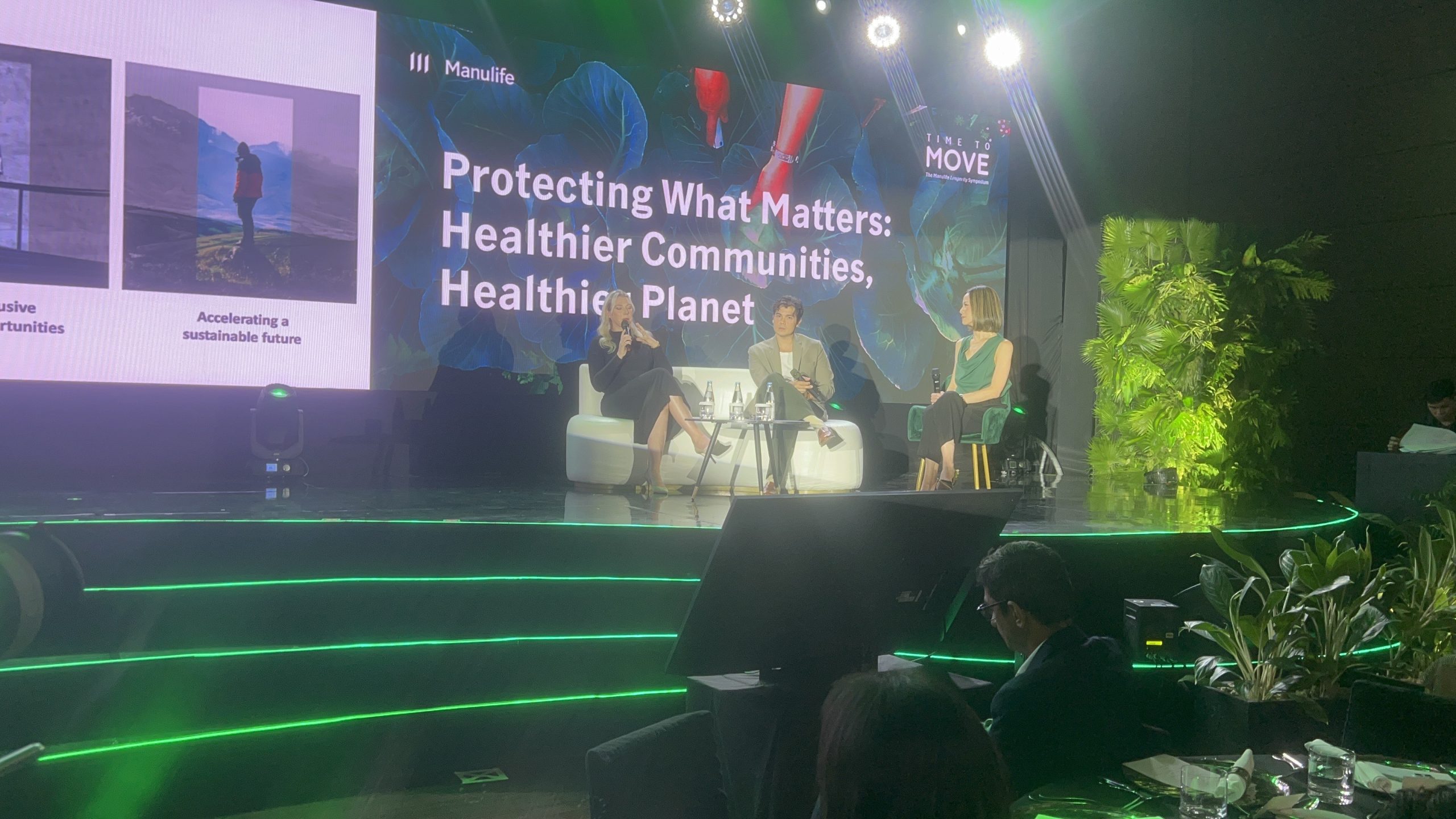
Doctors, wellness experts, economists, policymakers, and industry leaders gathered at the Grand Hyatt Hotel in Bonifacio Global City for the inaugural “Time to MOVE: Manulife Longevity Symposium,” October 11, Saturday.
Hosted by Manulife Philippines, the event sought to spark a nationwide conversation on health span, the number of years lived in good health, and how prevention, policy, and personal action can help Filipinos live not just longer, but better.
In his opening message, Rahul Hora, President and Chief Executive Officer of Manulife Philippines, underscored the company’s mission to equip Filipinos with financial tools and health insights for a longer, more confident life.
“As Filipinos redefine what it means to live longer and better, we at Manulife are committed to helping them achieve this vision with trusted guidance and financial strategies that enable them to make informed decisions about their future.”
Moderated by journalists Shawn Yao and Paolo del Rosario, the symposium convened leading experts including Dr. Jeremy Lim of AMILI, Dr. Nantha Kumar of Guardant Health, and Dr. Beverly Ho of Ayala Health.
The panels explored preventive health innovations, precision medicine, and stronger collaboration between public and private sectors in promoting healthier aging.
The event also launched Manulife MOVE, a digital wellness platform within the Manulife app. The program promotes healthier habits and provides users access to preventive services, health tools, and insurance benefits, integrating prevention and protection into everyday life.
Redefining Longevity
Hora described longevity as a changing concept shaped by each generation’s evolving values.
“We’re experiencing different kinds of gratification now,” he said. “It’s not just about adding years to life, but adding life to those years,” said during the media press briefing in the afternoon.
Ariel Kangasniemi, Head of Sustainability Performance Management and General Account Head of ESG at Manulife, added that the environment itself is central to human survival.
“Thirty, forty, fifty years from now, everything we rely on, clean air, fresh water, and a healthy climate, will become even more important than we realize today,” she said, stressing that future generations will depend on these natural systems for longevity and well-being.
A Shift From Lifespan to Health Span
Across Asia and increasingly in the Philippines, people are redefining longevity as quality of life, independence, and purpose rather than simply longer years.
According to the Manulife Asia Care Survey 2025, which surveyed 1,000 respondents in the Philippines, only 13 percent ranked a longer lifespan as their top goal in old age, while 26 percent prioritized financial independence, and 17 percent chose staying mentally and physically active. The findings show a clear preference for quality over quantity of years.
Moreover, the survey found a persistent say–do gap: while most respondents believe they value health and longevity, fewer act on preventive behaviors, suggesting a need for supportive programs that combine education, incentives, and access to care.
This change in perspective is backed by data. According to the Institute for Health Metrics and Evaluation’s Global Burden of Disease (GBD) 2021 forecast, global life expectancy will rise by about 4.6 years between 2022 and 2050. However, healthy life expectancy (HALE), the years lived in full health, is increasing more slowly, meaning people may live longer but spend more years managing illness or disability.
Why Prevention Now Matters More Than Ever
The Global Burden of Disease (GBD) program, the world’s most comprehensive tracking system for death and disability, finds that noncommunicable diseases (NCDs) such as heart disease, stroke, cancer, diabetes, and chronic lung disease account for roughly two-thirds of all global ill-health. According to the World Health Organization, NCDs caused 43 million deaths in 2021, representing about three-quarters of non-pandemic deaths worldwide.
Although rates of many chronic diseases have stabilized, the total burden continues to grow because of population aging and urban lifestyles.
Based on The Lancet/GBD 2021 analysis, NCDs contributed about 1.73 billion disability-adjusted life years (DALYs) in 2021, making them the leading cause of lost health globally.
Meanwhile, pandemic disruptions temporarily lowered life expectancy in many countries, but new GBD projections show recovery to pre-pandemic levels. Still, most of the added years are not necessarily healthy years.
According to the IHME 2024 update, people worldwide are expected to live to around 78 years on average by 2050, but rising chronic disease will continue to strain health systems and economies.
The Philippines mirrors these global patterns. WHO country data show that life expectancy at birth declined to 66.4 years in 2021 at the height of the pandemic. Locally, 68 percent of deaths are already due to NCDs, according to WHO’s noncommunicable disease profile. PSA data for 2022 list ischemic heart disease, neoplasms, and cerebrovascular disease, all NCDs, as the top causes of mortality.
These trends emphasize why prevention and primary care matter: extending life span without expanding health span simply adds years lived in poor health.
An Aging Society, Faster Than Many Realize
The Philippines is moving toward an aging society, defined by the United Nations as one where 10 percent of the population is aged 60 and above. According to the Longitudinal Study of Aging and Health in the Philippines (LSAHP Wave 2, 2024), the country is projected to reach this milestone by 2030, driven by falling fertility and longer survival.
Regional data show the trend is already visible. The Cordillera Administrative Region’s 2020 Census reported that 9.3 percent of its population were aged 60 and above, among the highest proportions nationwide.
Nationally, the Economic Research Institute for ASEAN and East Asia (ERIA) estimates that the older population will grow from 9.3 million in 2020 to 23.7 million by 2050. Similarly, PopCom reports seniors currently comprise 8.5 percent of Filipinos, a share expected to reach 14 percent by 2035, signaling a major demographic shift.
These figures imply far-reaching effects: greater demand for primary and long-term care, pressure on pensions, and shrinking working-age populations.
To sustain a healthy aging population, experts highlight the need for upstream investments, prevention, early screening, and age-friendly systems in health, transport, and finance.
From Research to Real-world Action
The symposium leaned into that philosophy by linking scientific research with everyday habits. Panels covered nutrition, movement, diagnostics, mental well-being, and financial preparedness as part of a whole-of-life approach to health.
discussions spanned AI-powered health diagnostics, nutrition for aging well, mental wellness, retirement and legacy planning, and redefining longevity through community engagement.
Experts such as Dr. Jeremy Lim of AMILI spoke on the microbiome’s role in aging, while Guardant Health discussed advances in precision oncology.
The sessions underscored that no single field owns longevity, it demands coordination across medicine, technology, and behavior.
Healthier Communities, Healthier Planet
In one of the morning discussion forums, Erwan Heussaff, Manulife ambassador, chef, and content creator, emphasized the importance of promoting a sustainable lifestyle and creating content that resonates with Filipinos to inspire and motivate people.
“It’s very important for us to provide real value through our content,” Heussaff said. “We share healthy recipes and simple eating habits that people can easily integrate into their daily lives to help with weight management.”
Heussaff also shared his experience, traveling across the Philippines, from the north to the south, where he gained a deeper appreciation of how food connects people and communities.
“I started to see food not just as sustenance, but as part of a whole system,” he explained… We often think of food as simply something to eat,” but it also reflects culture, sustainability, and the way we live, as he further discussed.
What the Latest Data Say About Living Well, Longer
Globally, healthy life expectancy has increased by about 3.8 years since 2000, according to WHO, but still trails total life expectancy. That means many people spend their final years managing chronic disease or disability rather than living independently. High-income countries are seeing longer survival but more years with cardiometabolic, musculoskeletal, or mental-health conditions. For the Philippines, the lesson is clear: longevity gains must come from reducing modifiable risks and expanding preventive care.
The Philippine and Regional Picture, Fresh Evidence
Manulife’s Asia Care Survey 2025 reports that Filipinos are redefining longevity as physical, mental, and financial well-being. The survey found that most respondents prefer independence and active living over simply adding years.
Insurance Business Asia (2025) reported that only 13 percent of Filipinos viewed “longer life” as their top aspiration, compared with 26 percent who prioritized financial independence. The same report noted behavioral gaps that hinder preventive practices.
Globally, IHME’s “Burden of Disease Scenarios 2022–2050” projects that while life expectancy will continue to improve, NCDs will remain the leading cause of disease burden, accounting for most preventable mortality worldwide.
Meanwhile, ERIA’s demographic study confirms that the Philippine population aged 60+ will reach 10 percent by 2030, marking its entry into aging-society status. Inquirer reporting, citing PSA projections, similarly estimates that about 7 percent of Filipinos will be aged 65+ by 2030, meeting another UN aging threshold.
What Works: Four Pillars with Evidence
- Move more, sit less. Regular physical activity lowers risks for heart disease, diabetes, cancer, depression, and cognitive decline. WHO guidelines recommend 150–300 minutes of moderate exercise weekly. Longevity programs that track steps and promote social accountability—such as Manulife MOVE—help make movement routine.
- Eat for metabolic health, not restriction. Diets rich in fruits, vegetables, and fiber, and low in processed foods, improve glucose control and reduce NCD risk. Nutrition panels at the symposium translated this science into practical meal swaps and culinary-medicine insights tailored to Filipino habits.
- Screen and treat earlier. Early detection saves healthy years. The Universal Health Care Act (RA 11223) requires every Filipino to register with a primary-care provider and institutionalizes Health Technology Assessment (HTA) to determine which diagnostics and treatments are publicly covered. This framework moves care upstream—from crisis treatment to prevention.
- Protect the brain and mind. Maintaining cognitive health through blood-pressure control, exercise, good sleep, and social engagement reduces dementia risk. Neurologists and mental-health advocates at the symposium reiterated that managing stress and reducing stigma are as vital as medication in preserving brain function.
Finance is a Health Intervention
The Asia Care Survey found that Filipinos rank purpose and financial independence among their top measures of a good old age. Financial stress, experts noted, often leads to skipped medications and delayed treatment, both of which shorten health span.
Longevity, then, is not only a medical issue but an economic one. Retirement panels led by Aira Gaspar, CEO of Manulife Investments Philippines, and Elvin Tharm, Head of Retirement for Manulife Asia, discussed myths around “how much is enough” and the role of digital tools in sustaining long-term savings.
Making Longevity a National Project
If longer, healthier lives are the goal, the Philippines already has the foundation: a Universal Health Care law that prioritizes primary care, a demographic push to invest in prevention, and cross-sector partnerships ready to implement real-world solutions.
The challenge lies in execution—financing primary care nationwide, ensuring equitable regional access, and closing the gap between intentions and daily health actions.
The symposium’s cross-disciplinary roster hints at the way forward: anchor evidence in everyday practice, pair education with policy, and make health everyone’s business.
As Hora summed up, “Filipinos are beginning to view their future through a new lens—one that prioritizes independence, stability, and quality of life. There’s a clear opportunity to bridge aspiration and action through preventive solutions that empower people to live meaningfully and secure the future they envision.”
Photo by Stanley Gajete